The History of Healing
 African Tribal Medicine: A Glimpse into the Past
Explore African tribal medicine history and discover ancient healing practices, traditional remedies, and indigenous knowledge passed down through generations.

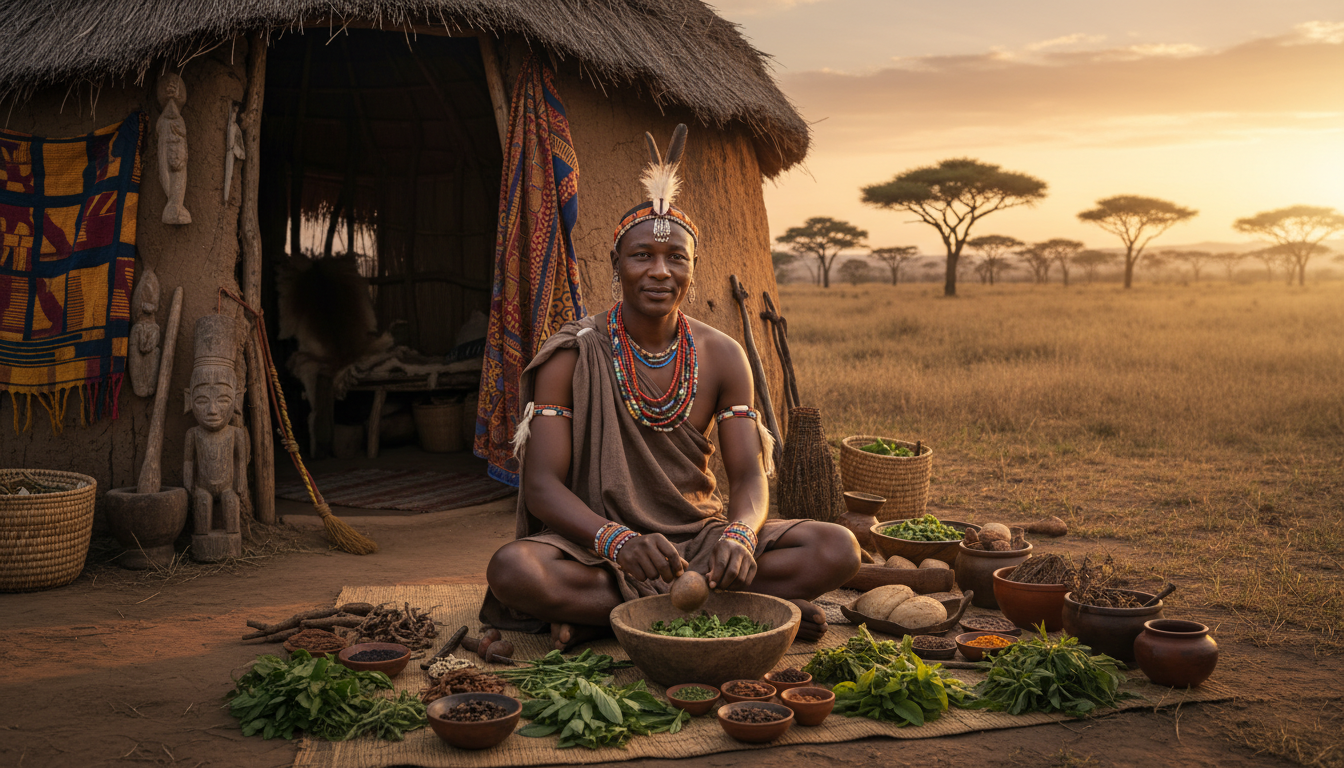
Did you know that up to 80% of people in developing countries use traditional medicine? In West Africa, this number goes up to 70-80%. This isn’t just old news. It’s a living system of healing that millions rely on today.
Africa is where humans first started. It’s full of ancient healing traditions. Before modern hospitals, communities in Africa created their own health systems. They mixed herbalism, divination, and spiritualism for a holistic approach. This wisdom was shared through stories and passed down through generations.
The history of African tribal medicine goes back thousands of years. Each region brought its own unique practices. Some focused on plants, others on spiritual connections. Many combined everything for a complete healing approach.
Let’s explore these traditions together. We’ll see the healers who keep them alive and how they shape health across Africa.
Key Takeaways
- Up to 80% of people in developing countries use traditional medicine as their primary form of healthcare, according to the WHO.
- African tribal medicine history spans thousands of years and covers a vast range of diverse practices across the continent.
- These cultural healing traditions combine herbalism, divination, and spiritualism into a holistic approach to wellness.
- Ancient healing wisdom was preserved and transmitted orally through storytelling across generations.
- Traditional African medicine treats the whole person — body, mind, and spirit — not just individual symptoms.
- These practices aren’t relics of the past; they remain deeply relevant to millions of people today.
Introduction to African Tribal Medicine
Let’s start here. African tribal medicine isn’t just old stuff from museums. It’s a living system of care that’s lasted for centuries. And it’s alive today. That’s pretty amazing, right?
This isn’t just about mixing herbs. It’s about spirituality, community, and understanding what it means to be human. It’s deep.
Importance in Cultural Context
In traditional African philosophy, health isn’t just about your body. It’s about all of you — body, spirit, morals, and social life. When everything works together, you’re healthy. But when it doesn’t, illness can come.
Indigenous healing sees sickness as connected to God, ancestors, and the universe. As researcher M.V. Gumede said in 1990, you can’t understand African healers without understanding their spirituality. They’re deeply connected.
Health is not merely the absence of disease but the harmony of body, spirit, and community.
Colonial powers tried to make Western medicine the only choice. But people kept their traditions alive.
Overview of Practices
So, what do these traditional healing practices look like? Here’s a quick look:
- Herbal remedies from local plants and roots
- Spiritual rituals for emotional and moral balance
- Divination to find the illness’s cause
- Community healing ceremonies
Each part has its role. As we explore African tribal medicine history, you’ll see how smart and intentional this knowledge is.
Historical Roots of African Tribal Medicine
African tribal medicine history is ancient, spanning thousands of years. It existed long before Western explorers arrived. These healing systems were incredibly advanced.
The roots of this tradition go back to the earliest human civilizations. Let’s explore where it began and what influenced it.
Ancient Civilizations and Healing
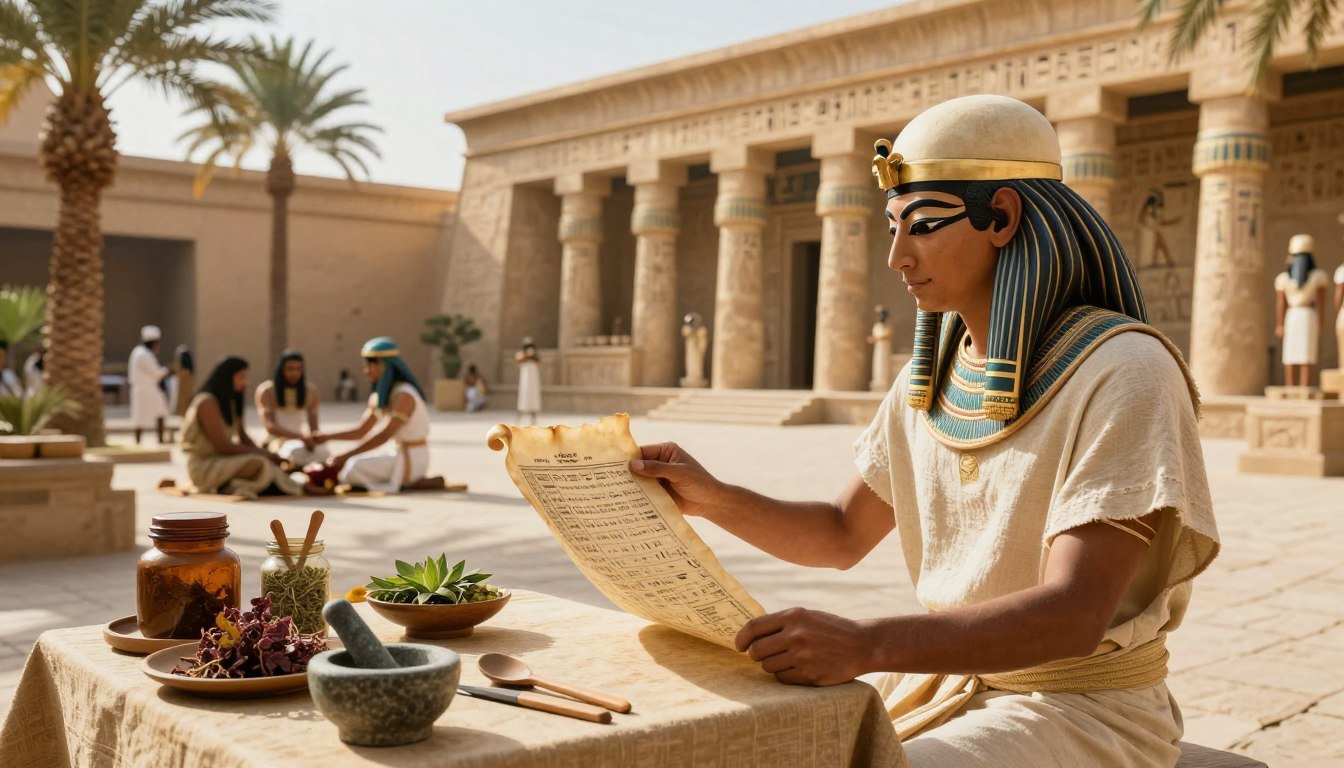
Africa is home to some of the oldest healing practices. Ancient Egypt, around 1550 BCE, created the Ebers Papyrus. It listed hundreds of remedies using plants, minerals, and animal products. But Egypt wasn’t alone. Communities across Africa, like the Nubian kingdoms and Great Zimbabwe, also developed their own medical traditions.
What made these systems unique? They were passed down through stories, songs, and apprenticeships. No need for textbooks. Each tribe had its own treatments for physical, mental, and spiritual issues. The core idea was to treat the whole person, not just symptoms.
| Ancient African Civilization | Approximate Era | Healing Contribution |
|---|---|---|
| Ancient Egypt | 3000–300 BCE | Herbal pharmacology, surgical techniques |
| Kingdom of Kush (Nubia) | 1070 BCE–350 CE | Plant-based wound treatments |
| Great Zimbabwe | 1100–1450 CE | Spiritual diagnosis and botanical cures |
Influence of Indigenous Beliefs
Healing wisdom was deeply connected to spiritual beliefs. For many African communities, illness was more than physical. It had spiritual meaning. It could signal broken relationships with ancestors, nature, or the community.
These beliefs made healing more than just using herbs. Rituals, prayers, and divination were key parts of the process. This holistic approach is something modern medicine is starting to understand.
Key Elements of African Healing Traditions
So, what makes African medicine special? It’s a mix of plants, spirits, and people. Traditional healing in Africa combines the physical and spiritual in unique ways. Let’s explore the main elements.
Herbal Remedies
African herbal medicine has been around for thousands of years. It’s like a natural pharmacy. Communities used roots, barks, and leaves for many health issues. Here are some examples:
- African potato (Hypoxis hemerocallidea) — supports immune health
- Rooibos — rich in antioxidants, good for digestion
- Hoodia cactus — helps control hunger during long hunts
- Devil’s claw — relieves joint and muscle pain
This knowledge was passed down through stories, not books. Elders taught apprentices, keeping secrets safe for generations.
Spiritual Healing Practices
In African medicine, body and spirit are connected. Shamanic rituals are key. Drumming, chanting, and ceremonies aim to balance a person with the spiritual world. Many believe illness starts in the spirit before affecting the body.
Role of the Healer
The healer, or sangoma or nganga, is more than a doctor. They diagnose, prescribe herbs, and lead rituals. Becoming a healer takes years of training and a spiritual calling. These experts are vital in traditional healing, deeply influencing community life.
The Role of Ancestors in African Medicine
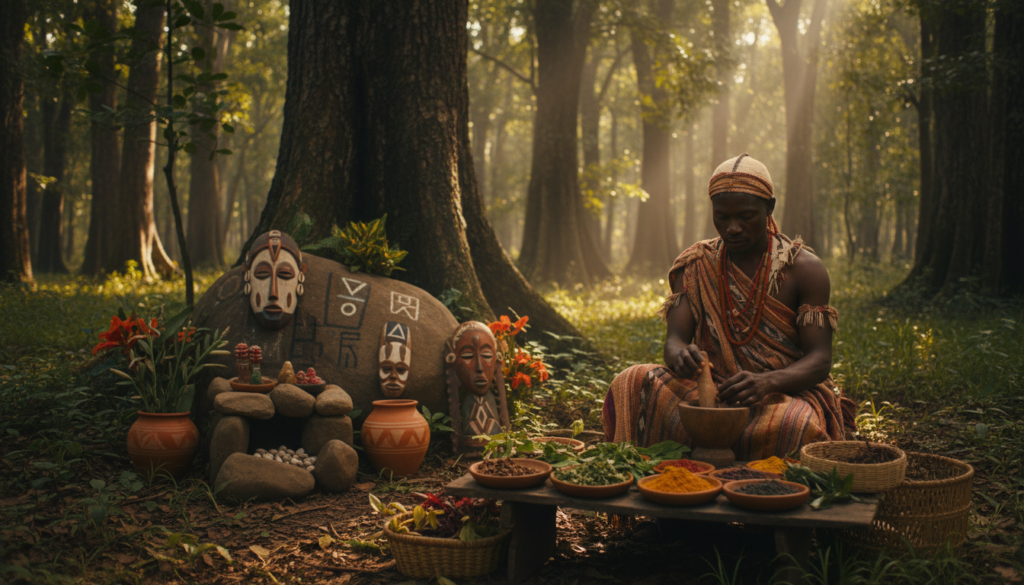
In many African cultures, the dead are always with us. They watch, guide, and even give remedies. Ancestors are key in healing across the continent. Let’s explore why.
Honoring the Living-Dead
Ancestors are not scary ghosts. They are caring spirits, our blood relatives who have passed on. They care about their living family. Each ethnic group has its own name for them.
| Ethnic Group | Term for Ancestors | Region |
|---|---|---|
| Bapedi, Batswana, Basotho | Badimo | Southern Africa |
| Amazulu | Amadlozi | KwaZulu-Natal, South Africa |
| Amaxhosa | Iinyanya | Eastern Cape, South Africa |
This is not worship. It’s reverence, a way to remember. In traditional African religion, God is above all. People don’t talk directly to God. Ancestors act as messengers, carrying prayers up.
Spiritual Guidance in the Healing Process
Ancestral remedies are a big part of healing. When someone gets sick, a healer might ask the ancestors for help. This knowledge has been passed down for ages. The ancestors guide healers to the right plants, rituals, or practices for the patient.
“The ancestors see what we cannot. They remember what the earth offers for every sickness.”
This spiritual connection is not random. It’s a structured system based on deep healing knowledge. Communities have relied on it for centuries. And as we’ll see next, healing is a community effort.
African Tribal Medicine and Community
In many African cultures, healing was never a solo act. It was a community event. Traditional healing practices were deeply woven into everyday life. The village supported the sick person and helped in the cure.
Collective Knowledge and Wisdom
Centuries of healing traditions weren’t stored in books. They lived in people. Elders passed down remedies through stories, songs, and rituals. Each generation added to the knowledge.
Carl Jung talked about the “collective unconscious.” This is shared knowledge in a culture’s psyche. In African communities, some people tapped into this wisdom, becoming traditional healers.
Getting this knowledge wasn’t easy. Aspiring healers had to join secret societies or go through intense initiation rites. This kept the wisdom safe and in the right hands.
Healing practices vary greatly across Africa. From the Yoruba in West Africa to the Zulu in Southern Africa, each region has its own way. This reflects their unique plants, beliefs, and community structures.
Healing Circles and Community Involvement
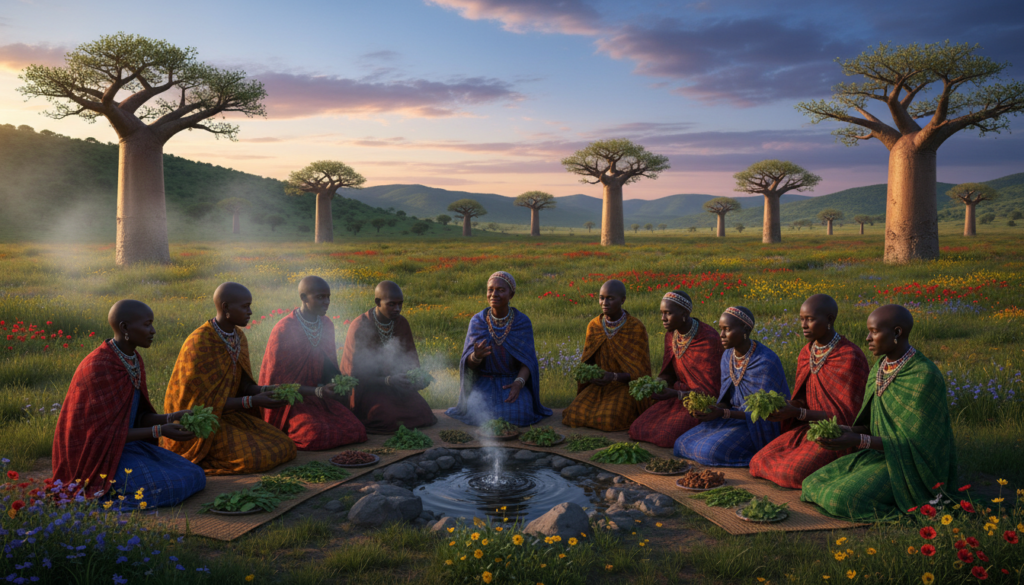
Healing circles brought the village together. These weren’t just physical treatments. They combined herbal remedies, drumming, prayer, and group support.
- Elders offered guidance rooted in generational wisdom
- Family members provided emotional and spiritual support
- Healers coordinated herbal and spiritual interventions
- Community members participated in chanting, dancing, or prayer
This collective approach to healing shows wellness is about belonging. The connection between healer, patient, and community is powerful. It’s something modern medicine is starting to see — the healing power of social bonds.
The Relationship Between Nature and Medicine
African tribal communities didn’t just live near nature. They built their medical systems around it. Every tree, river, and mountain was seen as a source of healing power. This deep bond between the land and its people shaped herbal medicine customs that thrive today.
Use of Local Flora and Fauna
Traditional healers, like herbalists and sangomas, carry ancient knowledge. They can identify plants by sight, smell, and touch. This expertise comes from centuries of trial and observation.
Some plants are famous worldwide. The African potato treats urinary infections. Rooibos fights inflammation. The hoodia cactus helps control appetite during long hunts.
African traditions use more than just plants. Animal-based remedies, mineral compounds, and physical techniques like Ghanaian shea butter massages are also used. These massages boost blood flow, ease muscle tension, and restore energy balance.
| Medicinal Plant | Region of Origin | Traditional Use |
|---|---|---|
| African Potato (Hypoxis hemerocallidea) | Southern Africa | Urinary tract issues, immune support |
| Rooibos (Aspalathus linearis) | South Africa (Cederberg) | Anti-inflammatory, digestive relief |
| Hoodia Cactus (Hoodia gordonii) | Kalahari Desert | Appetite suppression, energy sustenance |
| Devil’s Claw (Harpagophytum procumbens) | Southern Africa | Pain relief, joint inflammation |
Sacred Landscapes in Healing Ceremonies
Certain places feel special, right? African healers believe the same. Specific rivers, groves, and hilltops are sacred for healing ceremonies. These places are believed to amplify healing energy.
These landscapes are chosen for their spiritual significance. A waterfall might be a purification site. A grove could be where healers gather rare herbs during specific moon phases. The land becomes part of the medicine, connecting people and place in a special way.
Integration of Traditional and Modern Medicine
Did you know that in Africa, people have always used both old and new medicine? They’ve mixed them for decades, even centuries. The story of African tribal medicine isn’t about one replacing the other. It’s about two systems working together.
Coexistence with Conventional Healthcare
Western powers tried to get rid of ethnic medicine during colonial and apartheid times. But they failed. Many Africans used both systems together. They’d go to a clinic for one problem and a traditional healer for another.
After 1994, South Africa changed a lot. The government passed a law that recognized traditional healers. This included prophets called baporofeta. It was a big step for traditional healing.
Today, radio stations and public forums in South Africa talk about traditional ceremonies and healers. It’s a lively conversation, not something old.
Case Studies of Successful Integration
So, what does blending medicine look like? Let’s look at some examples:
| Country | Integration Approach | Outcome |
|---|---|---|
| South Africa | Legal recognition of traditional healers through national legislation | Over 200,000 registered practitioners working alongside hospitals |
| Ghana | Traditional medicine directorate within the Ministry of Health | Herbal medicine integrated into primary healthcare delivery |
| Mali | Department of Traditional Medicine researching local remedies | Standardized plant-based treatments for malaria adopted clinically |
The lesson is clear: trying to erase traditional medicine never worked. But working with healers to fight disease does. And it’s more important than ever because these systems are facing big threats today.
Challenges Facing African Tribal Medicine Today
African tribal medicine has a rich history, but it’s facing big threats today. These threats come from many places, some going back centuries. It’s a complex situation.
Cultural Erosion and Urbanization
Colonial powers didn’t just bring Western medicine. They tried to erase cultural healing traditions. They called ancestral practices “witchcraft,” saying they were old-fashioned and superstitious.
In apartheid-era South Africa, things got worse. African kids needed a “Christian” name to go to school. This forced assimilation hurt indigenous knowledge systems a lot.
Now, urbanization is taking its toll. Young people move to cities, breaking the chain of oral traditions. Traditional birth attendants are losing their role as more families choose hospitals. The knowledge of elders is disappearing because it’s not written down.
Modern Healthcare Skepticism
Modern healthcare professionals often doubt traditional African practices. They want scientific proof and standard treatments. This skepticism makes it hard for people to choose between their grandmother’s remedies and modern medicine.
It’s not just a medical issue. It’s also a cultural one. It needs respect from both sides to bridge the gap.
FAQ
What exactly is African tribal medicine, and why is it considered one of the oldest healing systems in the world?
How important is African tribal medicine in today’s cultural context?
What role do herbal remedies play in African healing traditions?
What are the spiritual healing practices in African tribal medicine?
How do ancestors factor into African medicine and healing?
How is traditional healing knowledge preserved and shared within African communities?
What’s the connection between nature and African medicinal practices?
Can traditional African medicine coexist with modern Western healthcare?
What are the biggest challenges facing African tribal medicine today?
Why should we care about preserving African tribal medicine history?
Get More Medical History
Join our newsletter for fascinating stories from medical history delivered to your inbox weekly.