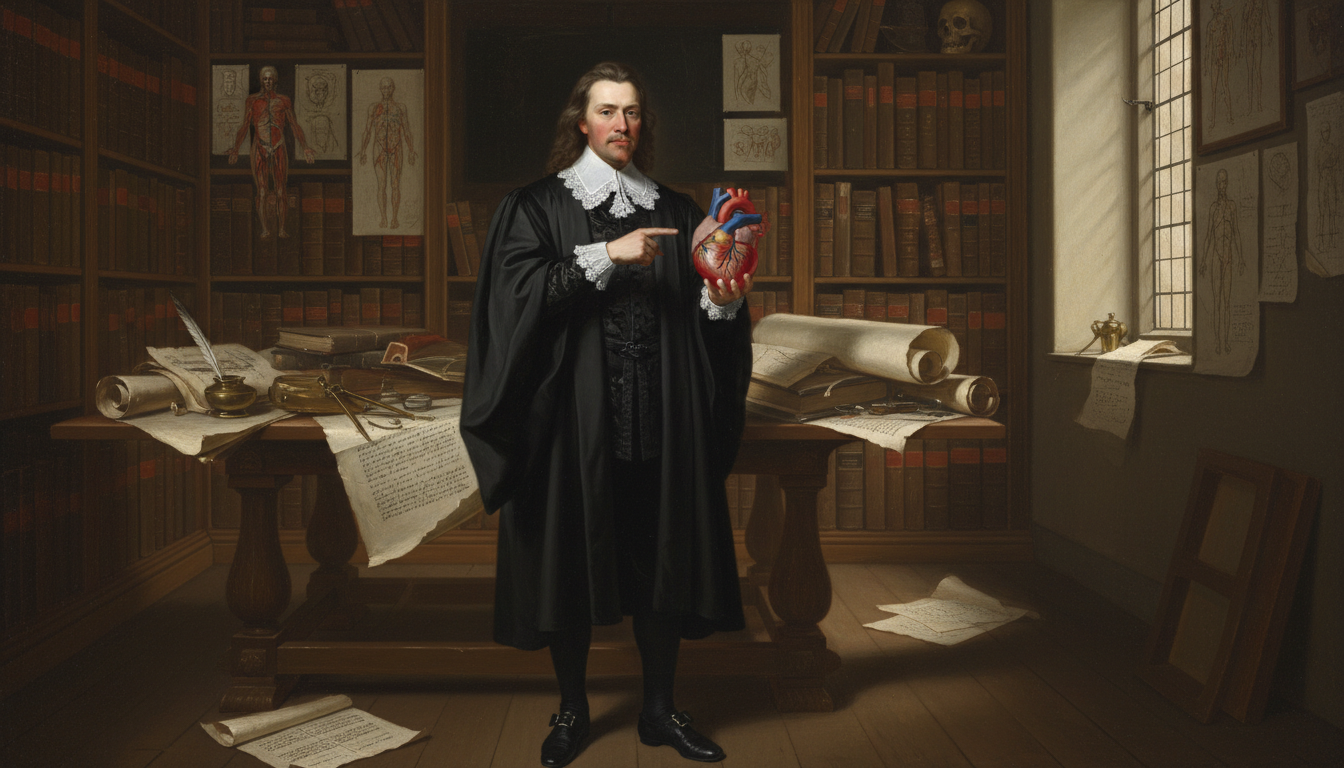
The History of Healing
 Al-Razi (Rhazes): Pioneer of Clinical Observation
Explore the life and legacy of Al-Razi, a medieval polymath who revolutionized clinical medicine and scientific thought with his insightful works.


More than 1,000 years ago, one doctor’s notes were so important that they were kept and taught in Latin Europe for centuries. That doctor was Al-Razi, also known as Rhazes. He watched patients closely, changing how medicine was done.
Meet Abu Bakr Muhammad ibn Zakariya al-Razi, a 10th-century doctor from Ray, near Tehran, Iran. He’s not famous for catchy sayings. He’s known for observing, comparing, and following what the body shows.
Al-Razi was born around 864/865 CE and died in 925 CE, at about 60 or 61. Some say he died in 935, but 925 is more common. His life was short, but his work was vast.
He didn’t start in medicine. He moved from music to alchemy and philosophy, then to healing. He ran big hospitals in Ray and Baghdad. His career change is fascinating.
He wrote over 200 works on medicine, philosophy, and alchemy. These books were translated into Syriac, Arabic, and Latin. They shaped medical training far beyond the Islamic world.
Al-Razi described smallpox clearly and separated it from measles. He wrote a treatise that was translated and passed along. His real power was in observing patients every day.
Key Takeaways
- Al-Razi (Rhazes) was a 10th-century physician from Ray, near modern Tehran, Iran.
- Al-Razi history is built on careful clinical observation, not blind trust in “accepted” ideas.
- He likely lived from about 865 CE to 925 CE, with Ray as both his origin and his final home.
- He shifted from music to alchemy and philosophy before committing to medicine.
- Al-Razi achievements include leading hospitals in Ray and Baghdad and producing 200+ major works.
- His writing traveled through Syriac, Arabic, and Latin, influencing medical education in medieval Europe.
Introduction to Al-Razi and His Contributions
If you enjoy history with a bit of grit and curiosity, you’re in the right spot. Al-Razi didn’t just follow what others did. He tested ideas in real life. This hands-on approach is at the heart of his contributions.
Al-Razi’s work in science and medicine was groundbreaking. He lived in a time when big cities traded goods and ideas. People debated how the body works, and Al-Razi’s medicine was shaped by these discussions.
Context of the Islamic Golden Age
The Islamic Golden Age was a time of rapid learning. Philosophy, math, astronomy, and medicine all advanced together. Ray, Al-Razi’s hometown, was a hub for new ideas and scholars.
Hospitals and libraries were key places. Think of them as public landmarks. Scholars, physicians, and students exchanged ideas, debated treatments, and sorted fact from fiction. Al-Razi’s work was part of this energetic push to understand the body.
Overview of Al-Razi’s Life
Al-Razi was born in Ray, on the southern slopes of the Alborz mountains. He started with music, then moved to alchemy and philosophy. Around age 30, chemical work hurt his eyes, leading him to focus on medicine.
He studied with Ali ibn Sahl Rabban al-Tabari, a physician-philosopher. Al-Razi quickly rose through the ranks, leading hospitals in Ray and Baghdad. Later, he became blind and died in Ray, often dated October 27, 925.
Importance of His Work in Medicine
Al-Razi’s medicine feels modern because he valued patient evidence. He read ancient texts but also kept detailed case notes. This mix of book learning and real-world experience is key to his contributions.
In Doubts about Galen, Al-Razi showed respect for the master but valued evidence. This skeptical approach is part of his science. It led to breakthroughs like separating smallpox from measles and understanding nerves.
| Thread you’ll keep noticing | What Al-Razi leaned on | What it changed for care |
|---|---|---|
| Evidence over vibe | Case histories, symptom timing, and outcomes tracked over days | Sharper decisions in Al-Razi medicine, specially when illnesses looked similar |
| Respectful disagreement | Reading Galen closely, then comparing claims to bedside notes | Room for correction and better practice—key to Al-Razi science |
| Practical tools | Real-world pharmacy methods and treatment routines used in hospitals | Everyday Al-Razi contributions that made care easier to repeat and teach |
Al-Razi’s Major Works
Imagine walking through a library. To understand Al-Razi’s impact, start with these books. His writing feels like notes from a hospital. This is why Al-Razi’s medicine is remembered for so long.
“Kitab al-Hawi” (The Comprehensive Book)
This book is a big deal. Kitab al-Hawi combines Greek and Roman medicine with Al-Razi’s own notes. It’s a mix of case records, treatments, and disagreements with old rules.
It was compiled by students after Al-Razi died. This book’s story is amazing. It was translated into Latin in 1279 and printed in 1486. It was huge and heavy, making Al-Razi’s work tangible.
“Kitab al-Mansuri”
Kitab al-Mansuri is like a quick guide. It was written for Abu Salih al-Mansur ibn Ishaq in 903 CE. It’s a key medical science book that spread fast.
Gerard of Cremona translated it into Latin in 1180. Andreas Vesalius edited it in the 16th century. A page from it shows brain anatomy, showing Al-Razi’s focus on study and observation.
“Kitab al-Judari wa al-Hasbah”
This book is a game-changer. Al-Razi described smallpox and measles clearly in Baghdad. It was translated many times into Latin and other languages.
Yet, many European doctors mixed up smallpox and measles for a long time. This shows how Al-Razi’s work was both influential and challenging.
Al-Razi wrote many books. There’s Man la Yahduruhu al-Tabib for home care, Kitab al-Tibb ar-Ruhani on spiritual health, and more. His work covers clinics, homes, and labs.
| Work | What you’ll notice right away | How it traveled | Why it stuck in memory |
|---|---|---|---|
| Kitab al-Hawi (Liber Continens) | Massive compilation of earlier learning plus clinical notes, case histories, and critiques based on hospital practice | Latin translation by Faraj ibn Salim (1279); printed in Brescia (1486) as the famed oversized pre-1501 volume | It feels like real working medicine on the page, which helped Al-Razi achievements stay visible across generations |
| Kitab al-Mansuri (Liber Medicinalis ad Almansorem) | Concise, teachable handbook written for Abu Salih al-Mansur ibn Ishaq around 903 CE | Latin translation by Gerard of Cremona (c. 1180); later edited by Andreas Vesalius in the 16th century | A clean structure that fit classrooms, plus vivid anatomy details like the brain’s ventricles in surviving pages |
| Kitab al-Judari wa al-Hasbah | Clear distinction between smallpox and measles from a practicing physician’s perspective in Baghdad | Translated more than a dozen times into Latin; also circulated in Syriac and Greek forms | Showed how observation could cut through confusion, even when old habits were hard to break |
Clinical Observation in Medicine
Medieval medicine might seem old and dusty. But Al-Razi medicine was different. He didn’t just read books; he watched patients closely. This hands-on approach is key to Al-Razi’s science and contributions.
Defining Clinical Observation
Clinical observation is simple. It’s about watching real people and tracking their health. You look for patterns and connections.
This method is not about winning arguments. It’s about noticing what really happens. In Al-Razi’s time, it meant recording and comparing cases. This makes his work seem surprisingly modern today.
The Role of Observation in Al-Razi’s Methodology
Al-Razi worked in busy hospitals in Baghdad and Ray. These places were like workshops for testing his science against real illnesses.
He collected and compared cases, noting what worked and what didn’t. This careful approach is why his work is seen as both scholarly and practical.
Al-Razi also questioned famous authorities when they didn’t match his observations. He doubted Galen’s claims about fevers and urinary ailments. This shows his confidence in observing reality over theory.
One story shows his practical side. To choose a hospital site in Baghdad, he hung meat in different areas. The slowest to rot showed him the cleanest air. This method might seem messy, but it’s based on observing and testing.
| What gets observed | How Al-Razi applied it | Why it mattered in practice |
|---|---|---|
| Symptom timing and changes | Tracked how fevers rose, broke, and returned across many patients | Helped separate repeating patterns from one-off stories in Al-Razi medicine |
| Patient outcomes after treatment | Compared responses to different care choices in hospital settings | Kept Al-Razi contributions grounded in results, not reputation |
| Differences between textbook claims and real cases | Challenged Galen on fevers and urinary ailments when observations disagreed | Made Al-Razi science feel like a living process, not a script |
| Environmental clues tied to health | Used the meat-hanging test to judge air quality across Baghdad locations | Applied observation beyond the bedside, shaping community health decisions |
Al-Razi’s Approach to Patient Care
Al-Razi’s writing shows he wasn’t after fame. He wanted clarity. His visits were more than just a quick look and a prescription. They became a record you could learn from and test later.

Detailed Case Histories
He tracked real people over time. He recorded symptoms, timing, treatment, and what changed. His work in Al-Hawi shows medicine as daily problem-solving.
Scholars say Kitab al-Tajarib is the largest case history collection in medieval Islamic medicine. It shows how he used case histories to find therapeutic principles. He balanced what treatises said with what he did in real life. This honesty is very relatable.
| What he captured | How it shows up in the records | Why it mattered in patient care |
|---|---|---|
| Step-by-step case narratives | Symptoms, timing, diet, remedies, and follow-up notes recorded across visits | Lets you compare outcomes instead of guessing what helped |
| Therapeutic principles | Patterns pulled from many cases, not just one memorable success | Pushes treatment toward repeatable habits, not one-off tricks |
| Eye disease observations | Descriptions of eye complaints and responses to care, discussed alongside broader treatment rules | Connects specific symptoms to practical choices you can defend |
| Treatise vs. daily practice | Moments where written guidance is tested against what happened at the bedside | Keeps medicine grounded in what patients actually experience |
Emphasis on Empirical Evidence
Reading him, you see him comparing patients. He looked for small clues that changed everything. This is where Al-Razi’s legacy feels alive.
Neurology is a key area where his clinical observation shines. In Al-Hawi and Al-Mansuri, he shows how to localize lesions and link them to symptoms. He knew about nerves and their functions.
He was the first to clearly recognize concussion. His work shows how careful observation leads to action. This is why Al-Razi’s achievements kept growing.
Innovations in Medical Ethics
Looking into Al-Razi history, you find more than just medical notes. You see a doctor who cared about how medicine is done. He was curious, honest, and hated fake stuff.
He was refreshingly honest. He spoke out against fake healers and said even doctors can’t fix everything. This mix of confidence and caution is why people remember him.
Principles of Medical Ethics Introduced by Al-Razi
Al-Razi believed medicine should be based on learning, not tricks. He said reading medical books and staying open to new info is key. This was important, even for doctors with a good reputation.
He also made a clear line between treatable and untreatable illnesses. For serious cases like cancer and leprosy, he said it’s unfair to blame doctors for not curing them.
At the core, he aimed to do good and avoid harm. He also promised not to make harmful treatments. This shows his commitment to ethics, making his legacy more than just dates and titles.
| Ethical focus | What it looks like in practice | Why it mattered |
|---|---|---|
| Honesty about limits | Admit when a disease is likely incurable, and set realistic expectations | Protects patients from false hope and protects medicine from empty promises |
| Anti-fraud mindset | Call out fake doctors and “miracle cures” that prey on fear | Keeps trust centered on evidence, not sales tricks |
| Non-maleficence | Aim to do good and not harm; avoid mortiferous remedies | Builds safety into decision-making, even under pressure |
| Continuous learning | Study medical books, compare reports, and update methods over time | Turns medicine into a living craft—one of the lasting Al-Razi achievements |
Al-Razi and the Patient-Physician Relationship
Ethics wasn’t just theory for Al-Razi. He was generous and treated patients with care. He even helped the poor without charge. This shows he cared for everyone, not just the rich.
He wrote Man la Yahduruhu al-Tabib for those who couldn’t see a doctor. It’s a guide for common problems when a doctor isn’t there. This makes his achievements feel close and personal.
He also saw the human side of medicine. He felt sorry for doctors treating the elite and those who ignored advice. He knew good care depends on what patients do after they leave.
Al-Razi and Pharmacology
Al-Razi medicine was all about the details. He didn’t just diagnose; he mixed and used medicines too. His work shows in every small detail, like texture and timing.
Early Contributions to Pharmacological Practices
He didn’t just give orders. He shaped early pharmacy work, using mercurial ointments and tools like mortars and pestles. These tools were common in pharmacies for a long time.
His work was experimental. He discovered things like sulfuric acid and ethanol. His books, like Al-Asrar and Sirr al-Asrar, show how he mixed and used substances.
Notable Substances and Treatments Identified
Some of his remedies were simple. He used honey a lot, like many traditional healers. His recipes were detailed, showing his careful approach.
| Situation | Ingredients | How it’s prepared and used | What it shows about Al-Razi science |
|---|---|---|---|
| Feverish headache | 2 parts rose oily extract; 1 part vinegar; linen cloth | Mix the rose extract with vinegar, soak linen, and apply as a forehead compress. | Clear ratios and a simple delivery method you can repeat. |
| Laxative recipe | 7 drams dried violet flowers; 20 pears; 20 drams sugar | Macerate violets with pears, strain, then add sugar to the liquid. | Measured dosing and a process built around extraction and filtration. |
| Melancholy | Poppies/opium; Cuscuta epithymum (sometimes both) | Used in prescribed combinations depending on the case. | A willingness to match ingredients to symptoms, not just tradition. |
| Eye remedy | Myrrh, saffron, frankincense (2 drams each); 1 dram yellow arsenic; coriander water | Make tablets, dissolve in coriander water, then apply as eye drops. | Precise weights—even when the ingredients sound intense today. |
Yellow arsenic might sound strange today. But it shows Al-Razi’s detailed approach. He wrote down everything so others could follow his steps. This made his medicine last through time and place.
Influence on Later Medical Practices
Al-Razi’s ideas traveled far, like footprints across languages. They went from Syriac to Greek and Latin. This is how many medieval European doctors first read his work.
Al-Razi’s books didn’t just survive; they traveled. They reached new libraries and classrooms. There, Al-Razi’s ideas changed how medicine was taught and practiced.
Impact on Western Medicine
In Western Europe, Al-Mansuri became a key part of medical education. Sections like “On Surgery” and “A General Book on Therapy” were used in training. Students learned from clear steps, not just theory.
An old catalog from Peterborough Abbey shows Al-Razi’s books were on shelves. This was around the 14th century. It shows his work was ready for use.
Then, Liber Continens, the Latin version of Kitab al-Hawi, was translated in 1279. It was first printed in Brescia in 1486. This gave doctors a big reference they could use over and over.
| Path into Europe | What moved | Why it mattered in practice | Concrete trace |
|---|---|---|---|
| Translation pipeline | Medical writing carried into Syriac, Greek, and Latin | Let European readers study Al-Razi books without knowing Arabic | Texts circulated as teaching and reference material in medieval settings |
| University-style learning | Al-Mansuri, including “On Surgery” and “A General Book on Therapy” | Supported step-by-step training and bedside decision-making | Used as part of Western medical curriculum traditions |
| Monastic libraries | Cataloged holdings connected to Al-Razi | Put Al-Razi contributions within reach of readers who copied, compared, and taught from texts | Peterborough Abbey catalog lists Al-Razi as part author of ten medical books |
| Latin translation + printing | Liber Continens (Latin Kitab al-Hawi) | Made a huge clinical reference easier to spread and reuse | Latin translation dated 1279; printed in Brescia in 1486 |
Al-Razi’s Legacy in Modern Medical Education
Watching a good clinician think out loud is familiar. Al-Razi’s legacy is about careful notes, comparing results, and questioning big claims. This is what you see when a patient’s story doesn’t match the theory.
His work on meningitis outcomes is often talked about. He compared patients who got bloodletting to those who didn’t. It’s not modern research, but you can see the urge to learn from results.
This mindset is why Al-Razi’s ideas are part of today’s training. You’re taught to observe, write down what happens, and stay open to being wrong. Even when famous authorities say you can’t be.
Comparison with Contemporary Physicians
Looking at big medical minds from the Islamic Golden Age is like a debate. But it’s more fun to see the differences. Al-Razi trusted what he could see, test, and write down at the bedside.
His hands-on style makes his achievements feel modern. You can almost hear the hospital corridor in his pages. He wasn’t just a doctor; he was also a philosopher who argued and doubted.

Al-Razi vs. Avicenna: A Comparative Analysis
It’s hard to find a clear winner between Al-Razi and Avicenna. Most discussions focus more on Al-Razi. So, it’s better to compare their methods than to score them.
Al-Razi’s writing is like a doctor’s case notes. He focuses on real patients and what treatments worked. This practical approach is a big part of his achievements.
Avicenna is known for building big systems. Al-Razi, on the other hand, was more skeptical. He questioned theories and asked for evidence. This makes Al-Razi’s history exciting to read.
| Angle | Al-Razi | Avicenna |
|---|---|---|
| Everyday “feel” of the writing | Clinical and grounded, with case-focused notes and practical guidance | More structured and system-oriented in the way later readers describe his impact |
| Signature strength | Observation-driven medicine shaped by hospital leadership and patient experience | Broad synthesis that organizes medical ideas into a larger framework |
| How you sense the thinker | The Al-Razi philosopher voice shows up as skepticism and sharp questioning | Aiming for coherence, big-picture order, and clean categories |
| Why the comparison matters | Helps you see how Al-Razi achievements grew out of lived clinical work | Helps you see how medical knowledge was also packaged for teaching and theory |
The Influence of Galen and Hippocrates
To understand Al-Razi, imagine the background of Greco-Roman medicine. Galen was a giant, and Al-Razi respected him deeply. His critiques had extra weight because of this.
In his critiques, Al-Razi challenged Galen’s views on fevers and the four humors. He used everyday observations, like how a warm drink can raise body heat. This mix of respect and questioning is key in Al-Razi’s history.
Hippocrates is in the background, not the spotlight. Al-Razi studied and reacted to Greek medicine, but his main debates were with Galen. This shows how Al-Razi treated old ideas as useful, not final.
Al-Razi’s Role as a Teacher
Imagine a bustling hospital with real patients and students learning together. That’s where Al-Razi medicine came alive. Not in a quiet classroom, but in the daily care of patients.
After returning to Ray in 907, Al-Razi ran the hospital and trained new doctors. This hands-on approach is key to his legacy. Students didn’t just memorize; they learned by observing and discussing.
Contributions to Medical Education
Al-Razi didn’t just treat patients; he also taught them. He wrote Kitab al-Murshid (The Guide) for beginners. It’s clear, practical, and easy to learn in short sessions.
He organized knowledge for students to learn step by step. This approach made hospital life a living classroom for Al-Razi medicine.
Description of Al-Razi’s Teaching Methods
Al-Razi used a unique method called “circles of students.” When a question came up, the first circle tried to answer. If they failed, the next circle tried, and so on.
- Circle 1: first response, basic triage thinking, quick reasoning
- Circle 2: deeper questioning, more detailed case logic
- Circle 3 and beyond: tougher edge cases and debated judgments
- Al-Razi: final decision, explanation, and correction when needed
Ibn al-Nadim tells us Al-Razi was a respected shaikh. There’s a story about a Chinese student who learned Arabic fast. He copied Galen’s works as Al-Razi read them aloud. These stories make Al-Razi’s legacy feel real and global.
| Teaching move | What students did | What it built |
|---|---|---|
| Circles of questions | Answered in tiers before the teacher stepped in | Confidence, accountability, and clearer clinical thinking |
| Hospital-based instruction | Observed patients, tracked symptoms, discussed outcomes | Pattern recognition and careful decision-making in Al-Razi medicine |
| Short student texts | Studied core principles in digestible sections | A shared foundation that supported later practice and debate |
| Read-aloud copying sessions | Copied and reviewed authoritative works, including Galen | Accuracy, focus, and a strong reading habit tied to Al-Razi contributions |
Preservation and Translation of Al-Razi’s Works
Think of Al-Razi books like well-traveled luggage: they didn’t stay put. Copyists, teachers, and translators kept them moving. This allowed ideas born in hospitals and libraries to reach new classrooms.
This long journey is a big part of Al-Razi history. It explains why his voice kept showing up in medical debates for centuries.
The Role of Translation in Spreading His Ideas
When Al-Razi’s writing crossed borders, it picked up “passport stamps” in Syriac, Greek, and Latin. Each language shift made the same clinical lessons readable to a different crowd. Over time, those versions fed the lecture notes and bedside habits of the Latin West.
They strengthened the Al-Razi legacy in a very practical way.
On Smallpox and Measles is a great example of that travel. The treatise moved through Syriac and Greek before reaching Latin. The Greek version even leaned on the word loimikē because ancient Greek didn’t have a neat, exact match for the disease term.
It’s a small detail, but it shows how translation wasn’t just copying words. It was problem-solving in real time, which keeps Al-Razi history honest and human.
Notable Translators and Their Contributions
To see how Al-Razi books spread, it helps to look at the people who did the heavy lifting. A few names come up again and again. Their work turned handwritten knowledge into widely taught medicine.
And yes, their choices shaped the Al-Razi legacy in ways most readers never notice.
| Translator | Work translated or edited | Language path | Approx. date | Why it mattered |
|---|---|---|---|---|
| Faraj ibn Salim (Faraj ben Salim) | Al-Hawi (known in Latin as Continens) | Arabic to Latin | 1279 | Put a massive clinical compilation into a format European schools could teach from. |
| Faraj ibn Salim (Faraj ben Salim) | Al-Hawi translation tied to court work in Sicily and to service under Charles of Anjou (reported in different accounts) | Arabic to Latin | Late 13th century | Shows how politics and patronage helped preserve Al-Razi books as working medical texts. |
| Gerard of Cremona | Kitab al-Mansuri | Arabic to Latin | Around 1180 | Made a structured medical manual available to Latin readers who wanted clear, teachable chapters. |
| Andreas Vesalius | Edited a Latin version linked to Kitab al-Mansuri | Latin editorial work | 16th century | Kept the text in circulation among Renaissance readers, adding another layer to Al-Razi history. |
| Printers in Brescia, Italy | Printed Continens | Latin print culture | 1486 | Printing boosted reach and durability, turning a hard-to-find manuscript tradition into a repeatable product. |
Once you track these translators and print moments, the map gets crowded fast. Syriac, Greek, Latin, and later European languages all played a role in how readers met Al-Razi books. This chain of hands and pages is one of the main engines behind the Al-Razi legacy.
Recognition and Honors
Al-Razi is not forgotten. His work is seen in today’s medical practices. This shows his lasting impact.
Al-Razi achievements are celebrated. He’s seen as one of the greatest Arabic-Islamic physicians. Edward Granville Browne called him the most original.
Modern Honors and Memorials
A famous portrait by Hossein Behzad (1962) keeps Al-Razi in our minds. Behzad also made a painting of Al-Razi examining a patient. This shows the doctor’s focus and care.
These tributes highlight Al-Razi’s human side. They show his hands-on approach and curiosity. Seeing him in a clinic scene makes his work feel more real.
| What gets recognized | How it shows up today | Why it’s important |
|---|---|---|
| Hossein Behzad’s 1962 portrait | Shared in modern discussions and collections as an artistic memorial | Keeps Al-Razi legacy visible through a single, memorable image |
| Behzad’s miniature of Al-Razi examining a patient | Repeated as a visual shorthand for clinical care | Frames Al-Razi achievements as practical work, not just reputation |
| Scholarly praise in medical history writing | Quoted assessments, including Edward Granville Browne’s judgment | Highlights originality and method as core Al-Razi contributions |
Influence on Contemporary Medical Thinkers
Modern fields draw from Al-Razi’s ideas. Neurology papers revisit his insights on the nervous system. His work on nerve types and concussion is also studied.
Psychiatry history also mentions Al-Razi. He set aside a section in Baghdad for mentally ill patients. He even gave money to help them after discharge.
In infectious disease history, Al-Razi’s work on smallpox and measles is noted. His careful observation and distinction between illnesses are praised. Al-Razi’s legacy lives on in medicine’s emphasis on careful observation.
Conclusion
What do you remember from learning about Al-Razi medicine? It’s about a doctor who didn’t just follow old rules. He watched patients closely, wrote down what happened, and changed course when the facts pushed back. This curious, hands-on spirit is the heart of the Al-Razi legacy.
Summary of Al-Razi’s Impact on Medicine
Al-Razi ran hospitals in Ray and Baghdad. He even used the famous meat test to pick a healthier site. He wrote huge medical books, like Al-Hawi (Liber Continens) and Al-Mansuri, full of case histories and treatment notes.
In Kitab al-Judari wa al-Hasbah, he drew a clear line between smallpox and measles. He also made big strides in neurology, like understanding motor versus sensory nerve function. He’s often credited with separating concussion from other head injuries.
He didn’t just treat the body. He treated mental illness with respect and recorded aftercare support for patients. He also knew a lot about pharmacy, like using honey and mercurial ointments. His bold critique in Doubts about Galen shows his legacy.
Relevance of Al-Razi’s Teachings Today
If you’ve ever trusted a doctor who listened and treated you like a person, you know the Al-Razi vibe. In the United States today, we want care that’s careful, honest, and based on real results.
That’s why Al-Razi medicine is relevant today. Medicine moves forward when people observe closely, track outcomes, and stay humble. It’s a straight line from a 10th-century ward in Baghdad to today’s clinics. That’s the Al-Razi legacy in action.
FAQ
Who was Abu Bakr Muhammad ibn Zakariya al-Razi (Rhazes)?
When did Al-Razi live, and where did he die?
What was Al-Razi’s “superpower” in medicine?
Why is Al-Razi linked to the Islamic Golden Age?
What’s surprising about Al-Razi’s early life?
Who taught Al-Razi medicine?
Did Al-Razi really run major hospitals?
What happened in Al-Razi’s later years?
How many works did Al-Razi write?
What is “Kitab al-Hawi” (Liber Continens), and why is it famous?
Who translated “Al-Hawi,” and when did Europe start printing it?
What is “Kitab al-Mansuri,” and who was it written for?
How did Al-Razi use observation in hospitals?
What is “Doubts about Galen,” and why did it matter?
Did Al-Razi respect Galen or reject him?
What’s the story about Al-Razi hanging meat in Baghdad?
Did Al-Razi keep detailed patient case records?
What kinds of cases did Al-Razi document?
What did Al-Razi contribute to neurology?
Is Al-Razi really credited with identifying concussion?
What were Al-Razi’s key ideas about medical ethics?
What was Al-Razi like with patients?
Did Al-Razi ever complain about difficult patients?
How did Al-Razi shape early pharmacy and pharmacology?
What substances and treatments did Al-Razi recommend?
What’s an example of an Al-Razi remedy that sounds shocking now?
How did Al-Razi’s work reach medieval Europe?
Is there proof that European libraries held Al-Razi’s works?
What does Al-Razi’s legacy look like in modern medical education?
How is Al-Razi different from Avicenna (Ibn Sina)?
Did Al-Razi rely on Hippocrates and Galen?
What was Al-Razi’s role as a teacher in Ray?
How did Al-Razi teach medicine day to day?
Which translators were most important for spreading Al-Razi’s ideas?
How did the smallpox-and-measles text move across languages?
Are there modern honors that keep Al-Razi’s image alive?
How do historians rank Al-Razi among physicians?
What do modern medical fields, such as neurology and psychiatry, cite Al-Razi for?
What are the biggest takeaways from Al-Razi’s impact on medicine?
Why should you care about Al-Razi today?
Get More Medical History
Join our newsletter for fascinating stories from medical history delivered to your inbox weekly.