The History of Healing
 Discover Ancient Anesthesia Methods
Explore ancient anesthesia methods used by civilizations to relieve pain during surgery, from herbal remedies to early techniques that shaped modern medicine.

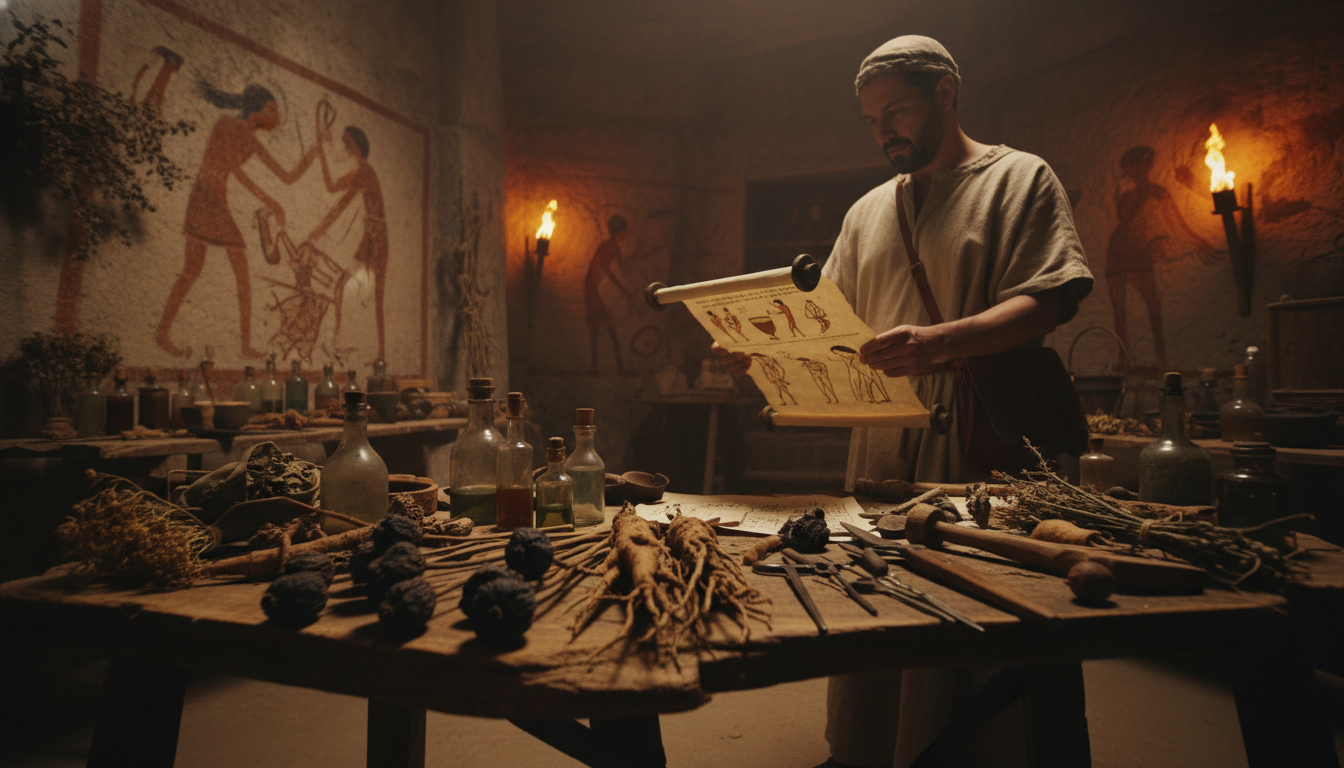
Did you know that 50% of surgical patients died back then? This was even in the Renaissance. And 80% of survivors got severe infections. It was brutal.
Imagine going through surgery without any pain relief. It’s hard to think about.
The quest for pain relief started on October 16, 1846. This was “Ether Day” at Massachusetts General Hospital. Dentist William Morton and surgeon John Warren used diethyl ether on Gilbert Abbott. It was a big moment in medicine.
But ancient anesthesia methods go way back. We’re talking 4,000 BC. Sumerian artifacts showed carvings of the opium poppy, a powerful painkiller.
Babylonians, Assyrians, Egyptians, Persians, Indians, and Chinese all used their own pain relief methods. They were not random guesses. They were careful, thoughtful approaches to a big problem.
Surgery was a last resort back then. Patients screamed and thrashed. Many had deep scars, both physical and psychological. People were desperate to find something to ease the pain.
So, let’s explore how our ancestors solved this problem. We’ll see their creative and sometimes wild solutions. It’s a journey through thousands of years of human ingenuity.
Key Takeaways
- Ancient anesthesia methods date back to at least 4,000 BC, thousands of years before modern anesthesia was introduced.
- The Sumerians were among the first to document the use of the opium poppy for pain relief.
- Multiple ancient civilizations — including Egyptian, Persian, Indian, and Chinese cultures — independently developed historical sedation techniques.
- Before effective antiquity pain management, about 50% of surgical patients died during or shortly after their operations.
- “Ether Day” in 1846 at Massachusetts General Hospital is often credited as the birth of modern anesthesia, but it built on millennia of earlier experimentation.
- Survivors of ancient surgeries often suffered lasting psychological trauma due to the extreme pain they endured.
Overview of Anesthesia in Ancient Times
Ever wonder how people handled pain before modern medicine? They got really creative. Ancient anesthesia methods go back thousands of years. The story is quite fascinating.
Definition of Anesthesia
The word “anesthesia” comes from ancient Greek anaisthēsía, meaning “without sensation.” It’s found in texts like the Hippocratic Corpus and Plato’s Timaeus. In 1846, Oliver Wendell Holmes coined “anesthesia” for the drug-induced state and “anesthetic” for the drug itself. But the idea of numbing pain? That’s been around for ages.
Importance in Historical Medicine
Surgery was around long before painkillers. Ancient healers needed a way to keep patients calm and alive during tough surgeries. These ancient anesthesia practices were not just nice extras. They were essential for survival. Without them, even simple surgeries could be deadly.
“The desire to alleviate suffering is as old as humanity itself.”
Evolution of Pain Management
The history of pain relief is like a global treasure hunt. People used herbs, alcohol, pressure, cold, and rituals to manage pain. Here’s a quick look at how it evolved:
| Era | Region | Primary Method | Key Agent |
|---|---|---|---|
| 3000 BCE | Mesopotamia | Herbal preparations | Opium poppy |
| 1550 BCE | Egypt | Topical compounds | Lotus, poppy |
| 400 BCE | Greece | Soporific sponges | Mandrake, henbane |
| 600 CE | India | Ayurvedic sedation | Cannabis, wine |
Each civilization built on what came before, making ancient medical sedation surprisingly effective. These early methods paved the way for today’s operating room tools.
Early Techniques Used by Ancient Civilizations
Ancient civilizations didn’t just sit around suffering. They got creative. From Mesopotamia to the Nile, people found ways to dull pain long before modern medicine. Let’s explore the ancient anesthesia methods that shaped today’s medicine.
Mesopotamian Methods
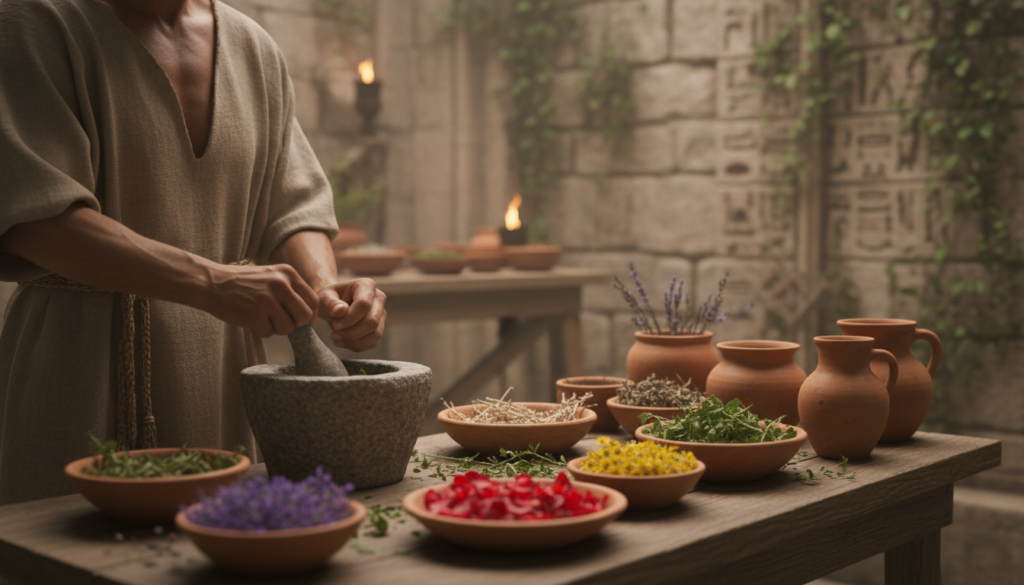
Sumerian medicine made early breakthroughs in pain management. Around 4000 BC, Mesopotamians used ethanol as an anesthetic. Yes, alcohol was one of the first sedatives humans used.
They didn’t stop there. By 3400 BC, they grew opium poppies in lower Mesopotamia. They called it “hul gil,” or “plant of joy.” A clay tablet from 1954 shows their ancient remedies.
When Babylonians took over around 2225 BC, they spread opium knowledge to Persia and Egypt.
Egyptian Practices
Ancient Egyptian surgery used herbal sedatives and rituals. They used opium, lotus, and henbane to sedate patients. Their medical texts show advanced pain management.
Greek Contributions
Greek physicians added to earlier knowledge. Dioscorides listed plant sedatives systematically. They mixed observation with wisdom from Mesopotamia and Egypt.
| Civilization | Key Technique | Approximate Date |
|---|---|---|
| Sumerian | Ethanol and opium poppy use | 4000–3400 BC |
| Egyptian | Herbal sedatives for surgery | 1550 BC (Ebers Papyrus) |
| Greek | Systematic plant-based anesthetics | 1st century AD (Dioscorides) |
Herbal Remedies as Anesthetic Agents
Nature’s pharmacy was open long before modern drugstores. Ancient healers used plants to make herbal anesthetics. These remedies helped dull pain and put patients to sleep.
Opium Poppy in Ancient Cultures
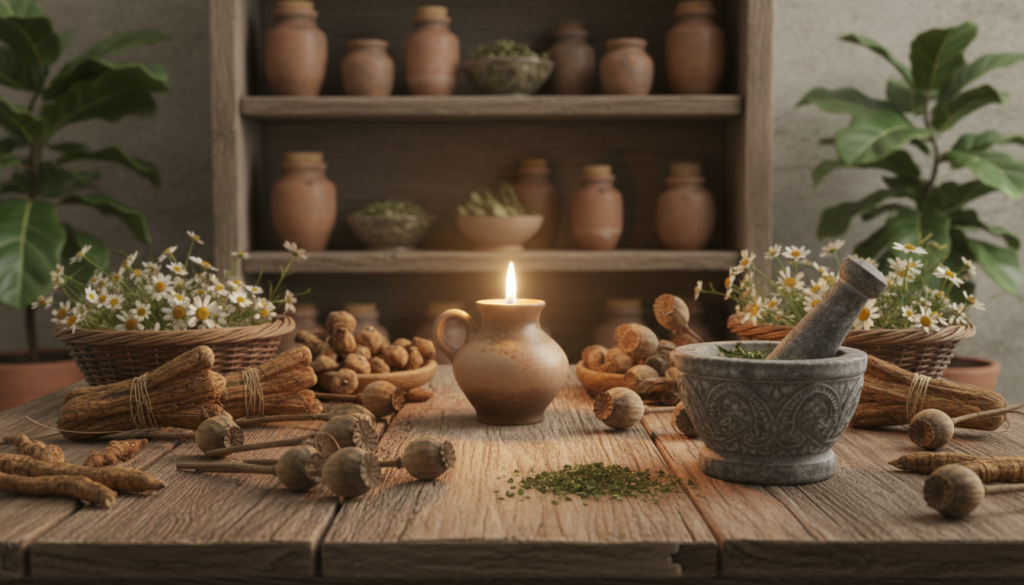
The opium history goes back to around 3400 BC. The Sumerians grew Papaver somniferum in lower Mesopotamia. They called it the “joy plant.”
This knowledge spread to Babylon, Persia, and Egypt. The Ebers Papyrus from Egypt’s Eighteenth Dynasty shows opium as a key remedy.
By the 8th century AD, Arabs took opium to India and China. Between the 10th and 13th centuries, it reached Europe. In 1804, Friedrich Sertürner found morphine in opium, named after Morpheus, the Greek god of dreams.
Mandrake and Other Plants
Mandrake anesthesia was very popular. Greek and Roman doctors used mandrake juice for sedation. The root has tropane alkaloids that cause deep sleep.
They mixed plants for sedation:
- Mandrake root — caused drowsiness and numbness
- Henbane — produced a trance-like state
- Hemlock — dulled nerve sensation in small doses
Use of Alcohol in Anesthesia
Wine was used for more than just dinner. It was a simple pain relief remedy. Surgeons gave patients wine before surgery.
The 1618 London Pharmacopeia listed laudanum. It was a mix of opium, saffron, and other ingredients. Thomas Sydenham in 1676 made a strong solution of opium and alcohol. It was used for sedation until the 19th century.
The Role of Religion and Ritual in Anesthesia
In ancient times, doctors and priests were often the same person. They didn’t just treat pain; they did it with prayers and ceremonies. This mix of medicine and spirituality was deeply connected.
Healing Practices in Ancient Religions
Spiritual medicine was key in ancient societies. The Sumerian goddess Nidaba was shown with poppies on her shoulders. This linked her power to pain relief.
Greek gods like Hypnos and Thanatos were also linked to poppies. They showed that only gods could make us sleep or die without pain.
In Ferdowsi’s Shahnameh, a Zoroastrian priest used special wine for a cesarean section. This shows how religious leaders and doctors were seen as the same.
Ritualistic Use of Anesthetics
Ritual healing was more than just herbs. It included chanting, incense, and prayers. These rituals helped people relax and made the herbs work better.
Influence of Spiritual Beliefs
Not all cultures believed in surgery. Confucianism, for example, saw the body as a gift from parents. This made surgery seem like a big no-no.
| Culture | Religious Influence | Approach to Pain Relief |
|---|---|---|
| Sumerian | Goddess Nidaba linked to poppies | Opium-based remedies with priestly guidance |
| Greek | Gods Hypnos and Thanatos held poppies | Herbal sedatives tied to divine power |
| Zoroastrian (Persian) | Priests performed medical roles | Wine-based anesthetics during surgery |
| Confucian (Chinese) | Body seen as sacred parental gift | Preference for non-surgical treatments |
Surgical Procedures and Anesthesia
Ancient surgery was not just poking around with sharp sticks. It was real operations. People performing them found ways to keep patients sedated. The history of surgical anesthesia will amaze you.
Notable Ancient Surgical Techniques
Hua Tuo, a Chinese surgeon from 140–208 AD, performed major operations. He used a formula called mafeisan for sedation. This was ancient medical sedation at its most ambitious.
Bian Que, a legendary physician from 300 BC, gave patients a toxic drink. It knocked them out for three days while he operated.
In 1804, Japanese surgeon Hanaoka Seishū did a partial mastectomy on a 60-year-old woman. He used tsūsensan for anesthesia. Before his death in 1835, he did over 150 surgeries.
Anesthesia Practices During Surgery
Historical sedation techniques evolved with surgical skill. Hanaoka’s student, Gendai Kamada, published a textbook in 1840. It described Mafutsusan use and had an early risk assessment system.
The greatest challenge of ancient surgery was never the cutting — it was conquering the pain.
Instruments Used in Combination with Anesthetics
Surgeons used sedation formulas with specialized tools. Here’s a quick look at key figures in ancient surgery and their approaches:
| Surgeon | Era | Anesthetic Used | Procedures Performed |
|---|---|---|---|
| Bian Que | c. 300 BC | Toxic herbal drink | Gastrostomy |
| Hua Tuo | c. 140–208 AD | Mafeisan | Intestinal resection |
| Hanaoka Seishū | 1804–1835 | Tsūsensan | Mastectomies, amputations |
| Yan Tau Wang | 1960s–1970s | Mafutsusan-based formula | Over 46,000 surgeries |
Historical Texts on Anesthesia
So, how do we know about ancient anesthesia methods? It’s all thanks to old written records. These texts let us see how early healers managed pain.
Ancient Egyptian Medical Papyri
The Ebers Papyrus is an ancient medical treasure. It dates back to around 1550 BCE. This scroll is full of recipes and remedies.
It talks about using opium, herbs, and minerals for anesthesia. Egyptian doctors took pain relief very seriously. They wrote it all down for us to learn from.
Greek Philosophers and Anesthesia
Greek thinkers like Dioscorides and Hippocrates wrote about pain relief. They talked about plant-based sedatives and their effects. Dioscorides even mentioned a wine and mandrake mix for sleep before surgery.
These texts shaped Western medicine for ages. They laid the groundwork for later European practices.
Indian Ayurvedic Texts
Sushruta wrote a remarkable surgical manual around the 6th century BCE. The Sushruta Samhita details complex surgeries and pain numbing methods. Cannabis and wine were key options.
These writings show ancient anesthesia wasn’t just in one place. Everywhere, healers were trying to manage pain.
FAQ
How far back do ancient anesthesia methods actually go?
Where does the word “anesthesia” come from?
How was the opium poppy used as a traditional pain relief remedy in the ancient world?
Why was surgery so dangerous before modern anesthesia?
What role did religion play in historical anesthesia practices?
Who performed the first documented surgery under general anesthesia?
How did ancient Mesopotamians discover ethanol as an anesthetic agent?
What were some of the most remarkable ancient surgical procedures performed under anesthesia?
How did knowledge of ancient medical sedation spread across civilizations?
When was morphine first isolated from opium?
Get More Medical History
Join our newsletter for fascinating stories from medical history delivered to your inbox weekly.