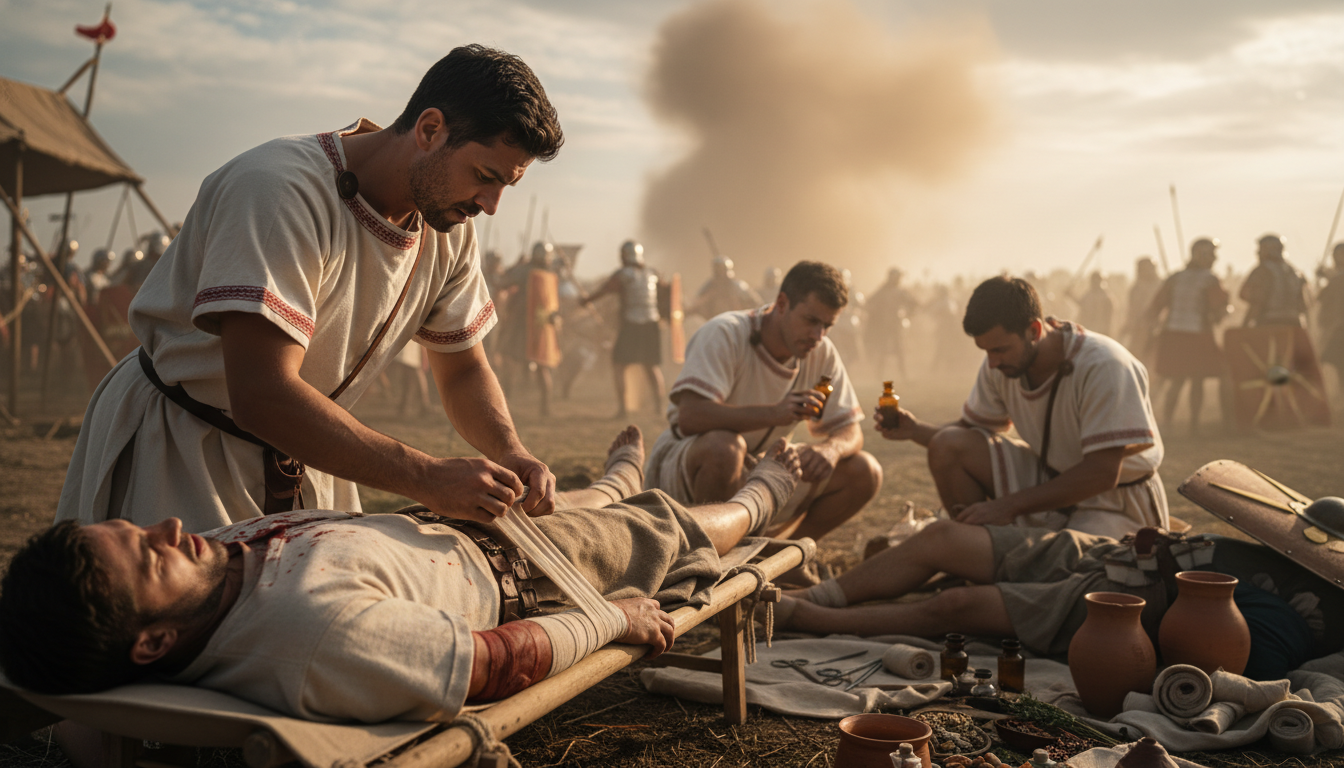
The History of Healing
 Discover the History of Ancient Chinese Medicine
Explore the fascinating history of Ancient Chinese Medicine with our in-depth Ultimate Guide, revealing surprising facts and discoveries

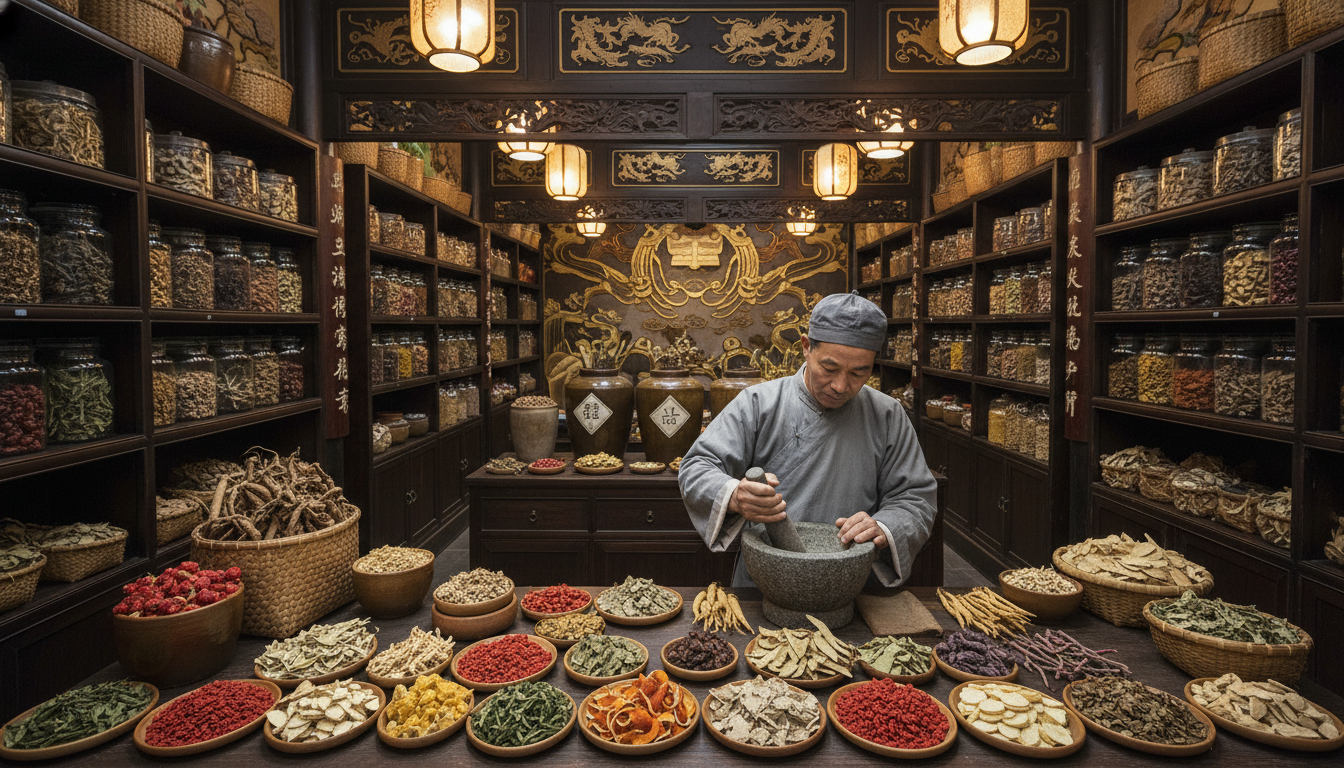
Surprising fact: after 1972, interest in traditional practices surged in the West, turning scattered techniques into a largely standardized system by the 20th century.
You’re about to take a time-travel tour—less myth, more real people and real texts. We’ll show how early ideas about the body and treatment changed with politics, epidemics, and daily needs.
Heads up: chinese medicine of the past wasn’t one neat system, and modern TCM is a 20th-century reshaping of older practices. Expect a clear, story-like map from Shang to Han to Ming so you remember what happened when.
We’ll point out the wow moments—early smallpox prevention and massive herbal catalogs—and also where historians disagree. By the end, you’ll be able to explain what “Ancient Chinese Medicine” really refers to, and what it doesn’t. Ready?
Key Takeaways
- Modern TCM was largely standardized in the 20th century.
- Past chinese medicine was diverse, not a single system.
- Major eras (Shang, Han, Ming) shaped major advances.
- Ideas about health evolved with politics and epidemics.
- You’ll learn what counts as historical fact and what’s debated.
What “Chinese Medicine” Means: Ancient Practice vs Traditional Chinese Medicine (TCM)
Let’s clear up a common wrinkle: “chinese medicine” didn’t arrive as one neat system. For most of history, healing was a patchwork of regional rules, local herbs, and rival theories. Historians separate those strands from what people now call traditional chinese medicine because the older world was messy and changing.
Why the split matters: scholars want accurate language. Saying something is part of a single, fixed tradition flattens centuries of debate and change. The label traditional chinese medicine only became common in English around the mid-20th century (one account cites 1955).
Why historians draw a line
First, many healing groups competed and borrowed ideas. Second, clinical handbooks and theories evolved at different times. Third, treating 2,000 years as one practice would hide key shifts in approach and evidence.
How the modern label took shape
In the 1950s the PRC pushed to standardize and teach a unified system. That political move helped turn diverse local practices into the modern brand we now call traditional chinese. Knowing this gives you a sharper understanding of sources that are genuinely old versus those repackaged in the 20th century.
- “Chinese medicine” historically = many traditions.
- “Traditional chinese” as a label is mostly modern.
- This distinction helps you read texts without confusion.
Ancient Chinese Medicine: A Timeline of Key Breakthroughs and Turning Points
Start with a few landmark dates and you’ll see how therapies and texts shaped a system. This quick timeline turns a huge topic into a clear map you can remember.
Shang dynasty roots and early therapeutic activities
The earliest traces date to the 14th–11th centuries BCE. Oracle bones record symptoms and notes about care. These are short, practical entries — the first hints of organized practices.
Han dynasty synthesis and the rise of medical theory
By about the 1st century BCE the Huangdi Neijing gathered ideas into a theoretical framework. That work set the logic for later diagnosis and treatment.
Post-Han systematization of acupuncture, pulse study, and formularies
Between 196 and 282 CE texts like the Shang Han Lun and the Zhenjiu jiayi jing and Maijing shaped point systems, pulse methods, and usable formularies.
Ming dynasty expansion of chinese herbal knowledge
In 1593 Li Shizhen published the Compendium of Materia Medica — a massive katalog of herbs and uses. It fueled later research and herbal therapy across regions.
Early smallpox prevention through variolation
Around 900–1000 AD, reports of variolation show public-health thinking long before modern vaccines. Simple, practical prevention mattered as much as theory.
- Why this timeline helps: it connects key years and texts so later deep dives feel logical.
- What follows next: we’ll unpack each text and practice so you can see how ideas became hands-on treatments.
Shang Dynasty Foundations: Illness, Ancestors, and Early Needling
Let’s zoom in on the very early records that show how people described illness and care. Oracle-bone inscriptions read like quick clinic notes: lists of symptoms such as eye trouble, toothaches, and a bloated abdomen. These scratches are the closest thing to medical shorthand from that era.
Diagnosis back then mixed the practical with the ritual. Illness could be traced to ancestor wrath or a curse, so deciding a cause often meant reading signs and consulting spirits rather than running tests.
Stone and bone tools: lancing or proto-needling?
Tombs contain stone and bone tools that look like needles. But many historians argue they were for lancing the skin—a way to release bad humors or blood—rather than true acupuncture that stimulates specific points.
| Feature | Lancing | Acupuncture |
|---|---|---|
| Tool material | Stone, bone | Metal needles |
| Intent | Release blood or pus | Stimulate points for system effects |
| Relation to body mapping | Local to wound | Linked to mapped meridians |
Simple memory trick: lancing = “release something”; acupuncture = “stimulate a system.” This shows how medical practice shifted slowly from ritual answers toward structured clinical thought. The evidence is limited, so scholars still debate what counts as early acupuncture.
The Han Dynasty and the Birth of Classical Medical Theory
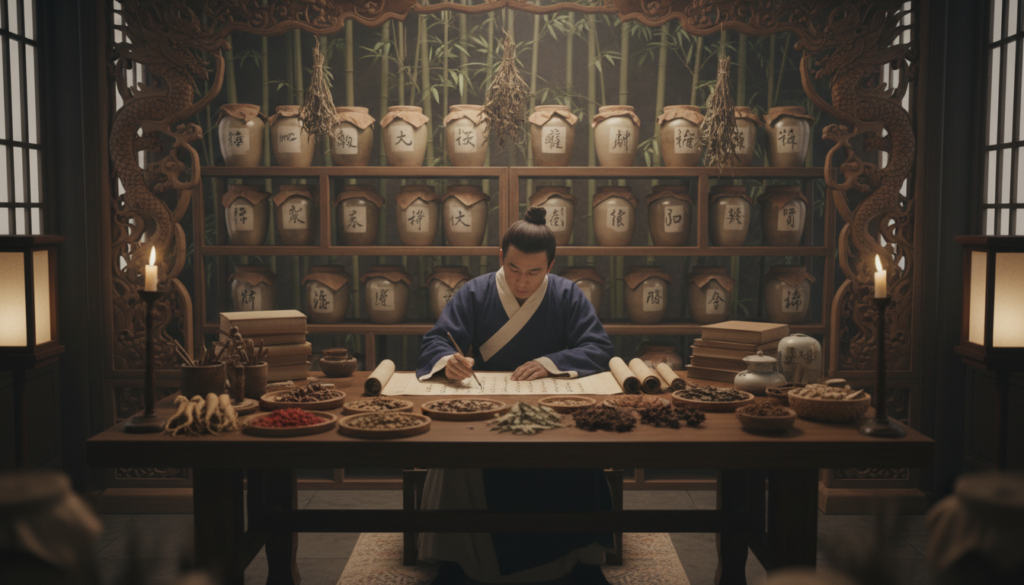
The Han period produced the written rules that later practitioners returned to. The Huangdi Neijing, compiled around the 1st century BCE from older notes, stitched ideas about humans, environment, and cosmos into a working framework.
That shift mattered. Before the Han, care often mixed ritual and local habit. The Neijing pushed diagnosis and treatment toward patterns you could teach and test.
Why the Han era became the cornerstone for later practitioners
Think of the Han as the moment when scattered tips became a curriculum. Texts allowed teachers to standardize training and debate theory.
Practically, this meant doctors could follow logical steps: observe signs, match patterns, pick therapies. That made healing repeatable and improvable.
- Written classics enabled schools and exams.
- Pattern-based logic linked symptoms to treatment paths.
- Theory started guiding hands-on care instead of pure ritual.
| Issue | Pre-Han approach | Han-era shift |
|---|---|---|
| Explanation of illness | Spirit, omen, local custom | Natural patterns linking body and environment |
| Training | Apprenticeship, local rules | Text-based teaching, shared classics |
| Clinical outcome | Variable, hard to reproduce | Repeatable diagnosis and targeted treatment |
The Huangdi Neijing: The Yellow Emperor’s Inner Canon and Its Lasting Influence
Think of the Neijing as a long conversation—curious, practical, and meant to teach how people fit into the wider world. It reads as dialogues where teachers test ideas, not a fixed manual.
Humans, environment, and cosmos as a medical framework
The text links the body to seasons, weather, diet, and daily labor. That connection made health a matter of context, not only of isolated symptoms.
Yin yang and five phases entering a mature synthesis
The Neijing folded yin yang into clinical thinking. It paired those labels with the five phases so doctors could sort hot versus cold, excess versus lack.
From symptoms to diagnosis: how classical reasoning shaped treatment decisions
Practitioners read patterns. They compared signs, then chose a treatment that matched the pattern—not just a drug for a label. This made diagnosis pattern-driven and repeatable.
| Feature | Neijing approach | Clinical effect |
|---|---|---|
| View of illness | Body in environment | Contextual diagnosis |
| Key tools | Yin yang, five phases | Pattern-based treatment |
| Practice style | Dialogue teaching | Shared language for care |
- Why it stuck: it gave a simple concept and shared words that survived change.
- What you get: a way to read symptoms and plan a matching treatment.
Shang Han Lun and Pattern-Based Treatment in Chinese Medicine
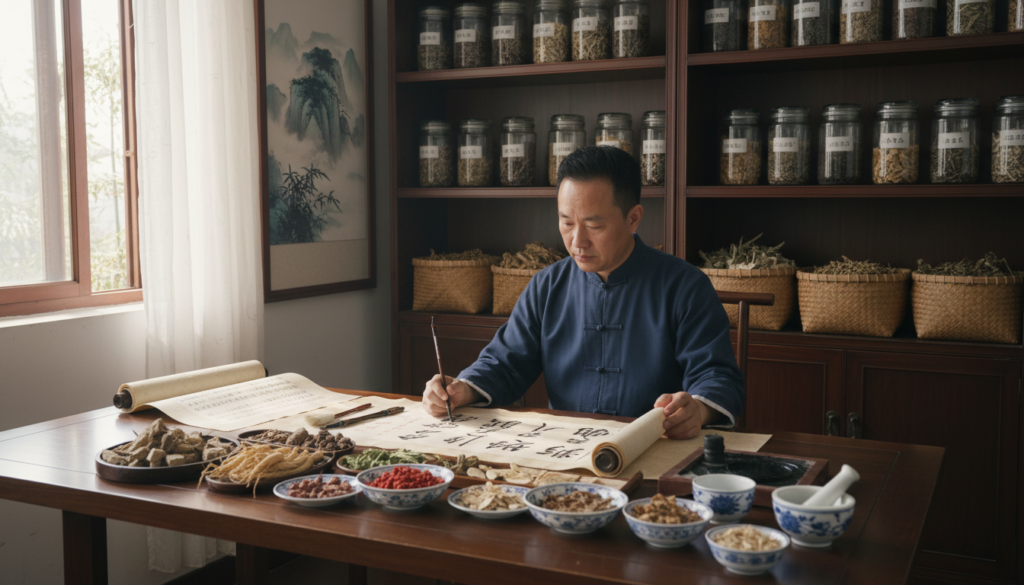
Imagine a clinic where a physician turns a jumble of signs into a clear treatment plan—this is Zhang Zhongjing’s world. Between 196 and 220 CE he compiled the Shang Han Lun, a manual of drug prescriptions that changed how practitioners handled symptoms.
What are “patterns”? Think of them as repeatable symptom clusters (zheng) that point to a target for therapy, not a single disease label. That made diagnosis practical and fast in a busy clinic.
The text fused yin-yang and five-phase theory with herb formulas. So a prescription was more than a list of herbs — it was a reasoned therapy built to rebalance a patient.
Formularies in the Shang Han Lun worked like recipe books. Practitioners could modify doses, swap herbs, and adapt use over time. That pushed chinese medicine toward flexible, formula-based care.
Modern takeaway: when clinicians today talk about TCM-style diagnosis, they often mean this pattern thinking — pragmatic, repeatable, and focused on what to use at the bedside.
Nanjing: Pulse, Meridians, and the “Classic of Difficult Issues”
The Nanjing reads like a practical FAQ that doctors actually used. It packs 81 focused Q&As that tidy confusing bits from earlier classics and give hands-on rules for clinic work.
Pulse diagnosis as a central diagnostic tool
Questions 1–22 turn pulse-taking into a repeatable method. The goal was simple: read the body’s signs so you could compare cases and track change over time. Diagnosis here meant turning subtle sensations into clear clues a student could learn.
Meridian study and the logic of acupuncture points
Q23–29 map out meridians as a way to organize the body. Think of meridians as routes used to plan treatment. They tie distant issues to specific routes and create a shared language for care.
Needling methods and how practitioners organized treatment strategy
Later sections (Q62–81) focus on acupuncture points and needling methods. Practitioners learn which points act like switches and how different needle techniques change the body’s flow.
| Section range | Focus | Clinical aim |
|---|---|---|
| Q1–22 | Pulse methods | Standardize bedside reading for repeatable diagnosis |
| Q23–29 | Meridians | Map routes for targeted therapy |
| Q62–68 | Acupuncture points | Identify key points used as therapeutic switches |
| Q69–81 | Needling methods | Match technique to imbalance and flow |
Why it matters today: the Nanjing’s clear Q&A style helped teachers reproduce skills. Its ideas on meridians, acupuncture, points, and needles still shape how many clinics explain what they do.
Shennong Ben Cao Jing and the Rise of Chinese Herbal Medicine
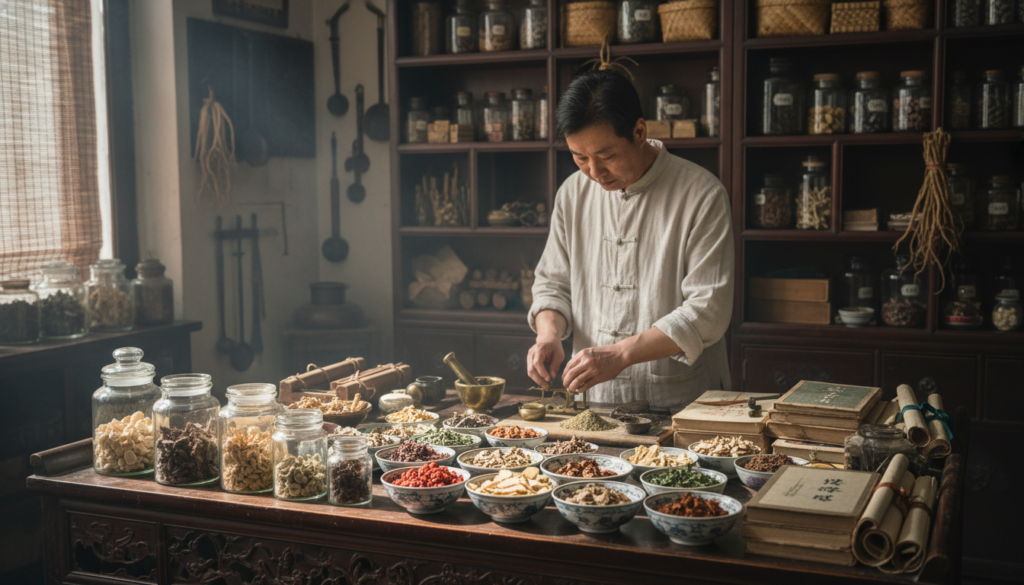
One landmark text turned scattered herbal tips into a teachable catalog. Compiled in the Eastern Han (200–250 CE), the Shennong Ben Cao Jing started to shape how people recorded drug properties and proper use.
Why it matters: this book framed early rules for combining plants and set compatibility ideas like the “seven emotions and harmony.” That made herbs feel less like local gossip and more like a shared system you could study.
The compendium organized entries by effect, toxicity, and season. It taught which ingredients paired well and which canceled each other. Those compatibility rules let practitioners adjust formulas on the fly.
- From handfuls to hundreds: early lists grew steadily—by the Ming era there were roughly 1,900 recorded drugs.
- Why scale matters: more records meant more debate, more copying, and wider regional use.
Over centuries the corpus ballooned, and that expansion is a big part of our modern understanding of herbal medicine. For you, it explains why herbs remain central to the traditions people still study and practice today.
Post-Han Consolidation: Acupuncture, Moxibustion, and Diagnostic Handbooks
Handbooks changed how care actually worked. When practitioners copied rules into manuals, bedside skills became sharable and teachable.
AB Canon and standardizing points
The Zhenjiu jiayi jing (compiled 256–282 CE) gathered point locations and needling rules into one clear guide. That book helped fix where to place needles so different clinics could repeat the same effect.
The Canon of the Pulse and clearer diagnosis
The Maijing (circa 280 CE) acted as a diagnostic handbook. It turned pulse reading into a reproducible method (so diagnosis felt less like art and more like a shared skill).
“Once locations and pulse patterns were written down, a craft could be taught instead of guessed.”
- Why points matter: agreed locations make acupuncture teachable across regions.
- Why pulse charts matter: they make diagnosis consistent from one practitioner to another.
| Manual | Main focus | Clinical effect |
|---|---|---|
| AB Canon (Zhenjiu jiayi jing) | Acupuncture points, moxibustion rules | Standardize needling and point location |
| Maijing (Canon of the Pulse) | Pulse diagnosis, pattern rules | Make diagnosis repeatable and teachable |
| Combined impact | Charts and practice methods | Bridge theory with hands-on therapy |
Bottom line: these books turned local tricks into a system you could teach, argue about, and pass on—keeping meridians, points, and practical treatment alive in real clinics.
Core Concepts That Shaped Care: Qi, Meridians, and Energy Flow

What if I told you “energy” was less a thing and more a useful story doctors used to link signs to treatment? That story centers on qi — a flexible, practical concept for vitality, movement, and function.
What qi meant and why it mattered
Historically, qi described why someone felt strong or weak. It wasn’t a single material; it was a way to read symptoms and pick therapies. That made qi central to diagnosis and healing.
Channels called meridians: mapping the body for therapy
Practitioners organized the body into routes called meridians (often described as channels). Needles or pressure targeted points along these routes to restore balance and flow.
Modern debates and ongoing research
Today many say there’s no clear proof meridians are physical structures. Still, some research looks for anatomical correlates. Clinicians translate qi as “life-force energy” or compare it to cellular ATP (a loose analogy noted by integrative doctors like Katie Hu).
- Quick take: qi = a working idea to guide care.
- Meridians = routes used to explain disrupted energy flow.
- Research is active, but direct measurement remains limited.
Balance and the Body: Yin Yang, Blood, and the Five-Element Theory
Rather than poetic talk, yin and yang acted like a clinical dashboard clinicians used every day. They named simple opposites—cold vs. heat, rest vs. activity—to spot where balance had shifted.
The idea of blood in these systems links nourishment and circulation. Low or stagnant blood explains fatigue, poor sleep, or pale complexion. Treating it meant dietary tweaks and pacing, not just a pill.
Five-element theory ties mind, body, and environment together. Think of it as a pattern language that helps make a workable plan—diet, sleep, and exercise—tailored to a person’s constitution.
Quick element tour
We use these labels to build simple lifestyle plans. Dr. Katie Hu’s examples are handy: wood types aim for purpose but get irritable when off; earth folks are steady but prone to worry.
| Element | Balanced traits | Practical plan |
|---|---|---|
| Wood | Driven, flexible | Set goals; add rest days |
| Fire | Warm, sociable | Cool-down routines; calm evenings |
| Earth | Nurturing, steady | Grounding meals; reduce rumination |
| Metal | Disciplined, clear | Organized sleep; breath work |
| Water | Reflective, resilient | Gentle movement; hydration focus |
“These models give you a flexible way to read symptoms and set a small, doable plan.”
Signature Treatments Over the Years: From Needles to Cupping and Massage
Bodies were treated with touch and simple tools. Over time a clear menu formed: needling, pressing, cupping, rubbing, scraping, and warming. Each aimed to restore balance and ease noticeable problems.
Acupuncture basics: points, needles, and intended effects
Acupuncture uses thin needles inserted through the skin at mapped acupuncture points along channels. Practitioners describe effects like pain relief, reduced inflammation, and shifts in mood or hormones.
Those claims are common in clinic talk but remain debated in research. Still, the technique stayed central because it was teachable and repeatable.
Acupressure and cupping as acupoint stimulation
Acupressure presses the same points without needles; it feels blunt and steady. Cupping pulls the skin into a cup to stimulate points and local circulation. Same map, different sensation.
Tui na massage and bodywork
Massage or tui na is a hands-on form of bodywork that treats tension, mobility limits, and what older texts call stagnation. It blends compression, stretch, and joint play to ease movement.
Gua sha, moxibustion, and other hands-on therapies
Gua sha scrapes the skin to boost circulation. Moxibustion applies warmth over points to change local flow. Practitioners often pair these with herbs and lifestyle advice to extend the effects.
| Treatment | Tool | Main aim | Typical sensation |
|---|---|---|---|
| Acupuncture | Thin needles | Regulate function, relieve pain | Pin-prick, achy |
| Acupressure | Fingers, palms | Stimulate points without needles | Firm pressure |
| Cupping | Glass or silicone cups | Increase local circulation | Pulling, warm |
| Tui na massage | Hands, elbows | Restore mobility, reduce tension | Deep rubs, stretches |
Diet, Lifestyle, and Movement Practices in Traditional Chinese Health
Healing often looked like a life plan: food, motion, and rhythm, not just a single treatment.
Dietary therapy and food as medicine
Food was treated as a daily tool. Practitioners recommended meals to warm, cool, or nourish the body depending on need.
This therapy aimed at root causes—fix digestion, improve sleep, restore steady energy—rather than only easing a symptom.
Qigong and tai chi for stress management and longevity
Slow, repeated movement mattered. Qigong and tai chi are gentle practices that blend breath, posture, and mindful motion.
People used them to manage stress, maintain steady energy, and support long-term health. Today some clinicians include these practices in a broader treatment plan.
Lifestyle counseling as preventive care
Doctors gave lifestyle advice: sleep schedules, work-rest balance, and simple routines that fit real lives.
Balance was the organizing idea—small daily shifts to stop a mild issue from growing. This counseling sits comfortably in modern integrative clinics.
- Food as medicine: match meals to season and symptom.
- Movement: short daily sessions for stress and energy.
- Routines: tweak sleep and work habits to prevent relapse.
Dr. Katie Hu frames these tools as practical: they’re about steady, usable changes you can keep. That makes the approach feel less mystical and more like a sensible plan for lasting well-being.
Modern Reinvention and Standardization: How TCM Took Shape in the 20th Century
A major remix happened in the last century: scattered healing practices were sorted, labeled, and taught as one system. Reformers in the early 1900s argued that old ways looked unscientific and pushed to scientize them—make therapies teachable, testable, and clearer for hospitals and schools.
What changed: practitioners selected core ideas, wrote curricula, and translated traditional terms into modern clinical language. That made a shared toolkit you could teach across regions and years.
1950s: state standardization and integration
In the 1950s the government systematized training and promoted the phrase traditional chinese medicine. Schools, exams, and hospital units mixed TCM and Western approaches, and doctors were encouraged to learn both.
Why TCM grew during the Cultural Revolution
During resource-strapped years, the system expanded because it was cheap and scalable. Clinics used herbal formulas, needling, and simple therapies that could reach remote populations fast.
“Policy, not purity, shaped modern TCM—practical access mattered more than philosophical purity.”
| Era | Policy move | Effect |
|---|---|---|
| Early 1900s | Reform & scientize | Curricula, textbooks, selective retention |
| 1950s | State standardization | National exams, hospital integration |
| 1960s–70s | Cultural Revolution promotion | Wider access, political backing |
Ancient Chinese Medicine in the United States: Interest, Clinics, and Integrative Care
After 1972, what had been curiosity turned into clinics you could actually book. Interest in acupuncture and related approaches moved from novelty to an option in many U.S. cities.
Why it spread: patients sought help for pain, stress, and chronic complaints that standard routes didn’t fully solve. That demand led hospitals and centers to add supportive services rather than replace primary care.
Post-1972 curiosity and the rise of clinics
University and private centers began offering sessions. People liked short-term relief and practical coaching. That created a marketplace for trained practitioners alongside conventional doctors.
Integrative centers: a working model
Take the UCLA Center for East-West Medicine. There, practitioners provide acupuncture, cupping, and lifestyle counseling while coordinating with hospital doctors. Patients meet clinicians who blend approaches and refer back to the primary team.
“Integrative” usually means additive care — not replacement, but supportive therapies and coaching.
- What you can expect: a detailed history, practical lifestyle tips, and optional pulse or tongue checks.
- Real-world bridge: Dr. Katie Hu trains in family and integrative care and uses this framework in clinic.
Next we’ll check the evidence. Popularity grew fast, but research and proof need a closer look.
Research, Evidence, and Controversies: What We Know and What’s Debated
Lots of headlines promise breakthroughs—so what does careful research really say?
Claims about pain relief, inflammation, hormones, and immune effects
Some studies report short-term pain relief and modest anti-inflammatory effects after needle or point stimulation. Other papers suggest hormone shifts or immune markers change after sessions. But results vary by design, and replicability is limited.
Pseudoscience critiques and mechanism disputes
Critics call out pseudoscience when concepts like qi or meridians are presented as proven anatomy. There’s no consistent anatomical proof, so mechanism debates keep skeptics and proponents talking.
Safety, toxic herbs, and patient supervision
Safety matters. Some herbs can be toxic or interact with prescriptions. Patients need supervised care and quality-controlled products to reduce risk.
Ethics and sustainability
Demand for certain chinese herbal and animal-derived ingredients has driven illegal wildlife trade. Governments and clinicians now push conservation, substitutes, and tighter controls.
“The goal is clear: read claims with a level head and ask for careful research and safe use.”
Conclusion
Here’s the tidy takeaway you can actually use and tell a friend. chinese medicine grew over millennia, then was reshaped into a national curriculum in the 1950s. That matters when you judge a claim.
We traced key milestones — earliest clinical traces, Han classics, post-Han handbooks, Ming herbal catalogs, and public-health innovations — so the timeline clicks in your head.
Use a simple reader lens: ask whether a claim comes from an old text, a clinical handbook, or modern traditional chinese medicine training. That helps you judge evidence and context.
People in the U.S. often use it as complementary care in integrative settings. Be curious, ask about safety, and watch for sustainability and ethical sourcing.
strong. Now you’ve got a clear story: not just what this system is, but how it became what it is.
FAQ
What do you mean by “Chinese medicine” versus “Traditional Chinese Medicine (TCM)”?
Why do historians separate older healing traditions from today’s standardized TCM?
When did the term “traditional Chinese medicine” emerge and why?
What are the earliest archaeological signs of medical activity in this tradition?
How did the Han dynasty shape medical theory?
What is the Yellow Emperor’s Inner Canon (Huangdi Neijing) and why does it matter?
Who was Zhang Zhongjing and what did the Shang Han Lun change?
How important was pulse diagnosis and meridian theory historically?
How did herbal medicine develop into large materia medica texts?
When and how were acupuncture points and needling standardized?
What does the historical concept of “qi” actually refer to?
Are meridians anatomical structures?
How do yin-yang and the five phases inform diagnosis and treatment?
What were the main hands-on therapies historically used?
How did diet and movement fit into traditional care?
How did TCM become standardized in the 20th century?
How did interest in this medicine spread to the United States?
What does modern research say about effectiveness and mechanisms?
Are there safety concerns with herbal formulas or therapies?
What ethical and sustainability issues should patients know?
How should I choose a practitioner or clinic in the U.S.?
Can TCM or traditional therapies replace conventional medical care?
Where can I read original classics or reliable modern summaries?
Get More Medical History
Join our newsletter for fascinating stories from medical history delivered to your inbox weekly.