The History of Healing
 Healing Practices of Ancient Persia
Ancient Persia’s innovative healing methods combined herbs, surgery, and holistic care that shaped modern medicine’s foundations.

The Persian Empire built the world’s first teaching hospital in 271 AD at Gundishapur. This hospital set a model for medical education that we use today. This achievement is just a glimpse of Ancient Persia’s impact on healing traditions.
Many think of Persian culture as ancient history. Yet, their medical practices are surprisingly alive today. Ancient Persian doctors didn’t just treat symptoms. They used surgery, plants, and sacred words to heal.
The Persian Empire once spanned from India to Egypt. It gathered medical knowledge from all cultures. Famous doctors like Vivangahan and Abtin were known for their wisdom.
What made Persian medicine so groundbreaking? They saw illness as a problem that affected body, mind, and spirit. The Vendidad, a sacred text, shows their deep understanding of health. It feels surprisingly modern.
Key Takeaways
- Ancient Persia established the first teaching hospital at Gundishapur in 271 AD
- Persian healing traditions recognized three types of medicine: surgical, herbal, and spiritual
- The Avesta texts documented medical practices that influenced medicine across three continents
- Persian culture created a unique blend of medical knowledge from India to Egypt
- Traditional medicine in the Persian Empire connected physical health with mental and spiritual wellbeing
- Early Persian physicians like Vivangahan and Abtin laid foundations for modern medical practices
Overview of Ancient Persian Medicine
Imagine walking through ancient Persepolis around 500 BCE. You’d see a medical system that’s truly advanced. The history of Persia’s healing traditions spans three key periods, each adding to the knowledge of the past.
Historical Context of Healing Practices
The medical history of ancient Persia begins with the Zend-Avesta period. Early healers documented their knowledge in sacred texts. The sixth book of the Avesta holds some of the earliest medical writings found.
Things got even more interesting during the Pahlavi era. Persian scholars created the Dinkart, an encyclopedia with 4,333 disease entries. It’s amazing to think doctors back then could identify so many ailments without today’s technology.
The Achaemenid dynasty took medicine to new heights. Darius I didn’t just build palaces; he also reestablished the medical school in Sais, Egypt. The Persepolis Tablets show something incredible: state-sponsored healthcare. Persian rulers paid medical workers from the royal treasury.
Influences from Surrounding Cultures
The Academy of Gundishapur was like Harvard in its time. Students from Greece, India, and Egypt came to study medicine, astronomy, and philosophy. Herodotus, a Greek historian, wrote about Persian medical practices. He noted their quarantine systems for leprosy and rules against polluting rivers.
Key Figures in Ancient Persian Medicine
The golden age of Persian physicians changed medicine forever. These pioneers didn’t just treat patients. They changed how we see the human body and mind. Their discoveries are the base for today’s doctors.
Avicenna: The Father of Modern Medicine
Have you heard of Ibn Sina? Medieval Europe loved him. Known as Avicenna, this Persian physician (980-1037 AD) wrote The Canon of Medicine. This book was a must-read in European universities for 500 years.
Avicenna listed mental health issues with amazing accuracy. He talked about hallucinations, strokes, insomnia, and epilepsy. His work mixed ancient wisdom with Islamic medicine, creating something new. Medical schools in Paris and Bologna followed his teachings until the 1700s.
Contributions of Other Notable Physicians
Muhammad ibn Zakariya al-Razi (865-925 AD) was called the “father of pediatrics.” He was the first to write about childhood diseases. He also did brain and eye surgeries long before anesthesia was invented. He even found medical uses for ethanol, the stuff in rubbing alcohol.
Abu Nasr Farabi (872-951 AD) explored the mind’s secrets, writing the first texts on social psychology. Omar Khayyam (1048-1131 AD), known for his poetry, also reformed the calendar with his math skills. Earlier, Persian physicians like Mani, Roozbeh, and Bozorgmehr set the stage during Cyrus the Great‘s time and beyond.
Principles of Persian Healing
Ancient Persian healing went beyond just treating symptoms. They saw the body as a complex system where everything is connected. They believed fixing one part meant considering the whole person—emotions, spirit, and body.
Holistic Approaches to Health
Persian healers split their work into body and soul medicine. Body medicine used diet, exercise, and herbs to keep you balanced. Soul medicine focused on emotional wellness and moral purity, linking a troubled spirit to sickness.
The concept of bodily humors was key in their holistic medicine. It was like your body’s internal chemistry set. When it was balanced, you felt well. But imbalance led to illness. Persian physicians were experts at finding and treating these imbalances.
Mind-Body Connection in Healing
The Avesta, Zoroastrianism’s sacred text, taught a groundbreaking idea: healing knows no bounds. It didn’t matter if you were rich or poor, Persian or foreign. The Vendidad showed that healing words could be more powerful than surgery or herbs.
Persian physicians had to prove themselves by treating non-Zoroastrian patients first. This shows their healing philosophy valued universal compassion and skill over religious or ethnic divisions.
Herbal Remedies Used in Ancient Persia
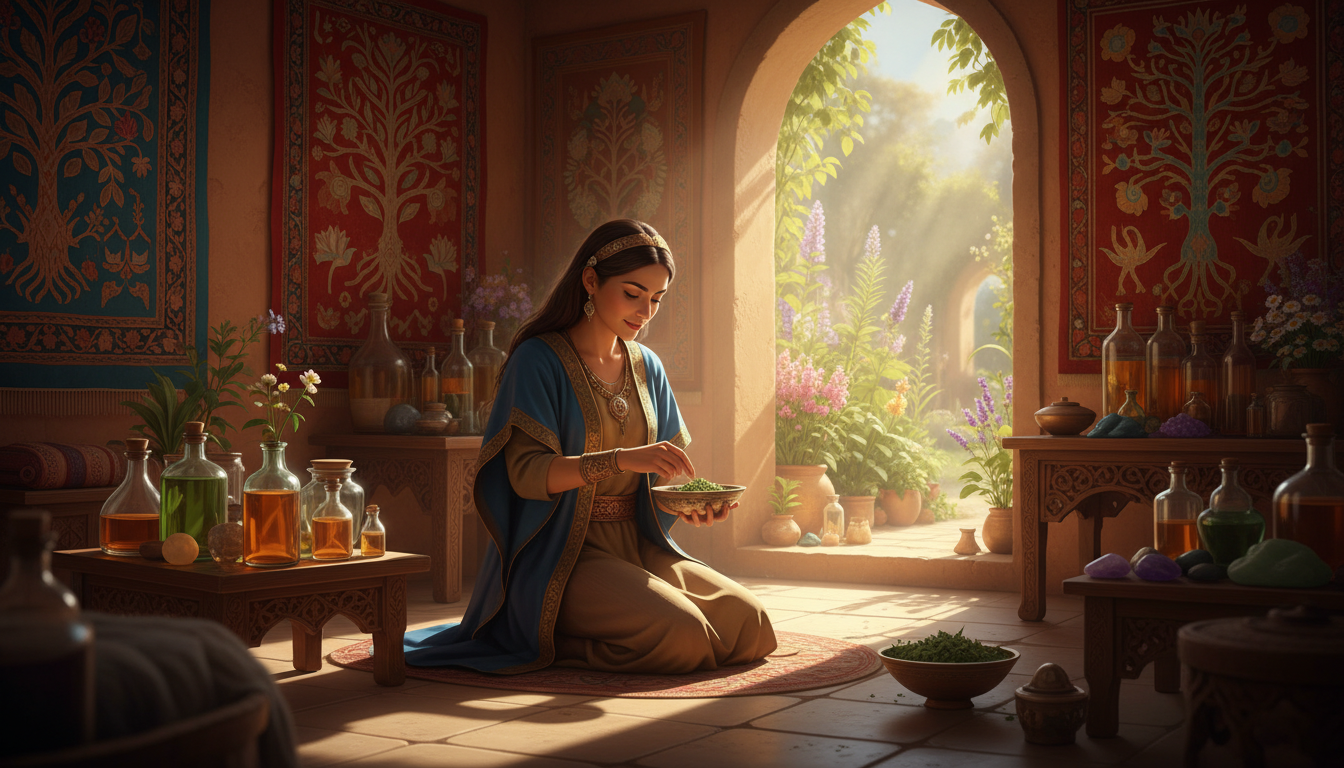
Ancient Persian physicians were skilled gardeners. They grew medicinal plants for healing, not just beauty. The Avesta and Bundahishn listed over thirty sacred healing plants.
They knew which parts of the plants worked best. Roots for some ailments, leaves for others, seeds for specific conditions.
Common Herbs and Their Uses
Persian medicine cabinets were full of surprises. Haoma (Ephedra Vulgaris) helped with breathing and heart health. Garlic fought infections and lowered blood pressure.
Rue was great for earaches and joint pain. It even cleaned houses during plague seasons.
Some herbal medicine was quite intense. Bangha, from Cannabis Indica seeds, was used before surgery. Frankincense treated respiratory issues. Aloeswood and sagapenon helped with heart and digestion problems.
Preparation and Application Methods
Persian healers didn’t just throw herbs at problems. They used specific preparation techniques. Crushing, boiling, fermenting, or drying, depending on the effect needed.
Some herbs were steeped in wine, others ground into powders. Inhalation therapies used smoke and steam. Topical treatments used herb-infused oils and pastes.
Traditional Persian Medicine Techniques
Persian medicine is more than just herbs and potions. Ancient healers used amazing techniques that went beyond simple remedies. They balanced the body’s elements—water, wind, earth, and fire—to keep illness away. Persian doctors used special baths and smoke treatments, creating a complex ancient therapy that amazes us today.
Cupping and Its Benefits
Imagine glass cups creating suction on your back—that’s cupping. Persian healers used heated cups on body points to draw out toxins and improve blood flow. They thought it could help with headaches, muscle pain, and breathing issues.
Doctors chose cupping points carefully, following detailed medical texts. Different cup sizes were used for different areas—small for the face, large for the back and shoulders.
Bloodletting: Historical Significance
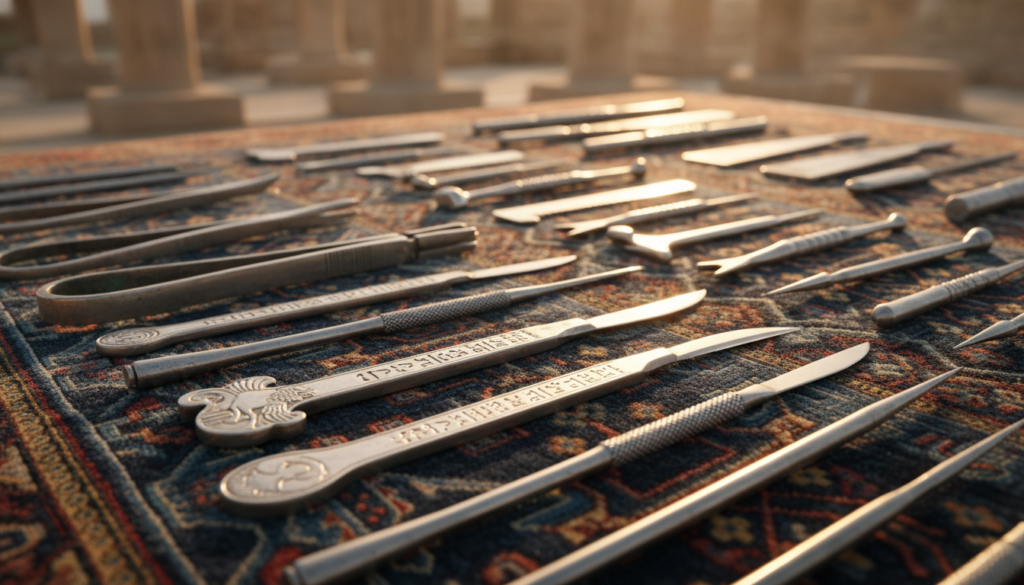
Bloodletting was key in Persian medicine, though it sounds scary today. Doctors used special tools, crafted with the same care as Persian architecture. They believed removing a bit of blood could balance the body’s humors and cure many ailments.
| Treatment Method | Common Uses | Frequency |
|---|---|---|
| Cupping | Headaches, muscle pain | Monthly |
| Bloodletting | Fever, inflammation | Seasonal |
| Smoke therapy | Respiratory issues | Weekly |
Ancient Persian Surgery Practices
Did you know Persian surgeons performed surgeries without anesthesia? They drilled into skulls and did cesarean sections long before we had anesthesia. Excavations near Persepolis have uncovered evidence that changes how we see ancient surgery.
These surgeries were not just desperate tries to heal. They were carefully planned and surprisingly successful.
Surgical Instruments and Techniques
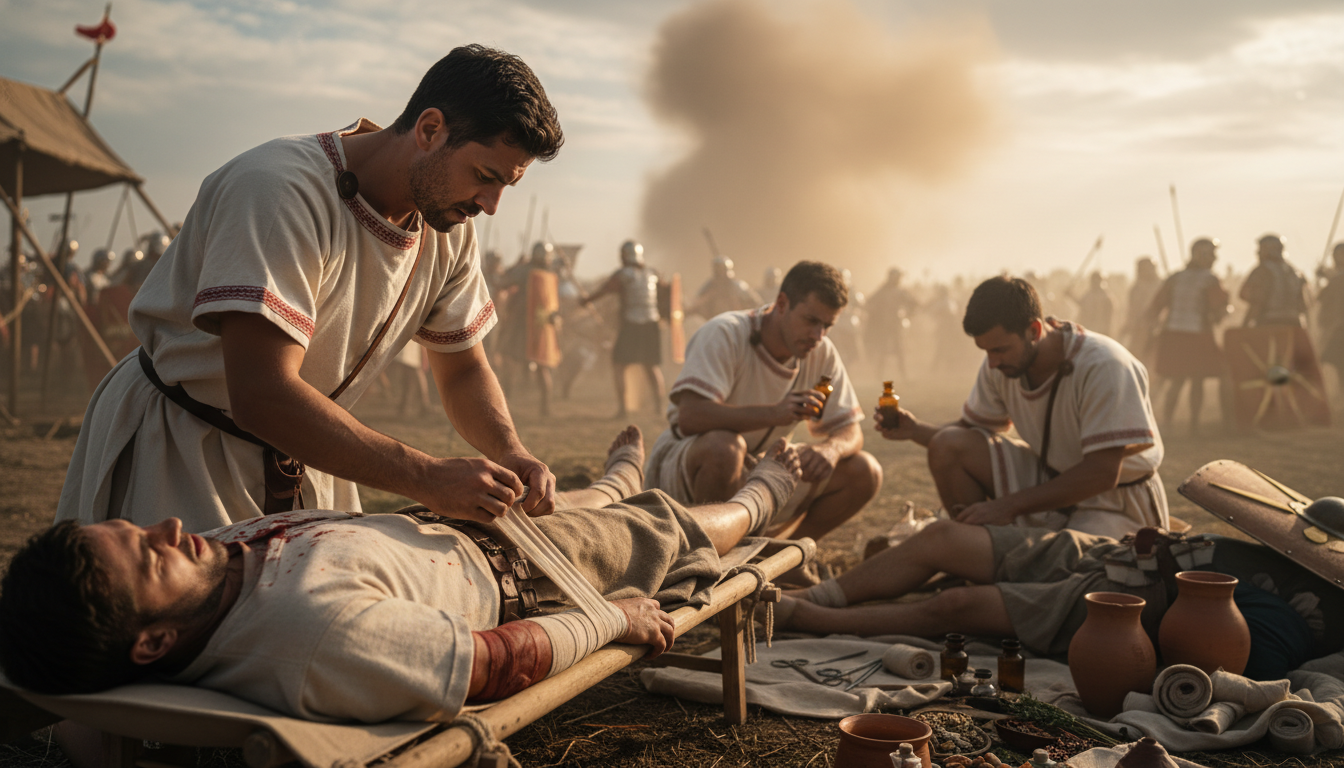
Persian surgeons, known as Kard Pezeshk (knife physicians), used basic tools. They had bronze scalpels, bone saws, and cauterization tools. Despite their simplicity, these tools led to amazing results.
Their big innovation was working together. Surgeons teamed up with herbalists and psychiatrists. Herbalists made pain-numbing drinks, and psychiatrists helped prepare patients. This teamwork was groundbreaking.
Notable Surgical Procedures
A 13-year-old girl’s skull from Shahr-e-Sukhteh shows brain surgery for hydrocephalus. She survived at least six months after. This proves their tools were effective.
Ferdowsi’s Shahnameh also talks about Rudaba’s cesarean section. Zoroastrian priests used special wine to numb the pain. This shows ancient surgery mixed spirituality with practicality. These surgeries were not random but well-planned and passed down through generations.
Role of Astronomy in Healing
Imagine ancient Persian healers gazing at the stars, using the planets to find the perfect time for treatments. It wasn’t just luck—it was astrological medicine at its peak. They thought our bodies moved with the cosmos, and they had years of watching the sky to prove it.
Astrological Influences on Medical Practices
Persian astronomy guided every medical choice. Doctors checked the planets before they treated patients. They thought each part of our body was connected to a star—like our heart to the Sun and our brain to the Moon. Timing was key in their ancient astrology.
The Avesta texts mixed medicine with astronomy in 815 chapters. Zoroastrian priests, called Mobeds, taught both. They followed how the sky’s patterns repeated over time through careful watching.
Celestial Events and Health
Solar eclipses meant doctors waited to operate. Full moons were the best time for healing. Persian doctors recorded these links carefully:
| Celestial Event | Medical Impact | Treatment Guidance |
|---|---|---|
| New Moon | Low vital energy | Rest and recovery focus |
| Spring Equinox | Blood purification time | Begin detox treatments |
| Saturn Transit | Bone weakness | Strengthen skeletal system |
| Venus Rising | Skin regeneration | Cosmetic procedures optimal |
Seasons helped doctors prevent problems. In winter, they used warm foods and treatments. In summer, they used cool ones. This calendar helped them guess health issues before they started.
Influence of Zoroastrianism on Medicine
It’s interesting to learn that ancient Persians didn’t just focus on the body. They believed true health came from spiritual balance. Zoroastrianism shaped medical practices in ancient Persia, blending religious medicine with practical healing. This ancient faith didn’t just pray for health; it developed rules and practices that would impress modern public health officials.
Spirituality and Healing
Persian spirituality saw illness as more than just physical pain. Ancient healers, called Mantreh Pezeshk, treated both body and soul. They used prayer, poetry, and music to heal.
What made their approach unique? They used prayers from different religions to comfort patients. Music therapy included melodies and chanting to restore balance.
Rituals and Their Health Implications
The Vendidad, a sacred Zoroastrian text, outlined health guidelines that seem modern. Doctors had to treat three patients to practice medicine. Persian spirituality emphasized respect for earth, water, air, and fire, leading to advanced hygiene.
These rituals were more than symbolic. Persians kept water sources clean, avoided contaminating fires, and followed strict cleanliness rules. Their religious medicine created public health systems long before germ theory was known.
Impact of Ancient Persian Medicine on Modern Practices
Every time you visit a teaching hospital or join a clinical trial, you see the Persian Empire’s mark on modern medicine. Ancient Persian doctors didn’t just treat patients. They also built systems and methods that influence healthcare today. Their 4,000-year-old medical heritage amazes researchers who test these ancient remedies with modern science.
Continuities in Treatment and Beliefs
Step into an Iranian herb shop today, and you’ll see history come alive. Herbalists use family books passed down for centuries to prescribe the same plants as their ancestors. They use borage for breathing issues, fenugreek for stomach problems, and chicory for liver health. These traditional practices haven’t changed much from the Persian Empire days.
The teaching hospital model you know today? It began at Gundishapur in ancient Persia. There, medical students learned by treating real patients under a doctor’s watch. This approach changed medicine from theory to practical training.
Case Studies of Ancient Practices Today
Recent studies have looked into Persian remedies with interesting results:
| Ancient Persian Practice | Modern Application | Scientific Validation |
|---|---|---|
| Saffron for depression | Supplement industry | Multiple clinical trials confirm effectiveness |
| Rose water for skin conditions | Dermatology treatments | Anti-inflammatory properties verified |
| Cumin for digestion | Functional medicine | Enzyme activity studies support use |
Avicenna’s work from 1,000 years ago helped start today’s clinical trials and risk analysis. His focus on testing remedies before approval mirrors modern medicine’s evidence-based methods.
Diagnostic Methods in Ancient Persia
Ancient Persian doctors were more than healers; they were detectives of the human body. Their diagnostic methods set the stage for future medical practices. They used careful observation and questioning to identify over 4,000 illnesses. Their techniques are surprisingly similar to ours today.
Pulse Diagnosis and Its Significance
How did Persian doctors check your health without modern tools? They’d check your pulse by holding your wrist. Pulse examination was key in ancient Persian medicine. They believed each organ had a unique pulse rhythm that showed internal issues.
It was more than just checking heart rate. They categorized pulses to diagnose various health issues. A “slippery” pulse might point to digestive problems, while a “tight” pulse could mean stress or pain. This system helped doctors diagnose everything from fevers to pregnancy.
Observation and Questioning Techniques
Persian doctors were experts at observing and listening. They looked at your tongue, eyes, skin, and fingernails for health clues. The Ordibehesht Yasht even classified doctors into five types, including Dâd Pezeshk, who did tasks similar to today’s pathologists.
| Diagnostic Method | What They Examined | Modern Equivalent |
|---|---|---|
| Visual Inspection | Skin tone, eye clarity, tongue coating | Physical examination |
| Patient Interview | Sleep patterns, appetite, pain location | Medical history taking |
| Pulse Analysis | Rate, rhythm, pressure variations | Vital sign monitoring |
Healing through Music and Art
Ancient Persian doctors believed in healing more than just the body. They found that art and music could touch the soul. When physical fixes weren’t enough, they turned to art and music for the heart.
The Role of Music in Therapy
Persian psychiatrists, known as Mantreh Pezeshk, used music like modern medicine. They thought certain tunes could soothe anxiety, lift spirits, and ease pain. Patients got music tailored to their needs, like slow tunes for a racing heart.
They knew music touched our emotions deeply. Persian healers noted which instruments helped with what. For example, the tar’s soft sounds helped sleep, while the ney flute’s notes eased sorrow.
Artistic Expression as a Healing Tool
Poetry sessions were like group therapy long before it was called that. People would listen to verses from Hafez or Rumi, finding solace in shared feelings. Writing their own poems let them express pain in a unique way.
Art wasn’t just for looking; it was for healing. Patients painted nightmares, sculpted fears, and danced through trauma. Persian healers saw art and music as ways to heal when other methods failed.
Importance of Hygiene and Sanitation
Modern sanitation might seem like a new thing, but the ancient Persians were ahead of their time. During the Achaemenid dynasty, they had high standards of hygiene. They knew how diseases spread long before the germ theory was discovered.
They created public health measures that would impress today’s health experts. This shows how advanced their understanding of health was.
Ancient Persian Views on Cleanliness
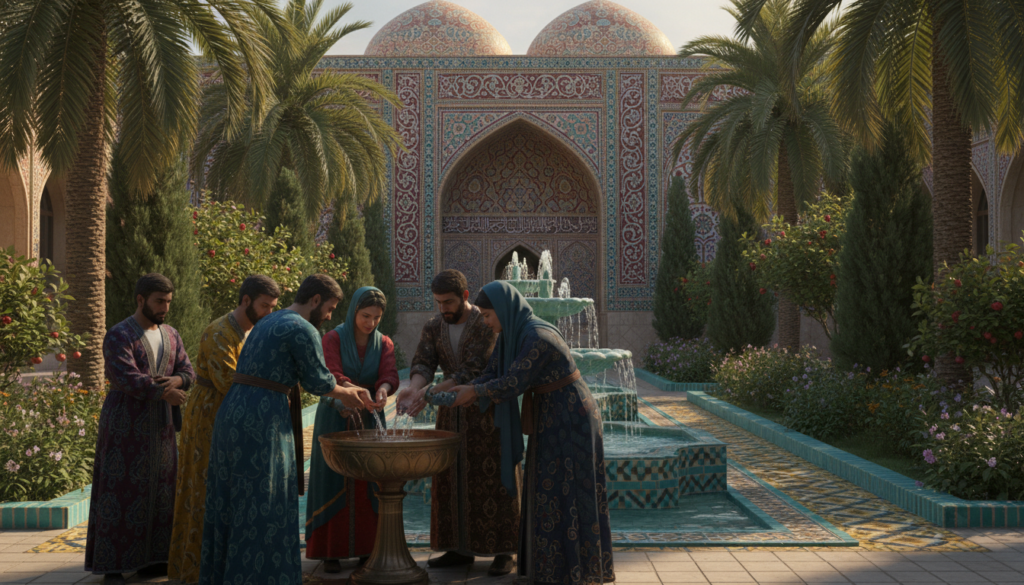
Cleanliness was sacred to the Persians. They believed rivers were too pure for human waste. This kept their water sources clean.
Greek historian Herodotus wrote about Persians with leprosy being isolated. They believed illness came from sin, but their quarantine was effective.
Practices for Maintaining Health
The Achaemenid dynasty had a system for keeping cities healthy. They had Ashoo Pezeshk, health officials who enforced strict rules. King Jamshid made bathing a key part of their culture.
| Health Practice | Purpose | Modern Equivalent |
|---|---|---|
| River Protection | Prevent water contamination | Water treatment facilities |
| Disease Quarantine | Stop infection spread | Isolation protocols |
| Regular Bathing | Personal cleanliness | Daily hygiene routines |
| House Sanitation | Maintain clean living spaces | Building health codes |
Their sanitation practices kept communities safe from diseases. They kept their environment clean by following strict rules. This shaped their daily lives across the empire.
Public Health Initiatives
The Persian healthcare system was ahead of its time. It had organized medical facilities that seem amazing today. While the world was figuring out healing, Persians built advanced medical institutions for communities.
The ancient hospitals were more than healing places. They were centers of learning, research, and community medicine. They changed how people viewed public health.
Ancient Hospitals and Healing Centers
The Academy of Gundishapur was a standout. Built in 271 AD by Shahpour I, it was the world’s first teaching hospital. Medical students practiced on real patients under expert supervision.
The library was incredible, with eight floors and 400,000 books. The entrance had an inscription that’s awe-inspiring: “Knowledge and virtue are superior to sword and strength.”
The Persian healthcare system was well-organized. Hospitals had directors, medical staff, pharmacists, and support. Physicians had to pass exams to get licenses at Gundishapur.
Community Health Practices
In 550 AD, Khosrow Anushiravan held the world’s first medical conference in Ctesiphon. Hundreds of Mobeds and physicians shared knowledge and set health standards. The government created positions like Iran Dorostbod (health minister) and Iran Farhangbod (education minister).
These positions were filled by the best physicians. This approach to public health near Persepolis and beyond helped lay the groundwork for modern healthcare.
Influence of Trade on Medical Knowledge
Imagine ancient caravans filled with spices, silks, and something even more precious than gold – medical secrets! The Persian Empire was not just a political giant. It was a place where healers from India, Greece, and China shared their remedies. This amazing knowledge transfer changed medicine forever.
Exchange of Ideas and Practices
The Persian Empire stretched from India to Greece, making it perfect for medical exchange. At Gundishapur University, you’d see Indian physicians teaching Ayurvedic principles alongside Greek doctors explaining Hippocratic methods. Persian rulers actively searched for medical texts from other lands.
King Khosrow Anushiravan even sent his physician Burzuyah to India to bring back medical manuscripts for translation.
The Role of the Silk Road
Silk Road medicine wasn’t just about treating camel bites! This legendary trade route became history’s first international medical highway. Persian trade caravans carried:
| Origin | Medical Contribution | Impact on Persian Medicine |
|---|---|---|
| China | Acupuncture techniques | Influenced pain management methods |
| India | Herbal formulations | Expanded pharmaceutical knowledge |
| Greece | Surgical procedures | Advanced surgical practices |
| Egypt | Mummification chemistry | Improved preservation techniques |
These exchanges led to a medical revolution that spread from Baghdad to Beijing. They showed that sharing knowledge is always better than hoarding it.
Modern Interpretations of Ancient Persian Medicine
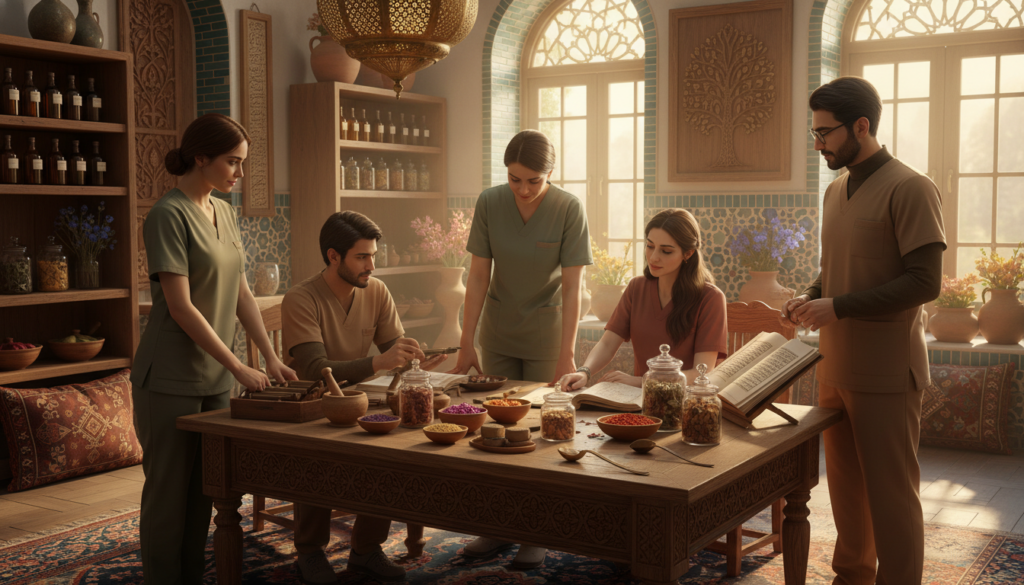
Medieval Persian remedies are not just museum artifacts. Scientists are studying them, and it’s exciting. Persian alternative medicine is back in research labs worldwide. Here, ancient texts meet modern science in amazing ways.
Integrating Ancient Practices Today
In some clinics, doctors look at ancient Persian texts alongside new medical studies. This isn’t about replacing modern medicine. It’s about making it better. For example, ancient Persian doctors had detailed plans for treating epilepsy.
Studies at Tehran University and Johns Hopkins tested these plans on animals. And it worked. This shows the power of ancient medicine.
Modern herbalism also draws from Persian sources. Doctors use saffron for depression, rose water for digestion, and pomegranate for heart health. These treatments have centuries of history behind them.
Perspective on Alternative Medicine
Today’s medicine values three key Persian principles:
- Holistic health—treating the whole person, not just symptoms
- Preventive care—stopping illness before it starts
- Mind-body connection—recognizing emotional health affects physical wellness
These ideas match the growing trend of integrative medicine in American hospitals. The Cleveland Clinic and Mayo Clinic now use these principles in their wellness programs. This shows ancient wisdom can be timeless.
Conclusion: The Enduring Legacy of Ancient Persian Healing
You’ve explored 4,000 years of medical wisdom. It’s been quite a journey! The Persian legacy in medicine is not just old history. It has shaped today’s healthcare.
From modern hospitals to the pills in your cabinet, Persian physicians’ work is all around you. They changed how we view health.
Persian doctors introduced the first teaching hospitals, medical licenses, and clinical trials. They didn’t just treat diseases; they built systems that put patients first. They taught us to treat all patients equally and to test treatments before use.
| Persian Innovation | Modern Application | Impact Today |
|---|---|---|
| Hospital Systems | Medical Centers Worldwide | 2.8 million hospitals globally |
| Medical Licensing | Board Certifications | 1.1 million licensed physicians in US |
| Clinical Trials | FDA Drug Testing | 4,000+ trials annually |
| Pharmacology Methods | Modern Drug Development | $83 billion research investment yearly |
The healing traditions of ancient Persia show us that good medicine is both scientific and compassionate. Persian physicians knew that healing the body means caring for the mind and spirit too. This holistic approach is returning in integrative medicine in America.
References and Further Reading
Want to explore the world of Persian medicine? You’re in luck! The ancient Persians left us a treasure trove of medical texts. These texts, from the Avesta’s Vendidad to Avicenna’s Canon of Medicine, show how doctors healed over a thousand years ago. The Shahnameh by Ferdowsi is not just poetry but also a guide to ancient medical practices.
Suggested Books and Articles
Looking for solid medical history references? Start with Cyril Elgood’s “A Medical History of Persia and the Eastern Caliphate.” It explains Persian medical traditions in an engaging way. The Iranian Journal of Pharmaceutical Research has articles on the history of medical sciences in Iran, linking ancient practices to today’s knowledge.
For something specific, check the Journal of Anatomy’s studies on medieval Iranian medicine. These studies show how Persian doctors understood the human body long before modern anatomy textbooks.
Resources for Further Exploration
The Persepolis Tablets show that ancient Persians had a healthcare system that sounds modern. Herodotus wrote about Persian medicine in his Histories, giving us a Greek view of their healing methods. The Dinkart encyclopedia is like an ancient Zoroastrian Wikipedia, full of medical wisdom.
For current research, look at neuroscience and pharmaceutical journals. They often test traditional Persian remedies. This proves that ancient Persian medicine was not just superstition but actually effective, and scientists are studying why.
FAQ
What made Ancient Persia such a powerhouse in early medicine?
Who was Avicenna and why should I care about him?
Did ancient Persians really perform brain surgery?
What role did Zoroastrianism play in Persian medicine?
How did Persian physicians diagnose illnesses without modern technology?
What herbs did ancient Persians use, and do we use any today?
How did the Persian Empire influence modern hospital systems?
What’s the deal with mental health treatment in ancient Persia?
How did ancient Persians handle public health and hygiene?
Did Cyrus the Great or other Persian rulers contribute to medicine?
How does ancient Persian culture influence medicine today?
Get More Medical History
Join our newsletter for fascinating stories from medical history delivered to your inbox weekly.