The History of Healing
 Disease and Healing in the Indus Civilisation
Learn about Disease and Healing in the Indus Civilisation: an expert roundup examining the historical context and practices.

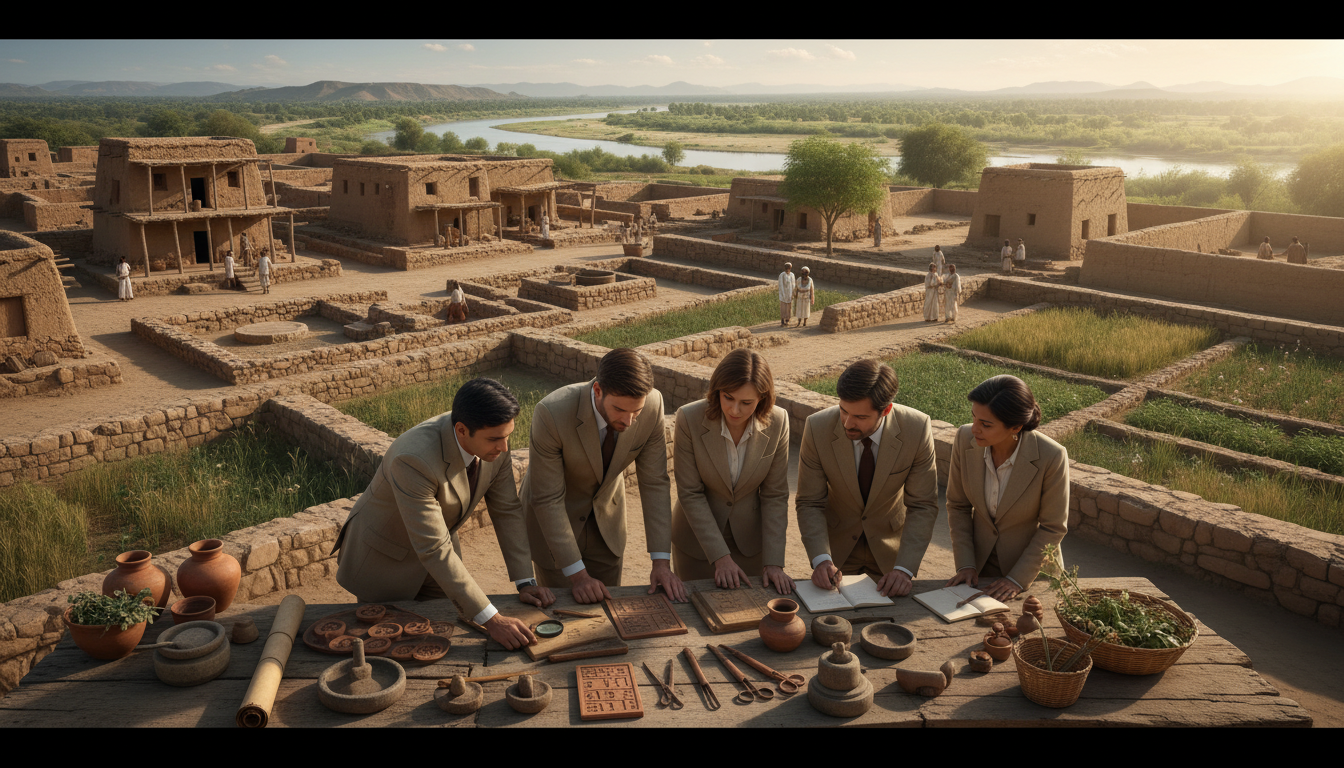
For nearly 2,000 years, the Indus Valley Civilisation flourished. Yet, modern science has never read a single medical prescription from its people. Their script remains undeciphered. This unique challenge forces a forensic approach to history of Disease and Healing in the Indus Civilisation.
This expert synthesis examines how this ancient society understood and managed illness. It explores the physical evidence of afflictions and the therapeutic responses they inspired. The inquiry relies entirely on material remains.
Scholarly work interprets bones, artifacts, and city layouts. Paleopathology reveals common conditions like joint stress and dental issues. Corresponding care traditions evolved from this reality.
Such analysis provides a crucial window into social organization. It highlights technological capabilities and worldview. This research places the Indus system within early medical history’s broader narrative.
Key Takeaways
- The Indus Valley Civilisation’s medical history is reconstructed solely from archaeological evidence, as its writing is undeciphered.
- Paleopathological analysis of skeletal remains provides direct evidence of prevalent physical ailments and injuries.
- Healing practices are inferred from artifacts, such as possible surgical tools and ritual objects, suggesting a blend of practical and spiritual care.
- Urban features like advanced drainage systems indicate a sophisticated public health focus and understanding of sanitation.
- This civilization’s approach to health reflects its social complexity and technological capabilities compared to contemporaries like Mesopotamia and Egypt.
- Studying ancient health offers crucial insights into daily life, labor, and social structures beyond political history.
Introduction: An Expert Roundup on Ancient Health
The medical history of a civilization without written records presents a unique puzzle for modern researchers. This section synthesizes leading scholarly perspectives. It explains why this study matters and outlines the rigorous approach used.
Experts agree that analyzing ancient health is vital. It moves beyond political narratives to reveal daily human challenges. This focus uncovers a society’s resilience and cultural priorities.
Setting the Stage: Why Study Indus Civilisation Health?
Investigating Indus health provides a window into everyday existence. Environmental factors, urban density, and social structure shaped illness patterns. Public health strategies emerged from these realities.
This research highlights how communities adapted to their world. It shows the direct link between environment and community well-being. Scholars use comparative frameworks with Mesopotamia and Egypt.
They note unique Indus features while drawing informed parallels. This process builds a clearer picture of ancient life. The goal is to understand societal endurance, not just kings and wars.
Methodology: Combining Archaeology and Modern Science
A truly interdisciplinary model is required. Traditional archaeology merges with advanced scientific techniques. Paleopathology, isotope analysis, and forensic anthropology are key tools.
This combined methodology moves beyond simple artifacts. It seeks to understand lived experiences of illness, nutrition, and trauma. The science offers direct evidence from skeletal remains.
Experts apply modern analytical tools with caution. Epidemiological theories help interpret disease spread in crowded cities. All conclusions are grounded in empirical evidence and peer-reviewed research.
This rigorous approach defines the authoritative stance of current study. It acknowledges gaps in the record and areas of ongoing debate. The knowledge gained is built on a fact-based exploration.
The resulting terms of understanding are always observational. This foundation supports the entire historical reconstruction. It commits to documenting what the material evidence can reliably show.
The Indus Valley Civilisation: Historical and Cultural Context
The story of health in the Indus Valley is inseparable from its historical and geographical setting. This section establishes the essential backdrop. It outlines the chronology, scope, and social fabric of this ancient society.
Understanding this context is foundational. It allows scholars to interpret skeletal evidence and material finds related to physical well-being. The environment and culture directly shaped the challenges its people faced.
Timeline and Geographic Scope
The Indus Valley Civilisation flourished for approximately two millennia. Its timeline is typically divided into three major phases. This long duration saw significant cultural and technological evolution.
These phases capture the civilisation’s dynamic process of growth and transformation.
| Phase | Approximate Time Period | Key Features & Changes |
|---|---|---|
| Early Harappan | c. 3300 – 2600 BCE | Formation of settled agricultural communities; emergence of proto-urban centers; early craft specialization. |
| Mature Harappan | c. 2600 – 1900 BCE | Peak urbanism with planned cities like Mohenjo-daro and Harappa; standardized weights, measures, and brick sizes; extensive long-distance trade networks. |
| Late Harappan | c. 1900 – 1300 BCE | Gradual de-urbanization and fragmentation; shift towards smaller rural settlements; decline of standardized features and long-distance trade. |
Geographically, it was expansive. The civilisation spread across a vast region. This area includes much of modern-day Pakistan and northwestern India.
Major urban centers developed along river systems. These waterways were vital for agriculture and transport. The Ghaggar-Hakra river system played a particularly crucial role.
Trade routes connected these cities to distant lands. Resources flowed from the Himalayas to the Arabian Sea. This geographic scope influenced diet and access to various materials.
These temporal and spatial factors created a specific disease ecology. Sedentary, dense populations presented new challenges. The time scale shows how communities adapted over generations.
Society, Economy, and Daily Life
Indus society was complex and likely stratified. There is no evidence of a single, all-powerful monarch. Instead, civic organization appears to have been sophisticated.
The economy was diverse and advanced. It relied on a highly productive agricultural base. Staples included wheat, barley, and legumes.
Animal domestication provided meat, dairy, and labor. This close human-animal interface was a key factor for certain health conditions. Specialized crafts formed another economic pillar.
“The standardisation of bricks, weights, and even street layouts points to a high degree of social coordination. This likely extended to aspects of community well-being and infrastructure management.”
Daily activity for most people involved manual labor. Farming, brick-making, metallurgy, and bead crafting were common. Each occupation carried specific physical risks and strains.
Urban planning created densely populated neighborhoods. This sedentary lifestyle differed greatly from earlier nomadic forms of existence. It changed the dynamics of how illness could spread within a population.
Social organization probably influenced physical states. Differences in nutrition, trauma, and access to care may have existed. The material record suggests a society capable of large-scale public works for communal benefit.
This entire context—the bustling cities, the specialized economy, the daily toil—set the stage. It determined the physical stresses, nutritional patterns, and environmental exposures its people endured. This reality directly shaped the evidence of affliction and care explored in the following sections.
Archaeological Evidence of Disease in Indus Populations
Archaeological excavations provide the only direct window into the physical afflictions endured by Indus Valley inhabitants. This material record, composed of bones and artifacts, forms the empirical foundation for all modern research. Scholars rely on it to reconstruct the burden of illness.
The process is meticulous and interdisciplinary. It combines field archaeology with laboratory science. This study moves from isolated finds to broader public health insights.
Skeletal Remains and Paleopathological Insights
Human bones offer the most direct testimony. Paleopathology examines these remains for signs of disease, trauma, and deficiency. Chronic conditions often leave permanent marks on the skeleton.
Lesions on vertebrae and ribs can signal infections like tuberculosis. Specific bone changes may indicate leprosy. These states show how pathogens circulated in dense urban settings.
Degenerative joint disorder is frequently observed. It resulted from repetitive manual labor and aging. This activity was a common feature of daily life.
Dental health provides another crucial dataset. Patterns of caries and abscesses reflect diet high in carbohydrates. Extreme tooth wear points to coarse food and milling techniques.
Anemia, perhaps from nutritional lack or parasitic infection, is inferred from cranial lesions. This condition would have caused fatigue and weakness. It affected the overall vitality of the people.
The table below summarizes key skeletal evidence and its interpretations.
| Pathology Type | Skeletal Evidence | Probable Cause or Association | Demographic Notes |
|---|---|---|---|
| Infectious Disease (e.g., Tuberculosis) | Lesions on vertebrae (Pott’s disease), rib periostitis | Close human contact, crowded living conditions | Found in adults; indicates chronic, long-term infection |
| Degenerative Joint Disease | Osteophytes (bone spurs), eburnation on joint surfaces | Repetitive stress from labor, aging | Common in older individuals; linked to specific occupations |
| Dental Pathologies | Caries (cavities), abscesses, severe attrition | Diet high in grains, gritty food from stone querns | Affects all age groups; wear patterns are near-universal |
| Cribra Orbitalia & Porotic Hyperostosis | Porotic lesions on skull bones and eye sockets | Iron-deficiency anemia, possibly from diet or parasites | Observed in both juveniles and adults, suggesting widespread nutritional stress |
| Traumatic Fractures | Healed fractures in long bones (e.g., ulna, femur) | Accidents, occupational hazards, or interpersonal violence | Most show signs of healing, indicating survival and some level of care |
Diagnoses are probabilistic. Researchers compare ancient bone forms with modern clinical profiles. They document frequency and distribution by age and sex.
This model helps identify which groups were most affected. The result is a demographic map of suffering. It forms the basis for understanding the civilization’s disease burden.
Artifacts Indicating Health Challenges
Material culture beyond bones also holds clues. Terracotta figurines may depict physical conditions. Some show spinal curvatures or unusual body proportions.
These objects could represent actual patient conditions or symbolic forms. They offer a window into how the society perceived bodily difference. Artistic motifs might symbolize illness or healing deities.
“A figurine from Mohenjo-daro displaying a pronounced kyphosis (hunchback) is often cited. While not a clinical diagnosis, it suggests that such physical features were observed and significant enough to be represented in clay.”
Certain tools and containers suggest therapeutic practices. Small, sharp blades could have served minor surgical purposes. Specific jars might have stored medicinal compounds.
Context is critical. Finding such items in a dedicated space hints at organized care. Residue analysis can sometimes detect ancient plant compounds. This example points to an early pharmacopoeia.
Interpretation requires caution. Many acute sicknesses leave no trace on artifacts or bones. Soft-tissue conditions remain invisible in the archaeological record.
Scholars acknowledge these gaps. They build a picture from fragmentary evidence. The combined data from skeletons and objects allows historians to move beyond isolated cases.
This approach leads to a broader view of public health. It reveals how the civilization managed collective well-being. The evidence, though silent, tells a compelling story of human resilience.
Prevalent Diseases and Health Conditions
Material evidence reveals a spectrum of common afflictions that shaped the civilization’s approach to well-being. This synthesis enumerates specific conditions believed pervasive in Indus cities. The archaeological record points to a distinct profile of suffering.
This profile directly influenced community strategies for care. It reflects the intersection of environment, diet, and urban life. Understanding these ailments is crucial for appreciating subsequent innovations.
Infectious Diseases: Leprosy, Tuberculosis, and More
Dense urban environments were breeding grounds for pathogens. Close living quarters facilitated rapid transmission. Contact with domesticated animals introduced zoonotic threats.
Skeletal lesions provide clear testimony. Vertebral damage signals tuberculosis, a persistent respiratory disease. Specific facial bone changes suggest leprosy was present.
These chronic infections had debilitating long-term effects. They reduced an individual’s capacity for labor. The population carried this constant burden.
Waterborne pathogens likely caused gastrointestinal sicknesses. Evidence for malaria or parasitic infections is circumstantial but plausible. Stagnant water near settlements would have been a vector.
The transmission process involved multiple factors. Crowding, sanitation limits, and animal proximity combined. This created a perfect storm for contagion.
Such maladies represented a major public health challenge. Their management required communal effort. The cause of outbreaks was not understood in modern terms.
Nutritional Deficiencies and Chronic Illnesses
Dietary patterns left clear marks on the skeleton. Porotic hyperostosis, lesions on the skull, indicates iron-deficiency anemia. This condition was widespread across ages.
Its primary cause was likely dietary monotony. Heavy reliance on grains provided calories but limited iron. Parasitic loads from unclean water could exacerbate the deficiency.
Chronic musculoskeletal disorder was another common reality. Degenerative joint disease, or osteoarthritis, resulted from repetitive physical activity. It is frequently found in older remains.
Dental pathologies were near-universal. Severe wear and cavities point to a gritty, carbohydrate-rich diet. This affected nutrition and comfort throughout life.
“The concept of ‘chronic illness’ in antiquity applies to persistent conditions that diminished labor capacity and quality of life. These were not episodic crises but constant companions for many.”
The prevalence of these ailments was not uniform. Age, occupation, and possibly social status created differential outcomes. A laborer’s skeleton tells a different story than a child’s.
This differential burden is a key insight. It shows how social structure influenced physical states. The result was a varied landscape of suffering within the community.
These conditions defined the daily reality for people and healers alike. They prompted the development of specific treatment methods and supportive therapy. The civilization’s entire medical worldview responded to this profile.
The disease spectrum mirrors the Indus ecological niche and technological stage. It was the product of a sophisticated yet constrained agricultural society. This understanding is foundational for analyzing their care traditions.
Trauma, Injuries, and Occupational Hazards
Accidents, conflict, and the dangers of daily work left a distinct mark on the bones of Indus inhabitants. This category of physical adversity differs from chronic illness. It required immediate, practical responses from the community.
Analysis of trauma reveals the physical risks embedded in urban and agricultural life. It shows how individuals survived serious injury. This evidence complements the broader picture of public health.
Evidence from Bone Fractures and Skull Deformations
Healed fractures are common in skeletal assemblages. They provide direct proof of accidents or violence. The pattern of breakage helps scholars determine the cause.
Forearm bones often show “parry” fractures. This specific injury results from raising an arm in defense. Its presence suggests interpersonal conflict was a real problem.
Skull deformations present another area of study. Some appear accidental, from a severe blow. Others may be intentional, perhaps for cultural or aesthetic reasons.
These cranial changes hold significance. They inform research about social identity and ritual practice. A head injury’s long-term effects on an individual could be profound.
Warfare, Accidents, and Labor-Related Injuries
Occupational hazards were numerous for Indus people. Each major trade carried specific physical risks. This repetitive activity led to distinct trauma patterns.
Agricultural workers risked cuts and crush injuries from tools. Builders faced falls from heights or heavy material drops. Artisans developed overuse syndromes from precise, repetitive motions.
“The healed fracture of a femur, for example, tells a story of survival. It implies the injured patient received care and support for weeks or months. This convalescence required community resources.”
Evidence for large-scale warfare remains debated. Skeletal traumas, however, confirm that violence occurred. Raids, social disputes, or judicial punishment could be the result.
The healing status of a break is highly informative. A well-set bone indicates knowledgeable treatment. An infected, misaligned fracture suggests a lack of effective therapy.
This post-injury care process was distinct from rituals for disease. It focused on setting bones, managing wounds, and supporting recovery. Survival from major trauma demonstrates remarkable resilience.
These injuries complete the spectrum of physical challenges. They show that affliction was not solely from internal disorder. The external environment posed constant threats to physical states.
Studying trauma offers a raw view of ancient life’s dangers. It highlights the community’s role in supporting the injured. This practical healing was a cornerstone of societal endurance.
Healing Practices: Rituals, Remedies, and Healers
When sickness struck, Indus communities activated a dual system of care. This approach intertwined the spiritual and the material seamlessly. The available evidence suggests a holistic worldview for managing affliction.
Physical remedies were not separated from ritual interventions. Both forms worked together to restore an individual’s well-being. This integrated model addressed the body, the community, and the cosmos.
Healers likely held a specialized role in this society. They mediated between these two realms of healing. Their activity combined practical skill with ceremonial authority.
Spiritual and Ritualistic Healing Ceremonies
Archaeological finds point to a rich ritual life connected to well-being. Terracotta figurines may depict deities associated with healing. Others could represent supplicants seeking relief from suffering.
Seals and amulets show scenes of ritual activity. A healer might perform ceremonies to appease spirits thought to cause sickness. Incantations, offerings, and symbolic actions were central to this process.
“The power of ritual provided psychosocial support, a form of ancient placebo effect. For the patient, the ceremony itself was a therapeutic act, reinforcing hope and community bonds.”
This spiritual focus addressed the invisible causes of illness. It was a logical response when germ theory was millennia away. The healer’s authority helped guide the sick person through crisis.
Herbal Medicine and Early Pharmacopoeia
Alongside ritual, an empirical medicine flourished. The region’s rich flora offered many resources. Residue analysis on pottery jars has detected traces of ancient plant compounds.
Specific plant remains found at sites suggest deliberate use. Herbs with known analgesic or anti-inflammatory properties were likely employed. This early pharmacopoeia was adapted to local ailments.
Practical therapy also included physical interventions. Small, sharp blades and polished stones may have served minor surgical purposes. Their use required precise knowledge and skill.
Healing knowledge was transmitted orally and through apprenticeship. This tradition formed a body of treatment adapted over generations. Environmental factors and available resources shaped its development.
The effectiveness of this medicine rested on bioactive plant properties. It also relied on the healer’s understanding of dosage and application. This practical healing complemented the spiritual ceremonies.
| Aspect | Spiritual & Ritual Modality | Material & Herbal Modality |
|---|---|---|
| Primary Focus | Addressing perceived spiritual causes, restoring cosmic/social balance | Alleviating physical symptoms, treating wounds, managing pain |
| Key Evidence | Figurines, amulets, seals depicting ritual scenes; hypothesized incantations | Plant residues in pottery, specialized tools (blades, probes), curated herb remains |
| Practitioner Role | Priest-healer: mediator with divine/spirit world, conductor of ceremonies | Herbalist-bonesetter: practitioner of empirical remedies and physical interventions |
| Targeted Outcome | Psychosocial support, community reintegration, appeasement of unseen forces | Direct physiological effect: reduced fever, healed fracture, relieved discomfort |
| Transmission of Knowledge | Oral tradition, ritual apprenticeship, symbolic teaching | Apprenticeship in plant identification, remedy preparation, manual techniques |
This table illustrates the complementary nature of both systems. They were likely deployed simultaneously for a sick patient. The choice of treatment depended on the perceived nature of the illness.
The Indus approach to health was fundamentally integrated. It viewed a person’s condition within a larger web of relationships. This reflects a sophisticated engagement with the universal problem of suffering.
Sanitation and Public Health: Engineering Marvels
The most tangible legacy of Indus urban genius lies beneath the streets in elaborate drainage networks. This infrastructure represents a proactive investment in community well-being. It stands as archaeological proof of sophisticated public health thinking.
These engineering feats demonstrate a clear grasp of environmental factors in illness. The civilization allocated significant resources to manage waste and water. This approach to urban living was remarkably advanced for its time.
Advanced Drainage Systems and Water Management
Indus cities featured meticulously planned sanitation networks. Covered brick-lined sewers ran beneath main avenues. They connected to household latrines and street-level drains.
This system efficiently removed waste from urban spaces. Maintenance access points allowed for regular cleaning. The engineering prevented blockages and overflows.
Water management complemented drainage infrastructure. Public wells provided clean drinking water throughout settlements. The Great Bath at Mohenjo-daro served ritual and possibly hygienic purposes.
These features indicate understanding of waterborne illness risks. Separate channels for clean water and waste water were maintained. This technical achievement required precise urban planning.
The construction process involved standardized bricks and measurements. It reflected centralized coordination across the population. Labor organization for such projects was substantial.
“The scale of Indus sanitation engineering suggests societal consensus. Cleanliness was linked directly to community welfare. This conceptual leap distinguishes their urban planning from contemporaries.”
Impact on Disease Prevention and Community Health
This infrastructure created measurable health benefits. Gastrointestinal parasites spread through fecal-oral transmission. Systematic waste removal reduced this problem significantly.
Comparative research with other ancient cities shows clear differences. Indus settlements likely had lower rates of certain infections. The result was a more stable urban environment.
Public health engineering functioned as preventive medicine. It addressed the root cause of many common ailments. This focus on prevention was conceptually sophisticated.
| Health Aspect | With Advanced Sanitation | Without Systematic Sanitation |
|---|---|---|
| Waterborne Disease Risk | Reduced through separated clean/waste water systems | High due to contaminated drinking sources |
| Parasitic Infection Rates | Lower prevalence of gastrointestinal parasites | Higher burden from fecal-oral transmission |
| Urban Livability | Improved through waste removal and odor control | Compromised by accumulated waste and pollution |
| Community Coordination | Required for system maintenance and operation | Less evidence of organized public health efforts |
| Long-term Urban Stability | Supported by reduced environmental health threats | More vulnerable to sanitation-related crises |
The table illustrates the protective effects of this engineering. It created a healthier baseline for urban people. This contributed to settlement longevity and resilience.
Modern science confirms the logic behind these ancient systems. Preventing contamination at the source remains a core public health principle. The Indus model anticipated this understanding by millennia.
These sanitation networks required ongoing communal effort. Their existence implies shared values about cleanliness. This investment in infrastructure reveals cultural priorities.
While not eliminating all sickness, these measures mitigated specific risks. They represent the civilization’s most direct response to environmental health threats. This engineering legacy offers profound insights into Indus societal organization.
Expert Insight: Abstracting Disease in Ancient Times
Interpreting the Indus approach to sickness requires examining the conceptual leap from individual symptoms to generalized syndromes. Scholars propose that healers performed a fundamental cognitive operation. They moved from observing specific cases to forming abstract categories of illness.
This intellectual process is central to any medical system. It transforms random suffering into something nameable and treatable. Modern theoretical models help illuminate this ancient mental approach.
From Symptoms to Syndromes: A Conceptual Model
Inspired by the modern K-operator concept, a model emerges. This model abstracts a sickness from the patient. The real-world states of many sick people provide the raw data.
“The definition of a ‘disease’ is an abstraction; the ‘reality’ is given by real patients affected by the disease. The description of a new disease after a collection of particular cases is an inductive process; the diagnosis of a patient’s condition is a deductive process, from the abstraction of the disease to the reality of the specific condition.”
Indus healers likely engaged in this inductive process. They saw numerous cases with similar features: fever, cough, and severe wasting. From these observations, they abstracted a general concept of a specific wasting sickness.
This abstraction allowed for targeted responses. Rituals, remedies, and social protocols could be developed for each class of ailment. It moved healing beyond pure trial and error.
Category theory in modern science shifts focus from objects to transformations. Similarly, the healer’s focus shifted from a single sick person to the mechanism of the affliction. The idea of a sickness itself became an operational tool.
The Role of Healers as Early Diagnosticians
The healer’s role then involved the deductive application of these categories. A new patient presented with observable signs. The healer matched these signs to a known syndrome in their mental catalog.
Diagnosis relied on physical evidence and possibly divination. Signs included skin lesions, behavioral shifts, or specific pains. This classification dictated the entire treatment protocol.
The healer’s authority stemmed from this diagnostic knowledge. Naming the illness reduced uncertainty for the sufferer and community. This act, in itself, held therapeutic power.
Comparing different sicknesses was a natural part of this thinking. A skin disorder demanded a different response than a respiratory condition. This comparative analysis refined the categorical system over generations.
| Cognitive Process | Description | Indus Healer’s Activity |
|---|---|---|
| Inductive Abstraction | Forming a general disease category from many specific patient cases. | Observing repeated patterns (e.g., fever + cough + wasting) and defining a “wasting sickness” syndrome. |
| Deductive Diagnosis | Applying the abstract disease category to a new specific patient’s symptoms. | Examining a new patient, recognizing the pattern, and pronouncing it as an instance of the known “wasting sickness.” |
| Systematization | Organizing different disease categories and their corresponding treatments. | Developing distinct rituals, herbal mixes, and care practices for respiratory, gastrointestinal, or skin syndromes. |
This conceptual model frames Indus practice as systematic. It was an early attempt to codify the phenomenon of illness. The terms and language used were undoubtedly different from modern terms.
Environmental factors and available resources shaped these categories. The system was pragmatic, built from lived experience. This insight elevates our understanding of their intellectual engagement with health.
Such diagnostic thinking represents a significant cognitive leap. It provided a stable framework for transmitting healing knowledge. This study offers a profound example of how ancient people made sense of suffering.
Historical research into this abstraction process reveals more than mere superstition. It uncovers the roots of medical systematization. This foundational thinking supported the civilization’s entire approach to community well-being.
The Healing Cycle: Ancient Parallels to Modern Salugenesis
The biological pathway from sickness back to wellness, known as salugenesis, finds echoes in the structured rituals of Indus healers. This modern concept describes an active, cellular process of recovery. It offers a lens to reinterpret ancient therapeutic traditions.
Scholars propose that Indus healing recognized similar staged progression. Recovery was not seen as instant cure. It was a journey requiring time and specific interventions at each phase.
This perspective shifts the focus from merely removing a cause to supporting a natural cycle. It aligns with a holistic approach evident in the archaeological record. The model provides a framework for understanding disparate artifacts.
Stages of Recovery in Indus Healing Practices
Modern research into salugenesis outlines a programmed sequence. Once a cell detects threat, a cascade of metabolic changes begins. This cycle cannot be skipped or reversed.
“Once the cell danger response (CDR) is activated by any stress or injury, a stereotyped and programmed sequence of events is initiated that enables healing from almost any injury. Like the cell cycle, the steps of the healing cycle cannot be skipped or reversed.”
Indus practices likely mirrored this staged process. Evidence suggests three key phases were recognized. Each phase demanded a different healer approach.
The initial crisis involved purification rituals. These ceremonies addressed acute distress and spiritual imbalance. They marked the start of the treatment journey.
The active treatment phase applied material remedies. Herbal compounds and physical therapy targeted symptoms. This phase required direct healer involvement.
Convalescence focused on restorative practices. Nourishing foods and strengthening tonics rebuilt vitality. Social reintegration rituals completed the cycle.
| Modern Healing Cycle Phase | Inferred Indus Practice & Evidence | Healer’s Primary Role |
|---|---|---|
| Cell Danger Response (CDR) Activation | Initial crisis recognition; purification rituals (e.g., bathing, fumigation). | Diagnostician & ritual conductor to manage acute crisis. |
| Inflammation & Communication | Application of anti-inflammatory herbs; fever management; symbolic communication with spirits. | Applied herbalist & mediator, using active material and spiritual interventions. |
| Proliferation & Remodeling | Restorative tonics, nutrient-rich foods; gradual reintroduction to labor; community acceptance ceremonies. | Supportive guide and nutritionist, overseeing rebuilding and social reintegration. |
Healers acted as essential guides through this sequence. Their knowledge dictated the transition between stages. A skipped stage could result in relapse or chronic illness.
Holistic Approaches and Community Support Systems
Indus healing inherently addressed the whole person. Physical symptoms were one part of a larger imbalance. Mental state and social standing received equal focus.
Community support was a critical factor for successful recovery. Family and neighbors participated in care duties. They fulfilled the social roles of an incapacitated patient.
This collective approach transformed healing into a social event. It reinforced community bonds and shared responsibility for health. The sick individual was never isolated in their suffering.
Several factors could act as blocks to this natural cycle. Persistent malnutrition provided inadequate resources for cellular repair. Repeated infection constantly reactivated the danger response.
Social ostracism was another potential block. Without community support, the convalescence phase failed. This could lock an individual into a state of chronic illness.
Healers understood these obstacles at some level. Their therapy aimed to remove both physical and social blocks. Success meant restoring the individual to full functional and social capacity.
This staged, process-oriented view contrasts with a purely mechanistic model. It sees recovery as an organic unfolding. The community’s role underscores that health was a collective concern.
Recognizing this cycle provides a powerful framework for study. It allows scholars to interpret healing artifacts in a sequential manner. Tools, herbs, and ritual objects correspond to different points in the journey from affliction back to well-being.
Comparative Analysis: Indus vs. Other Ancient Civilisations
While Mesopotamian and Egyptian healers left detailed texts, the Indus legacy is written in bricks, bones, and artifacts. This demands a different mode of comparison. Placing these systems side-by-side reveals universal human strategies and distinct cultural innovations.
This study positions Indus medicine within the broader ancient landscape. It identifies shared foundations with contemporary societies. The analysis also highlights features that set the Indus approach apart.
Comparative research clarifies what is present and absent in the record. It helps historians understand the civilization’s unique path. This focus enriches our view of early medical history.
Similarities with Mesopotamian and Egyptian Medicine
Fundamental parallels existed across these early urban cultures. All three blended spiritual and empirical practices seamlessly. Healers served as both ritual specialists and practical therapists.
A shared belief in supernatural causation was common. Demons or divine displeasure were thought to cause disease. This worldview existed alongside observations of natural factors like injury or decay.
The use of herbal compendia was another key similarity. All civilizations developed a knowledge of local botanicals for remedies. Trauma management, including bone setting, was a practical skill found in each society.
The healer’s role often connected to priestly classes. This lent authority to both incantations and physical treatments. The diagnostic process involved observing physical signs and seeking omens.
“The convergence on a dualistic model—addressing both spirit and body—suggests a universal human response to suffering. The specific forms this took were shaped by local culture and environment.”
These shared features underscore common challenges in dense, early urban settings. They represent foundational solutions to illness. This context makes the Indus divergences even more significant.
Unique Features of Indus Healing Traditions
The Indus path is distinguished by its material, rather than textual, expression. The scale of public sanitation engineering is unparalleled for its time. This indicates a powerful emphasis on preventive, environmental health.
The artistic corpus may depict unique ritual postures or symbols. Specific figurines or seals could represent local healing deities. These artifacts provide clues to a distinct symbolic language for wellness.
A notable difference is the apparent lack of massive temple complexes for healing gods. Unlike the Asclepieia of Greece, Indus healing might have been more decentralized. Care could have been household-based or organized within neighborhoods.
The record also shows clear absences. There is no evidence of elaborate surgical procedures described in Egyptian papyri. Detailed diagnostic omens listed in Mesopotamian texts are also missing.
This unique profile was rooted in cultural and environmental context. The Indus approach invested heavily in infrastructure to prevent disease. Community coordination for sanitation was a profound innovation.
| Aspect of Health & Medicine | Shared Features (Indus, Mesopotamia, Egypt) | Unique Indus Features & Absences |
|---|---|---|
| Conceptual Foundation | Blend of spiritual/supernatural and empirical/naturalistic causes of illness. | Strong preventive focus inferred from engineering; less evidence for elaborate divine etiology in art. |
| Therapeutic Practices | Use of herbal remedies, trauma management (bone-setting), ritual purification. | Unparalleled urban sanitation systems; unique artifact iconography (e.g., specific figurines). |
| Social Organization of Healing | Healers often associated with religious or priestly authority. | Possibly decentralized or household-based; no evidence of large healing temple complexes. |
| Evidence & Transmission | Material artifacts (tools, vessels) for treatment. | Complete reliance on material evidence (no deciphered medical texts). Absence of textual surgical manuals or diagnostic lists. |
| Primary Investment | Care for the sick individual. | Major investment in public infrastructure for community-wide disease prevention. |
This comparison ultimately clarifies the Indus Civilisation’s distinct priorities. Its people developed a system where public works were a primary medical intervention. The material record tells this story where texts are silent.
Modern science uses this comparative model to interpret skeletal states and artifact functions. For example, a tool found in all three regions confirms a universal practice. An artifact found only in the Indus Valley points to a local innovation.
This analysis does not rank one system above another. It maps the diverse ways ancient societies conceptualized and managed well-being. The Indus tradition stands out for its communal, engineering-minded approach to sustaining health.
Philosophical Views on Health and Illness
Underlying every therapeutic act in the Indus Valley was a coherent, if unspoken, worldview about human nature. This section reconstructs the philosophical assumptions that framed their entire approach to affliction. It moves beyond artifacts to explore the conceptual bedrock of their care system.
Scholars infer these views from the integrated nature of their practices. The model of sickness was not merely physical. It encompassed the mind, spirit, and social bonds of the individual.
Understanding this perspective is crucial. It explains why rituals held equal weight with herbal remedies. The patient was treated as a whole person within a larger cosmic order.
Ancient Worldviews: Body, Mind, and Spirit Integration
The Indus perspective almost certainly did not separate body, mind, and spirit. Illness was perceived as a disharmony affecting the complete person. This imbalance occurred within their social and environmental context.
This integrated view stands in stark contrast to later Western thought. Modern biomedicine often relies on Cartesian dualism. This philosophy severed the mind (res cogito) from the body (res extensa).
Historical research critiques this separation as a foundational shift. For Indus people, such a split would have made little sense. Their language of wellness likely spoke of restoration and balance.
Healing practices reflected this holistic philosophy. A ritual addressed spiritual disquiet. A poultice treated a physical wound. Both actions worked toward the same result: reintegrating the suffering individual.
This worldview made the healer’s role profoundly complex. They mediated between visible symptoms and invisible causes. Their knowledge bridged the material and spiritual realms.
The Placebo Effect and Healer-Patient Dynamics
Within this holistic framework, the relationship between healer and sufferer was powerfully therapeutic. The healer’s authority, empathy, and symbolic acts functioned as a potent agent. Modern science understands this through the placebo effect.
“If the patient believes in the magic, the magic works… the placebo effect and the healer-as-drug effect are the most important lessons.”
Belief and expectation in the treatment contributed to positive outcomes. This was not an error in their system. It was an integral part of its therapeutic mechanism.
The healer performed a critical diagnostic act by naming the illness. This addressed a core existential suffering described by phenomenologists. In sickness, our usual coping mechanisms fail.
“In illness none of these things will help. Our essential existential mechanisms for coping with all other exigencies have been compromised…”
Rituals restored a sense of order, meaning, and community connection. This psychosocial support could trigger physiological changes. Recovery became a guided process back to wholeness.
The patient‘s trust was therefore a key factor. The healer’s role was to cultivate this belief through ceremony and presence. Their dynamic created a shared reality where recovery was possible.
This perspective allows historians to appreciate Indus medicine as a coherent system. It addressed the full human experience of sickness. The blend of practical and symbolic features was philosophically necessary.
Viewing their approach through this lens avoids labeling it “primitive.” Instead, it reveals a sophisticated engagement with universal human states. Their study of affliction considered all dimensions of being.
Technological Innovations in Indus Healthcare

Beyond grand public works, a suite of small, sophisticated artifacts reveals the civilization’s hands-on approach to treating individual ailments. This research focuses on the material technology for direct patient care.
These objects complement the known sanitation infrastructure. They represent a practical investment in specialized knowledge. This activity was dedicated to immediate therapeutic outcomes.
Surgical Tools and Techniques from Archaeological Finds
Excavations have yielded precise copper and bronze instruments. Fine blades, needles, and tapered probes are among the finds. Scholars tentatively identify them as potential surgical tools.
Their proposed uses are inferred from form and context. Sharp blades could lance abscesses or make minor incisions. Robust probes might assist in setting broken bones.
Finely pointed rods suggest a practice of deliberate stimulation. This technique may have been similar to acupuncture or scarification. The process aimed to relieve pain or restore balance.
“The presence of these standardized, purpose-made instruments indicates craft specialization for health purposes. They are not repurposed domestic items but dedicated interventions for bodily treatment.”
The development of these tools required metallurgical skill. It also demanded an understanding of human anatomy. This knowledge was likely passed through apprenticeship.
| Tool Type (Material) | Proposed Medical Use | Supporting Evidence & Inference |
|---|---|---|
| Fine Blades (Copper/Bronze) | Lancing abscesses, minor incision, cutting. | Sharp, beveled edges; found in contexts with other care-related artifacts. |
| Tapered Probes/Rods (Copper/Bronze) | Bone setting, wound probing, applying substances. | Solid, smooth tips; varying thicknesses suggest different functions. |
| Needles (Copper) | Suturing, piercing, or therapeutic stimulation. | Extremely fine points; some show evidence of careful polishing. |
| Small Scrapers (Stone/Shell) | Preparing herbal compounds, scraping skin. | Wear patterns consistent with grinding or scraping soft materials. |
This toolkit demonstrates a logical model for physical interventions. Each tool addressed a specific step in a treatment protocol. The forms are simple but effective.
Dental Care and Hygiene Artifacts
Indus health technology extended to oral care. Skeletal evidence provides a striking example. Some molars show carefully drilled holes.
This activity was likely a response to painful abscesses. The technique required remarkable skill and steady hands. It represents early endodontic intervention to relieve pressure.
Hygiene was supported by numerous everyday objects. Terracotta pipes and home bathing platforms facilitated cleanliness. Small, handled pots probably held oils, unguents, or medicinal preparations.
Combs made from wood or ivory are common finds. They indicate attention to personal grooming and parasite removal. This practice had direct implications for preventing certain conditions.
The civilization’s famous standardization may have applied to medicine. Consistent weights and measures, seen in trade, could ensure accurate dosages in herbal compounds. This factor would improve treatment reliability.
These technological features show a comprehensive approach. They address the body from the inside out. Practical care worked alongside spiritual healing.
Modern science views these artifacts as data points. They reveal a society that invested in direct care tools. This investment reflects a deep concern for individual well-being.
Technological changes in this realm were likely gradual. They resulted from accumulated knowledge and craft refinement. These innovations were critical for managing the daily reality of sickness.
Challenges in Interpreting Indus Health Data
Reconstructing the medical landscape of the Indus Valley Civilisation is an exercise in confronting profound silences within the archaeological record. This section adopts a necessary meta-historical perspective. It examines the significant methodological constraints that define all modern research on this topic.
An authoritative study must honestly account for these inherent factors. The result is a nuanced understanding of what can be known, and what remains obscured by time. This critical focus separates speculative guesswork from responsible historical scholarship.
Gaps in the Archaeological Record
Major voids exist in the material available for analysis. Organic substances decay rapidly in the region’s soil conditions. Herbs, wooden implements, textiles for bandages, and other perishables rarely survive.
This loss creates a fundamental problem for understanding their material approach to care. The undeciphered script presents an even greater void. No medical texts, healer manuals, or recipe lists provide direct insight.
Consequently, scholars have no access to the internal language of diagnosis or the theoretical terms they used. The pharmacopoeia and precise knowledge of herbal healing are largely inferred. This forces a reliance on indirect physical evidence alone.
Biases and Limitations in Historical Reconstruction
Interpretive biases are unavoidable. Skeletal samples represent only those people buried in recovered cemeteries. This group may not reflect the entire living population.
Preservation bias skews the visible spectrum of affliction. Chronic conditions affecting bone are over-represented. Acute, fatal soft-tissue infections leave no trace on skeletons.
| Type of Evidence | Visibility in Record | Interpretive Challenge |
|---|---|---|
| Skeletal Lesions (e.g., from tuberculosis) | High – bone preserves well. | Represents only chronic, non-immediately fatal cases; silent on acute epidemics. |
| Perishable Tools & Herbs | Extremely Low – organic decay. | The primary toolkit for daily care is missing, creating a significant gap in practical knowledge. |
| Artifacts (e.g., figurines) | High – fired clay survives. | Medical interpretations are often speculative, based on analogy with other cultures. |
| Written Medical Concepts | None – script undeciphered. | No direct access to illness categories, healer patient interactions, or ritual incantations. |
Artifact interpretation requires extreme caution. A figurine with an unusual posture might depict a disease state. It could also represent a deity, dancer, or symbolic form.
Such analysis often relies on external comparison, not definitive internal evidence. Another major limitation involves modern categories. Applying current disease labels to ancient bone features risks historical distortion.
“The silence of the Indus people themselves on medical concepts forces historians into a position of cautious modeling. We must reconstruct their process from its shadow, acknowledging that our model is a best-fit hypothesis, not a recovered truth.”
All historical reconstruction is therefore partial and probabilistic. New discoveries or analytical techniques can revise prevailing theories. This honest acknowledgment of limits is a hallmark of authoritative research.
It sets realistic expectations for this field of study. The cause of many skeletal states remains open to debate. This interpretive humility is the final, crucial layer in understanding Indus Valley health.
Modern Scientific Models Applied to Ancient Health
The application of modern analytical models transforms static archaeological data into dynamic simulations of past public health. This approach uses formal analogies from contemporary science to generate new hypotheses. It exemplifies the interdisciplinary methodology central to this field of study.
These frameworks do not provide direct evidence. Instead, they offer powerful interpretive tools. They connect universal biological and social principles to the fragmentary Indus record.
Network Theory and Disease Spread in Urban Centers
Network theory analyzes how connections influence the flow of information, goods, or pathogens. In physics, it examines system features and alterations. This model is now applied beyond its original domain.
“Nowadays, several neurological pathologies are experimentally investigated in terms of network alteration, exploiting concepts and methods from network theory in physics.”
Historians apply this same process to ancient urban layouts. The standardized grid of Harappa or Mohenjo-daro forms a distinct network. Gateways, main avenues, and neighborhood clusters are nodes and links.
Researchers can model how an infectious disease might propagate through this structured system. The focus is on the impact of population density and settlement design. This tests hypotheses about epidemic dynamics in antiquity.
Such models suggest comparative insights. The organic growth of Mesopotamian cities likely created different transmission pathways. The Indus grid might have influenced the speed and pattern of contagion.
This approach turns city plans into testable simulations. It moves beyond describing bones to understanding the process of community-wide affliction.
| Urban Layout Feature | Hypothesized Impact on Disease Spread | Comparative Insight |
|---|---|---|
| Standardized Grid Plan | Predictable, rapid propagation along main arteries; potential for strategic containment at chokepoints. | Contrasts with the more variable, less predictable spread in organically grown cities. |
| High Population Density | Increased contact rates, accelerating outbreak velocity and overall infection rates. | A universal factor in all early urban centers, but density distribution varied. |
| Controlled Gateways & Neighborhoods | Could act as partial barriers, segmenting the network and slowing transmission between districts. | Suggests urban planning might have had unintended public health effects. |
Metabolic Perspectives on Healing and Resilience
A metabolic lens examines the cellular fuel required for recovery. The modern concept of salugenesis describes a programmed healing cycle. Specific metabolic patterns power each stage.
“The three stages of the healing cycle are made possible by metabolic patterns that are produced by 3 different kinds of mitochondria.”
This perspective provides a biological framework for understanding ancient resilience. Surviving a major trauma or chronic infection demanded immense physiological resources. The result depended on an individual’s metabolic reserves.
Nutritional intake was the primary source of these reserves. Isotope data from bones provides clues about diet quality. Linking this evidence to skeletal states is a key research goal.
An individual with better access to protein and essential nutrients likely had a stronger healing response. This factor could explain differential survival rates observed in the record. Concepts of metabolic resilience help interpret these patterns.
This science also clarifies the demands of convalescence. The final remodeling phase of healing requires sustained energy. Community support in providing nourishing food was therefore a direct therapeutic activity.
Metabolic blocks, like chronic malnutrition or repeated infection, could halt the recovery cycle. This perspective connects dietary evidence to the population’s overall capacity to withstand health challenges.
Applying these modern models enriches the historical narrative. It grounds interpretations in universal biological principles. This formal analogy exemplifies how cutting-edge science can illuminate the silent past.
Future Research Directions and Unanswered Questions
Charting the course for the next era of discovery, scholars are assembling a multidisciplinary toolkit. This new approach will interrogate the Indus health record with unprecedented precision. The field is poised for significant progress driven by technological innovation.
Future study will move beyond descriptive cataloging. It aims to build dynamic models of public health and individual care. Each unanswered question forms a compelling agenda for the next generation of research.
Integrating Multidisciplinary Approaches
The most powerful insights will come from converging scientific fields. Ancient DNA analysis is a revolutionary tool. It can identify pathogen strains from skeletal lesions and trace human population movements.
Advanced chemical analysis offers another path. Residue studies on pottery and dental calculus can reveal medicinal compounds and diet. This process uncovers the material basis of ancient healing.
Geospatial modeling adds a crucial layer. It can simulate disease spread within the urban grid or map resource access. These techniques transform static finds into dynamic systems.
“The future lies in a truly integrated science of the past. Geneticists, chemists, and archaeologists must collaborate to ask questions a single discipline cannot answer alone.”
This collaborative focus addresses core factors in ancient well-being. It connects cellular evidence with community-wide patterns. The knowledge gained will be fundamentally richer.
Potential Discoveries from Ongoing Excavations
New excavations hold extraordinary promise. A healer’s dwelling with associated tools would be a landmark find. Such a context could provide a direct window into therapeutic practice.
A curated “medical kit” containing blades, probes, and botanical remains is a realistic hope. This artifact assemblage would clarify the healer’s role and technical features. It would show care in action.
The enduring mystery of the Indus script represents the ultimate potential discovery. A single decipherment could revolutionize understanding overnight. It would give voice to their medical language and diagnostic terms.
Several key questions drive this research forward. What was the full range of medicinal plants used? How were healers trained and organized within society?
Were there specialists for different physical states or disorders? Larger skeletal samples will refine the demographic profile of affliction. They may reveal health inequalities based on occupation or status.
| Research Avenue | Potential Discovery | Impact on Understanding |
|---|---|---|
| Ancient Pathogen DNA | Strain-level identification of tuberculosis or leprosy from bone. | Conclusive proof of specific diseases; tracks pathogen evolution and transmission. |
| Contextual Excavation | A healer’s workspace with tools, herbs, and possibly texts. | Direct evidence of healer-patient interactions, remedy preparation, and specialization. |
| Paleoclimatology & Health Data | Correlation between climate shifts and changes in disease patterns or infrastructure. | Reveals how environmental stress impacted public health strategies over time. |
| Isotope & Residue Analysis | Detailed dietary reconstruction and medicinal compound identification. | Links nutrition to resilience and maps the empirical pharmacopoeia of Indus people. |
International collaboration is essential for this progress. Data sharing among global teams accelerates discovery. It ensures the Indus case informs the broader narrative of human health history.
Each technological advance offers a fresh opportunity. Existing museum collections can be re-analyzed with new methods. The silent record continues to await its interpreters.
For example, future study may one day reconstruct the metabolic states of an ancient patient. It could trace the journey from sickness back to vitality. This would complete our understanding of their lived experience.
Conclusion: Lessons from the Indus for Modern Medicine
Modern healthcare can find unexpected parallels in the ancient Indus approach to community well-being. This historical study synthesizes a key finding. The enduring human quest to understand suffering blended ritual, remedy, and engineering.
The Indus case highlights holistic and preventive health. Their investment in public sanitation shows that well-being is shaped by the environment. This focus on infrastructure remains a vital lesson.
Their medicine also underscores the therapeutic role of the healer-patient bond. Belief and ritual were central to the healing process. These elements offer a critique of overly technical modern health systems.
This civilization built a knowledge system on empirical observation, without written texts. Their experience reminds us that people can manage disease through cultural wisdom. Historical research into such medicine fosters a nuanced, humble perspective on our ongoing journey to heal.
FAQ
Why is the health of the Indus Valley Civilisation important to study?
What evidence do researchers use to understand illnesses in ancient Indus cities?
What were common health challenges faced by Indus Valley inhabitants?
Did the Indus Valley Civilisation have advanced public health systems?
How did healing practices in the Indus Valley compare to other ancient cultures?
What are the biggest challenges in reconstructing their medical history?
Can modern science help us understand ancient Indus healing?
Get More Medical History
Join our newsletter for fascinating stories from medical history delivered to your inbox weekly.