The History of Healing
 Elizabeth Blackwell: The First Woman Physician in America
Explore the life of Elizabeth Blackwell, America’s first female physician, and her trailblazing journey in medicine and women’s rights.

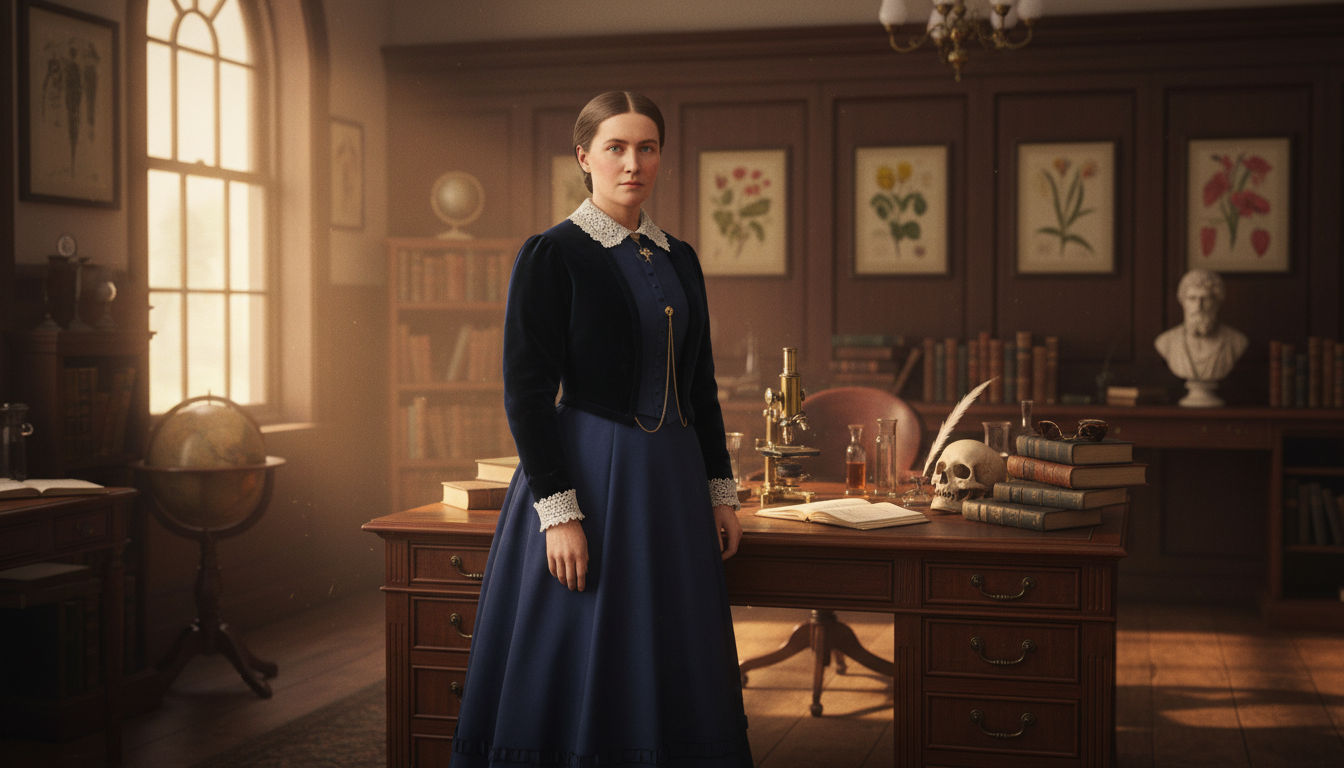
In the mid-1800s, a woman getting an M.D. in the U.S. seemed impossible. But Elizabeth Blackwell didn’t wait for permission.
Elizabeth Blackwell was born in Bristol, England, on February 3, 1821. She had a simple idea: women should be able to study medicine if they can do the work.
At first, she taught school. It was one of the few jobs for women back then. But she didn’t give up. In 1849, she became the first woman to earn a medical degree in the U.S.
She didn’t stop there. Elizabeth Blackwell became the first woman on the U.K.’s General Medical Council Medical Register in 1859. This was a big deal in two countries.
Elizabeth Blackwell built real institutions, not just headlines. She started the New York Infirmary for Women and Children in 1857. Later, she helped launch the London School of Medicine for Women in 1874.
She also supported causes like abolition, women’s rights, hygiene, and better medical education. Her legacy is honored today with the Elizabeth Blackwell Medal, given to women who advance medicine.
Key Takeaways
- Elizabeth Blackwell was the first woman to earn a medical degree in the United States (1849).
- This Elizabeth Blackwell biography begins in Bristol, England, and follows her into American medicine.
- One of the standout Elizabeth Blackwell facts: she was also the first woman on the U.K. General Medical Council Medical Register (January 1, 1859).
- She helped found the New York Infirmary for Women and Children in 1857.
- She supported women’s medical training through the London School of Medicine for Women (opened 1874).
- Her influence lives on through honors like the Elizabeth Blackwell Medal.
Early Life and Education
Elizabeth Blackwell’s story begins in Bristol, England. Her family was known for asking big questions. When they moved to America, these debates grew louder.
Family Background and Upbringing
Elizabeth was the third of nine kids. Her dad, Samuel, was a sugar refiner and a Quaker. He fought against slavery. The family talked about important topics at dinner.
Her family was full of activists. Her brother Henry supported women’s rights. Her sister Emily became a doctor. Her sister-in-law Antoinette was the first female minister in a big Protestant church.
Educational Challenges Faced
In 1832, the Blackwells moved to the United States after a fire. They settled in New York and then Cincinnati, Ohio. When Samuel died in 1838, money was scarce.
Elizabeth and her family had to work hard. She taught at a school and privately. This kept her family afloat and her mind sharp.
Pioneering Role in Medical Education
Before medical school, Elizabeth prepared herself. She read a lot, went to lectures, and explored art. She also wrote and attended different religious services.
Her early years show a pattern: facing challenges, taking on responsibilities, and learning a lot. This pattern helped her challenge who could study medicine and be taken seriously.
| Early thread in her life | What happened | Why it mattered later |
|---|---|---|
| Reform-minded household | Samuel Blackwell encouraged serious education for sons and daughters, with private tutors and strong expectations. | It made learning feel like a right, not a privilege, which fits key Elizabeth Blackwell facts about her persistence. |
| Major family move | In 1832, the Blackwells left Bristol for the United States, first New York and later Cincinnati. | It placed her in American public debates on slavery and women’s roles—useful context for any Elizabeth Blackwell biography. |
| Financial shock | Samuel died in 1838, leaving the family with little money during a tough economic period. | Teaching became survival work, and that discipline later supported her demanding course of study. |
| Hands-on education work | She helped run the Cincinnati English and French Academy for Young Ladies and taught privately. | It sharpened her communication skills and confidence—two quiet building blocks in an Elizabeth Blackwell timeline. |
| Self-education habit | She studied art, attended lectures, wrote, and tested ideas through reading and reflection. | It built the mental stamina and curiosity that would carry her into medical education. |
The Path to Medicine
The start of Elizabeth Blackwell’s medical career wasn’t grand. It was about work, money, and a job that didn’t fit. If you’ve felt stuck in a “practical” choice, you’ll get it.
Then, a personal moment changed everything. A friend said a woman doctor could have made her illness less painful. This fact hits hard because it’s real.
Decision to Pursue a Medical Career
Elizabeth didn’t rush into school. She taught to earn money and studied late at night. This hard work became her identity.
In Asheville, North Carolina, she lived with Reverend John Dickson, a former doctor. He supported her and gave her access to his medical library. Later, she met people in Charleston who helped her get closer to her goal.
Overcoming Discrimination in Medicine
She faced a lot of rejection. Doctors and schools told her women couldn’t study medicine. The messages were clear: not you.
In Philadelphia, she studied anatomy privately. Men offered her ways to give up, but she didn’t listen. This perseverance is key to her achievements.
Support from Friends and Mentors
But she wasn’t alone. Quaker friends and mentors helped her. They offered support, encouragement, and introductions.
She kept going, saving money and applying to schools. She applied to twelve schools because she refused to give up. Her persistence is inspiring.
| Place | What she did there | Who helped | What it changed |
|---|---|---|---|
| Asheville, North Carolina | Studied medicine alongside teaching, using a home library to build fundamentals | Reverend John Dickson | Turned curiosity into a daily study routine and real preparation |
| Charleston, South Carolina | Taught at a boarding school while staying close to medical contacts and conversations | Mrs. Du Pré; Samuel Henry Dickson | Expanded her access to medical thinking and professional networks |
| Philadelphia, Pennsylvania | Learned anatomy privately and sought direct guidance from physicians | Jonathan M. Allen; William Elder | Exposed the era’s gatekeeping and sharpened her strategy to apply broadly |
| Letters to medical schools | Asked for entry routes, training options, and admissions advice | Quaker friends and supportive contacts | Built momentum toward applications and set up later Elizabeth Blackwell accomplishments |
Acceptance to Medical School
Imagine a door opening, but it creaks because people didn’t expect you on the other side. In Elizabeth Blackwell’s story, October 1847 is a turning point. After many rejections, one school in upstate New York accepts her.
This acceptance comes with a twist. It shows a lot about Elizabeth Blackwell’s journey in medicine. The decision was not made like a normal acceptance. It became a test of her determination and courage.
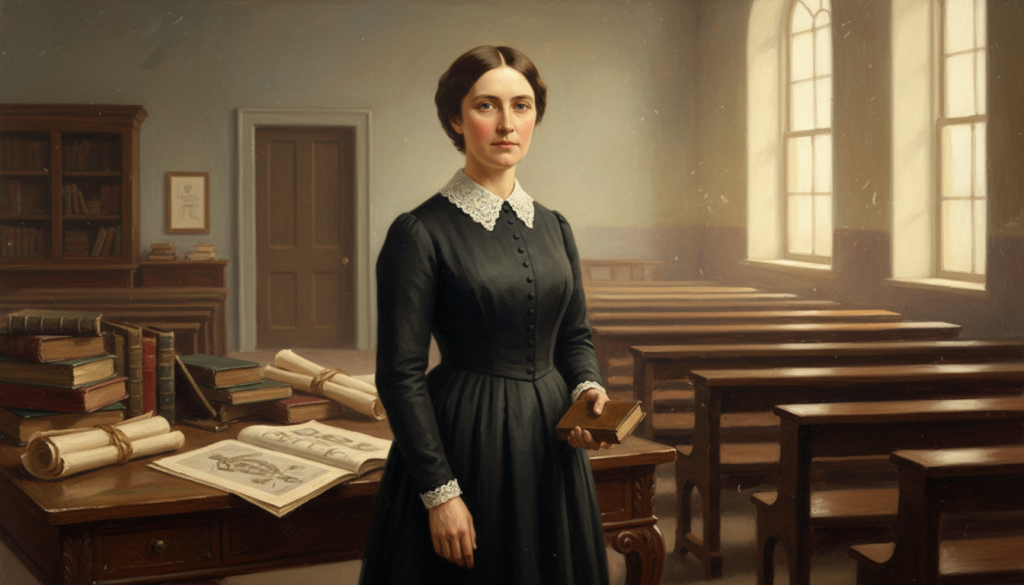
The Application Process
Elizabeth Blackwell applied to many schools, but they all said no. They thought she didn’t belong in medical studies. Schools used excuses like “policy” and “custom” to reject her.
But Geneva Medical College in New York did something different. They let the students decide. Around 150 male students voted, and if one opposed, she wouldn’t be accepted.
Enrolling at Geneva Medical College
The students voted unanimously in her favor. But many thought it was a joke. This moment on the Elizabeth Blackwell timeline shows how a “prank” turned into a serious decision.
When she arrived, the joke stopped. She didn’t back down. The Elizabeth Blackwell biography sees this as a moment of clear determination.
| Moment | What Happened | Why It Mattered |
|---|---|---|
| Oct. 1847 acceptance | Geneva Medical College admits her after repeated rejections elsewhere | It creates a sharp turning point in the Elizabeth Blackwell timeline |
| Student vote | Male students vote unanimously, believing the application is a prank | Shows how Elizabeth Blackwell women in medicine faced gatekeeping wrapped in “humor” |
| Arrival in Geneva, New York | She shows up and enrolls despite the mocking setup | Turns a dismissive gesture into a real place in medical education |
| Daily campus reality | She’s singled out in lectures and shut out of parts of training | Adds texture to the Elizabeth Blackwell biography beyond the headline “first” |
Initial Reactions from Peers
Once classes started, reactions varied. Some classmates were curious, while others were cold. She might be forced to sit apart during lectures and miss out on hands-on work.
Outside campus, people often saw her as odd. They thought she was unnatural for pursuing a career in medicine. This part of the Elizabeth Blackwell timeline shows the challenges she faced.
Achievements during Medical School
Here’s where the story really clicks: you can track the shift from “outsider” to standout. If you’re mapping an Elizabeth Blackwell timeline, this stretch is all grit, long nights, and a steady climb into undeniable skill.
Academic Performance and Recognition
In lectures and exams, she didn’t just keep up—she led. One of the clearest Elizabeth Blackwell facts is that she finished at the top of her class in 1849, after a demanding run of study that some accounts describe as just eighteen months.
Her thesis work stayed close to the real world. She wrote on typhus (sometimes framed as typhoid fever), tying disease to living conditions and public behavior, which hints at the reform energy she’d bring later.
| Milestone | What happened | Why it mattered |
|---|---|---|
| Top-ranked graduate | She earned first place in her class in 1849. | It turned performance into proof, forcing classmates and critics to take her seriously. |
| Clinical exposure in Philadelphia | She returned to Philadelphia, stayed with William Elder, and pushed for hands-on work at Blockley Almshouse under the city’s Guardians of the Poor. | It moved her learning from theory to ward reality, with patients, crowding, and hard decisions. |
| Thesis and publication | Her inaugural thesis on typhoid fever appeared in 1849 in the Buffalo Medical Journal and Monthly Review. | It marked a public step into medical writing and shaped how readers viewed her voice and priorities. |
Building a Supportive Network
Even when the room felt cold, she didn’t work alone. She leaned on supportive friends, Quaker allies, and mentors who helped her find housing, introductions, and clinical access when doors stayed shut.
This part of the Elizabeth Blackwell timeline is less about applause and more about survival strategy. She built a small circle on purpose, because nobody was handing her a ready-made path.
Overcoming Adversity
At Blockley, some resident physicians refused to assist her, and the pushback didn’t stop just because she was qualified. Yet, she kept showing up, taking notes, and doing the work in wards that shocked her, including patients suffering from typhus and severe infections.
When you line up Elizabeth Blackwell accomplishments next to the obstacles, the contrast is the point. These Elizabeth Blackwell facts don’t read like luck; they read like endurance, sharpened by daily resistance and constant pressure.
Graduating as a Doctor
Elizabeth Blackwell is about to reach the end. Years of hard work and facing doubts are almost over. This moment will show everyone that she’s a real doctor.
The Historic Graduation Day
In January 1849, Elizabeth Blackwell graduates from Geneva Medical College. Some say it was on January 23, others on January 21. This shows how fast her story spread.
When Dean Charles Lee gives her the degree, it’s a big moment. The local press even shows respect. This was big because people usually didn’t listen to women.
Significance of the Achievement
Elizabeth Blackwell’s achievement was more than personal. She got a real degree from a school. This proved she was more than just a helper.
Her degree changed things. It showed women could do the same work as men. No special treatment needed.
Impact on Women’s Rights in Medicine
With her degree, Elizabeth Blackwell didn’t hide. She used her title to help others. This is where her legacy really starts.
Her success changed what people thought women could do. Elizabeth Blackwell proved women could be doctors and fight for change.
| What changed after her graduation | Before the degree | After the degree |
|---|---|---|
| Credibility in public debate | People could dismiss her as “unqualified” | Her training was documented and harder to deny |
| How women’s roles were framed | Often limited to informal caregiving | Women could point to a clear professional model |
| Career direction and reach | A single student facing isolation | A physician positioned to build programs and institutions |
| Long-term ripple effect | Rare exceptions, easy to overlook | Elizabeth Blackwell accomplishments became a reference point others could cite |
| Momentum for future change | Progress depended on private support | Elizabeth Blackwell legacy helped shift what schools and communities would consider “normal” |
Founding Medical Institutions
Elizabeth Blackwell starts building real infrastructure. She gets more training in Paris and London. Then, she returns to New York City.
But, she faces closed hospital doors and skeptical patients. The medical world doesn’t want her.
So, she creates new paths. This changes her career.
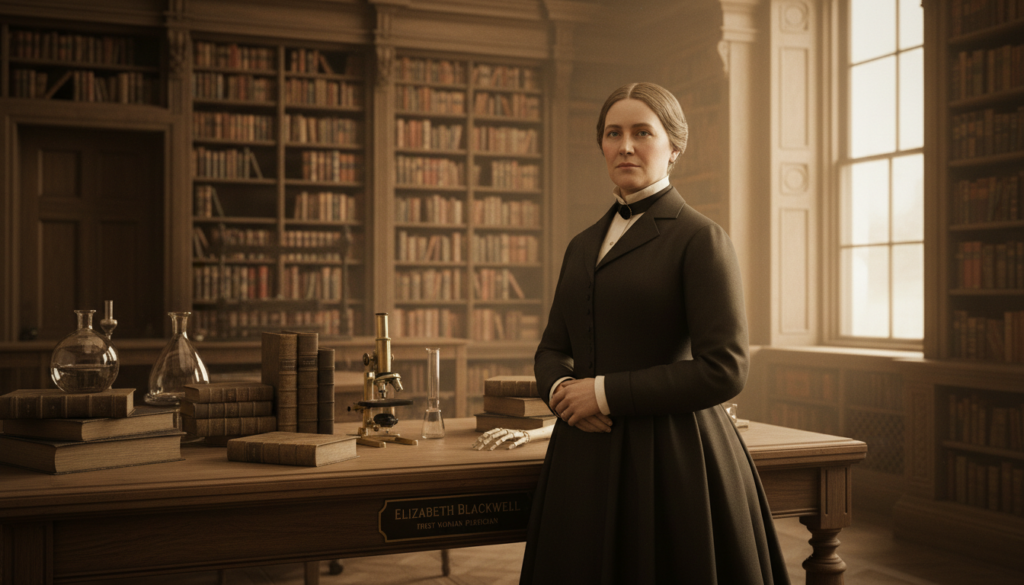
Establishment of the New York Infirmary
In 1853, she opens a small dispensary near Tompkins Square. It helps poor women. It’s for everyday medicine.
In 1857, she and Dr. Emily Blackwell start the New York Infirmary. It’s for women and children. Women are in charge here.
This is a big accomplishment. It shows women can lead in medicine. Patients get the care they need.
Contribution to Women’s Medical Education
The Infirmary is not just for treating illness. It’s also for training. Nurses and women physicians learn here.
Blackwell also lectures and writes. She believes girls should learn about health. This opens doors for them.
During the Civil War, the Infirmary supports nurse training. It works with Dorothea Dix. This makes it more respected.
Legacy of the Infirmary
The Infirmary becomes a place for women to practice and teach. It shows that patients value good care and respect.
The Infirmary is a turning point in Elizabeth Blackwell’s career. It creates a system for other women. This is why her achievements are so important.
| Year | Institution move | Why it mattered for care | Why it mattered for training |
|---|---|---|---|
| 1853 | Dispensary opened near Tompkins Square | Low-cost access for women who had few options | Early clinical routine in a setting run by women physicians |
| 1857 | Expanded into the New York Infirmary for Indigent Women and Children | Inpatient and outpatient treatment in a dedicated facility | Structured roles for women as attending physicians and leaders |
| 1860s | Nurse training linked to Civil War-era needs | Better-prepared nursing support for large-scale medical demand | Skill-based instruction that raised credibility for women’s clinical work |
| 1866 | High-volume patient service (nearly 7,000 per year) | Proof the model worked at scale, not just as a “trial” | More cases meant more supervised learning and real-world experience |
Advocacy for Women in Medicine
Elizabeth Blackwell was more than just a quiet pioneer. She was a public voice for change. She pushed for better care and more chances for women doctors.
Her ideas were surprisingly modern. She warned about doctors spreading disease if they didn’t wash their hands. She taught about prevention and hygiene in simple ways.
Role in the Women’s Medical Movement
In New York, she worked hard to build systems, not just talk about them. In 1868, she helped start a medical college for women. It was linked to the New York Infirmary and focused on real training.
When disagreements arose, she didn’t give up. She moved to Britain in 1869 and kept organizing. Her legacy wasn’t limited to one place.
Public Speaking and Education Efforts
Blackwell was great at speaking to people in a way they could understand. She talked about education, health, and preventive care to women and girls. Her approach was effective and built trust.
In Britain, she co-founded the National Health Society in 1871. Later, she supported the London School of Medicine for Women in 1874. This was a big step for women’s training in London.
She also taught. By 1875, she was a professor of gynecology. She stood up against vivisection in the school’s lab, showing her strong ethics.
Influencing Future Generations
Mentorship was one of her key strengths. She supported Dr. Marie Zakrzewska in the U.S. and Elizabeth Garrett Anderson in Britain. These relationships are key to her legacy.
She passed on more than just confidence. She taught about the importance of more training and patient contact. This helped create a pipeline for women in medicine.
| Advocacy focus | What Blackwell pushed for | Where it showed up | Why it mattered for women entering medicine |
|---|---|---|---|
| Stronger medical education | Longer courses and deeper clinical training | Medical college for women linked to the New York Infirmary (1868) | Made women’s credentials harder to dismiss and improved patient care |
| Public health basics | Hygiene, prevention, and practical health teaching | Lectures to female audiences in the U.S. and Britain | Built public trust and framed women physicians as essential community resources |
| Institution-building in Britain | Organizing groups and supporting training pathways | National Health Society (1871) and the London School of Medicine for Women (1874) | Expanded access beyond the U.S. and created stable routes into practice |
| Mentorship and example | Guidance, connections, and pressure to aim higher | Support for Marie Zakrzewska and Elizabeth Garrett Anderson | Turned individual breakthroughs into ongoing opportunity for others |
Later Life and Retirement
Elizabeth Blackwell’s life story gets bigger in its later chapters. After 1869, she moved around a lot. She went from England to France, Wales, Switzerland, and Italy. This allowed her to read, write, and speak out more.
One key date in her life is January 1, 1859. Thanks to the Medical Act of 1858, she became the first woman on the British Medical Register. This was a big moment for her.
Continuing Medical Practice
Even though she didn’t see patients as much, she stayed involved in medicine. She taught, advised, and wrote about hygiene and training. She wanted medicine to be strict but also caring.
In 1895, she published Pioneer Work in Opening the Medical Profession to Women. This book is important because it shows her story and her views in one place.
Involvement in Social Reforms
From 1880 to 1895, she got more involved in reforms. She worked on sanitation, medical ethics, and even moral issues. She didn’t like vivisection and questioned some medical practices.
She also talked about sex, prostitution, and family life. She supported sexual purity and opposed some birth control methods. Her views on these topics were complex.
| Theme she emphasized | What she pushed for | What she pushed against | Why it mattered to her |
|---|---|---|---|
| Preventive health | Hygiene, sanitation, and practical education | Careless medical training and public neglect | Prevention felt like the most humane kind of medicine |
| Medical ethics | Christian morality shaping clinical decisions | Anything she saw as profit-first medicine | She wanted trust to be the center of the doctor-patient bond |
| Research methods | Limits on animal experimentation | Vivisection as a routine tool | She believed cruelty could distort both science and character |
| Public health debates | Caution and personal responsibility | What she viewed as risky inoculation and overconfident claims | She feared new methods could harm people if treated like magic |
Final Years and Legacy
She retired from medicine in 1907. She died on May 31, 1910, in Hastings, England, at 89. Her burial was in Kilmun, Scotland, a quiet place.
Elizabeth Blackwell’s legacy is complex. She opened doors and then tried to shape what happened next. Her story is full of tension and contradiction.
Elizabeth Blackwell’s Lasting Impact
Zoom out, and the story gets even bigger. Elizabeth Blackwell’s legacy is more than just breaking a rule. She changed the rules so others could follow. Her journey from Geneva Medical College to the New York Infirmary shows her impact.
Influence on Future Female Physicians
Her influence is seen in real people and places. She mentored doctors like Elizabeth Garrett Anderson. She also supported institutions like the women’s medical college in 1868 and the London School of Medicine for Women in 1874.
Recognition and Awards
Some markers are official and clear. In 1859, she became the first female on the U.K. medical register. Later, she was honored with a U.S. postage stamp in 1974 and the Elizabeth Blackwell Medal for advancing women in medicine.
Continuing the Fight for Gender Equality in Medicine
Her battles are just as relevant today. Issues like gatekeeping and access didn’t disappear. Even the school she attended is connected to SUNY Upstate Medical University today. Her legacy keeps pushing for fairness in American medicine.
FAQ
Who was Elizabeth Blackwell?
Where was Elizabeth Blackwell born, and how did she end up in the United States?
What pushed Elizabeth Blackwell to choose medicine instead of teaching?
What discrimination did Elizabeth Blackwell face when she tried to enter medicine?
Who supported Elizabeth Blackwell as she pursued a medical education?
How did Elizabeth Blackwell get accepted to Geneva Medical College?
What was medical school like for Elizabeth Blackwell at Geneva?
What did Elizabeth Blackwell accomplish during medical school?
When did Elizabeth Blackwell become the first woman to earn a medical degree in the United States?
Why is Elizabeth Blackwell’s graduation considered such a major milestone for women in medicine?
What is the New York Infirmary for Women and Children, and why did it matter?
How did Elizabeth Blackwell help expand medical education for women in the United States?
What role did Elizabeth Blackwell play during the Civil War?
What did Elizabeth Blackwell publish, and what were her ideas about health?
When did Elizabeth Blackwell become the first woman on the United Kingdom’s Medical Register?
What was Elizabeth Blackwell’s connection to the London School of Medicine for Women?
Who were some notable people in Elizabeth Blackwell’s family and circle?
What reform movements was Elizabeth Blackwell involved with later in life?
When did Elizabeth Blackwell retire, and where did she die?
What is the Elizabeth Blackwell Medal?
What are some widely cited Elizabeth Blackwell facts and recognitions today?
Why does Elizabeth Blackwell’s legacy continue to matter in modern medicine?
Get More Medical History
Join our newsletter for fascinating stories from medical history delivered to your inbox weekly.