The History of Healing
 The Remarkable history of Greek and Roman Medicine
Dive into the world of ancient healing with our Ultimate Guide to Greek Roman Medicine. You’ll uncover surprising facts and fascinating stories.

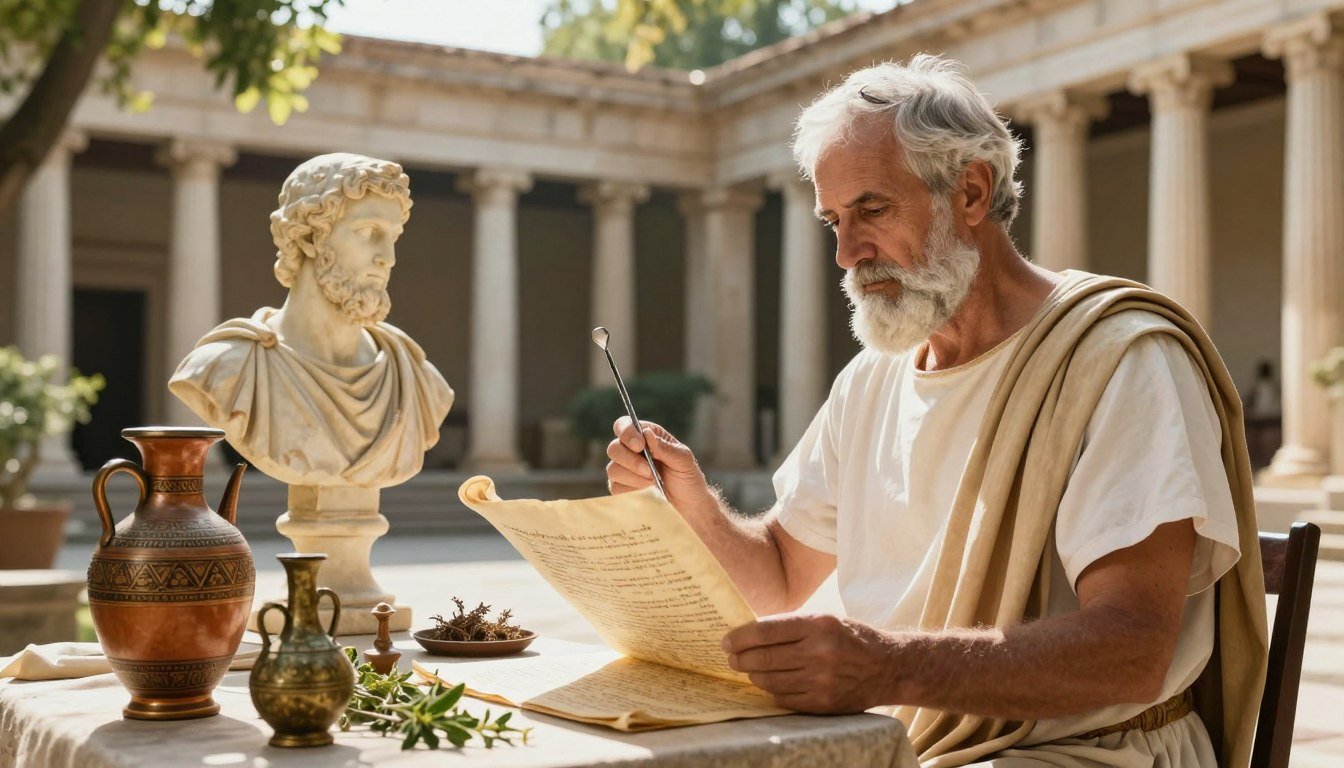
Did you know that a single herbal handbook compiled two millennia ago listed over 600 remedies, including opium and mandragora, and shaped health care for centuries?
You’re about to walk into a world where medicine meant diet plans, temple dreams, battlefield surgery, and a suspicious amount of cabbage.
In plain terms, “Greek Roman Medicine” wasn’t two tidy systems. It was a long, messy blend that grew inside the roman empire over centuries, pulling practical tips from doctors and household healers alike.
We’ll meet big names—Galen, who dissected animals and advised emperors, and Dioscorides, author of De materia medica—along with places like valetudinaria and the public works that changed health: aqueducts, baths, and sewage.
Expect hard facts (real remedies, real institutions) and surprises: brilliant breakthroughs side-by-side with lasting mistakes. By the end, you’ll see why much of what feels “modern” has roots in that old, inventive world.
Key Takeaways
- The era blended practical healing, household cures, and public health engineering.
- Galen and Dioscorides shaped medical knowledge for many years.
- Roman public works—like aqueducts and baths—boosted community health.
- Military hospitals (valetudinaria) advanced surgery and care on the move.
- Many modern ideas about hospitals and drug compendia trace back to this past.
Why Ancient Greek and Roman Medicine Still Matters Today
If you listen closely to the past, you hear routines that still shape how we stay healthy. The old world had no licensing boards, no standard degrees, and no urgent care on every corner. Care was a patchwork: household help, hired physicians, temple visits, and DIY fixes all coexisted.
What “medicine” meant then versus now
Back then, a doctor could be a household hire or a wandering expert. Wealthy families often paid foreign physicians to manage health. There was skill, but no formal training rules. That made care uneven and local.
How ancient knowledge shaped later practice
Galenic humoral ideas dominated for centuries. When texts were copied, they carried authority across time. Regimen thinking — sleep, diet, exercise — survived. Yet limits were real: no germ theory, no imaging, so some confident ideas missed the mark.
| Then | Now | Lasting Echo |
|---|---|---|
| Private, household care | Licensed clinics & hospitals | Regimens for lifestyle |
| Copies of texts spread ideas | Peer review and standards | Authority of written guidance |
| Humoral theory shaped choice | Evidence-based modern medicine | Observation-driven practice |
“Written texts outlived empires and kept shaping care.”
We’ll keep one foot in belief and one in action as we move on. Expect clear examples of what people thought and what doctors actually did.
From Magic and Prayer to Observation-Based Healing in Early Rome
Early households were the clinic, and the head of the house doubled as the family’s first-line healer.
Household care and the paterfamilias
When illness arrived, you rarely called a doctor. The paterfamilias took charge. He mixed herbs, adjusted diets, and set routines. These were simple, everyday acts. They reflected practical knowledge passed down through generations.
Cabbage, Cato, and common remedies
Cato the Elder loved cabbage. He recommended it for digestion, ear complaints, and even to wrap broken limbs. That sounds odd now, but food often served as the first cure. Families used what they had: herbs, oil, wine, and boiled plants.
Charms, temples, and the role of the god
Practical care lived side-by-side with prayer. A chant or charm might be said while applying a poultice. People believed in divine help — a local god could tip the odds toward recovery.
“Practical use and piety walked hand in hand at home.”
In short: home practice, local rites, and hands-on knowledge formed daily health care. For most, this blend of religious ritual and household remedies was simply life at the time, and it set the stage for later, more formal medical developments.
| Care setting | Typical actions | Why it helped |
|---|---|---|
| Household | Herbs, food, rest | Accessible, quick relief |
| Family leader | Diagnosis by eye, routine changes | Consistent care, low cost |
| Temple/ritual | Prayers, charms, offerings | Psychological comfort, social support |
How Greek Medicine Entered Rome and Changed Everything
A wave of crises pushed Rome to borrow new ways of healing—and it changed daily life. Plagues in the 5th century BCE led to the Temple of Apollo Medicus in 431 BCE, a public attempt to curb fast-moving diseases and calm anxious crowds.
Plague, Apollo, and the first public cures
The Apollo Medicus cult offered ritual care and offered hope when routine remedies failed. Rituals mixed with simple treatments. The god’s priests became part of civic response to outbreaks.
Asclepius on the Tiber: a dramatic arrival
The Asclepius story reads like an adventure. In 292 BCE a sacred snake resurfaced on the Tiber and a sanctuary rose on Tiber Island. That site drew patients and slowly introduced systematic healing into city life.
Shock therapy: Archagathus and public doubt
Archagathus of Sparta arrived in 219 BCE and stunned locals with aggressive surgery. Pliny slammed such practitioners, calling one a “carnifex” and warning that some doctors charged too much and harmed patients.
“Foreign skill offered both promise and fear.”
Result: imported methods stuck, then morphed. The greek medical influx gave physicians tools and new practices, and Rome adapted them to its tastes and institutions over time.
Greek Roman Medicine as a Blended System of Ideas and Practice
Think of ancient healing as a workshop where theory and hands-on tricks met at the workbench. Doctors combined careful rules with practical fixes. That mix shaped a lasting approach to health.
Hippocratic pillars: diet, regimen, and surgery
Diet, regimen, and surgery formed a simple frame most physicians kept returning to. Diet meant food as therapy. Regimen covered sleep, exercise, and lifestyle. Surgery handled injuries and urgent care.
Observation alongside belief
Doctors relied on watching symptoms, noting results, and changing treatment when needed. They tracked outcomes even without labs. Still, many people read plagues as divine signals, so rituals and prayers coexisted with clinical care.
Why philosophy mattered
Philosophy taught logic and ethics. Physicians needed both to reason about the body and to decide what was right for patients.
“The best doctor is also a philosopher.”
Galen tied these threads together: a man of writings, argument, and demonstration. Elite households hired Greek-speaking physicians for that blend, while everyday families kept old remedies and temple help close at hand.
Theories of the Body, Disease, and Balance
Imagine your body as an ancient dashboard, lit up by four shifting gauges that healers read like weather. Balance meant health. Tilted gauges meant a disease to fix.
The four humors: a health dashboard
Doctors named four players: blood, phlegm, yellow bile, and black bile. Each had a shape in the body and a story for how diseases began. If one ran high, you adjusted diet, baths, or bloodletting.
Heat, cold, wet, and dry as treatment drivers
Qualities mattered. Hot or cold, wet or dry—those labels made treatment feel logical. Too cold? Warm the patient. Too wet? Dry them out. This made the treatment choices seem systematic and repeatable.
Miasma, early contagion, and quarantine origins
People blamed bad air—rot, swamps, or foul smells—for many diseases. That idea (miasma) led to early quarantine steps and better water and sewer planning. It wasn’t germ knowledge, but it nudged cities toward safer design.
“A shared language of humors gave doctors a way to diagnose and act.”
| Humor | Quality | Common treatment | Practical use |
|---|---|---|---|
| Blood | Hot & wet | Leeches, venesection | Restore balance |
| Phlegm | Cold & wet | Warming baths, diet | Evict chill |
| Yellow bile | Hot & dry | Purgatives, fever control | Move excess |
| Black bile | Cold & dry | Warming foods, exercise | Lift gloom |
These ideas shaped medical practice for a long time. They gave a common system so professionals could compare notes. Next: how those roles became jobs in the city and army.
Physicians, Status, and Medical Careers in the Roman World
In Rome’s streets, the title physician covered a surprising range of roles. It could mean a household expert, a military surgeon, or someone trying to cash in on perks.
Household prestige and Greek-speaking doctors
By about 200 BCE many wealthy homes hired Greek-speaking physicians as a mark of status. They were part of a curated lifestyle—like a tutor or a private chef.
These doctors brought medical knowledge, language skills, and social cachet. They advised on diet, regimen, and therapy for elite families.
Army demand and Julius Caesar’s boost
The army needed skilled hands. Field surgeons kept soldiers alive and on campaign.
In 46 BCE Julius Caesar granted citizenship to physicians, a clear career upgrade. That move showed how valuable trained medical talent had become to the state.
Augustus, tax breaks, and the flood of practitioners
Augustus later offered tax immunity in 10 AD to attract more professionals. It worked—too well.
Tax perks drew unqualified people as well as experts. When profit flows, quality control follows (and not always closely).
“A booming field attracts both masters and shortcuts.”
The result? A mixed professional system: respected physicians, capable army medici, and opportunists all shared the label.
| Role | Typical setting | Impact |
|---|---|---|
| Household physician | Elite domus | Status, personalized care, advice on regimen |
| Military surgeon (medicus) | Campaigns, valetudinaria | Saved lives, standardized battlefield care |
| Unqualified practitioner | Markets, private shops | Variable outcomes, prompted later regulations |
So yes, careers in medicine shifted with law, war, and tax policy. And once you see how incentives shaped who practiced, you understand why Rome moved from one-off cures to city-wide public health steps.
Public Health in the Roman Empire: Water, Baths, and Sanitation
Cities rewired their streets and skies to fight what people called bad air—and the results were literal pipes and drains.
Aqueducts delivered steady water into towns and made daily life cleaner. Clean water meant safer drinking, easier washing, and full public baths. Those pipes cut down on mystery illnesses tied to tainted sources.
Aqueducts as health infrastructure
Reliable water supplies let people use fountains, latrines, and baths without constant fear. That steady flow changed how we practiced hygiene and how quickly cities recovered from outbreaks.
Bathing as preventive practice
Public baths were social places and hygiene centers. Daily washing, steaming, and rubbing reduced skin and parasite issues—simple prevention that looked like custom and worked like care.
Sewers, drainage, and burial rules
Sewage systems and drained swamps moved filth out of living areas. People feared foul air and decay; removing both reduced disease risks.
Burials outside city walls were practical too: keep decay away from crowded neighborhoods. These moves show a system approach — reshaping the environment to limit disease, not just treating symptoms.
“They attacked illness by changing the city itself.”
| Feature | Function | Public health effect |
|---|---|---|
| Aqueducts | Large, reliable water supply | Safer drinking, baths, fewer waterborne diseases |
| Public baths | Hygiene and social routine | Reduced skin issues and communal transmission |
| Sewers & drainage | Remove waste and swamp water | Lower miasma risk and fewer pests |
| Burial outside walls | Separate dead from living areas | Less local contamination and public alarm |
Think system: water, baths, and sewers worked together. Engineers and officials engineered health long before labs existed.
And yes — the same logic applied to forts and camps. If sanitation saved cities, it kept soldiers fighting too.
Military Medicine and the Rise of Roman Hospitals
War pushed practical care forward: you fix a man fast or lose an army.
Valetudinaria were purpose-built military hospitals. By the 1st century BCE they existed, and in the 1st–2nd centuries AD they became common across the empire. These were a clear jump from makeshift care on the field to planned health buildings.
Who ran the show
Skilled physicians (medici) led treatment. Capsarii dressed the wounds and managed dressings. Support staff kept the place clean, cooked, and recorded patients. Administrators made it a working system.
Inside a hospital
The layout was repeatable: a rectangular plan with four wings and an entrance hall used as triage. Wards sat off courtyards. There were dispensaries, kitchens, staff rooms, washing areas, and latrines. Repeatable design meant repeatable care.
What soldiers needed most
The top cases were battlefield wounds, general illness, and eye problems from dust, smoke, and infection. Eye trouble was common enough to be noted in records alongside the wounded and the sick.
“You can’t hold land if your people die from treatable injuries.”
| Feature | Function | Benefit |
|---|---|---|
| Entrance hall (triage) | Quick assessment of new arrivals | Faster treatment, better survival |
| Wards | Stable recovery space | Reduced reinjury, monitored healing |
| Dispensary & capsarii | Dressings and medicines | Cleaner wounds, fewer infections |
| Washing/latrines | Hygiene | Lower infection rates |
In short: the army forced a practical, repeatable system of care. Valetudinaria show how planning, people, and place turned battlefield need into institutional practice. Next up: if there’s one name that towers over these years, it’s Galen.
Galen and the Making of a Medical Authority
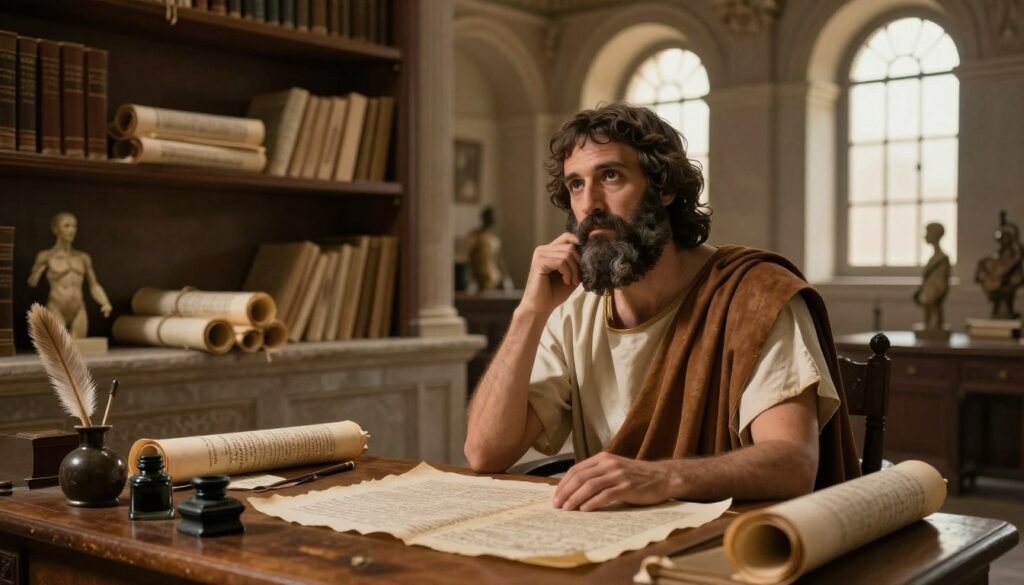
Meet the man whose curiosity and force of argument reshaped how doctors thought for centuries. Galen (129–c.216 AD) combined showmanship, strict logic, and a talent for writing that made his voice hard to ignore.
Animal dissection and building a model of the human body
Human dissection was rare, so Galen studied pigs and apes to map the anatomy of the human body. He used those lessons to explain organs, nerves, and blood flow.
Some of his conclusions fit people well. Others stuck as errors for a long time. Still, his method pushed observation forward.
Public demonstrations, prolific writings, and medical debate
Galen lectured and staged demonstrations like ancient public science shows. Rivals came to argue. Patients watched. He also left a mountain of writings—notes, treatises, lecture records—that students copied for centuries.
Galen as physician to Marcus Aurelius and the imperial court
Serving marcus aurelius and later emperors gave Galen unmatched reach. Court favor spread his ideas across cities and schools. Authority followed power.
Why his approach dominated for over a millennium
Two things mattered: persuasive writings and institutional backing. His humoral framework fit existing habits and offered a language for diagnosis. That made his system stick for many centuries.
“The best doctor is also a philosopher.”
| Feature | Impact | Long-term effect |
|---|---|---|
| Animal-based anatomy | Detailed models of organs | Guided surgery and teaching |
| Public debates | Raised standards of proof | Shaped physician training |
| Imperial position | Wide authority and patronage | Writings preserved and copied |
Dioscorides, Materia Medica, and the Birth of Pharmacology
A Roman army physician named Dioscorides turned wandering herbal lore into a practical guide you could carry on campaign.
De materia medica was five volumes of plain, usable lists: over 600 herbal remedies and roughly 1,000 simple drugs. It reads like an ancient drug handbook—recipes, identifications, and notes on use.
The book lasted about fifteen hundred years because it was useful, not theoretical. Physicians copied it, traders carried it, and workshops turned entries into real medicines. Its practical format let busy healers find a cure or a treatment fast.
Dioscorides’ army life mattered. Traveling with troops gave him access to regional plants and live tests. That field exposure made the writings trustworthy for working people in many lands and many years.
He even described opium and mandragora as sleep-inducing mixtures—early attempts at surgical anesthesia. Not perfect dosing, but real efforts to quiet pain.
“A handbook that made plant knowledge repeatable and portable.”
Now that we’ve seen how drugs were cataloged, let’s move to bedside treatment and surgery next.
Celsus and De Medicina: A Snapshot of Roman Treatment and Surgery
Celsus acts like a field reporter for healing—he records, sorts, and lays out the options rather than running a ward. His book, De Medicina, bundles eight volumes of plain advice and two focused on surgery so you can see what worked at the bedside.
Empirics vs. Dogmatics: what counts as knowledge?
Two camps argued loudly. Empirics trusted experience: if a therapy helped patients, it mattered. Dogmatics wanted theory first: they asked why a treatment should work. Celsus preserves both views so you see the debate and the practical outcomes.
Reading inflammation at the bedside
He lists simple signs any observer could note: rubor (redness), tumor (swelling), calor (heat), and dolor (pain). These four clues guided diagnosis and immediate action.
Common interventions and the role of regimen
Celsus describes blunt tools: bloodletting, massage, sweating therapies, and strict regimen-based care. Diet and routine often came first; harsher measures followed if the patient didn’t improve.
Why it matters: De Medicina survived into later history, was rediscovered, and printed in 1478. Its clear writings helped later doctors adopt proven treatment ideas and informed the use of surgical and bedside practice for a long time.
“Practical notes that guided care across centuries.”
Asclepiades and Soranus: Comfort-Focused Care and Women’s Health
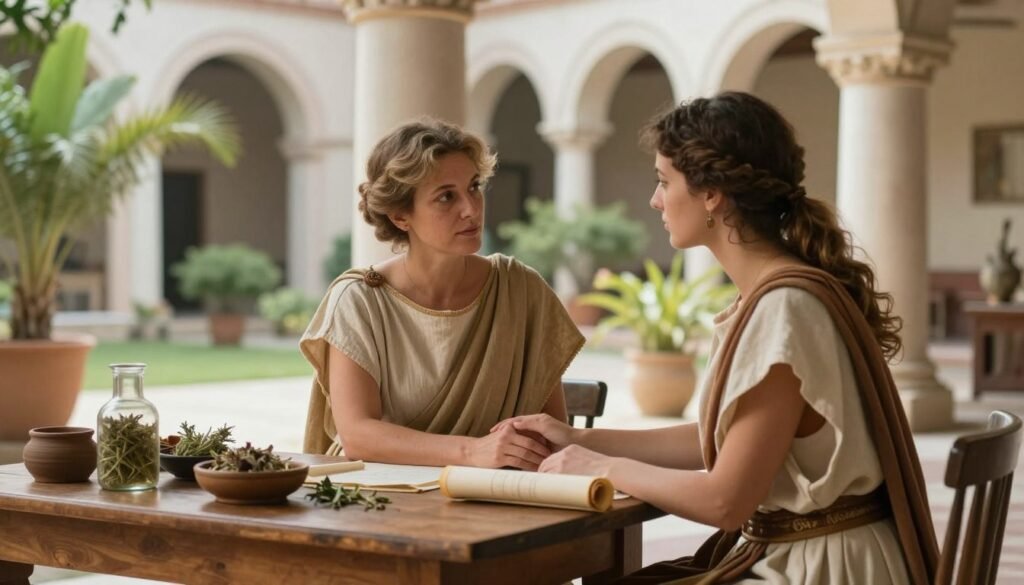
Imagine a doctor who prescribes a good night’s sleep and a soak instead of a scalpel. Asclepiades of Bithynia was that kind of physician. He favored soft therapies—warm baths, moderate wine, rest, and gentle massage.
His toolkit fit daily life. Baths eased muscles, wine calmed nerves, and massage sped recovery. People liked it. It felt kinder than cutting and often worked well for stress and minor injuries.
Atoms, pores, and blocked flow
Asclepiades explained illness with an easy image: tiny particles moving through tiny channels in the body. Disease happened when flow stopped—too tight or too loose.
The Methodic school echoed that vibe. Instead of chasing deep theory, they looked for patterns: is the body constrained or relaxed? Then pick a clear treatment. Practical, fast, repeatable.
Soranus on pregnancy, midwives, and newborn care
Soranus of Ephesus wrote a full guide to childbearing. He trained midwives, detailed prenatal advice, and described newborn care plainly. Midwives were real professionals—skilled, trusted, and versed in basic drugs and remedies.
He also discussed contraception without squeamishness: herbal options and barrier methods appear in his pages, though effectiveness varied. The tone was practical—what helps in everyday practice?
“Comfort and clear rules often beat flair in bedside care.”
| Practitioner | Focus | Common approaches |
|---|---|---|
| Asclepiades | Comfort-focused care | Baths, rest, wine, massage |
| Methodic school | Pattern-based treatment | Assess: constrained vs. relaxed; simple remedies |
| Soranus | Women’s health | Midwife training, prenatal care, contraception advice |
Materia Medica in Daily Life: Drugs, Foods, and Household Remedies
Open a wooden box and you meet the ancient pharmacy: lumps of resin, dried petals, and a tangle of uses. These are not neat bottles but raw ingredients mixed on demand.
The word medicamenta was slippery. It could mean a harmless remedy, a cosmetic, a dye—or a poison. Context decided whether a thing healed or harmed. That made everyday care risky and creative.
Drug boxes, apothecaries, and preparation
Physicians and apothecaries kept wooden boxes with frankincense, myrrh, and saffron. They ground, melted, brewed, and mixed with wine into lozenges, pastes, or ointments. It was kitchen chemistry as much as clinic work.
Botanicals and animal products in use
Pennyroyal lived in birthing rooms and as a crude contraceptive. Saffron and frankincense signaled wealth; myrrh soothed wounds. Honey and beeswax made clean dressings. Fats and oils shaped salves.
Opium served many roles: cough relief, sleep aid, and sometimes a gentler passage toward death when illness was hopeless. Even ordinary people and midwives knew some recipes by heart.
In short: drugs and remedies fit household life. Once you picture that drug box, you see how remedies blurred into perfumes, dyes, and danger—then step into the surgical world where stakes rise fast.
Roman Surgery and Surgical Procedures: Tools, Limits, and Breakthroughs
Surgery in the ancient world could save a life—or end one; surgeons treated danger like a bet. Because pain, blood loss, and infection were real threats, cutting came only after other treatment options failed.
Many injuries were considered off-limits. Deep damage to the liver, heart, spine, or major arteries was often refused. Skilled doctors avoided cases they could not fix without ruining their reputations.
Instruments and survivals from Pompeii
Museum trays show fine forceps, narrow scalpels, probes, and metal catheters. These tools prove craftsmen made precision instruments for real use, not just crude hacks.
Common operations you might recognize
Stitching wounds was routine when skin and muscle could be approximated. Trephination—drilling to relieve skull pressure—appears in records and bones. Eye work to remove cataracts aimed to restore sight when blindness ruined a person’s livelihood.
Dressings and antiseptic habits
Linen, sponges, and poultices were soaked in wine, oil, vinegar, or water. Those liquids reduced visible grime and eased pain. Without antibiotics, the goal was to keep things clean and let the body heal.
“A good surgeon fought the clock, the wound, and bad luck.”
Real limits remained. Anatomy knowledge helped, but internal operations were often fatal. Next we’ll look at who specialized, who treated ordinary patients, and how care felt on the bedside.
Specialization, Anatomy, and the Everyday Patient Experience
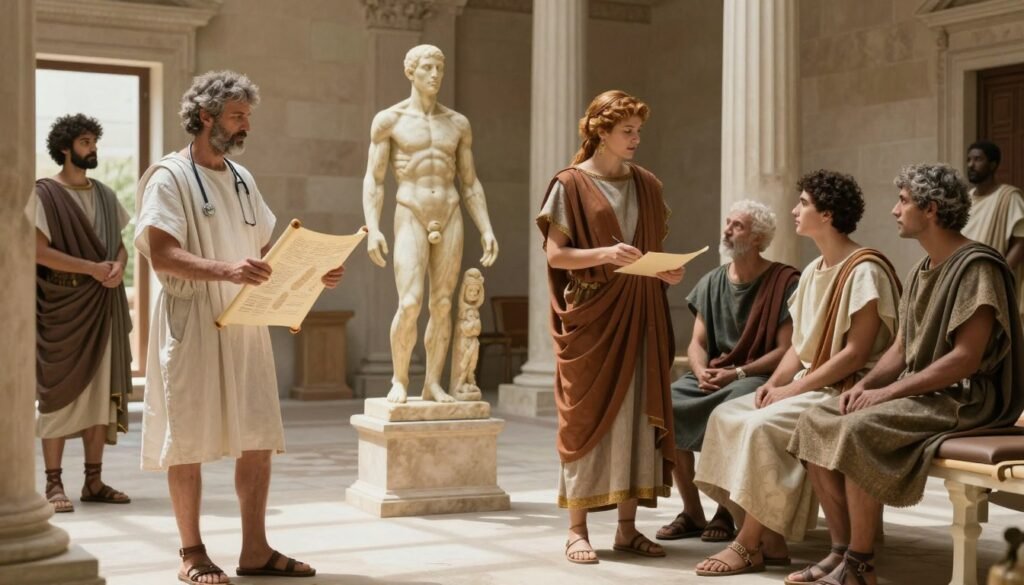
Not every doctor in antiquity carried the same toolkit; some focused on narrow, repeatable skills. Over a few generations, that focus created early specialties and sharper anatomical know‑how.
Early specialties: focused hands and tools
Yes, there were early forms of ophthalmology and urology. Surgeons and physicians learned tricks for eyes and urinary care that generalists did not. That narrowing meant better instruments and steadier results.
Tabernae clinics vs house calls
Some doctors ran small clinics in market shops. Still, house calls ruled for the wealthy. For many patients, the physician came to the domus. For others, a stall in the street was the clinic.
Temples, access, and the social reality of illness
When cost or distance blocked care, people turned to temple healing. It wasn’t just faith; it was a practical fallback. Families, enslaved people, soldiers, and elites all faced different options and risks. Your health plan then depended on status, purse, and place.
“Care looked different depending on who you were and where you lived.”
Why this matters: specialization pushed anatomy and practical knowledge forward, while varied access shaped how medicine actually reached people. Next we ask what that legacy left behind.
Legacy: What Greek and Roman Medicine Gave the World
In short: the past left us tools, texts, and systems that shaped care for centuries. Those gifts traveled across time and changed how people in later years thought about health.
Texts that traveled
Writings survived because scribes copied them again and again. Monks, translators, and later printers recirculated key works. Celsus printed in 1478 is one clear example of how old pages found new life.
That steady copying acted like a long-term backup for knowledge. When scholars needed a reference, they often turned to those same texts.
Lasting ideas and lasting errors
Humoral thinking gave a useful framework: it taught physicians how to observe, classify, and predict. But it also preserved wrong explanations for a long time.
Prognosis — predicting what would happen next — became central. A doctor’s reputation often rested on accurate forecasts as much as on treatments.
Institutional innovations
The practical wins are visible: planned hospitals in the military, repeatable ward layouts, and civic systems for sanitation (aqueducts, sewers, drainage). Those developments made public health a matter of engineering as well as practice.
“Texts, institutions, and infrastructure traveled together — bringing both insight and error into later centuries.”
| Legacy area | What endured | Long-term effect |
|---|---|---|
| Writings | Copied treatises (Galen, Dioscorides, Celsus) | Preserved medical knowledge across centuries |
| Theory | Humoral system and prognosis | Structured clinical observation; delayed some advances |
| Institutions | Valetudinaria, sanitation systems | Models for hospitals and urban public health |
The takeaway: this legacy is a both/and story. You get lasting, practical systems and influential writings — and also ideas that held back progress until new methods and evidence arrived. That messy mix is exactly why the history of medicine still matters today.
Conclusion
This history closes on the small, stubborn acts that kept people alive—a kitchen poultice, a public bath, a handbook copied for years.
We moved from home cures to imported ideas, then to a blended practice of humors, public works, and planned hospitals. That mix changed over time and kept evolving across a century or many years.
Remember the big beats: household remedies → outside influence → theory plus hands-on care → aqueducts and sewers → valetudinaria and medical texts. Figures like Galen, Dioscorides, Celsus, Asclepiades, and Soranus shaped treatment, drugs, surgery, and bedside care.
They didn’t have modern labs, but their observation and shared knowledge built a working system to fight disease, ease suffering, and support healing. Next time you use a hospital, think of the long arc of this history—and how people and doctors kept experimenting to make care better.
FAQ
What did "medicine" mean in the Roman Empire compared to today?
How did Greek medical ideas change practice in Rome?
Were early Roman cures mostly magical or practical?
Who served as doctors in the empire? Could anyone become one?
What were the main theories about the body and disease?
How advanced was Roman surgery and what tools did they use?
How did military medicine influence civilian care?
What role did public health systems play in preventing disease?
Why did Galen become so influential for over a millennium?
What is De Materia Medica and why does it matter now?
Were there treatments specifically for women and childbirth?
Which remedies and substances were commonly used at home?
How did ideas of contagion and sanitation develop in antiquity?
What was the typical patient experience—clinic, temple, or house call?
Did ancient practitioners use anesthesia or pain relief?
What lasting innovations came from ancient medical practice?
Get More Medical History
Join our newsletter for fascinating stories from medical history delivered to your inbox weekly.