The History of Healing
 Hippocrates and the Birth of Clinical Medicine
Hippocrates transformed medicine from mysticism to clinical observation, establishing ethical standards that shaped modern healthcare practice forever.

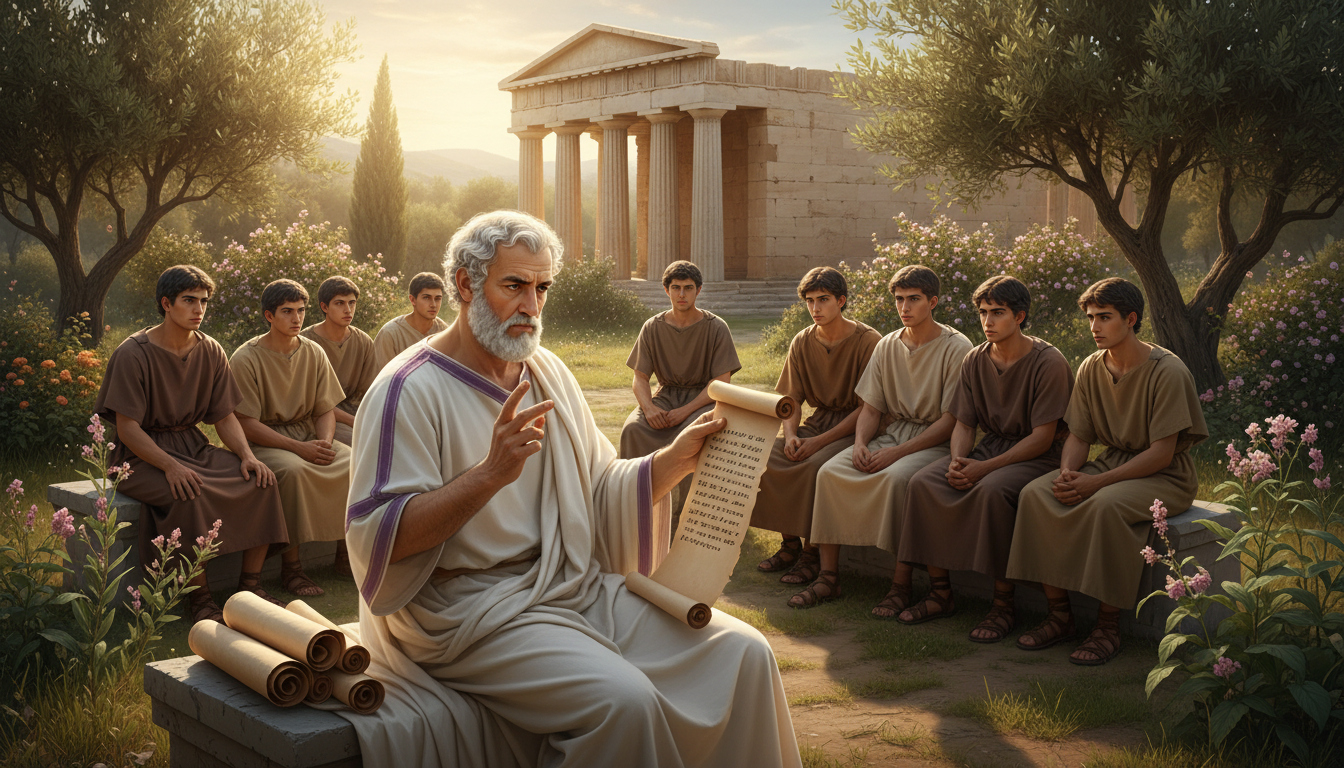
Before 460 BC, people thought diseases came from angry gods and evil spirits. Imagine being sick back then and getting treated with magic spells and animal sacrifices. It wasn’t exactly reassuring.
Hippocrates changed all that. He was an ancient Greek physician who told the world to stop blaming the gods for sickness. Born on the island of Kos around 460 BC, he moved medicine from temples to the real world. While others were sacrificing goats, Hippocrates was observing symptoms and examining patients.
Hippocrates came from a family of physicians. He learned from his dad and grandpa. He studied with famous thinkers like Democritus and Gorgias during Greece’s golden age. But he was different because he treated medicine as a science, not a guessing game.
This ancient Greek physician lived to be about 90 years old, which was quite old for 370 BC. He spent his days setting rules for doctors to follow. Before Hippocrates, there were no professional standards. No code of conduct. Just people with herbs and hope.
Hippocrates wasn’t just lucky. He changed healing from mystical mumbo-jumbo into something based on observation. He said, “Let’s actually look at what’s happening in the body instead of blaming invisible forces.” That was revolutionary for his time.
Key Takeaways
- Hippocrates separated medicine from religion and superstition around 460 BC
- He established clinical medicine as a scientific discipline based on observation
- Born on Kos island, he learned medicine from his physician father and grandfather
- He created the first professional standards for physician behavior with patients
- Living to approximately 90 years old, he spent his life transforming healing practices
- His rational approach replaced supernatural explanations for diseases
Introduction to Hippocrates
Imagine being in ancient Greece, around 460 BCE. Athens was buzzing with philosophy and art. But on the island of Kos, a doctor was about to change medicine forever. His ideas on healing have shaped how doctors treat patients for over 2,500 years.
Historical Background
The story of Hippocrates is like an epic tale. He was born during Greece’s golden age, when Socrates roamed Athens and Sophocles penned his masterpieces. At that time, medicine was shifting from temple rituals to science, and Hippocrates was at the forefront.
He didn’t just stay on Kos. When plague hit Athens between 429 and 426 BCE, killing a third of the people, Hippocrates went to help. He traveled across Thessaly and Thrace, treating diseases and teaching students wherever he went.
Importance in Medicine
So, what made the Hippocratic school so groundbreaking? They rejected the idea that angry gods caused illness. Instead, Hippocrates believed diseases came from environment, diet, and genetics. That was a wild concept back then!
His impact didn’t end with him. His sons Thessalus and Draco, and his son-in-law Polybus, also became doctors. They carried on his work, spreading his ideas across the ancient world. The Hippocratic school became the Harvard of ancient Greece medicine, where serious doctors learned.
The Hippocratic Corpus
Imagine stepping into an ancient library in Alexandria, Greece. You’d see shelves filled with about seventy scrolls. Each scroll holds a piece of the Hippocratic corpus, a collection of ancient medical writings.
These texts weren’t written by one person. At least nineteen different authors contributed to them. Written in Ionic Greek, they laid the groundwork for Western medicine.
Definition and Significance
The Hippocratic corpus marks the start of organized medical knowledge in the West. It includes lecture notes, research, and essays on health and disease. These writings are significant because they moved medicine from myths to logical observation.
Key Texts and Their Contributions
Several key works in the Hippocratic corpus have greatly influenced medicine. Let’s explore the most impactful texts and their contributions:
| Text Title | Main Focus | Revolutionary Contribution |
|---|---|---|
| The Hippocratic Oath | Medical ethics | First code of professional conduct for physicians |
| The Book of Prognostics | Disease prediction | Systematic approach to forecasting illness outcomes |
| On Regimen in Acute Diseases | Treatment methods | Detailed dietary and lifestyle prescriptions |
| Aphorisms | Medical wisdom | Concise observations about health patterns |
| On The Sacred Disease | Epilepsy study | Natural causes versus divine punishment |
The Four Humors Theory
Imagine feeling grumpy and someone says it’s because your yellow bile is out of balance. Sounds strange? For nearly 2,000 years, this was the latest in medical science! The four humors were the core of ancient medical thought, giving doctors their first way to understand sickness.
Overview of the Humors
The Hippocratic theory split your body into four key fluids, each with its own vibe. Think of them as the first mood rings in medicine:
- Blood – the warm, moist humor that made you cheerful and sociable
- Yellow bile – the hot, dry fluid responsible for anger and ambition
- Black bile – the cold, dry humor linked to sadness and introspection
- Phlegm – the cold, moist substance causing sluggishness and calm
Each humor was tied to a season, an element, and specific organs. The spleen handled black bile, while the liver managed yellow bile. When these fluids were in balance, you felt top-notch. But if one got too much, it was time to see a doctor!
Impact on Medical Practices
This ancient idea changed how doctors treated patients. They became like detectives, looking for imbalances in the humors. Too much blood? Bloodletting was the fix. Too much phlegm? Purgatives were the way to go.
The four humors led to treatments like bloodletting, cauterization, and purgatives. Doctors gave diets, exercises, and lifestyle advice based on which humor needed fixing. This method was a big step up from just guessing, marking a major advance in medicine.
Hippocrates’ Approach to Diagnosis
Imagine being sick in ancient Greece. Instead of praying or blaming gods, you meet a doctor who actually *examines* you. This was a big change. Hippocrates made doctors look at patients before deciding what’s wrong. His methods are the base of how doctors work today.
Observation and Symptoms
Hippocrates used senses to understand illness. He taught doctors to watch everything: how patients moved, their skin color, breathing, and facial expressions. This wasn’t just a quick look. He’d check:
- Complexion changes throughout the day
- Pulse rhythm and strength
- Fever patterns
- Types of pain and where they occurred
- Bodily excretions (yes, really)
He introduced terms like *symptoma*, *diagnosis*, and *trauma*. Without myths, he described conditions like diabetes, arthritis, and epilepsy based on what he observed.
Importance of Patient Examination
Patient examination wasn’t just about physical symptoms. Hippocrates was the first to take detailed patient histories. He’d ask about lifestyle, diet, and sleep patterns. He even measured pulse rates to check if patients were lying.
These methods changed medicine from guesswork to systematic investigation. Every modern medical exam follows his basic principle: observe first, diagnose second, treat third.
The Role of Prognosis
Imagine going to a doctor in ancient Greece. You’re not feeling well, but there’s no blood test or X-ray. Your doctor watches you closely, noting every symptom and change. This was how Hippocratic medicine worked, and it was surprisingly good.
Definition and Relevance
In ancient Greek medicine, predicting diseases wasn’t just a guess. It was a detailed way to understand how illnesses would progress. Hippocratic doctors were experts at spotting patterns in symptoms and knowing when to treat. They knew that timing was key – too early or too late, and you could make things worse.
Medical prognosis was the base for making treatment choices. Doctors watched symptoms at every stage, changing their plan as needed. Some illnesses needed strong action, while others needed gentle care to let the body heal.
Techniques for Predicting Outcomes
The ancient Greeks had special ways to predict diseases that seem modern today. They sorted illnesses into different types:
- Acute diseases that came on suddenly
- Chronic conditions that lasted long
- Endemic illnesses common in certain areas
- Epidemic diseases that spread widely
The idea of “crisis days” changed how doctors predicted diseases. They found that illnesses had turning points at set times. Knowing these moments helped doctors plan treatments and give families hope for recovery.
Ethical Standards in Medicine
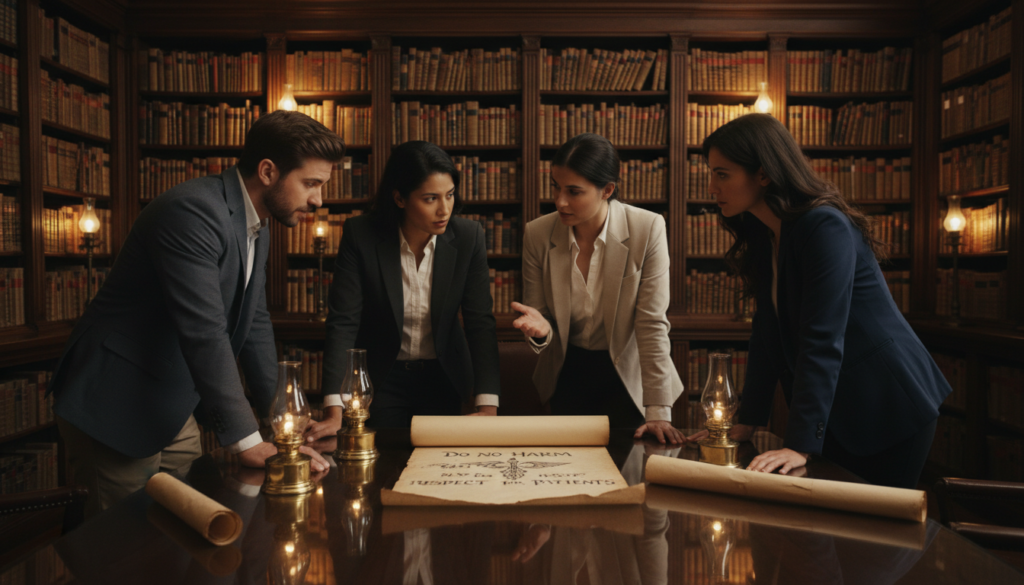
Doctors make a big promise when they graduate. It all started with an ancient Greek text that changed how doctors think about their *moral duties*. The Hippocratic oath made medicine a profession based on trust and ethics.
The Hippocratic Oath
Imagine ancient Greek doctors swearing by Apollo and other healing gods. They vowed to follow certain rules that were groundbreaking back then. “First, do no harm” is a key part of medical ethics, even though it’s not in the original text.
The oath said doctors should only treat what they know they can fix. It also protected patient privacy long before HIPAA. Doctors promised to keep secrets, showing confidentiality is very important.
Evolution of Medical Ethics
In 1948, the World Medical Association updated the Hippocratic oath. They removed the ancient Greek gods and added modern ethics. Today, medical students recite versions that fit 21st-century medicine.
Modern oaths deal with issues Hippocrates never thought of, like genetic testing and life support. Yet, the core values remain the same. Doctors must respect patients, stay within their skills, and put patients first. Medical schools around the world keep this tradition alive, showing some ethics never go out of date.
Clinical Observation and Record-Keeping
In ancient Greece, doctors did more than just treat patients. They wrote down everything they observed. Hippocrates started this practice, which changed patient care forever.
Importance in Patient Care
Hippocrates focused on patient observation because he saw patterns that superstition couldn’t explain. Doctors tracked everything—from pulse rates to how patients moved. These records helped teach other doctors.
He didn’t just look at symptoms. Hippocrates also asked about family health, living conditions, and daily routines. This approach is used in doctor’s offices today.
Legacy in Medical Documentation
Hippocrates’ record-keeping changed medicine for good. His methods are standards we follow today:
| Hippocratic Practice | Modern Equivalent |
|---|---|
| Daily symptom logs | Electronic health records |
| Environmental notes | Social history documentation |
| Family illness tracking | Genetic history records |
| Treatment outcomes | Clinical trial data |
Every time a nurse charts your vitals or a doctor updates your records, they follow Hippocrates’ tradition. He didn’t just treat patients; he laid the groundwork for modern healthcare.
Hippocrates and Natural Remedies

Imagine Hippocrates strolling through ancient Greek gardens, picking herbs for his patients. This was the start of herbal medicine that changed healthcare for centuries. His use of natural remedies shifted us from magical thinking to practical results.
Use of Herbs and Natural Treatments
Hippocrates thought your body could heal itself with the right support. His treatments were gentle, working with your body, not against it. He recommended:
- Fresh air and sunlight exposure
- Therapeutic baths and hydrotherapy
- Specific dietary changes
- Honey-vinegar mixtures for various ailments
- Carefully selected herbs based on symptoms
He famously said, “Let food be thy medicine and medicine be thy food.” When patients got sick, he often suggested fasting. He believed “to eat when you are sick is to feed your sickness.” These remedies were chosen based on his observations of many patients.
Influence on Pharmacology
Hippocrates’ work on herbal medicine set the stage for modern pharmacology. He used only pure water or wine to clean wounds. His notes on which plants helped which conditions were the first pharmaceutical records. Today, drug development follows his principle: observe, document, and refine.
The Shift from Superstition to Rationality
In ancient Greece, every illness was seen as a sign of angering Zeus or forgetting to sacrifice to Apollo. Hippocrates came along with a groundbreaking idea: what if diseases were not caused by gods? This idea changed medicine from temple rituals to a science based on observation and natural causes.
Moving Away from Mythological Explanations
Before Hippocrates, people thought diseases were punishments from the gods or demonic possessions. If you had a fever, you must have upset Artemis. Seizures? The gods were speaking through you! Hippocrates said this was wrong. He believed illnesses came from diet, environment, and lifestyle choices.
Epilepsy was called the “sacred disease” because Greeks thought it was from the gods. Hippocrates said it was like a common cold. He thought it was caused by an imbalance of body fluids blocking brain vessels – a wrong idea today, but a big step forward.
Emergence of Evidence-Based Medicine
This new way of thinking made doctors look at what actually worked. They stopped praying and started observing symptoms. They documented patient histories instead of asking oracles. The Hippocratic Corpus has no mention of mystical cures, only practical treatments based on what doctors saw.
This approach is the basis of all medicine today. By saying diseases have natural causes, Hippocrates opened the door to finding real cures. He helped us understand how the body works.
Influence on Future Medical Thinkers
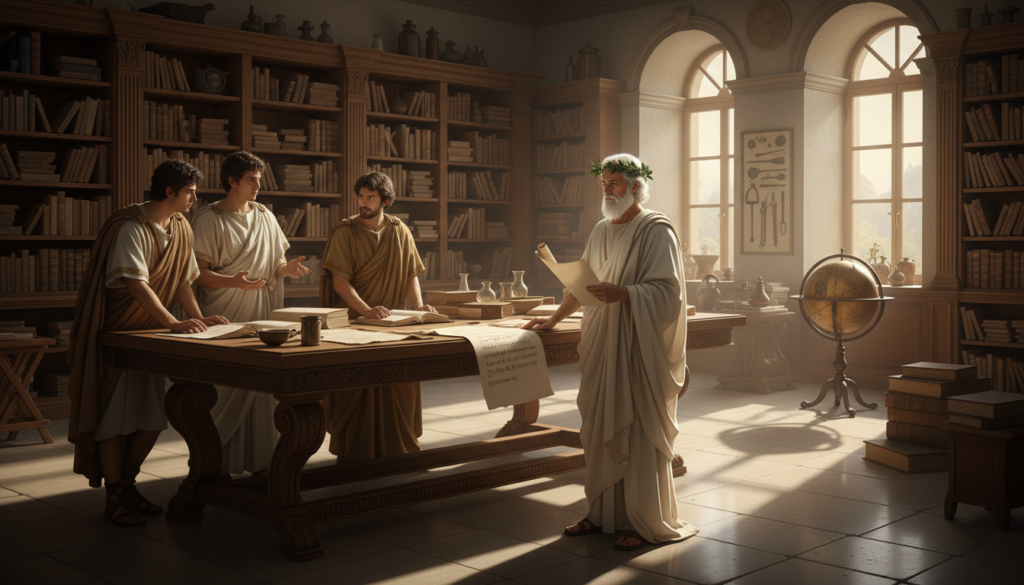
Many think ancient Greek medicine ended with Hippocrates. But his teachings started a medical revolution that lasts today. He taught medicine by observing and practicing directly, setting a standard for centuries.
His students didn’t just memorize theories. They watched real patients and documented real cases. This hands-on learning became the norm.
Mentorship and Teaching
Hippocrates created the first teaching hospital, changing medical education. His sons, Thessalus and Draco, and his son-in-law Polybus, learned from him. Galen later called Polybus the true heir to Hippocrates’ teachings.
This family teaching model spread across ancient Greece and beyond. It became a cornerstone of medical education.
His teaching was groundbreaking. He made students examine patients themselves, not just read books. This approach shaped Western medicine for 2,400 years.
Lasting Legacy in Western Medicine
The Hippocratic influence continued through time. Galen carried it forward in ancient Rome, and Islamic physicians refined it in the Middle Ages. European doctors rediscovered these principles during the Renaissance.
In the 1800s, doctors like Thomas Sydenham and William Osler built medical schools around Hippocratic methods. They emphasized the importance of direct observation.
“To study medicine without books is to sail an uncharted sea, while to study medicine only from books is not to go to sea at all.” – William Osler
Today, medical students learn the basics of patient observation from Hippocrates. Every physical exam, patient history, and clinical rotation goes back to those ancient teachings.
Hippocrates in Modern Context
When you visit a doctor today, you see the influence of a man who lived 2,400 years ago. From the forms you sign to your doctor’s notes, Hippocrates’ work is everywhere. His ideas didn’t just last; they grew into the heart of modern medicine.
Continuing Relevance of His Ideas
You might think ancient Greek medicine is outdated, given today’s technology. But Hippocrates’ methods are surprisingly relevant. He described treatments for chest infections that surgeons use today. His approach to hemorrhoids also influenced modern procedures.
Hippocrates is often called the father of lifestyle medicine. He advised patients with diabetes to exercise and eat right. This advice is what doctors give today. His focus on treating the whole person, not just symptoms, led to preventive care.
Integration of Ancient Wisdom in Today’s Medicine
Every time your doctor keeps your records private or asks about your habits, they follow Hippocrates’ lead. His ideas on privacy led to HIPAA and secure databases. His detailed notes evolved into electronic health records. Even the uncomfortable colonoscopy has roots in Hippocrates’ work.
Criticisms of Hippocratic Medicine
Hippocrates made mistakes, and we can’t blame him for not having modern tools. His theories had big flaws that slowed medicine for centuries. Today, we see how far we’ve come from ancient Greece.
Limitations of His Theories
The Four Humors theory was way off. Hippocrates thought illness came from unbalanced body fluids. But, this idea didn’t match human biology at all.
The Greeks couldn’t study human bodies because of religious rules. So, they guessed at anatomy.
French doctor M.S. Houdart called Hippocratic treatment a “meditation upon death.” It was harsh, but true. Doctors just watched patients and hoped for the best. No antibiotics or surgery back then.
Modern Scientific Perspectives
Today, we criticize Hippocratic medicine for not being able to tell diseases apart. The Knidian school failed to do this. They thought one disease could cause many symptoms.
After Hippocrates died, medicine didn’t move forward. People thought his teachings were perfect and couldn’t be improved. This led to centuries of no progress. Fielding Garrison noted that Hippocrates’ clinical case histories disappeared after his time. This shows how his ideas became a barrier, not a stepping stone.
Conclusion: The Enduring Legacy of Hippocrates
Modern medicine owes a lot to Hippocrates, who lived over 2,400 years ago. He turned healing from myths to science. His ideas on treating patients quickly, safely, and kindly were groundbreaking.
Summary of Contributions
Hippocrates made many key discoveries in medicine. He believed diseases had natural causes, not magic. He also divided illnesses into acute and chronic types, a system we use today.
He was ahead of his time in mental health, using music and work instead of punishment. He even had doctors wash with boiled water and salt before treating patients.
Hippocrates was unique because he saw patients as whole beings. He looked at their body, mind, and spirit together. This way of thinking is used by doctors today, when they consider your whole life when treating you.
The Future of Clinical Medicine Inspired by Hippocrates
Today’s medicine is building on Hippocrates’ ideas in new ways. Personalized medicine and preventive care are inspired by him. Even new fields like genomics and AI diagnostics follow his principle of careful observation.
As medicine moves into new areas like robotic surgery and gene therapy, Hippocrates’ approach remains key. The tools may change, but the focus on understanding patients and treating them ethically stays the same.
FAQ
Who was Hippocrates and why is he called the father of medicine?
What is the Hippocratic Corpus and did Hippocrates write all of it?
What is the Hippocratic Oath and do doctors use it today?
What were the four humors according to Hippocrates?
What were Hippocrates’ most important contributions to medicine?
How did Hippocrates view mental illness compared to his contemporaries?
What was the Hippocratic school’s approach to medical documentation?
What treatments did Hippocrates typically recommend?
What were the major limitations of Hippocratic medicine?
How does Hippocrates’ work influence modern medicine?
Get More Medical History
Join our newsletter for fascinating stories from medical history delivered to your inbox weekly.