The History of Healing
 The Life and Legacy of Hippocrates: Father of Western Medicine
Explore the extraordinary life and enduring contributions of Hippocrates, the revered Father of Western Medicine, and his timeless medical principles.

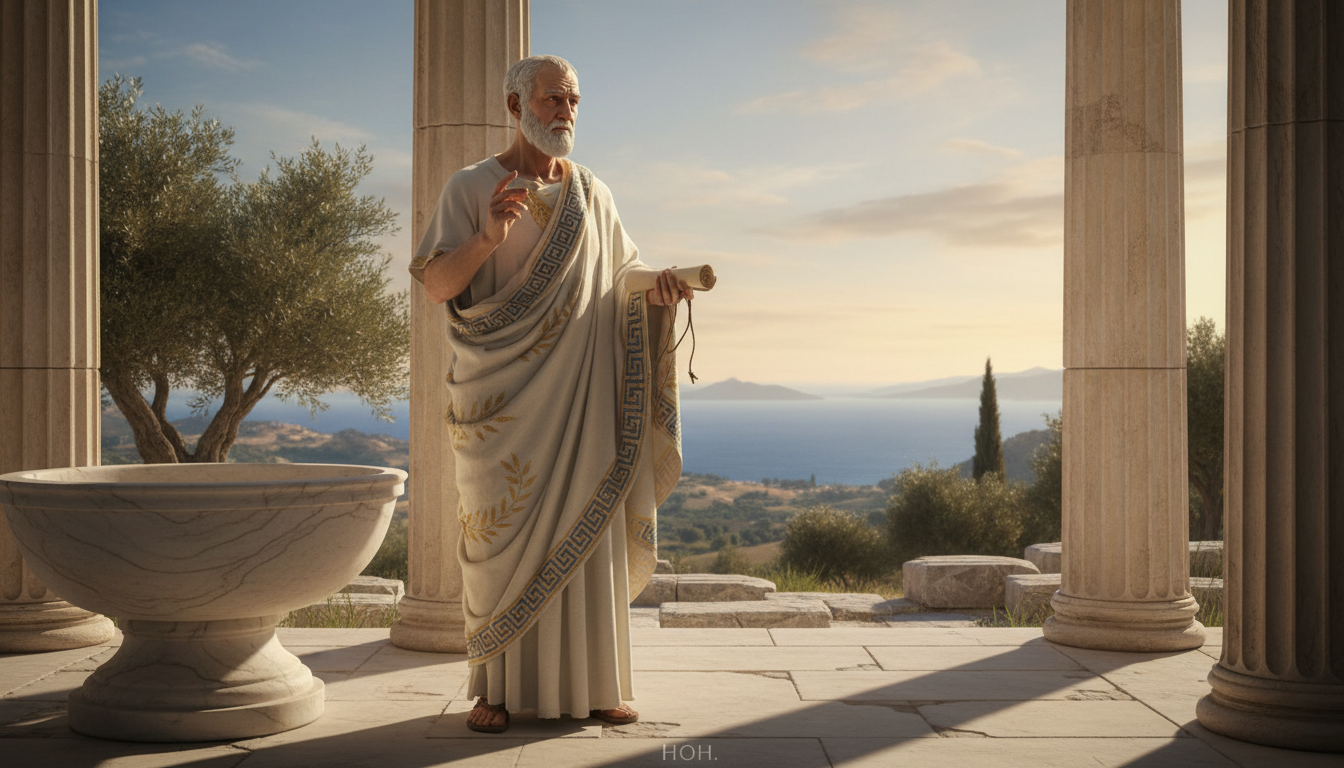
Even 2,000 years later, doctors mention Hippocrates often. They might not even know why. His impact is huge, from ethics to how we talk about symptoms.
Hippocrates is a key figure in ancient Greece. He’s known as the Father of Medicine. His story starts on the island of Kos, where he was born around 460 BC.
He likely died around 370 BC, possibly in Larissa. His long life helped his legend grow. Legends can get complicated.
Hippocrates isn’t just a name. He’s a symbol of moving medicine away from myths. The Hippocratic school focused on what you can see and measure.
We can’t know for sure what Hippocrates wrote. Much of what we know comes from the Hippocratic Corpus. This collection is made of texts by many authors.
Despite this, Hippocrates’ ideas are powerful. We’ll explore clinical observation, ethics, and the four humors theory. His focus on environment, diet, and habits is surprisingly modern.
Key Takeaways
-
Hippocrates of Kos (Hippocrates II) likely lived from around 460 BC to about 370 BC.
-
He’s known as the Father of Medicine because the Hippocratic school emphasized observation and recorded cases, not superstition.
-
This Hippocrates biography includes a key twist: we can’t be sure which works he personally wrote.
-
The Hippocratic Corpus is a collection of medical texts that later became closely tied to Hippocrates’ name.
-
Big themes ahead include the Hippocratic Oath, clinical observation, and the long-lived four humors theory.
-
Hippocrates is also linked to practical advice about lifestyle, diet, and environment—ideas that are familiar today.
Who Was Hippocrates?
Ever heard Hippocrates called the “father of medicine”? It’s a mystery. A Hippocrates biography reveals a mix of facts and stories. We can’t know everything, but his story is clear.
The mystery comes from different sources. Some stories come from writers long after him. This makes us question what’s true and what’s legend. This debate is why his story has lasted so long.
Early Life and Background
Most agree Hippocrates was born around 460 BC on Kos. But the personal details are hard to find. Soranus of Ephesus (2nd century AD) and others later filled in the gaps.
Soranus says Hippocrates came from a medical family. His father, Heraclides, and mother, Praxitela, were both from medical backgrounds. This shows how he might have learned medicine.
His family was big in medicine. His sons and son-in-law studied under him. Galen later said Polybus was his true successor. This makes Hippocrates’ family tree complex and interesting.
Education and Influences
Where did he learn? Many say he trained at the asklepieion of Kos. This was a place where healing and rituals mixed. He also learned from his family.
Soranus says Hippocrates studied with famous thinkers. He learned from Democritus and Gorgias, among others. This shows he was well-educated in both practice and theory.
Plato and Aristotle mention him. Plato even calls him “Hippocrates of Kos, the Asclepiad.” They highlight his focus on understanding the body, not just treating symptoms. This is key to his contributions.
Many stories say he traveled a lot. He worked in Thessaly, Thrace, and near the Sea of Marmara. This explains how he became so well-known.
| What you can trace | Where it shows up | Why it matters for a Hippocrates biography |
|---|---|---|
| Born around 460 BC on Kos | General scholarly agreement based on ancient tradition | Gives a stable starting point for placing Hippocrates in Greek history |
| Family details: Heraclides, Praxitela, and Tizane | Soranus of Ephesus (2nd century AD) | Suggests medicine may have been learned at home and passed through relatives |
| Students in the family: Thessalus, Draco, Polybus | Later traditions; discussed by Galen | Shows how Hippocrates contributions were framed as a “school” with successors |
| Training setting: the asklepieion of Kos | Common ancient accounts about medical learning on Kos | Connects the Ancient Greek physician role to both care practices and sacred spaces |
| Named by Plato and Aristotle | Plato’s Protagoras and Phaedrus; Aristotle’s Politics | Acts like a credibility anchor: other major thinkers treat him as real and influential |
| Traveling practice in Thessaly, Thrace, and near the Sea of Marmara | Biographical traditions repeated across later sources | Helps explain how his methods and reputation could travel beyond Kos |
The Context of Hippocrates’ Time
If you went back to Classical Greece, healthcare wouldn’t be like today’s clinics. It was a mix of rituals, home remedies, and careful observation. People combined prayer, diet, and hands-on care together.
This was the world that shaped the Father of Medicine. It wasn’t a simple timeline. Instead, it was a busy place where faith and observation met often.
Medicine in Ancient Greece
Many sick people went to asklepieia, temple spaces for healing. They hoped for a healing dream after sleeping there. Priests and healers guided them, and supernatural causes were seen as real.
But there was a big limit: no dissection. Cutting open bodies wasn’t common. This made understanding the body’s inner workings hard.
| Approach | Main focus | Typical strengths | Common snag |
|---|---|---|---|
| Knidian school | Precise disease labels and detailed diagnosis | Careful sorting of symptoms; lots of categories | Struggled when one illness showed up in many different symptom patterns |
| Koan/Hippocratic school | Broad patterns, bedside watching, and prognosis | Stronger patient care; steadier attention to diet, rest, and timing | Often used more general labels; treatment could look “passive” on purpose |
In the Koan lane, you see the start of Hippocrates’ theory of the four humors. The body was seen as a system to watch over time. This included fluids, seasons, appetite, sleep, heat, and pain.
Cultural Influences on Healthcare
Greek culture was changing fast. There was a lot of talk about reason and debate. People were testing ideas with observation, not just myths.
Pythagorean thinking also played a role. It talked about harmony and balance in nature. This helped connect ideas to Hippocrates’ theory of the four humors, even if it wasn’t a straight line.
There were also outbreaks. The Athens plague era (429–426 BCE) was a big time of trouble. Modern science has found that typhoid fever was likely the cause, based on DNA from remains in Kerameikos.
Some stories say the Father of Medicine was in Athens during this time. He supposedly used fires to purify the air. But most scholars think this is just a legend. Thucydides never mentions him, and Hippocrates was likely too young to be famous. Yet, the stories show what people wanted: a calm and careful observer in chaos.
Hippocrates’ Contributions to Medicine
Hippocrates’ work is everywhere in medicine today. His ideas might seem old-fashioned. Yet, they also feel strangely familiar. Much of what we know today comes from a large collection of writings that don’t seem to come from one person.
The Hippocratic Corpus
The Hippocratic Corpus is like an ancient medical library. It has about 70 works written in Ionic Greek. These writings were gathered in Alexandria, Egypt, later known as the Corpus Hippocraticum.
But here’s the catch: most scholars think it was written by many hands, not one. The writing styles don’t match, and the dates don’t add up. Some ideas even clash.
Think of it like this: Hippocrates became famous, and later, many texts were attributed to him. His followers and students likely added to the collection. So, the Hippocratic Corpus feels like a collaborative effort, not the work of one genius.
- The Hippocratic Oath
- Aphorisms
- On Airs, Waters and Places
- On Regimen in Acute Diseases
- The Book of Prognostics
- On the Sacred Disease
- Instruments of Reduction
If you enjoy short, impactful wisdom, you’ll find many Hippocrates quotes here. Even when it’s hard to know who wrote them, the mystery is part of the story.
Development of Clinical Observation
Hippocrates taught us to watch closely and write down what we see. Symptoms, timing, and patterns were key. Predicting what might happen next was seen as a skill, not a guess.
He focused on the basics: complexion, pulse, fever, pain, movement, and excretions. He also looked at the bigger picture, like family history and environment. In On the Sacred Disease, he argued that epilepsy has natural causes, not divine ones.
In Epidemics, he used detailed case histories. These stories follow disease progression closely. For example, one case describes a patient’s angina, swelling, and death on the fifth day. It’s not dramatic; it’s practical for learning and action.
| What you notice | How it’s recorded | Why it matters for care | Where it shows up |
|---|---|---|---|
| Complexion and facial changes | Brief description with timing (early vs. late) | Signals worsening illness or recovery trends | The Book of Prognostics (within the Hippocratic Corpus) |
| Fever patterns | Day-by-day notes (rises, drops, returns) | Helps anticipate turning points and likely outcomes | Epidemics; supports many Hippocrates quotes about observation |
| Pain and movement | Location, intensity, and whether the patient can move | Guides diagnosis and practical next steps | Common across the Hippocratic Corpus; tied to Hippocrates contributions in bedside practice |
| Excretions (sweat, urine, stool) | Color, consistency, and changes over time | Used as clues for internal processes and prognosis | Aphorisms and related clinical notes |
| Environment and habits | Water source, weather, diet, routines | Connects place and lifestyle to disease risk | On Airs, Waters and Places (in the Hippocratic Corpus) |
The Hippocratic Oath
People often talk about the Hippocratic Oath as if it’s one thing. But it’s really a guide for medical ethics that has evolved over time. This evolution keeps the Father of Medicine relevant today.

Hippocrates’ famous quotes didn’t just sit in a museum. They traveled through history, influencing doctors and their patients.
Historical Significance
The Hippocratic Oath is a key document in medicine, linked to Hippocrates. It might have been written after his death, but it’s part of the Hippocratic Corpus. This collection helped shape medical ethics.
The oath reflects Pythagorean values like justice and respect for teachers. These values are essential for trust in medicine. This makes Hippocrates more than just a historical figure.
Over the years, the oath has been adapted and reinterpreted. A 12th-century manuscript even shows it as a cross. Later versions replaced Greek gods with the Judeo-Christian God, showing how it adapted to different cultures.
| Oath Feature | Older Tradition (Common Manuscripts) | Later Adaptations (Common in the West) | Why It Mattered |
|---|---|---|---|
| Invocation | Calls on Apollo, Asclepius, Hygeia, Panacea | Often replaced with the Judeo-Christian God | Helped the oath fit local beliefs without dropping the ethical tone |
| Teacher-student bond | Strong duty to honor teachers and share knowledge within the circle | Framed more as mentorship and training standards | Protected continuity of skills, not just personal loyalty |
| Secrecy | Strict promise to keep what’s seen and heard private | Echoes in confidentiality norms and professional discipline | Made patients safer to speak honestly, which improves diagnosis |
| Community expectations | Emphasizes solidarity with peers and ethical boundaries | Reappears as codes of conduct and licensing rules | Turned medicine into a shared craft with standards, not a free-for-all |
| Manuscript “remixes” | Examples include a cross-shaped Byzantine presentation | Modern oath texts are rewritten for new institutions and values | Shows the Oath lived as a practice, not just a fixed page |
Modern Interpretations
Today, many doctors take a version of the Hippocratic Oath. But it’s not always the original. Instead, it’s a modern, updated version that fits today’s laws and patient rights.
Some of Hippocrates’ quotes are famous for their truth. For example, “Life is short, the Art long, opportunity fleeting, experience false, judgment difficult.” It warns that medicine is not easy.
The famous phrase “Do no harm” is often shortened to just that. But in tradition, it’s “help, or at least do no harm.” It reminds doctors of their role and the importance of their work.
When you hear the Father of Medicine mentioned at a white coat ceremony, it’s not about ignoring history. It’s about testing your judgment and ethics in tough situations. And it’s about letting Hippocrates’ quotes guide your actions.
Medical Ethics and Professionalism
Hippocrates didn’t just share early medical ideas. He showed doctors how to be steady, prepared, and trustworthy. This is why he’s called the Father of Medicine.
The Hippocratic Oath gets a lot of attention. But the daily rules are just as important. They were like a checklist for being professional, long before doctors wore white coats.
Principles Established by Hippocrates
In On the Physician, Hippocrates was clear: skill isn’t enough without good conduct. Doctors should look neat, be honest, stay calm, and speak seriously but warmly. It’s like he had a sign saying “do not wing it.”
Even the work habits were detailed. He talked about lighting, tools, assistants, and how to bandage and splint. He even said fingernails should be short. It shows he valued care and respect for the body.
- Composure: steady voice, controlled pace, no panic moves
- Clean practice: orderly tools and tidy hands that won’t harm skin
- Clear roles: helpers placed where they won’t get in the way
- Method: consistent steps for wrapping, setting, and supporting injuries
The Impact on Today’s Medical Practices
Today, the same expectations shape what you see in clinics. Routines, hygiene, and clear records build trust. Hippocrates’ ideas are alive in today’s care.
There’s a focus on gentleness too. The goal is to avoid harm, not to be flashy. The Hippocratic Oath reminds us that safety is more important than speed or pride.
Ancient Medicine values helping people, not just patients. It sees people with fears, family pressures, and messy lives. If you can’t explain things simply, you’re missing the point.
| Professional habit | How it shows up today in the U.S. | Why it’s important for patient trust |
|---|---|---|
| Orderly setup (lighting, tools, room readiness) | Prep trays, sterile fields, checklists before procedures | You see a system, not improvisation |
| Controlled demeanor (calm, serious, attentive) | Measured communication in triage, exams, and emergencies | People feel safer when the clinician stays steady |
| Clean hands and precise grooming (including nails) | Hand hygiene rules, glove use, infection control audits | Reduces infection risk and signals respect |
| Consistent technique (bandaging, splinting, positioning) | Standard protocols, repeatable steps, charted aftercare | Consistency lowers errors and makes outcomes easier to track |
| Explain causes and care in plain speech | Teach-back method, informed consent talks, discharge instructions | Understanding turns anxiety into cooperation |
So, when we talk about the Father of Medicine, it’s not just about old ideas. It’s about how doctors look, act, and earn trust every minute. This is the quiet power of the Hippocratic Oath, and it’s why these standards are familiar today.
Techniques and Practices
Imagine an Ancient Greek doctor with a bag of magic pills. But Hippocrates’ methods were calm, practical, and humble. He believed the body could heal itself, so he focused on not making things worse.
Rest, quiet, and not moving were key treatments. This approach was based on the idea that sometimes, doing nothing is the best thing to do.
Diagnosis and Treatment Methods
Doctors used what they could see and feel to diagnose. They looked at skin color, breathing, sleep, pain, and appetite. They also watched how symptoms changed each day.
When they weren’t sure, they treated broadly. This way, they avoided risking the patient’s life for the sake of doing something.
For wounds, keeping them clean was important. Doctors might use water or wine to clean them. They also used balms to help, not to overwhelm the body.
Food could be medicine or poison. Hippocrates said eating when sick could feed the sickness. He treated fever as a disease and sometimes starved it to help.
When rest wasn’t enough, doctors might use fasting. They also used a honey-vinegar mix as a general treatment when they weren’t sure what else to do.
Innovations Introduced
Hippocratic practice was hands-on with bones and joints. Doctors used traction and reduction to align the body. They used tools like the Hippocratic bench to manage injuries.
Surgery was rare but described with care. Doctors used tools like trephines and scalpels. They cleaned the area with boiled water and natural perfumes.
Timing was key. Doctors believed illnesses had a turning point called a “crisis.” If things got worse on an off-day, it might mean the illness was coming back.
| Practice | What it looked like in daily care | Why it mattered |
|---|---|---|
| Clinical observation | Tracking sleep, appetite, pain, breathing, and changes over time | Helped an Ancient Greek physician build a case from patterns instead of guesses |
| Rest and immobilization | Limiting movement for injuries; prioritizing rest and recovery | Reduced strain and supported the body’s natural rebalancing |
| Wound hygiene | Rinsing with clean water or wine; sometimes choosing “dry” care; using balms | Lowered irritation and kept care focused on healing, not harsh additives |
| Diet and fasting | Restricting food during illness; using simple mixes like honey and vinegar | Matched the idea behind Hippocrates quotes that appetite can shape recovery |
| Orthopedic traction and reduction | Using controlled force and devices like the Hippocratic bench for bones and joints | Turned messy injuries into treatable problems with repeatable technique |
| Crisis and critical days | Watching for turning points and noting whether they arrived on schedule | Guided expectations about recovery, relapse, or decline without modern testing |
The Philosophy of Medicine
When you read Hippocratic writings, you see a big idea: the body is connected to everything around it. It’s tied to the weather, work, food, and time. Hippocrates looked at the big picture before focusing on details.
His quotes are simple yet wise. They tell us to watch what people breathe, drink, and live with. It’s about seeing the whole scene, not just one symptom.
Holistic Approach
In Hippocratic medicine, your daily life was as important as your health. “Diet” meant more than just food. It included how you moved, slept, bathed, and even your emotions.
Doctors adjusted their advice based on who you were. They considered your age, body type, work, where you lived, and the season. This approach was flexible and tried to fit real life into medicine.
The writings also showed how lifestyle patterns affected health. For example, sitting too much could lead to weight gain. It linked inactivity to obesity and infertility in women. It even suggested that horse riding could cause male sexual problems.
The Four Humors Theory
The four humors theory was a big idea in medicine for centuries. It came from ancient Greek ideas. The body had four fluids—blood, phlegm, yellow bile, and black bile—each with its own qualities.
This theory said health was about balance. Illness was imbalance. Many of Hippocrates’ quotes talked about helping Nature, not fighting the body.
Treatments aimed to balance the body’s fluids. This could mean changing what you ate, how much you slept, or using stronger treatments like bleeding. Even though science doesn’t support it today, it shaped how doctors thought for a long time.
| Hippocratic focus | What you’d watch | What it could change | Typical actions |
|---|---|---|---|
| Holistic routine | Sleep, meals, movement, baths, stress, sexual habits | Energy, digestion, mood, recovery speed | Adjust daily schedule, pacing, rest, and food choices |
| Environment and place | Air quality, water source, winds, local terrain, season | Breathing issues, fevers, outbreaks, chronic complaints | Change exposures when possible; time care to the season |
| Hippocrates theory of the four humors | Signs read as “too hot/cold” or “too dry/moist,” plus body fluids | How symptoms were explained and grouped | Diet shifts, rest vs. exertion, bleeding, emetics, purgatives |
| Helping “Nature” | Whether the body seems to be turning a corner on its own | When to intervene and when to step back | Support with fluids, warmth/cooling, gentle routines, careful timing |
Legacy in Medical Education
Doctors today learn from Hippocrates, even if they don’t know it. The Hippocratic Corpus taught a way to think and write. This is why Hippocrates is important in schools and clinics.

Influence on Future Generations
After Hippocrates died, his ideas were seen as sacred. This slowed down progress. Medical historian Fielding Garrison said the clinical case-history style faded after Hippocrates.
Then Galen came along (AD 129–200), keeping some of Hippocrates’ ideas alive. But Galen’s big influence also kept doctors stuck in old ways. Tradition can be both a light and a trap, even from the Father of Medicine.
The Hippocratic legacy spread far. In the Middle Ages, Islamic scholars used Hippocratic methods and added new tools. Later, Western Europe rediscovered Hippocrates, bringing back the importance of observing patients.
When we talk about careful patient watching, names like Thomas Sydenham and William Osler come up. They focused on real patients, not just theories. This is very Hippocratic.
| Era | Where the Hippocratic approach traveled | What learners took from it |
|---|---|---|
| After Hippocrates | Greek medical circles that guarded the tradition | Respect for careful notes, but a tendency to treat ideas as untouchable |
| Galen’s period (AD 129–200) | Roman medicine shaped by Galen’s teaching and writing | More structured medical writing; strong influence that could also slow debate |
| Middle Ages | Islamic world medical centers and libraries | Hippocratic observation paired with new technologies and organized study |
| Renaissance and after | Western Europe’s universities and hospitals | Revived bedside practice and detailed case descriptions |
Hippocrates’ Teachings in Medical Schools
In medical schools, it’s the everyday habits that stick. You learn to observe patients closely and write down what you see. This echoes Hippocrates, where watching is a skill, not a talent.
Prognosis was also key. When treatments were limited, being honest about outcomes was part of good care. This honesty is a core lesson that Hippocrates taught.
Hippocrates also challenged the idea of simple causes for diseases. He encouraged doctors to review past discoveries and test them against experience. This approach is surprisingly relevant today.
Communication is another important part of Hippocrates’ teachings. The Hippocratic Corpus aimed to explain things in a way that ordinary people could understand. This means learning to communicate effectively with patients.
Recognition and Commemoration
Looking for Hippocrates in museums or books? You’ll see a calm, bearded man with deep eyes. This image is powerful but might not be true. It makes exploring Hippocrates’ story fun.
Statues and Monuments
Many “portraits” of Hippocrates look the same. They show wrinkles, a thick beard, and a serious face. But, we don’t really know what Hippocrates looked like.
Many famous busts might be more like art than real pictures. They might look like gods, showing Hippocrates’ authority. A Roman bust and an engraving by Paulus Pontius helped make this image famous.
| Commemoration form | What you’ll usually see | Why it can be misleading | What it stil communicates |
|---|---|---|---|
| Roman-style busts | Bearded, aged face with a steady, “thinking” pose | Could be a standard philosopher/physician type | Trust, experience, and calm authority |
| Engravings spread in Europe | Sharpened features and dramatic lighting, made for print | Copies of copies can drift far from any original model | A memorable icon |
| Paulus Pontius after Peter Paul Rubens (1638) | A polished “great man” image with heroic weight | Artistic choices can overpower historical accuracy | Respect and fame |
Annual Celebrations and Events
Commemoration isn’t just statues. It’s in stories told every year. One story says Hippocrates was buried near Larissa, and bees made a hive on his tomb. People believed the honey could cure many ailments.
On Kos, Hippocrates’ memory feels alive. The International Hippocratic Foundation of Kos honors him. It’s a place where people come to learn and respect Hippocrates’ legacy.
Kritikon: Commentary on Hippocrates’ Work
Trying to find the real Hippocrates is a fun challenge. What seems like one clear legacy turns into a big debate. This debate is about texts, timing, and who contributed what to Hippocrates.
Debates Within Medical Community
The big fight is over the Hippocratic Corpus. The writing styles vary a lot. Some passages even disagree with each other. Scholars think it might have been written by up to 19 different people.
Even back then, people argued about what Hippocrates wrote versus what his students did. Later doctors tried to sort out what was truly Hippocrates’ work. They used his quotes to show their own authority.
Galen is a key figure in this debate. He praised Hippocrates but also questioned some ideas. He even pointed out differences in famous quotes, making the idea of a single, clear tradition harder to hold onto.
Centuries later, critics were even harsher. The French doctor M. S. Houdart called some Hippocratic care a “meditation upon death.” This criticism didn’t get rid of the old texts. Instead, it changed how people viewed the Hippocratic Corpus.
Importance in Historical Context
Even when some ideas don’t work today, their impact is huge. Humoral theory, for example, shaped medicine for centuries. It also influenced how Hippocrates’ quotes were used to teach and persuade.
The method Hippocrates used is more lasting than any theory. It involves observing closely, writing it down, reasoning it through, and making cautious predictions. This method is a key part of Hippocrates’ contributions and why his tradition is always revisited.
Some historians compare Hippocrates’ method to Thucydides’ style of history. Both look for patterns in human behavior. This simple idea keeps drawing us back to the Hippocratic Corpus with new questions.
| Flashpoint | What people argue about | Why it matters when reading today |
|---|---|---|
| Authorship | Contradictions, shifting tone, and mixed dating suggest multiple hands, not one writer. | It changes how you credit Hippocrates contributions versus the wider medical school tradition. |
| Text variants | Different manuscripts preserve different word choices in key lines, including ethical phrasing. | It affects which Hippocrates quotes you treat as stable “canon” versus later editing. |
| Later framing | Physicians like Galen praised Hippocrates while also disputing what was original to him. | It shows how authority can be built through commentary, not just through discovery. |
| Changing expectations of treatment | Later critics disliked the older emphasis on watchful, minimal intervention. | It highlights how medical “good practice” shifts with tools, risks, and cultural taste. |
| Method versus theory | Humors faded, but careful observation and case notes stayed influential. | It helps separate the lasting method in the Hippocratic Corpus from outdated explanations. |
Hippocrates in Popular Culture
Even if you’ve never read an old medical book, you’ve met Hippocrates. His name is a sign of smart medicine. It pops up in stories, classrooms, and health talks.
Hippocrates quotes are like stickers of wisdom. They are quick, catchy, but not always right. This is how pop culture works.
References in Literature and Film
Literature loves medical details, and Hippocrates has them. In Shakespeare’s Henry V, Falstaff’s death scene mentions the “Hippocratic face.” It adds a real touch to the scene.
Charles Darwin was also drawn to Hippocrates. In 1868, Darwin wrote to Dr William Ogle. He said Hippocrates’ ideas were similar to his own. Darwin joked that Hippocrates had “taken the wind out of my sails.”
In movies, Hippocrates is more of a symbol than a character. He stands for calm, logic, and seriousness. Just mentioning his name can make a point quickly.
His Image in Society Today
In everyday life, Hippocrates is in health talks and articles. “Hippocratic fingers” refers to finger clubbing. “Hippocratic face” is used when illness changes someone’s look.
But there’s a problem with quotes. “Let food be your medicine, and medicine be your food” and “Walking is man’s best medicine” are often shared. But their true origins are unclear. People repeat them because they sound wise.
Hippocrates’ name is powerful. Even when details are fuzzy, it signals trust. He represents timeless, practical, and wise medicine.
| Pop culture or everyday use | How Hippocrates shows up | Why it sticks with you |
|---|---|---|
| Shakespeare’s Henry V (Falstaff’s death) | Allusion to the “Hippocratic face” from Prognosis | Turns a scene into something vivid and bodily, not just sad |
| Charles Darwin’s 1868 letter to Dr William Ogle | Darwin compares his ideas to Hippocrates and jokes about originality | Makes ancient medicine feel surprisingly current and relatable |
| Clinical language today | Terms like “Hippocratic fingers” and “Hippocratic face” | Keeps Hippocrates present in real-world observation and diagnosis |
| Social media and motivational posters | Hippocrates quotes shared widely, including likely misquotes | Easy moral punch; his name acts as instant credibility |
Conclusion: The Enduring Impact of Hippocrates
Hippocrates may seem far away, but he’s surprisingly close. He worked without labs or MRIs. Yet, he moved medicine toward what we know today.
He focused on careful notes, patterns, and the person in front of him. This simple idea—pay attention, then pay closer attention—is key.
His work led to healthcare becoming a profession with rules. The Hippocratic Oath set ethical standards. It showed the importance of trust and duties to patients.
Hippocrates also believed diseases have natural causes, not divine punishment. This idea is clear in On the Sacred Disease, where epilepsy is seen as a medical issue, not a curse.
Lasting Influence on Healthcare
His legacy is in our language. Words like symptom, diagnosis, and therapy come from him. Even disease names like diabetes and cancer are linked to his work.
This shows Hippocrates’ impact is not just an idea. It’s part of our everyday language in clinics and hospitals.
Reflection on His Legacy
We’re trying to understand what Hippocrates really wrote. His portraits might be symbols, not real pictures. But his attitude—flexible, critical, and alert for errors—is lasting.
The saying from the Aphorisms is timeless: “Life is short, the Art long…” It makes us wonder: 25 centuries from now, what will remain true in medicine?
FAQ
Who was Hippocrates, and why have you definitely heard his name?
Why is Hippocrates called the “Father of Medicine” if he didn’t invent medicine?
What do we actually know for sure about Hippocrates’ life?
Who were Hippocrates’ parents and students—if those details are even reliable?
Where did Hippocrates study medicine?
Is there any “proof” Hippocrates really existed?
Did Hippocrates travel, or was he mainly a local doctor on Kos?
What was medicine like in Ancient Greece before the Hippocratic school?
What was the difference between the Knidian school and the Koan (Hippocratic) school?
Did Hippocrates treat the Plague of Athens?
What is the Hippocratic Corpus?
Did Hippocrates write the Hippocratic Corpus?
Which famous texts are inside the Hippocratic Corpus?
What did Hippocratic medicine do that feels surprisingly modern?
What’s the famous Hippocrates quote about epilepsy and the supernatural?
What are Hippocratic case histories, and why do historians love them?
What is the Hippocratic Oath really—and did Hippocrates write it?
How has the Hippocratic Oath changed over time?
What are the most famous Hippocrates quotes that actually come from the tradition?
What “professional rules” did Hippocratic doctors follow?
How did Hippocratic ideas shape today’s medical expectations?
What were Hippocratic diagnosis and treatment methods like?
Did Hippocratic doctors use surgery or medical devices?
Did Hippocratic medicine have anything like antisepsis?
What did Hippocrates mean by “crisis” and “critical days”?
What is the Hippocratic holistic approach?
What’s the Hippocrates theory of the four humors?
How did Hippocrates influence later medicine—specifically Galen and beyond?
Which later clinicians are often linked to reviving Hippocratic-style observation?
What did Hippocratic teaching emphasize in medical education?
Do we know what Hippocrates looked like from statues and busts?
How is Hippocrates commemorated today on Kos and elsewhere?
Why do scholars argue so much about Hippocrates and the Hippocratic Corpus?
What are some major criticisms of Hippocratic medicine?
If humoral theory was wrong, why did Hippocrates’ legacy endure?
How does Hippocratic method get compared to Thucydides?
Where does Hippocrates show up in literature and pop culture?
What medical terms are named after Hippocrates?
Are the popular “Hippocrates quotes” about food and walking real?
What lasting influence did Hippocrates leave on healthcare?
What’s the most honest way to describe Hippocrates’ legacy?
Get More Medical History
Join our newsletter for fascinating stories from medical history delivered to your inbox weekly.