The History of Healing
 Uncover the Fascinating History of Herbal Medicine
Explore the rich history of herbal medicine from ancient civilizations to modern times. Discover how plants shaped healing practices worldwide.

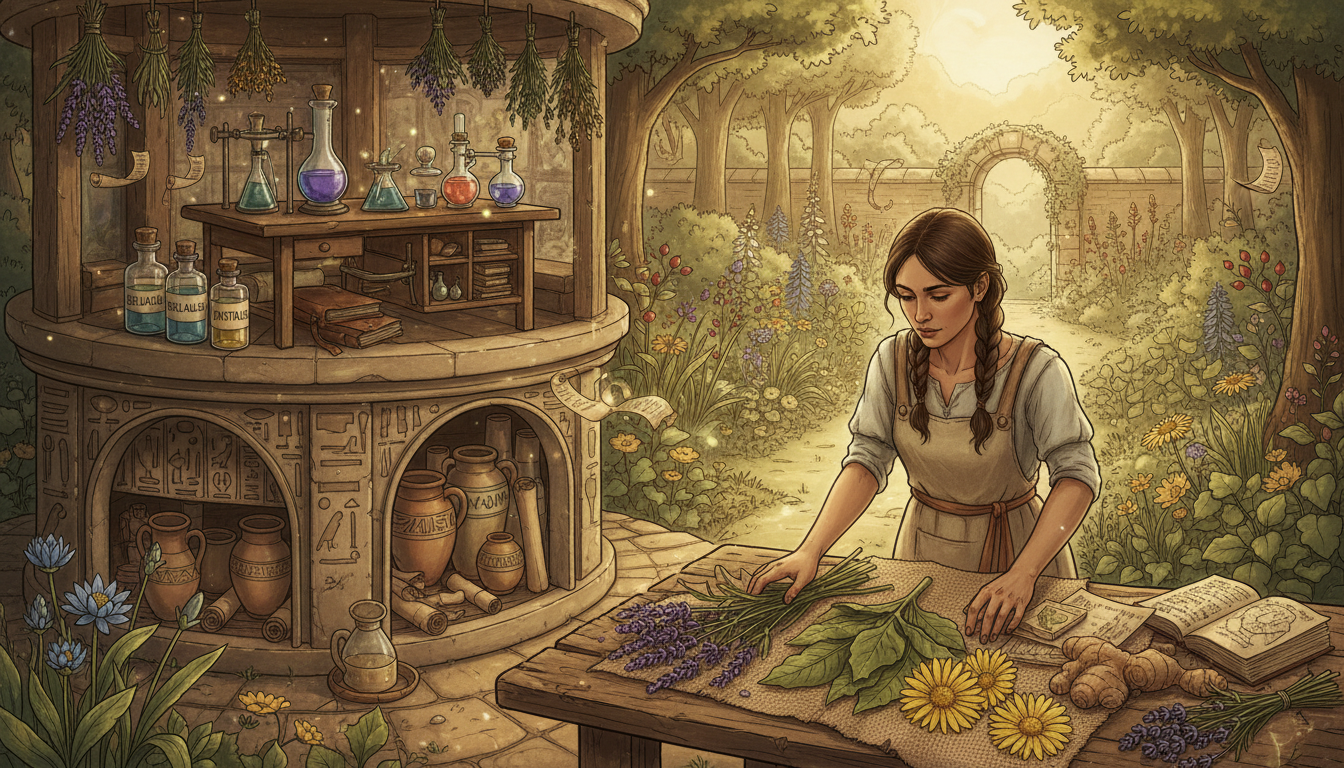
Did you know that about 25% of all modern medicines come from plants? That’s right, one in four medicines you take today started as a plant. The history of herbal medicine is not just old news. It’s alive in every aspirin and in the anti-malarial drug artemisinin, made from sweet wormwood.
Get ready for a journey through time. We’ll explore ancient Egyptian scrolls, Greek physicians, Native American rituals, and Chinese texts. The timeline of herbal remedies is full of stories of trial, error, and breakthrough.
Traditional plant-based healing was more than just treating headaches or coughs. It was the foundation of healthcare for entire civilizations. People used plants to heal physical, emotional, and spiritual wounds long before modern medicine.
Modern science is confirming what our ancestors knew. Researchers are finding powerful compounds in plants and turning them into life-saving drugs. Herbalism has shaped the medicine we use today.
Whether you’re new to plant medicine or have been curious for years, this journey into herbal medicine’s history is for you. Let’s explore it together.
Key Takeaways
- About 25% of modern pharmaceuticals are derived from plant-based compounds, including aspirin and artemisinin.
- The herbal remedies timeline spans thousands of years, from ancient Egypt and Greece to Native American and Chinese traditions.
- Traditional plant-based healing addressed physical, emotional, and spiritual needs across every major civilization.
- Herbal knowledge was passed down through generations, forming the backbone of early healthcare systems worldwide.
- Herbalism through the ages directly shaped modern pharmacology and continues to influence drug discovery today.
- Scientific research increasingly validates the healing properties of plants that ancient cultures relied on for centuries.
The History of Herbal Medicine: From Ancient Roots to Modern Practice
Long before pharmacies existed, people used plants to heal themselves. This tradition goes back tens of thousands of years. It’s found in every culture around the world.
Let’s explore what makes this tradition so special. And why it’s important today.
What Defines Traditional Plant-Based Healing
The World Health Organization says traditional medicine is based on cultural beliefs and experiences. It’s used to keep people healthy and treat sickness. At the center of this is traditional plant-based healing.
Each culture used local plants and knowledge to create its own healing practices. A healer in the Amazon rainforest used different plants than one in ancient Egypt. But they both believed nature had the answers.
The Holistic Philosophy Behind Herbalism Through the Ages
Herbalism has always seen the body as more than just parts. It views a person as a whole being. Mind, body, spirit, and environment are all important.
- Treatments aimed to restore balance, not just eliminate symptoms
- Diet, lifestyle, and emotional well-being were part of the healing process
- Prevention carried as much weight as cure
This holistic view is why many people turn to plant medicine today.
Why Plants Became Humanity’s First Pharmacy
Plants were everywhere. They were easy to find, plentiful, and worked well. Early humans watched animals eat certain leaves when sick. They tried it themselves and shared their findings with others.
Plants became our first pharmacy because they were the obvious choice. And as we’ll see next, ancient civilizations like Egypt and Greece developed advanced medical systems based on this idea.
Origins of Botanical Medicine in Ancient Civilizations
The history of using plants for medicine is fascinating. It goes back thousands of years to many cultures. These ancient people had remarkably detailed ways to use plants for health. Let’s explore the top three.
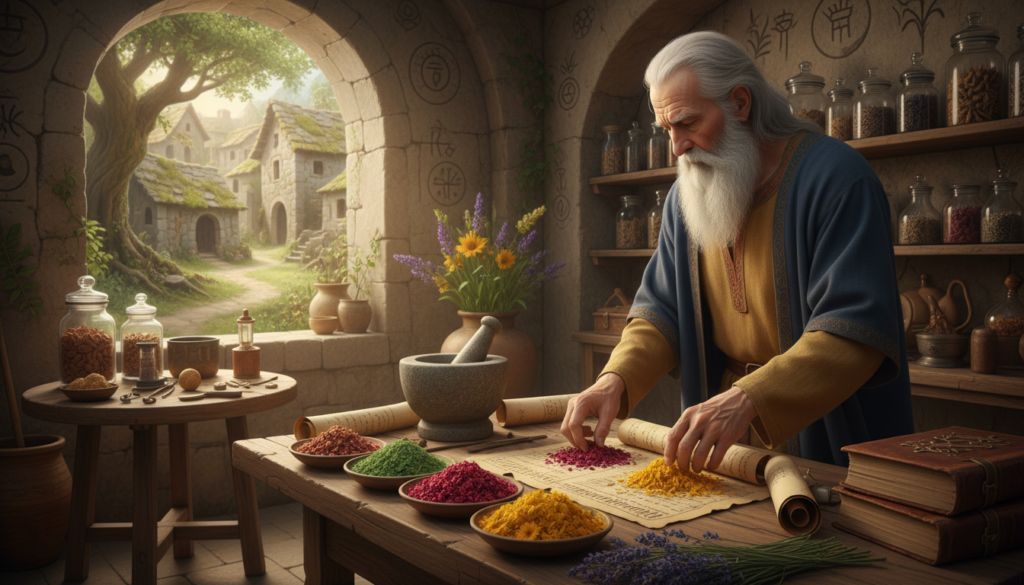
Egyptian Herbal Practices Dating Back to 1550 BC
Egypt’s herbal medicine is one of the oldest known. The Ebers Papyrus, from around 1550 BC, lists over 800 plant remedies. These include aloe vera, garlic, juniper, and castor oil.
These remedies were used for many health issues. They were made from plants and were very effective. This ancient knowledge is seen in today’s medicines.
Ancient Greek Contributions: Hippocrates and the Use of Medicinal Herbs
Hippocrates, known as the “Father of Medicine,” was a big deal. He used about 400 different plants for medicine. He believed diseases had natural causes, not angry gods.
He linked specific plants to certain health problems. This was a big step forward in medicine.
Native American Traditions and Indigenous Plant-Based Healing
Native American healers used over 2,500 plants for medicine before Europeans arrived. They used willow bark for pain, echinacea for immune support, and black cohosh for women’s health.
| Civilization | Time Period | Key Plants Used | Notable Contribution |
|---|---|---|---|
| Ancient Egypt | 1550 BC | Aloe vera, garlic, castor oil | Ebers Papyrus (800+ remedies) |
| Ancient Greece | 460–370 BC | Willow bark, mint, thyme | Hippocratic Corpus (400 herbs) |
| Native American | Pre-1492 AD | Echinacea, willow bark, black cohosh | 2,500+ species in active use |
Traditional Chinese Medicine and the Oldest Herbal Text in the World
Traditional Chinese Medicine (TCM) is very old, over 3,000 years. It’s not a mistake. Three thousand years of using plants for healing, and it’s alive today.
While ancient Egypt and Greece were also important, China created the oldest herbal text in the world.
The Divine Farmer’s Classic: Over 2,000 Years of Knowledge
The Shennong Ben Cao Jing was made about 2,000 years ago. It lists 365 herbs used in TCM. Each herb is sorted by its effects and safety.
This text led to many herbal guides. These guides are used by practitioners today.
Yin, Yang, and the Five Elements
Chinese herbal practices focus on balance. TCM uses yin, yang, and five elements: wood, fire, earth, metal, and water. Herbs are sorted by their energy effects.
This system is key to TCM. It guides how practitioners choose herbs for treatments.
How Ginkgo Biloba, Garlic, and Ginseng Originated in TCM
These three are common in health stores. But they began as TCM herbs thousands of years ago:
- Ginkgo biloba — used for memory and circulation for ages
- Garlic — used for digestion and fighting infections
- Ginseng — known as the king herb for energy
These plants moved from ancient Chinese shops to today’s supplements. It shows how deep herbal medicine’s roots are.
Herbal Medicine in Antiquity: Key Cultures and Their Healing Traditions
We’ve talked about Egypt, Greece, and China. But herbal medicine’s story is found on every continent. Amazing traditions came from unexpected places and healers history forgot.
Let’s explore three traditions that shaped plant medicine. We’re feeling their impact today.
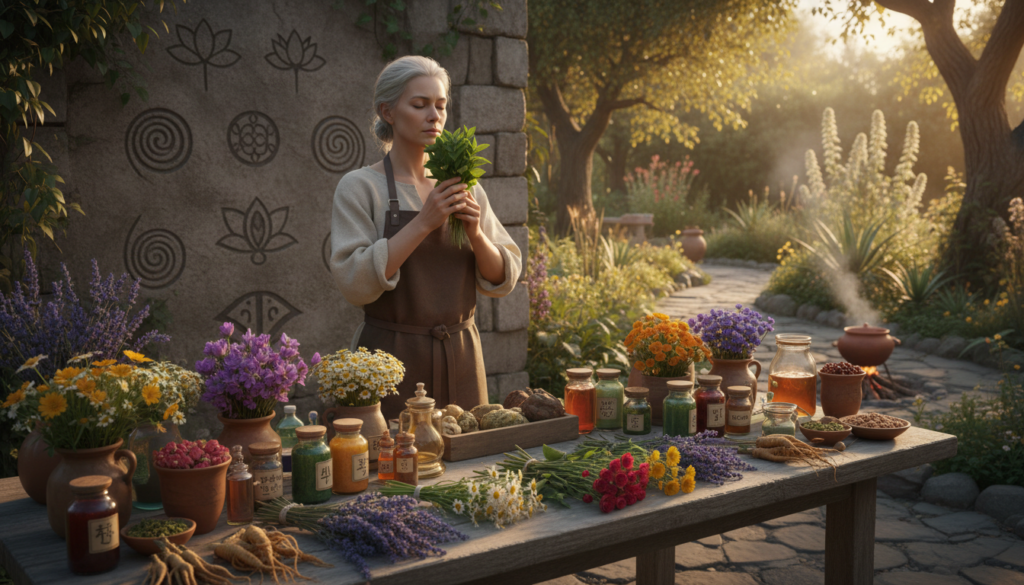
Ayurvedic Medicine and India’s Rich Plant Heritage
India’s Ayurvedic system is ancient, over 3,000 years old. Today, 70% of India’s people use it for health.
India’s herbal industry uses 960 plant species. 178 are traded in huge amounts. This is a living herbal timeline, not just history.
Women Healers Who Changed Everything
Women were key in herbalism for centuries. Hildegard von Bingen, a 12th-century German abbess, wrote about medicinal plants. She mixed spiritual and botanical knowledge in her remedies.
Many women kept plant-based healing alive. They did this when formal medicine ignored plants.
African Traditions and Continental Plant Wisdom
Africa’s role in plant medicine is huge, yet often ignored. The continent has incredible biodiversity. Indigenous communities used local plants for healing long before Europeans arrived.
- Devil’s claw from southern Africa for pain relief
- Rooibos from South Africa as an antioxidant remedy
- Pygeum bark from Central Africa for urinary health
These cultures show herbal medicine wasn’t just for famous civilizations. It was everywhere. The Middle Ages and Renaissance added their own twists to this story.
Evolution of Plant Medicine During the Middle Ages and Renaissance
Now, let’s dive into something fascinating. Plant medicine didn’t end with ancient times. It thrived in some surprising places.
Imagine monks in quiet European monasteries, copying herbal texts by candlelight. In the medieval era, these monks were the guardians of plant knowledge. They grew gardens, treated the sick, and shared ancient remedies. Even figures like Hildegard von Bingen, a 12th-century German nun, wrote guides on healing plants that we use today.
The Middle Ages and Renaissance were a bridge in herbalism’s history. Ancient remedies didn’t just survive; they were organized. Countries like Germany and France became leaders in plant-based healing. They’re also top in European sales of herbal products.
By 1989, the European Scientific Cooperative on Phytotherapy (ESCOP) was formed. It aimed to bring science to herbal medicine across Europe.
Now, you can find herbal teas, essential oils, and plant extracts in pharmacies worldwide. It’s amazing to think about.
| Era | Key Development | Region |
|---|---|---|
| 5th–15th Century | Monastery herb gardens preserved ancient remedies | Western Europe |
| 12th Century | Hildegard von Bingen documented plant healing | Germany |
| 14th–17th Century | Renaissance scholars systematized herbal texts | France, Germany, Italy |
| 1989 | ESCOP founded for phytomedicine standards | Europe-wide |
This time period laid the groundwork for modern pharmacology. You’re about to see how it all came together.
The Birth of Modern Pharmacology from Historical Uses of Medicinal Herbs
Things get really exciting here. Ancient remedies didn’t just disappear. They became the foundation of modern medicine. The use of medicinal herbs sparked a revolution in how we treat diseases.
Let’s explore how ancient medicine led to the drugs in your cabinet today.
Morphine from Opium Poppies: The First Purified Plant Compound
In 1804, a German pharmacist named Friedrich Sertürner made a big discovery. He isolated morphine from the opium poppy (Papaver somniferum). This was the first compound from a plant used for medicine. It showed that plant medicines could be made reliable and precise.
From Willow Bark to Aspirin: How Ancient Remedies Inspired Modern Drugs
For ages, people used willow bark to fight pain and fever. In 1897, Bayer chemist Felix Hoffmann made aspirin from this tradition. This shows how plant medicine evolved clearly.
Cancer Therapeutics, Antibiotics, and Other Drugs Derived from Plants
Many drugs come from plants. Here’s a list:
| Drug | Plant Source | Medical Use | Year Introduced |
|---|---|---|---|
| Morphine | Opium Poppy | Pain Relief | 1804 |
| Aspirin | Willow Bark | Pain, Fever, Inflammation | 1899 |
| Quinine | Cinchona Tree | Malaria Treatment | 1820 |
| Paclitaxel (Taxol) | Pacific Yew Tree | Cancer Therapy | 1992 |
| Vincristine | Madagascar Periwinkle | Leukemia Treatment | 1963 |
The National Cancer Institute says over 60% of cancer drugs come from nature. The history of botanical medicine is alive today. It shapes the treatments we use every day.
Global Reliance on Herbal Remedies in Developing Nations
Something might surprise you. While Western countries debate herbal supplements, billions worldwide rely on plants for health. The history of herbal medicine is alive today, across continents.
Africa’s 90% Dependence on Traditional Plant-Based Healing
This fact is amazing. Up to 90% of Africa’s people use plants for health. It’s not just history — it’s today. For example, the African potato treats HIV symptoms when clinics are rare.
India’s Herbal Industry: 960 Plant Species in Active Use
India’s herbal history goes back thousands of years through Ayurveda. It uses about 960 plant species in its medicine. This is a huge library of plant knowledge, alive in a nation of over 1.4 billion.
China’s Integration of Traditional and Western Medicine in Hospitals
China took a special path. It mixes traditional herbal formulas with Western treatments in hospitals. This shows centuries of knowledge meeting modern science.
| Country/Region | Population Using Herbal Medicine | Key Feature |
|---|---|---|
| Africa | Up to 90% | Primary healthcare source in rural areas |
| India | Over 65% | 960 plant species in active commercial use |
| China | Over 40% (integrated care) | Herbal and Western medicine combined in hospitals |
Despite synthetic drugs for a century, herbal medicine is key worldwide. These numbers show plants are a lifeline, not just ancient relics.
The Resurgence of Herbalism in the United States and Western Countries
Herbal medicine’s history didn’t end in pharmacies. In the U.S. and Western countries, a big change has happened. People are going back to plants. By 2007, about 38% of American adults and 12% of kids were using traditional medicine.
This means tens of millions of people are choosing herbs over or with regular treatments.
Rising Consumer Interest in Natural and Traditional Therapies
So, what’s behind this change? The National Center for Complementary and Alternative Medicine says herbal therapy is very popular. It’s the top choice at 18.9%, after prayer.
In a big survey, 12.8% of adults were taking herbal supplements. Another study found 42% of people use dietary supplements. They like saw palmetto, flax, garlic, and Ginkgo biloba, along with multivitamins.
Herbalism has always had fans, but this new wave is different. It’s because people have more access to info and want natural options.
The Billion-Dollar Herbal Products Market and Its Rapid Growth
This interest turned into a huge market. The herbal supplement market is now worth billions. You can find echinacea, turmeric, and elderberry supplements everywhere.
This isn’t just a trend. It’s a big change that stores and makers are trying to keep up with.
The Dietary Supplement Health and Education Act of 1994
DSHEA 1994 was a key factor. It let herbal products be sold without the same rules as drugs. This made supplements easier for people to get.
But it also made manufacturers responsible for quality and safety. DSHEA has greatly changed American herbalism, and we’re feeling its effects today.
FAQ
What exactly is traditional plant-based healing, and how is it defined?
How far back does the history of herbal medicine actually go?
What role did ancient civilizations like Egypt and Greece play in the evolution of plant medicine?
What is The Devine Farmer’s Classic of Herbalism and why is it so important?
How does Ayurvedic medicine fit into the broader herbal remedies timeline?
Who was Hildegard von Bingen, and what did she contribute to herbal medicine in antiquity?
How did ancient herbal remedies lead to modern pharmaceutical drugs?
Why do so many people in Africa and developing nations rely on traditional plant-based healing?
Is interest in herbal medicine actually growing in the United States and other Western countries?
What happened during the Middle Ages and Renaissance that shaped the evolution of plant medicine?
Get More Medical History
Join our newsletter for fascinating stories from medical history delivered to your inbox weekly.