The History of Healing
 The Development of the Hospital Bed
Explore the evolution of the hospital bed and its impact on patient care through innovative designs and advanced features for comfort and safety.

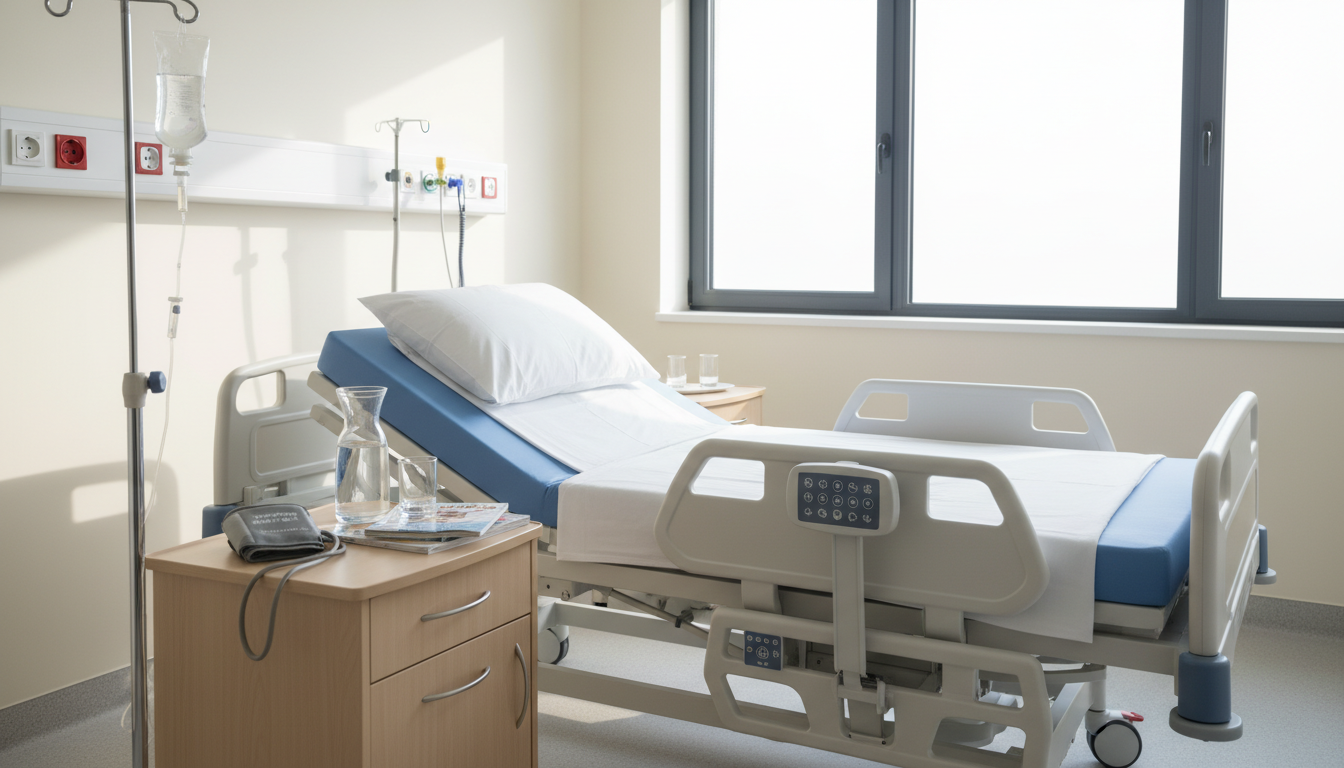
In a modern hospital, “bed” can mean both the furniture and the hospital’s capacity. Saying a hospital is “out of beds” might not mean they’re out of mattresses. It could mean they’re out of space, staff, or the ability to care for more people safely. This shows how important the hospital bed really is.
But most of us don’t think about hospital beds until we need one. They play a big role in our sleep, comfort, and recovery. They also affect the daily work of nurses and doctors who use them.
The story of the hospital bed is quite a makeover. The first “beds” were like stretchers, with poles and cloth. Over time, they evolved into tools that can raise the head, lift the feet, change height, and add safety rails.
In the next sections, we’ll explore how the hospital bed changed over time. We’ll see how it went from simple designs to the modern features we know today. It took about two centuries of trial and error, including some strange ideas, like built-in toilets.
Key Takeaways
-
A hospital bed isn’t just furniture—it can also mean a unit of hospital capacity.
-
Early hospital bed designs were often simple stretchers made from poles and cloth.
-
The medical hospital bed became a core part of comfort, rest, and recovery—not a side detail.
-
Modern features like adjustable height and head/foot elevation took decades to perfect.
-
Side rails and locking wheels helped make the hospital bed safer for patients and staff.
-
What looks “basic” today is the result of long, messy experimentation at real bedsides.
Historical Overview of Hospital Beds
Trying to find the first hospital bed is tricky. There’s no clear start date. What we call a bed has changed over time, depending on the place and need.
Early beds were more like transport tools than furniture. They were simple, strong, and made for moving injured people fast.
Ancient Medical Practices
In ancient times, healing happened on any surface available. This included mats, low platforms, or basic cots. The main goal was to help the healer work, not just for rest.
Materials were chosen for their practicality. Wood, fibers, leather, and padding were used where they could be found. These choices are seen today in the balance between durability and cleanliness in hospital beds.
Evolution Through the Ages
As hospitals grew in medieval and early modern Europe, beds became more standard. Wards needed beds that could be fixed, moved, and reused. Privacy was limited, but structure was key.
By the 1800s, metal frames and mass production helped hospitals grow. A hospital bed supplier was now supporting new routines like monitoring and charting.
| Era | Typical bed setup | What it prioritized | Common materials |
|---|---|---|---|
| Ancient period | Mats, low platforms, simple cots | Access for hands-on care | Reeds, wood, linen, leather |
| Medieval hospitals | Shared ward beds, tighter spacing | Capacity and reuse | Wood frames, straw ticking, wool |
| Industrial age (1800s) | More standardized frames, easier to move | Cleaning, durability, faster setup | Iron or steel, canvas, early springs |
| Early 1900s | Adjustable features begin appearing | Positioning for breathing and recovery | Steel frames, mechanical joints, washable covers |
Key Innovations in Early Designs
When caregivers saw how important positioning was, beds started to change. Raising the head helped breathing. Lifting legs eased swelling. This led to the use of hinges, cranks, and stronger joints.
Wheels and side rails were a big step forward. They made moving patients safer and reduced falls. Even today, these features are essential in hospital bed designs.
Behind the scenes, how beds were distributed also changed. A hospital bed supplier had to think about spare parts, cleaning, and quick replacements. This practical approach shaped what hospitals bought and what makers made.
The Role of Hospital Beds in Patient Care
A hospital bed is more than a place to rest. It helps you move and stay safe while healing. This is true in hospitals and at home.
When choosing between renting or buying a bed, think about what it does. Small changes can make a big difference in how you feel.
Comfort and Recovery
Comfort is key. Adjusting the bed can help you relax. This can lead to better sleep.
The Fowler’s position is a classic. It lets you sit up and breathe easier. It makes everyday tasks feel normal again.
Adjusting the bed can also ease pressure and help you move. This can make a big difference at home.
Impact on Patient Outcomes
Some features are just for comfort. But they also help with care routines. Adjustable height is a great example.
When the bed goes up, caregivers can work closer. This protects their backs and shoulders. Lowering the bed makes getting in and out easier. This can prevent falls, which is why rentals are popular after surgery.
Changing positions helps the skin and keeps blood flowing. This can prevent pressure injuries. It’s a simple but important part of care.
Integration with Medical Technology
Modern beds work well with medical equipment. They have mounts for bars and room for tubing. Even at home, they can keep things organized.
These beds also support safe transfers. Rentals can make the room feel safer and easier to navigate.
| Bed feature | How it supports care | Everyday moment it helps |
|---|---|---|
| Head elevation (Fowler’s position) | Supports eating, alertness, and can ease breathing | Sitting up for meals, meds, or short conversations |
| Leg and knee elevation | Helps repositioning, comfort, and circulation support | Settling after a turn or reducing leg heaviness |
| Hi-low height adjustment | Improves transfer safety and caregiver ergonomics | Standing up with less strain; easier dressing and bathing |
| Accessory compatibility (rails, trapeze, mattress types) | Supports mobility, pressure management, and safer handling | Turning, sitting, and moving without yanks on tubing |
Modern Features of Hospital Beds
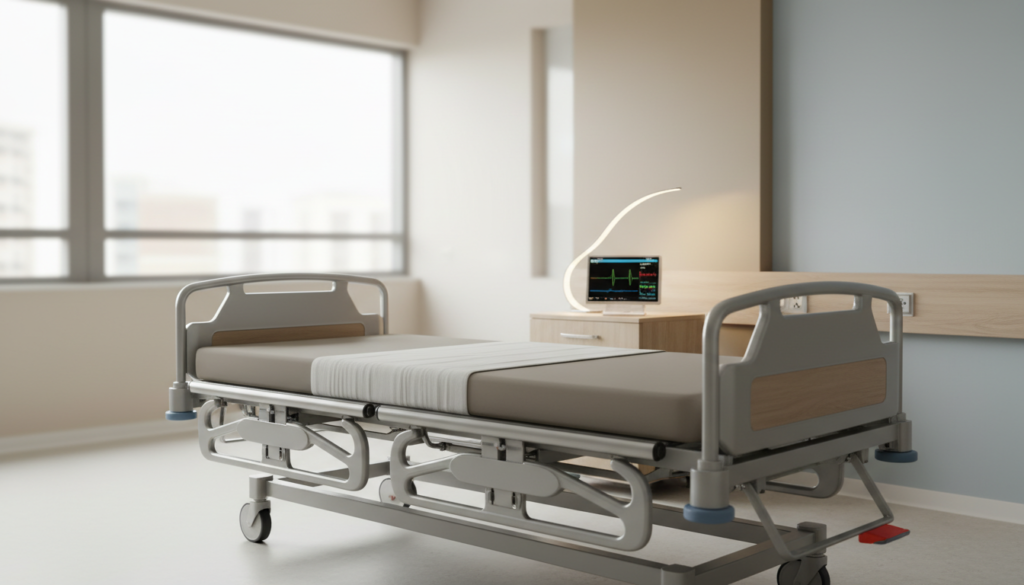
Modern hospital beds seem simple at first. But they’re full of smart mechanics. Spend a minute with an adjustable bed, and you’ll see how small tweaks improve comfort, safety, and workflow. Portable beds offer the same features in a lighter, more flexible form.
Adjustable Height Mechanisms
The big feature is the full-bed lift. With a button, the bed rises for safer transfers. Then, it lowers to reduce fall risk when resting. Many models let you adjust the head and feet separately.
This makes a big difference in daily life. You can sit up to eat, ease leg pressure, or find a breathing-friendly position. Adjustable beds use electric actuators under the frame for smooth, repeated use.
Built-in Mobility Aids
Mobility features are key. Side rails raise and lower for grip, locking easily. Some beds have low-friction casters for quick moves and wheel locks for stability.
Portable beds focus on these features. They have compact frames, easy steering, and parts that fold for transport. Yet, they keep the safety features that prevent slips.
Advanced Bedside Controls
Controls have become easier to use. Handsets have clear buttons for up/down, head, and knee controls, plus a quick “flat” reset. Many systems also have controls on the rail for easy access.
Here’s what you’ll usually find in common setups:
| Feature | What it does for you | Where you’ll notice it most |
|---|---|---|
| Hi-low height range | Helps with transfers, reduces awkward bending, supports safer exits | Getting in/out of bed, caregiver tasks |
| Independent head and knee articulation | Lets you dial in comfort and reduce sliding down in bed | Meals, reading, breathing comfort |
| Rail-mounted controls | Keeps adjustments within reach and limits remote “hide-and-seek” | Nighttime position changes |
| Locking casters and steer assist | Moves smoothly, then stays put when you need stability | Room transfers, cleaning, repositioning |
| Battery backup (on select models) | Maintains basic positioning during brief power loss | Unplanned outages, transport moments |
Whether you’re looking at an adjustable bed for long stays or a portable bed for short-term needs, these features are key. They work quietly every day, improving your comfort and safety.
The Influence of Technology on Hospital Beds
Today’s hospital beds are more than just places to sleep. They use motors, sensors, and software for smooth movements. This is important for nurses when they move patients.
Electric hospital beds have special drives that move parts in a set order. They have three zones (back, upper leg, lower leg) and a fixed center. This helps keep the mattress flat and supports a chair-like position for better comfort.
Smart Beds and IoT Integration
Smart features turn hospital beds into tools that share data. They connect to nurse call systems and show bed status on dashboards. They also log changes and alert staff to issues like bed exit risk.
This connected approach helps teams work better, even during busy times. It lets them check records and adjust care faster.
Pressure Monitoring Systems
Pressure monitoring is a big upgrade in modern hospital beds. Sensors track how weight is distributed and alert to hotspots. This helps in moving patients to avoid pressure sores.
The fixed center area helps keep support even when the bed moves. With pressure cues, caregivers know when to adjust positions for better care.
Electric vs. Manual Hospital Beds
Choosing between electric and manual hospital beds depends on workflow. Manual beds are simple but take time and effort. Electric beds are faster and support precise angles for comfort.
| Feature | Electric hospital bed | Manual hospital bed |
|---|---|---|
| Position changes | Button-based adjustments for back, leg sections, and height, often with smoother transitions | Hand cranks or levers; changes can be slower and harder to fine-tune |
| Staff workload | Less physical strain during frequent repositioning and transfers | More physical effort, specially when adjustments happen many times per shift |
| Patient experience | More consistent comfort with chair positioning and small angle tweaks | Comfort depends on how easily the bed can be adjusted in the moment |
| Power and downtime | Needs charging or outlet access; backup options vary by model | No power required; works the same during outages |
| Best fit | High-turnover units, post-surgical care, and settings that rely on frequent, precise moves | Lower-acuity spaces, limited budgets, or areas where simplicity is the priority |
Either way, the goal is to make hospital beds easier, safer, and more supportive of care routines.
Design and Aesthetics in Hospital Beds
Design is what catches your eye when you enter a room. But it also affects how you feel, like when you need to move at 2 a.m. A good medical hospital bed looks nice and works well.
Great ideas come from talking to people and watching how they move. When patients and caregivers are involved early, the bed fits their needs better.
Importance of Ergonomics
Ergonomics is about keeping your body comfortable. Caregivers use beds all day, so controls need to be easy to reach. If not, their job gets harder.
Look for handles that feel natural and pedals you can tap easily. A good supplier tests these to avoid small design problems that cause big headaches.
Color and Material Choices
Color isn’t just for looks. It can make a room feel less cold and help staff move faster. Clean contrasts are important, even when it’s dark.
Materials are key too. They should handle cleaners well and not show scuffs. Smooth panels and smart designs make cleaning easier without looking cold.
Customization for Different Facilities
Every unit has its own needs. A med-surg floor needs fast transport, while rehab focuses on easy transfers. Room size also matters.
Talking to a supplier can make customization practical. Options like mattress decks and rail styles can fit your workflow. This makes the room feel organized.
| Design choice | What you feel day-to-day | Where it fits best |
|---|---|---|
| Low-position frame range | Less fear during entry/exit and fewer awkward climbs | Med-surg units, senior care wings, fall-risk rooms |
| Sealed surfaces with fewer seams | Faster wipe-downs and fewer spots for grime to stick | High-turnover rooms, isolation areas, emergency overflow |
| High-contrast control icons | Quicker use in dim light and fewer wrong-button moments | Night-shift heavy units, step-down floors |
| Steer-assist casters and clear brake pedals | Smoother transport with less shoulder strain and fewer hallway “fights” | Large campuses, long corridors, imaging transport routes |
| Modular accessory rails | Cleaner setup with fewer improvised clamps and tangled lines | Telemetry rooms, infusion-heavy care, procedure areas |
The Manufacturing Process of Hospital Beds
Making an adjustable hospital bed is like building a small machine for sleep. It must lift, tilt, lock, roll, and stay steady at 2 a.m. The manufacturer also thinks about chemicals for cleaning, noise, and how parts last over time.
Materials Used in Production
The frame starts with steel for strength. Powder coating is added to fight chips and rust. Deck sections need to bend without warping, so they’re thick and reinforced.
Side rails mix metal and plastics for grip and cleaning. Headboards and footboards are removable for quick access in tight rooms.
| Component | Common material choice | Why it’s used | What it affects day to day |
|---|---|---|---|
| Frame and base | Steel with powder coating | High load capacity and corrosion resistance | Stability during repositioning and long service life |
| Articulating deck sections | Reinforced steel panels | Holds shape through constant motion | Smoother back/knee lift with less flex |
| Side rails and handles | Metal core with molded polymer | Strong, easy to sanitize, comfortable to grip | Safer exits and fewer pinch-point surprises |
| Casters and braking system | Steel housings with durable wheels | Rolls quietly, locks firmly, resists flat spots | Better control during transport and bedside care |
| Control surfaces | Sealed plastics and membranes | Helps block fluid intrusion | Buttons stay responsive after frequent cleaning |
Quality Control Standards
Quality checks are key. Welds, fasteners, and alignment are checked to avoid wobble. A slight misalignment can make the bed feel rough and wear out quickly.
Electronics get special attention. Motors, handsets, and controls need testing. This ensures the bed moves smoothly and brakes work when needed.
- Cycle testing to repeat lift and articulation moves until weak points show up
- Load testing to verify the bed stays stable at real-world weights
- Ingress and cleaning checks so controls keep working after frequent wipe-downs
- Brake and caster validation to confirm the bed rolls when you want it to, and stops when you don’t
Innovations in Design and Manufacturing
Modern beds combine hardware and software. They have smarter controls, quieter motors, and better integration. This makes them easier to use and maintain.
Factories are changing how beds are made. They use modular parts, cleaner cables, and standard motor mounts. This reduces mistakes and makes repairs easier. The goal is to make beds easier to service without sacrificing quality.
Regulatory Standards for Hospital Beds
When you see a hospital bed, it might seem simple. But in the U.S., it’s seen as serious equipment. This is because of strict rules made after real harm and lessons learned.
Side-rail entrapment was a big issue. Over 300 deaths were reported from 1985 to 2004. This led the FDA to create new safety guidelines for side rails and mattresses.
FDA Regulations and Compliance
Buying, using, or maintaining a medical hospital bed means following FDA rules. Manufacturers must think about how the bed will be used and how it performs. This includes when accessories are added later.
Changes to a hospital bed can affect safety. This includes mattresses, add-on rails, alarms, and positioners. So, it’s important to control changes and document testing.
Safety Standards Overview
Safety standards focus on avoiding harm. This includes stability, pinch points, electrical safety, and entrapment zones. If a bed tilts or traps a limb, it’s a serious issue.
| Safety focus area | What it checks | Why it matters in a hospital bed | Common risk if ignored |
|---|---|---|---|
| Side-rail and mattress fit | Gaps, openings, and alignment across rail positions | Reduces entrapment hazards during sleep, confusion, or transfers | Head/neck entrapment, asphyxiation risk |
| Structural strength and stability | Frame load limits, brake hold, caster performance | Keeps the bed steady during turning, transport, and repositioning | Tipping, falls, caregiver strain |
| Electrical and control safety | Handset reliability, actuator movement, insulation basics | Prevents unexpected motion and reduces shock/fire concerns | Pinch injuries, sudden drops, equipment damage |
| Compatibility with accessories | How rails, mattresses, and overlays interact as a system | Helps a medical hospital bed stay safe after upgrades or swaps | New gaps, new pinch points, false alarms |
Importance of Certification
Certification shows a bed meets safety standards. It’s a quick way to trust a bed, even if it looks like others. This is important when comparing different models.
Certification also helps keep a facility consistent. It makes training easier, maintenance clearer, and incident reviews simpler. This builds safer care every day.
The Future of Hospital Bed Technology
The next wave of bed design is exciting. It’s like a smart car getting its first big upgrade. You’ll see smoother motion and clearer feedback. This means less hassle for you and your caregivers.
Portable hospital beds are also changing fast. They’re not just lighter anymore. They’re about being stable, easy to move, and quick to set up.
Anticipated Innovations
Expect better movement in the bed’s parts. This makes repositioning feel natural, not jerky. Sensors will quietly track your position and more, aiming to reduce falls and injuries.
Controls will get easier, too. Look for bigger icons and clearer feedback. This means safer adjustments at night and faster changes during transfers.
Sustainability in Hospital Bed Design
Hospitals want beds that last longer and need less replacement. You’ll see more about modular parts and recyclable materials. This is important for beds that move often without wearing out fast.
Energy use is also a focus. Motors and charging systems are getting more efficient. This is key for beds with more electronics.
Telehealth Integration
Telehealth is evolving beyond video calls. Beds are becoming data hubs, sharing important health trends. This can make remote check-ins feel supportive, not invasive.
In facilities, these features help staff focus on what’s really needed. An electric hospital bed can report its own status, making maintenance easier.
| What’s evolving | What you notice day-to-day | Why it matters for care teams |
|---|---|---|
| Coordinated mechatronic motion (frame + joints moving together) | Smoother repositioning with less sliding and fewer “pinch” moments | Less physical strain during turns, boosts, and transfers |
| Sensor integration (position, load, movement, bed-exit signals) | More timely alerts and fewer disruptive checks while you rest | Earlier risk flags for falls and pressure issues |
| Smarter interfaces (simple presets, lockouts, clearer feedback) | Buttons that feel obvious, even when you’re groggy | Fewer user errors and quicker setup across shifts |
| Modular, repair-friendly parts (motors, side rails, casters) | Faster fixes with less downtime, specially after moves | Lower service time and more consistent equipment availability |
| Remote monitoring hooks for telehealth | More tailored check-ins based on real patterns, not guesses | Better triage and smarter scheduling for follow-ups |
Hospital Beds in Different Care Settings
Hospital beds come in many types. Each setting has its own needs. This means the bed’s speed, controls, and who uses them change.
Some beds are made for constant use. Others focus on long-term comfort. This thinking applies to both hospital beds for home and rentals.
Acute Care Hospitals
In acute care, beds are part of the team. Nurses adjust height for safe moves. Clinicians reposition patients for exams. Side rails help when someone is weak or dizzy.
These beds also work with medical gear. You’ll see IV poles and oxygen setups. They need clear frames, strong brakes, and easy-to-clean surfaces.
Long-term Care Facilities
Long-term care focuses on daily life. Beds support clinical needs and offer comfort during meals and sleep. They need to be steady and familiar every day.
Small design choices are key here. Quiet motors and simple controls reduce stress. Skin-friendly surfaces are also important.
Home Health Care Solutions
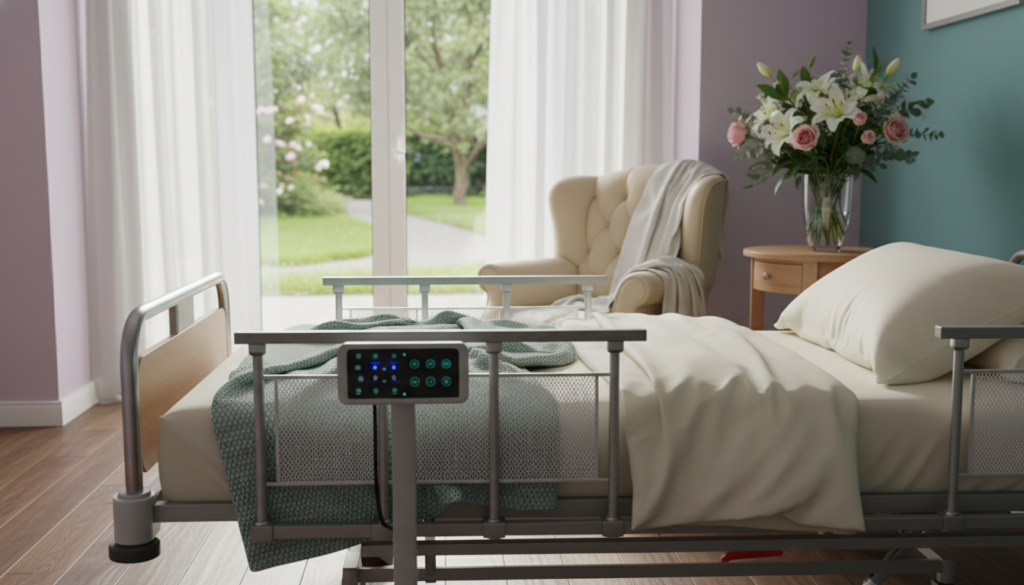
At home, beds mix care with daily life. A hospital bed for home should be easy to set up. It needs to fit in the room and controls should be easy to learn.
Renting a bed can be smart for short needs. This includes after surgery or a short illness. It avoids a long-term commitment.
Either way, look for basic features. These include safe height changes, reliable brakes, and a mattress for comfort through the night.
| Care setting | What the bed is optimized for | Typical must-have features | Common trade-offs |
|---|---|---|---|
| Acute care hospitals | Rapid response, frequent repositioning, clinical access | Fast height adjustment, strong brakes, easy sanitation, accessory compatibility | More controls and alarms can feel overwhelming outside a hospital |
| Long-term care facilities | Daily comfort, routine caregiving, injury prevention | Pressure management options, stable side support, simple handsets, durable surfaces | Extra durability can mean heavier frames and less portability |
| Home health care | Safety in tight spaces, caregiver ease, everyday usability | Tool-light setup, bed height range for transfers, quiet operation, compact footprint | Home layouts can limit turning space and caregiver positioning |
| Short-term recovery at home (rental) | Quick access to equipment for a defined recovery window | Delivery and pickup coordination, adjustable positioning, straightforward controls | Availability and model options can vary by region and timing |
Economic Considerations of Hospital Beds
Let’s talk money (without the headache). The cost of a bed can swing fast. It usually comes down to features, weight capacity, and how quickly you need it. Sometimes, renting a hospital bed makes more sense than buying, when care needs change week to week.
Before you price-shop, ask one simple question: what job does the bed need to do every day? A reliable hospital bed supplier can help you match clinical needs to a realistic budget. They ensure you don’t pay extra for bells and whistles you won’t use.
Cost Factors in Procurement
At the entry level, basic manual models often start around $1,000. Standard electric beds commonly land in the $1,500 to $3,000 range. Advanced high–low models with multiple motors can push past $4,000. Bariatric beds usually cost more because they’re wider, stronger, and built for higher loads.
Hospital bed rental can be a smart move when you need a bed fast. It’s good for short recovery windows or when you want to avoid a big upfront spend. Buying can win out when you’ll use the bed long-term and can spread the cost across years of care.
| Bed type | Typical starting price (USD) | What drives the price | When hospital bed rental often fits |
|---|---|---|---|
| Manual | ~$1,000 | Fewer moving parts, simpler frames, basic positioning | Short recoveries, tight budgets, temporary home setups |
| Standard electric | $1,500–$3,000 | Motor count, control style, rail options, mattress compatibility | When you need easier repositioning but don’t need high–low |
| Advanced electric (high–low, multi-position) | >$4,000 | High–low range, extra motors, clinical-grade components, safety sensors | When needs may change quickly and you want flexibility without buying |
| Bariatric | Higher than standard models | Higher weight ratings, wider sleep surface, reinforced decks and casters | When sizing is urgent or the care plan is being adjusted |
Insurance and Reimbursement Issues
Coverage can be tricky, and it’s rarely “one size fits all.” Plans may require medical necessity paperwork, a prescription, or proof that a standard setup won’t work. A hospital bed supplier that’s used to insurance questions can help you line up the right documents and avoid delays.
Hospital bed rental is often billed in monthly cycles. This can align with how some payers handle durable medical equipment. Your out-of-pocket cost can change based on deductibles, network rules, and whether add-ons—like special mattresses—are treated as separate items.
Lifecycle Costs and Maintenance
The sticker price isn’t the whole story. Over time, you’ll want to think about cleaning, wear parts, battery backups, and service calls. With hospital bed rental, maintenance is commonly bundled, which can make planning easier.
If you buy, keep an eye on long-term reliability and parts availability. A responsive hospital bed supplier can be the difference between a quick fix and a frustrating wait. This is important when the bed is used every day.
Case Studies: Hospital Bed Implementation
Hospital bed upgrades don’t always follow a simple path. In the U.S., the best results come from real-world experience, not just guesses. Teams paired buying with feedback from the floor. They chose a hospital bed maker based on daily needs like alarms and cleaning.
Major hospitals’ success often began with testing an electric bed on busy units. Staff looked for quick height changes and stable side rails. They also checked how easy it was to swap mattresses and service parts without removing beds.
Research showed that workflow is key, not just features. If an electric bed is hard to use at 2 a.m., it slows care. Small issues, like catching linens or hard-to-spot brakes, add risks. Hospitals that worked with bed makers early could fix these problems before they cost a lot to fix.
Patient feedback was just as important. People complained about noise, heat, and feeling trapped. The best implementations used these comments to make changes. Small tweaks, like clearer buttons and better alerts, made the bed feel less clinical. This helped support safer care in many places.
FAQ
What counts as a “hospital bed,” and why do hospitals talk about beds like they’re a number?
Were early hospital beds really just stretchers?
Why are hospital beds so important for recovery and sleep?
What is Fowler’s position, and when is it used?
What does raising the feet on an adjustable hospital bed actually do?
What are the core features of a modern adjustable hospital bed?
What makes an electric hospital bed different from a manual one?
What is an “Intelligent Mechatronic Bed,” and is it really a thing?
Why do advanced beds have multiple moving sections?
What is “chair position,” and why do people like it?
Why do caregivers care so much about bed height and controls?
What are the biggest real-world pain points with hospital beds?
How are modern hospital beds manufactured today?
What materials are common in a hospital bed frame, and why?
Are side rails always safe?
What should you look for to confirm a bed meets safety expectations?
How do smart beds and IoT features actually help in care settings?
What are pressure monitoring systems, and who benefits from them?
Where are hospital beds used beside hospitals?
What should you know before choosing a hospital bed for home?
When does a portable hospital bed make sense?
What does hospital bed pricing usually look like?
FAQ
What counts as a “hospital bed,” and why do hospitals talk about beds like they’re a number?
A hospital bed is a real piece of medical equipment. It’s also a way to measure space and staff. “Beds available” means how many patients can be cared for at once.
Were early hospital beds really just stretchers?
Yes, early beds were like stretchers. They were made to move sick or injured people. Later, they became more comfortable for long-term care.
Why are hospital beds so important for recovery and sleep?
Hospital beds are key for recovery and sleep. They support your body and help you rest better. This makes healing easier.
What is Fowler’s position, and when is it used?
A: Fowler’s position means your head is raised. It’s used for eating, reading, and activities. It helps with breathing for some patients.
What does raising the feet on an adjustable hospital bed actually do?
Raising the feet makes you more comfortable. It helps with turning and moving safely. This is important for caregivers.
What are the core features of a modern adjustable hospital bed?
Modern beds adjust height and position easily. They have side rails and controls that are simple to use. This makes changing positions quick and safe.
What makes an electric hospital bed different from a manual one?
Electric beds adjust with buttons, making it easier for you and caregivers. Manual beds use hand cranks and are slower.
What is an “Intelligent Mechatronic Bed,” and is it really a thing?
Yes, it’s a bed that uses technology for better care. It moves parts in ways that improve comfort and care.
Why do advanced beds have multiple moving sections?
Advanced beds move in four sections for better support. This helps prevent mattress deformation and supports even pressure.
What is “chair position,” and why do people like it?
Chair position makes you feel more upright. It’s good for breathing and comfort. It’s better than lying flat for long times.
Why do caregivers care so much about bed height and controls?
Caregivers need to adjust beds often. The right height and controls make their job easier. This is important for safety and efficiency.
What are the biggest real-world pain points with hospital beds?
The biggest issues are moving the bed, transporting patients, and cleaning. New designs aim to make these tasks easier.
How are modern hospital beds manufactured today?
Modern beds are complex systems. They have motors, controls, and joints. They must be durable and easy to clean.
What materials are common in a hospital bed frame, and why?
Steel and aluminum are used for strength and durability. The surfaces must also be easy to clean and resistant to infection.
Are side rails always safe?
Side rails can prevent falls but have safety risks. In the U.S., over 300 deaths were linked to side rail entrapment from 1985 to 2004.
What should you look for to confirm a bed meets safety expectations?
Look for proven safety and clear documentation from the manufacturer. Safety features include rail spacing, lock reliability, and controls.
How do smart beds and IoT features actually help in care settings?
Smart beds help by making care safer and easier. They coordinate movements and track usage. This reduces injuries and improves care.
What are pressure monitoring systems, and who benefits from them?
Pressure monitoring systems track weight distribution. They’re useful for long-term bed use. This helps prevent skin damage.
Where are hospital beds used beside hospitals?
Hospital beds are used in nursing homes, clinics, and private homes. The right bed depends on the setting and needs.
What should you know before choosing a hospital bed for home?
Choose a bed that fits your space and needs. Consider height, rail options, and controls. Easy cleaning and quiet motors are important at home.
When does a portable hospital bed make sense?
Portable beds are good for temporary needs or travel. They offer flexibility but may lack advanced features.
What does hospital bed pricing usually look like?
Prices vary based on features and capacity. Basic manual beds start around
FAQ
What counts as a “hospital bed,” and why do hospitals talk about beds like they’re a number?
A hospital bed is a real piece of medical equipment. It’s also a way to measure space and staff. “Beds available” means how many patients can be cared for at once.
Were early hospital beds really just stretchers?
Yes, early beds were like stretchers. They were made to move sick or injured people. Later, they became more comfortable for long-term care.
Why are hospital beds so important for recovery and sleep?
Hospital beds are key for recovery and sleep. They support your body and help you rest better. This makes healing easier.
What is Fowler’s position, and when is it used?
A: Fowler’s position means your head is raised. It’s used for eating, reading, and activities. It helps with breathing for some patients.
What does raising the feet on an adjustable hospital bed actually do?
Raising the feet makes you more comfortable. It helps with turning and moving safely. This is important for caregivers.
What are the core features of a modern adjustable hospital bed?
Modern beds adjust height and position easily. They have side rails and controls that are simple to use. This makes changing positions quick and safe.
What makes an electric hospital bed different from a manual one?
Electric beds adjust with buttons, making it easier for you and caregivers. Manual beds use hand cranks and are slower.
What is an “Intelligent Mechatronic Bed,” and is it really a thing?
Yes, it’s a bed that uses technology for better care. It moves parts in ways that improve comfort and care.
Why do advanced beds have multiple moving sections?
Advanced beds move in four sections for better support. This helps prevent mattress deformation and supports even pressure.
What is “chair position,” and why do people like it?
Chair position makes you feel more upright. It’s good for breathing and comfort. It’s better than lying flat for long times.
Why do caregivers care so much about bed height and controls?
Caregivers need to adjust beds often. The right height and controls make their job easier. This is important for safety and efficiency.
What are the biggest real-world pain points with hospital beds?
The biggest issues are moving the bed, transporting patients, and cleaning. New designs aim to make these tasks easier.
How are modern hospital beds manufactured today?
Modern beds are complex systems. They have motors, controls, and joints. They must be durable and easy to clean.
What materials are common in a hospital bed frame, and why?
Steel and aluminum are used for strength and durability. The surfaces must also be easy to clean and resistant to infection.
Are side rails always safe?
Side rails can prevent falls but have safety risks. In the U.S., over 300 deaths were linked to side rail entrapment from 1985 to 2004.
What should you look for to confirm a bed meets safety expectations?
Look for proven safety and clear documentation from the manufacturer. Safety features include rail spacing, lock reliability, and controls.
How do smart beds and IoT features actually help in care settings?
Smart beds help by making care safer and easier. They coordinate movements and track usage. This reduces injuries and improves care.
What are pressure monitoring systems, and who benefits from them?
Pressure monitoring systems track weight distribution. They’re useful for long-term bed use. This helps prevent skin damage.
Where are hospital beds used beside hospitals?
Hospital beds are used in nursing homes, clinics, and private homes. The right bed depends on the setting and needs.
What should you know before choosing a hospital bed for home?
Choose a bed that fits your space and needs. Consider height, rail options, and controls. Easy cleaning and quiet motors are important at home.
When does a portable hospital bed make sense?
Portable beds are good for temporary needs or travel. They offer flexibility but may lack advanced features.
What does hospital bed pricing usually look like?
Prices vary based on features and capacity. Basic manual beds start around $1,000. Electric beds cost $1,500 to $3,000. Advanced beds can be over $4,000. Bariatric beds cost more due to higher weight capacity.
Is hospital bed rental a smart option?
A: Hospital bed rental is good for short-term needs. It lets you test a bed before buying.
What hidden costs come with hospital beds over time?
Costs include maintenance, parts, and mattress wear. Electric beds may need motor servicing. Faster cleaning designs save labor.
Why does human-centered design matter in hospital bed upgrades?
Design matters because beds are used under pressure. Studies show what works in theory but fails in practice. This is true for maneuvering, transport, and cleaning.
What makes a hospital bed upgrade succeed in a real facility?
Success comes from early caregiver involvement and matching the bed to workflows. Training and intuitive controls are key. Reliable brakes and designs that reduce strain are also important.
How do you evaluate a hospital bed manufacturer or hospital bed supplier?
Look for quality control, safety documentation, and parts support. Check specs on weight limits, positioning, and cleaning. A good supplier matches the bed to the setting.
,000. Electric beds cost
FAQ
What counts as a “hospital bed,” and why do hospitals talk about beds like they’re a number?
A hospital bed is a real piece of medical equipment. It’s also a way to measure space and staff. “Beds available” means how many patients can be cared for at once.
Were early hospital beds really just stretchers?
Yes, early beds were like stretchers. They were made to move sick or injured people. Later, they became more comfortable for long-term care.
Why are hospital beds so important for recovery and sleep?
Hospital beds are key for recovery and sleep. They support your body and help you rest better. This makes healing easier.
What is Fowler’s position, and when is it used?
A: Fowler’s position means your head is raised. It’s used for eating, reading, and activities. It helps with breathing for some patients.
What does raising the feet on an adjustable hospital bed actually do?
Raising the feet makes you more comfortable. It helps with turning and moving safely. This is important for caregivers.
What are the core features of a modern adjustable hospital bed?
Modern beds adjust height and position easily. They have side rails and controls that are simple to use. This makes changing positions quick and safe.
What makes an electric hospital bed different from a manual one?
Electric beds adjust with buttons, making it easier for you and caregivers. Manual beds use hand cranks and are slower.
What is an “Intelligent Mechatronic Bed,” and is it really a thing?
Yes, it’s a bed that uses technology for better care. It moves parts in ways that improve comfort and care.
Why do advanced beds have multiple moving sections?
Advanced beds move in four sections for better support. This helps prevent mattress deformation and supports even pressure.
What is “chair position,” and why do people like it?
Chair position makes you feel more upright. It’s good for breathing and comfort. It’s better than lying flat for long times.
Why do caregivers care so much about bed height and controls?
Caregivers need to adjust beds often. The right height and controls make their job easier. This is important for safety and efficiency.
What are the biggest real-world pain points with hospital beds?
The biggest issues are moving the bed, transporting patients, and cleaning. New designs aim to make these tasks easier.
How are modern hospital beds manufactured today?
Modern beds are complex systems. They have motors, controls, and joints. They must be durable and easy to clean.
What materials are common in a hospital bed frame, and why?
Steel and aluminum are used for strength and durability. The surfaces must also be easy to clean and resistant to infection.
Are side rails always safe?
Side rails can prevent falls but have safety risks. In the U.S., over 300 deaths were linked to side rail entrapment from 1985 to 2004.
What should you look for to confirm a bed meets safety expectations?
Look for proven safety and clear documentation from the manufacturer. Safety features include rail spacing, lock reliability, and controls.
How do smart beds and IoT features actually help in care settings?
Smart beds help by making care safer and easier. They coordinate movements and track usage. This reduces injuries and improves care.
What are pressure monitoring systems, and who benefits from them?
Pressure monitoring systems track weight distribution. They’re useful for long-term bed use. This helps prevent skin damage.
Where are hospital beds used beside hospitals?
Hospital beds are used in nursing homes, clinics, and private homes. The right bed depends on the setting and needs.
What should you know before choosing a hospital bed for home?
Choose a bed that fits your space and needs. Consider height, rail options, and controls. Easy cleaning and quiet motors are important at home.
When does a portable hospital bed make sense?
Portable beds are good for temporary needs or travel. They offer flexibility but may lack advanced features.
What does hospital bed pricing usually look like?
Prices vary based on features and capacity. Basic manual beds start around $1,000. Electric beds cost $1,500 to $3,000. Advanced beds can be over $4,000. Bariatric beds cost more due to higher weight capacity.
Is hospital bed rental a smart option?
A: Hospital bed rental is good for short-term needs. It lets you test a bed before buying.
What hidden costs come with hospital beds over time?
Costs include maintenance, parts, and mattress wear. Electric beds may need motor servicing. Faster cleaning designs save labor.
Why does human-centered design matter in hospital bed upgrades?
Design matters because beds are used under pressure. Studies show what works in theory but fails in practice. This is true for maneuvering, transport, and cleaning.
What makes a hospital bed upgrade succeed in a real facility?
Success comes from early caregiver involvement and matching the bed to workflows. Training and intuitive controls are key. Reliable brakes and designs that reduce strain are also important.
How do you evaluate a hospital bed manufacturer or hospital bed supplier?
Look for quality control, safety documentation, and parts support. Check specs on weight limits, positioning, and cleaning. A good supplier matches the bed to the setting.
,500 to ,000. Advanced beds can be over ,000. Bariatric beds cost more due to higher weight capacity.
Is hospital bed rental a smart option?
A: Hospital bed rental is good for short-term needs. It lets you test a bed before buying.
What hidden costs come with hospital beds over time?
Costs include maintenance, parts, and mattress wear. Electric beds may need motor servicing. Faster cleaning designs save labor.
Why does human-centered design matter in hospital bed upgrades?
Design matters because beds are used under pressure. Studies show what works in theory but fails in practice. This is true for maneuvering, transport, and cleaning.
What makes a hospital bed upgrade succeed in a real facility?
Success comes from early caregiver involvement and matching the bed to workflows. Training and intuitive controls are key. Reliable brakes and designs that reduce strain are also important.
How do you evaluate a hospital bed manufacturer or hospital bed supplier?
Look for quality control, safety documentation, and parts support. Check specs on weight limits, positioning, and cleaning. A good supplier matches the bed to the setting.
FAQ
What counts as a “hospital bed,” and why do hospitals talk about beds like they’re a number?
A hospital bed is a real piece of medical equipment. It’s also a way to measure space and staff. “Beds available” means how many patients can be cared for at once.
Were early hospital beds really just stretchers?
Yes, early beds were like stretchers. They were made to move sick or injured people. Later, they became more comfortable for long-term care.
Why are hospital beds so important for recovery and sleep?
Hospital beds are key for recovery and sleep. They support your body and help you rest better. This makes healing easier.
What is Fowler’s position, and when is it used?
A: Fowler’s position means your head is raised. It’s used for eating, reading, and activities. It helps with breathing for some patients.
What does raising the feet on an adjustable hospital bed actually do?
Raising the feet makes you more comfortable. It helps with turning and moving safely. This is important for caregivers.
What are the core features of a modern adjustable hospital bed?
Modern beds adjust height and position easily. They have side rails and controls that are simple to use. This makes changing positions quick and safe.
What makes an electric hospital bed different from a manual one?
Electric beds adjust with buttons, making it easier for you and caregivers. Manual beds use hand cranks and are slower.
What is an “Intelligent Mechatronic Bed,” and is it really a thing?
Yes, it’s a bed that uses technology for better care. It moves parts in ways that improve comfort and care.
Why do advanced beds have multiple moving sections?
Advanced beds move in four sections for better support. This helps prevent mattress deformation and supports even pressure.
What is “chair position,” and why do people like it?
Chair position makes you feel more upright. It’s good for breathing and comfort. It’s better than lying flat for long times.
Why do caregivers care so much about bed height and controls?
Caregivers need to adjust beds often. The right height and controls make their job easier. This is important for safety and efficiency.
What are the biggest real-world pain points with hospital beds?
The biggest issues are moving the bed, transporting patients, and cleaning. New designs aim to make these tasks easier.
How are modern hospital beds manufactured today?
Modern beds are complex systems. They have motors, controls, and joints. They must be durable and easy to clean.
What materials are common in a hospital bed frame, and why?
Steel and aluminum are used for strength and durability. The surfaces must also be easy to clean and resistant to infection.
Are side rails always safe?
Side rails can prevent falls but have safety risks. In the U.S., over 300 deaths were linked to side rail entrapment from 1985 to 2004.
What should you look for to confirm a bed meets safety expectations?
Look for proven safety and clear documentation from the manufacturer. Safety features include rail spacing, lock reliability, and controls.
How do smart beds and IoT features actually help in care settings?
Smart beds help by making care safer and easier. They coordinate movements and track usage. This reduces injuries and improves care.
What are pressure monitoring systems, and who benefits from them?
Pressure monitoring systems track weight distribution. They’re useful for long-term bed use. This helps prevent skin damage.
Where are hospital beds used beside hospitals?
Hospital beds are used in nursing homes, clinics, and private homes. The right bed depends on the setting and needs.
What should you know before choosing a hospital bed for home?
Choose a bed that fits your space and needs. Consider height, rail options, and controls. Easy cleaning and quiet motors are important at home.
When does a portable hospital bed make sense?
Portable beds are good for temporary needs or travel. They offer flexibility but may lack advanced features.
What does hospital bed pricing usually look like?
Prices vary based on features and capacity. Basic manual beds start around
FAQ
What counts as a “hospital bed,” and why do hospitals talk about beds like they’re a number?
A hospital bed is a real piece of medical equipment. It’s also a way to measure space and staff. “Beds available” means how many patients can be cared for at once.
Were early hospital beds really just stretchers?
Yes, early beds were like stretchers. They were made to move sick or injured people. Later, they became more comfortable for long-term care.
Why are hospital beds so important for recovery and sleep?
Hospital beds are key for recovery and sleep. They support your body and help you rest better. This makes healing easier.
What is Fowler’s position, and when is it used?
A: Fowler’s position means your head is raised. It’s used for eating, reading, and activities. It helps with breathing for some patients.
What does raising the feet on an adjustable hospital bed actually do?
Raising the feet makes you more comfortable. It helps with turning and moving safely. This is important for caregivers.
What are the core features of a modern adjustable hospital bed?
Modern beds adjust height and position easily. They have side rails and controls that are simple to use. This makes changing positions quick and safe.
What makes an electric hospital bed different from a manual one?
Electric beds adjust with buttons, making it easier for you and caregivers. Manual beds use hand cranks and are slower.
What is an “Intelligent Mechatronic Bed,” and is it really a thing?
Yes, it’s a bed that uses technology for better care. It moves parts in ways that improve comfort and care.
Why do advanced beds have multiple moving sections?
Advanced beds move in four sections for better support. This helps prevent mattress deformation and supports even pressure.
What is “chair position,” and why do people like it?
Chair position makes you feel more upright. It’s good for breathing and comfort. It’s better than lying flat for long times.
Why do caregivers care so much about bed height and controls?
Caregivers need to adjust beds often. The right height and controls make their job easier. This is important for safety and efficiency.
What are the biggest real-world pain points with hospital beds?
The biggest issues are moving the bed, transporting patients, and cleaning. New designs aim to make these tasks easier.
How are modern hospital beds manufactured today?
Modern beds are complex systems. They have motors, controls, and joints. They must be durable and easy to clean.
What materials are common in a hospital bed frame, and why?
Steel and aluminum are used for strength and durability. The surfaces must also be easy to clean and resistant to infection.
Are side rails always safe?
Side rails can prevent falls but have safety risks. In the U.S., over 300 deaths were linked to side rail entrapment from 1985 to 2004.
What should you look for to confirm a bed meets safety expectations?
Look for proven safety and clear documentation from the manufacturer. Safety features include rail spacing, lock reliability, and controls.
How do smart beds and IoT features actually help in care settings?
Smart beds help by making care safer and easier. They coordinate movements and track usage. This reduces injuries and improves care.
What are pressure monitoring systems, and who benefits from them?
Pressure monitoring systems track weight distribution. They’re useful for long-term bed use. This helps prevent skin damage.
Where are hospital beds used beside hospitals?
Hospital beds are used in nursing homes, clinics, and private homes. The right bed depends on the setting and needs.
What should you know before choosing a hospital bed for home?
Choose a bed that fits your space and needs. Consider height, rail options, and controls. Easy cleaning and quiet motors are important at home.
When does a portable hospital bed make sense?
Portable beds are good for temporary needs or travel. They offer flexibility but may lack advanced features.
What does hospital bed pricing usually look like?
Prices vary based on features and capacity. Basic manual beds start around $1,000. Electric beds cost $1,500 to $3,000. Advanced beds can be over $4,000. Bariatric beds cost more due to higher weight capacity.
Is hospital bed rental a smart option?
A: Hospital bed rental is good for short-term needs. It lets you test a bed before buying.
What hidden costs come with hospital beds over time?
Costs include maintenance, parts, and mattress wear. Electric beds may need motor servicing. Faster cleaning designs save labor.
Why does human-centered design matter in hospital bed upgrades?
Design matters because beds are used under pressure. Studies show what works in theory but fails in practice. This is true for maneuvering, transport, and cleaning.
What makes a hospital bed upgrade succeed in a real facility?
Success comes from early caregiver involvement and matching the bed to workflows. Training and intuitive controls are key. Reliable brakes and designs that reduce strain are also important.
How do you evaluate a hospital bed manufacturer or hospital bed supplier?
Look for quality control, safety documentation, and parts support. Check specs on weight limits, positioning, and cleaning. A good supplier matches the bed to the setting.
,000. Electric beds cost
FAQ
What counts as a “hospital bed,” and why do hospitals talk about beds like they’re a number?
A hospital bed is a real piece of medical equipment. It’s also a way to measure space and staff. “Beds available” means how many patients can be cared for at once.
Were early hospital beds really just stretchers?
Yes, early beds were like stretchers. They were made to move sick or injured people. Later, they became more comfortable for long-term care.
Why are hospital beds so important for recovery and sleep?
Hospital beds are key for recovery and sleep. They support your body and help you rest better. This makes healing easier.
What is Fowler’s position, and when is it used?
A: Fowler’s position means your head is raised. It’s used for eating, reading, and activities. It helps with breathing for some patients.
What does raising the feet on an adjustable hospital bed actually do?
Raising the feet makes you more comfortable. It helps with turning and moving safely. This is important for caregivers.
What are the core features of a modern adjustable hospital bed?
Modern beds adjust height and position easily. They have side rails and controls that are simple to use. This makes changing positions quick and safe.
What makes an electric hospital bed different from a manual one?
Electric beds adjust with buttons, making it easier for you and caregivers. Manual beds use hand cranks and are slower.
What is an “Intelligent Mechatronic Bed,” and is it really a thing?
Yes, it’s a bed that uses technology for better care. It moves parts in ways that improve comfort and care.
Why do advanced beds have multiple moving sections?
Advanced beds move in four sections for better support. This helps prevent mattress deformation and supports even pressure.
What is “chair position,” and why do people like it?
Chair position makes you feel more upright. It’s good for breathing and comfort. It’s better than lying flat for long times.
Why do caregivers care so much about bed height and controls?
Caregivers need to adjust beds often. The right height and controls make their job easier. This is important for safety and efficiency.
What are the biggest real-world pain points with hospital beds?
The biggest issues are moving the bed, transporting patients, and cleaning. New designs aim to make these tasks easier.
How are modern hospital beds manufactured today?
Modern beds are complex systems. They have motors, controls, and joints. They must be durable and easy to clean.
What materials are common in a hospital bed frame, and why?
Steel and aluminum are used for strength and durability. The surfaces must also be easy to clean and resistant to infection.
Are side rails always safe?
Side rails can prevent falls but have safety risks. In the U.S., over 300 deaths were linked to side rail entrapment from 1985 to 2004.
What should you look for to confirm a bed meets safety expectations?
Look for proven safety and clear documentation from the manufacturer. Safety features include rail spacing, lock reliability, and controls.
How do smart beds and IoT features actually help in care settings?
Smart beds help by making care safer and easier. They coordinate movements and track usage. This reduces injuries and improves care.
What are pressure monitoring systems, and who benefits from them?
Pressure monitoring systems track weight distribution. They’re useful for long-term bed use. This helps prevent skin damage.
Where are hospital beds used beside hospitals?
Hospital beds are used in nursing homes, clinics, and private homes. The right bed depends on the setting and needs.
What should you know before choosing a hospital bed for home?
Choose a bed that fits your space and needs. Consider height, rail options, and controls. Easy cleaning and quiet motors are important at home.
When does a portable hospital bed make sense?
Portable beds are good for temporary needs or travel. They offer flexibility but may lack advanced features.
What does hospital bed pricing usually look like?
Prices vary based on features and capacity. Basic manual beds start around $1,000. Electric beds cost $1,500 to $3,000. Advanced beds can be over $4,000. Bariatric beds cost more due to higher weight capacity.
Is hospital bed rental a smart option?
A: Hospital bed rental is good for short-term needs. It lets you test a bed before buying.
What hidden costs come with hospital beds over time?
Costs include maintenance, parts, and mattress wear. Electric beds may need motor servicing. Faster cleaning designs save labor.
Why does human-centered design matter in hospital bed upgrades?
Design matters because beds are used under pressure. Studies show what works in theory but fails in practice. This is true for maneuvering, transport, and cleaning.
What makes a hospital bed upgrade succeed in a real facility?
Success comes from early caregiver involvement and matching the bed to workflows. Training and intuitive controls are key. Reliable brakes and designs that reduce strain are also important.
How do you evaluate a hospital bed manufacturer or hospital bed supplier?
Look for quality control, safety documentation, and parts support. Check specs on weight limits, positioning, and cleaning. A good supplier matches the bed to the setting.
,500 to ,000. Advanced beds can be over ,000. Bariatric beds cost more due to higher weight capacity.
Is hospital bed rental a smart option?
A: Hospital bed rental is good for short-term needs. It lets you test a bed before buying.
What hidden costs come with hospital beds over time?
Costs include maintenance, parts, and mattress wear. Electric beds may need motor servicing. Faster cleaning designs save labor.
Why does human-centered design matter in hospital bed upgrades?
Design matters because beds are used under pressure. Studies show what works in theory but fails in practice. This is true for maneuvering, transport, and cleaning.
What makes a hospital bed upgrade succeed in a real facility?
Success comes from early caregiver involvement and matching the bed to workflows. Training and intuitive controls are key. Reliable brakes and designs that reduce strain are also important.
How do you evaluate a hospital bed manufacturer or hospital bed supplier?
Look for quality control, safety documentation, and parts support. Check specs on weight limits, positioning, and cleaning. A good supplier matches the bed to the setting.
FAQ
What counts as a “hospital bed,” and why do hospitals talk about beds like they’re a number?
A hospital bed is a real piece of medical equipment. It’s also a way to measure space and staff. “Beds available” means how many patients can be cared for at once.
Were early hospital beds really just stretchers?
Yes, early beds were like stretchers. They were made to move sick or injured people. Later, they became more comfortable for long-term care.
Why are hospital beds so important for recovery and sleep?
Hospital beds are key for recovery and sleep. They support your body and help you rest better. This makes healing easier.
What is Fowler’s position, and when is it used?
A: Fowler’s position means your head is raised. It’s used for eating, reading, and activities. It helps with breathing for some patients.
What does raising the feet on an adjustable hospital bed actually do?
Raising the feet makes you more comfortable. It helps with turning and moving safely. This is important for caregivers.
What are the core features of a modern adjustable hospital bed?
Modern beds adjust height and position easily. They have side rails and controls that are simple to use. This makes changing positions quick and safe.
What makes an electric hospital bed different from a manual one?
Electric beds adjust with buttons, making it easier for you and caregivers. Manual beds use hand cranks and are slower.
What is an “Intelligent Mechatronic Bed,” and is it really a thing?
Yes, it’s a bed that uses technology for better care. It moves parts in ways that improve comfort and care.
Why do advanced beds have multiple moving sections?
Advanced beds move in four sections for better support. This helps prevent mattress deformation and supports even pressure.
What is “chair position,” and why do people like it?
Chair position makes you feel more upright. It’s good for breathing and comfort. It’s better than lying flat for long times.
Why do caregivers care so much about bed height and controls?
Caregivers need to adjust beds often. The right height and controls make their job easier. This is important for safety and efficiency.
What are the biggest real-world pain points with hospital beds?
The biggest issues are moving the bed, transporting patients, and cleaning. New designs aim to make these tasks easier.
How are modern hospital beds manufactured today?
Modern beds are complex systems. They have motors, controls, and joints. They must be durable and easy to clean.
What materials are common in a hospital bed frame, and why?
Steel and aluminum are used for strength and durability. The surfaces must also be easy to clean and resistant to infection.
Are side rails always safe?
Side rails can prevent falls but have safety risks. In the U.S., over 300 deaths were linked to side rail entrapment from 1985 to 2004.
What should you look for to confirm a bed meets safety expectations?
Look for proven safety and clear documentation from the manufacturer. Safety features include rail spacing, lock reliability, and controls.
How do smart beds and IoT features actually help in care settings?
Smart beds help by making care safer and easier. They coordinate movements and track usage. This reduces injuries and improves care.
What are pressure monitoring systems, and who benefits from them?
Pressure monitoring systems track weight distribution. They’re useful for long-term bed use. This helps prevent skin damage.
Where are hospital beds used beside hospitals?
Hospital beds are used in nursing homes, clinics, and private homes. The right bed depends on the setting and needs.
What should you know before choosing a hospital bed for home?
Choose a bed that fits your space and needs. Consider height, rail options, and controls. Easy cleaning and quiet motors are important at home.
When does a portable hospital bed make sense?
Portable beds are good for temporary needs or travel. They offer flexibility but may lack advanced features.
What does hospital bed pricing usually look like?
Prices vary based on features and capacity. Basic manual beds start around
FAQ
What counts as a “hospital bed,” and why do hospitals talk about beds like they’re a number?
A hospital bed is a real piece of medical equipment. It’s also a way to measure space and staff. “Beds available” means how many patients can be cared for at once.
Were early hospital beds really just stretchers?
Yes, early beds were like stretchers. They were made to move sick or injured people. Later, they became more comfortable for long-term care.
Why are hospital beds so important for recovery and sleep?
Hospital beds are key for recovery and sleep. They support your body and help you rest better. This makes healing easier.
What is Fowler’s position, and when is it used?
A: Fowler’s position means your head is raised. It’s used for eating, reading, and activities. It helps with breathing for some patients.
What does raising the feet on an adjustable hospital bed actually do?
Raising the feet makes you more comfortable. It helps with turning and moving safely. This is important for caregivers.
What are the core features of a modern adjustable hospital bed?
Modern beds adjust height and position easily. They have side rails and controls that are simple to use. This makes changing positions quick and safe.
What makes an electric hospital bed different from a manual one?
Electric beds adjust with buttons, making it easier for you and caregivers. Manual beds use hand cranks and are slower.
What is an “Intelligent Mechatronic Bed,” and is it really a thing?
Yes, it’s a bed that uses technology for better care. It moves parts in ways that improve comfort and care.
Why do advanced beds have multiple moving sections?
Advanced beds move in four sections for better support. This helps prevent mattress deformation and supports even pressure.
What is “chair position,” and why do people like it?
Chair position makes you feel more upright. It’s good for breathing and comfort. It’s better than lying flat for long times.
Why do caregivers care so much about bed height and controls?
Caregivers need to adjust beds often. The right height and controls make their job easier. This is important for safety and efficiency.
What are the biggest real-world pain points with hospital beds?
The biggest issues are moving the bed, transporting patients, and cleaning. New designs aim to make these tasks easier.
How are modern hospital beds manufactured today?
Modern beds are complex systems. They have motors, controls, and joints. They must be durable and easy to clean.
What materials are common in a hospital bed frame, and why?
Steel and aluminum are used for strength and durability. The surfaces must also be easy to clean and resistant to infection.
Are side rails always safe?
Side rails can prevent falls but have safety risks. In the U.S., over 300 deaths were linked to side rail entrapment from 1985 to 2004.
What should you look for to confirm a bed meets safety expectations?
Look for proven safety and clear documentation from the manufacturer. Safety features include rail spacing, lock reliability, and controls.
How do smart beds and IoT features actually help in care settings?
Smart beds help by making care safer and easier. They coordinate movements and track usage. This reduces injuries and improves care.
What are pressure monitoring systems, and who benefits from them?
Pressure monitoring systems track weight distribution. They’re useful for long-term bed use. This helps prevent skin damage.
Where are hospital beds used beside hospitals?
Hospital beds are used in nursing homes, clinics, and private homes. The right bed depends on the setting and needs.
What should you know before choosing a hospital bed for home?
Choose a bed that fits your space and needs. Consider height, rail options, and controls. Easy cleaning and quiet motors are important at home.
When does a portable hospital bed make sense?
Portable beds are good for temporary needs or travel. They offer flexibility but may lack advanced features.
What does hospital bed pricing usually look like?
Prices vary based on features and capacity. Basic manual beds start around $1,000. Electric beds cost $1,500 to $3,000. Advanced beds can be over $4,000. Bariatric beds cost more due to higher weight capacity.
Is hospital bed rental a smart option?
A: Hospital bed rental is good for short-term needs. It lets you test a bed before buying.
What hidden costs come with hospital beds over time?
Costs include maintenance, parts, and mattress wear. Electric beds may need motor servicing. Faster cleaning designs save labor.
Why does human-centered design matter in hospital bed upgrades?
Design matters because beds are used under pressure. Studies show what works in theory but fails in practice. This is true for maneuvering, transport, and cleaning.
What makes a hospital bed upgrade succeed in a real facility?
Success comes from early caregiver involvement and matching the bed to workflows. Training and intuitive controls are key. Reliable brakes and designs that reduce strain are also important.
How do you evaluate a hospital bed manufacturer or hospital bed supplier?
Look for quality control, safety documentation, and parts support. Check specs on weight limits, positioning, and cleaning. A good supplier matches the bed to the setting.
,000. Electric beds cost
FAQ
What counts as a “hospital bed,” and why do hospitals talk about beds like they’re a number?
A hospital bed is a real piece of medical equipment. It’s also a way to measure space and staff. “Beds available” means how many patients can be cared for at once.
Were early hospital beds really just stretchers?
Yes, early beds were like stretchers. They were made to move sick or injured people. Later, they became more comfortable for long-term care.
Why are hospital beds so important for recovery and sleep?
Hospital beds are key for recovery and sleep. They support your body and help you rest better. This makes healing easier.
What is Fowler’s position, and when is it used?
A: Fowler’s position means your head is raised. It’s used for eating, reading, and activities. It helps with breathing for some patients.
What does raising the feet on an adjustable hospital bed actually do?
Raising the feet makes you more comfortable. It helps with turning and moving safely. This is important for caregivers.
What are the core features of a modern adjustable hospital bed?
Modern beds adjust height and position easily. They have side rails and controls that are simple to use. This makes changing positions quick and safe.
What makes an electric hospital bed different from a manual one?
Electric beds adjust with buttons, making it easier for you and caregivers. Manual beds use hand cranks and are slower.
What is an “Intelligent Mechatronic Bed,” and is it really a thing?
Yes, it’s a bed that uses technology for better care. It moves parts in ways that improve comfort and care.
Why do advanced beds have multiple moving sections?
Advanced beds move in four sections for better support. This helps prevent mattress deformation and supports even pressure.
What is “chair position,” and why do people like it?
Chair position makes you feel more upright. It’s good for breathing and comfort. It’s better than lying flat for long times.
Why do caregivers care so much about bed height and controls?
Caregivers need to adjust beds often. The right height and controls make their job easier. This is important for safety and efficiency.
What are the biggest real-world pain points with hospital beds?
The biggest issues are moving the bed, transporting patients, and cleaning. New designs aim to make these tasks easier.
How are modern hospital beds manufactured today?
Modern beds are complex systems. They have motors, controls, and joints. They must be durable and easy to clean.
What materials are common in a hospital bed frame, and why?
Steel and aluminum are used for strength and durability. The surfaces must also be easy to clean and resistant to infection.
Are side rails always safe?
Side rails can prevent falls but have safety risks. In the U.S., over 300 deaths were linked to side rail entrapment from 1985 to 2004.
What should you look for to confirm a bed meets safety expectations?
Look for proven safety and clear documentation from the manufacturer. Safety features include rail spacing, lock reliability, and controls.
How do smart beds and IoT features actually help in care settings?
Smart beds help by making care safer and easier. They coordinate movements and track usage. This reduces injuries and improves care.
What are pressure monitoring systems, and who benefits from them?
Pressure monitoring systems track weight distribution. They’re useful for long-term bed use. This helps prevent skin damage.
Where are hospital beds used beside hospitals?
Hospital beds are used in nursing homes, clinics, and private homes. The right bed depends on the setting and needs.
What should you know before choosing a hospital bed for home?
Choose a bed that fits your space and needs. Consider height, rail options, and controls. Easy cleaning and quiet motors are important at home.
When does a portable hospital bed make sense?
Portable beds are good for temporary needs or travel. They offer flexibility but may lack advanced features.
What does hospital bed pricing usually look like?
Prices vary based on features and capacity. Basic manual beds start around $1,000. Electric beds cost $1,500 to $3,000. Advanced beds can be over $4,000. Bariatric beds cost more due to higher weight capacity.
Is hospital bed rental a smart option?
A: Hospital bed rental is good for short-term needs. It lets you test a bed before buying.
What hidden costs come with hospital beds over time?
Costs include maintenance, parts, and mattress wear. Electric beds may need motor servicing. Faster cleaning designs save labor.
Why does human-centered design matter in hospital bed upgrades?
Design matters because beds are used under pressure. Studies show what works in theory but fails in practice. This is true for maneuvering, transport, and cleaning.
What makes a hospital bed upgrade succeed in a real facility?
Success comes from early caregiver involvement and matching the bed to workflows. Training and intuitive controls are key. Reliable brakes and designs that reduce strain are also important.
How do you evaluate a hospital bed manufacturer or hospital bed supplier?
Look for quality control, safety documentation, and parts support. Check specs on weight limits, positioning, and cleaning. A good supplier matches the bed to the setting.
,500 to ,000. Advanced beds can be over ,000. Bariatric beds cost more due to higher weight capacity.
Is hospital bed rental a smart option?
A: Hospital bed rental is good for short-term needs. It lets you test a bed before buying.
What hidden costs come with hospital beds over time?
Costs include maintenance, parts, and mattress wear. Electric beds may need motor servicing. Faster cleaning designs save labor.
Why does human-centered design matter in hospital bed upgrades?
Design matters because beds are used under pressure. Studies show what works in theory but fails in practice. This is true for maneuvering, transport, and cleaning.
What makes a hospital bed upgrade succeed in a real facility?
Success comes from early caregiver involvement and matching the bed to workflows. Training and intuitive controls are key. Reliable brakes and designs that reduce strain are also important.
How do you evaluate a hospital bed manufacturer or hospital bed supplier?
Look for quality control, safety documentation, and parts support. Check specs on weight limits, positioning, and cleaning. A good supplier matches the bed to the setting.
FAQ
What counts as a “hospital bed,” and why do hospitals talk about beds like they’re a number?
A hospital bed is a real piece of medical equipment. It’s also a way to measure space and staff. “Beds available” means how many patients can be cared for at once.
Were early hospital beds really just stretchers?
Yes, early beds were like stretchers. They were made to move sick or injured people. Later, they became more comfortable for long-term care.
Why are hospital beds so important for recovery and sleep?
Hospital beds are key for recovery and sleep. They support your body and help you rest better. This makes healing easier.
What is Fowler’s position, and when is it used?
A: Fowler’s position means your head is raised. It’s used for eating, reading, and activities. It helps with breathing for some patients.
What does raising the feet on an adjustable hospital bed actually do?
Raising the feet makes you more comfortable. It helps with turning and moving safely. This is important for caregivers.
What are the core features of a modern adjustable hospital bed?
Modern beds adjust height and position easily. They have side rails and controls that are simple to use. This makes changing positions quick and safe.
What makes an electric hospital bed different from a manual one?
Electric beds adjust with buttons, making it easier for you and caregivers. Manual beds use hand cranks and are slower.
What is an “Intelligent Mechatronic Bed,” and is it really a thing?
Yes, it’s a bed that uses technology for better care. It moves parts in ways that improve comfort and care.
Why do advanced beds have multiple moving sections?
Advanced beds move in four sections for better support. This helps prevent mattress deformation and supports even pressure.
What is “chair position,” and why do people like it?
Chair position makes you feel more upright. It’s good for breathing and comfort. It’s better than lying flat for long times.
Why do caregivers care so much about bed height and controls?
Caregivers need to adjust beds often. The right height and controls make their job easier. This is important for safety and efficiency.
What are the biggest real-world pain points with hospital beds?
The biggest issues are moving the bed, transporting patients, and cleaning. New designs aim to make these tasks easier.
How are modern hospital beds manufactured today?
Modern beds are complex systems. They have motors, controls, and joints. They must be durable and easy to clean.
What materials are common in a hospital bed frame, and why?
Steel and aluminum are used for strength and durability. The surfaces must also be easy to clean and resistant to infection.
Are side rails always safe?
Side rails can prevent falls but have safety risks. In the U.S., over 300 deaths were linked to side rail entrapment from 1985 to 2004.
What should you look for to confirm a bed meets safety expectations?
Look for proven safety and clear documentation from the manufacturer. Safety features include rail spacing, lock reliability, and controls.
How do smart beds and IoT features actually help in care settings?
Smart beds help by making care safer and easier. They coordinate movements and track usage. This reduces injuries and improves care.
What are pressure monitoring systems, and who benefits from them?
Pressure monitoring systems track weight distribution. They’re useful for long-term bed use. This helps prevent skin damage.
Where are hospital beds used beside hospitals?
Hospital beds are used in nursing homes, clinics, and private homes. The right bed depends on the setting and needs.
What should you know before choosing a hospital bed for home?
Choose a bed that fits your space and needs. Consider height, rail options, and controls. Easy cleaning and quiet motors are important at home.
When does a portable hospital bed make sense?
Portable beds are good for temporary needs or travel. They offer flexibility but may lack advanced features.
What does hospital bed pricing usually look like?
Prices vary based on features and capacity. Basic manual beds start around
FAQ
What counts as a “hospital bed,” and why do hospitals talk about beds like they’re a number?
A hospital bed is a real piece of medical equipment. It’s also a way to measure space and staff. “Beds available” means how many patients can be cared for at once.
Were early hospital beds really just stretchers?
Yes, early beds were like stretchers. They were made to move sick or injured people. Later, they became more comfortable for long-term care.
Why are hospital beds so important for recovery and sleep?
Hospital beds are key for recovery and sleep. They support your body and help you rest better. This makes healing easier.
What is Fowler’s position, and when is it used?
A: Fowler’s position means your head is raised. It’s used for eating, reading, and activities. It helps with breathing for some patients.
What does raising the feet on an adjustable hospital bed actually do?
Raising the feet makes you more comfortable. It helps with turning and moving safely. This is important for caregivers.
What are the core features of a modern adjustable hospital bed?
Modern beds adjust height and position easily. They have side rails and controls that are simple to use. This makes changing positions quick and safe.
What makes an electric hospital bed different from a manual one?
Electric beds adjust with buttons, making it easier for you and caregivers. Manual beds use hand cranks and are slower.
What is an “Intelligent Mechatronic Bed,” and is it really a thing?
Yes, it’s a bed that uses technology for better care. It moves parts in ways that improve comfort and care.
Why do advanced beds have multiple moving sections?
Advanced beds move in four sections for better support. This helps prevent mattress deformation and supports even pressure.
What is “chair position,” and why do people like it?
Chair position makes you feel more upright. It’s good for breathing and comfort. It’s better than lying flat for long times.
Why do caregivers care so much about bed height and controls?
Caregivers need to adjust beds often. The right height and controls make their job easier. This is important for safety and efficiency.
What are the biggest real-world pain points with hospital beds?
The biggest issues are moving the bed, transporting patients, and cleaning. New designs aim to make these tasks easier.
How are modern hospital beds manufactured today?
Modern beds are complex systems. They have motors, controls, and joints. They must be durable and easy to clean.
What materials are common in a hospital bed frame, and why?
Steel and aluminum are used for strength and durability. The surfaces must also be easy to clean and resistant to infection.
Are side rails always safe?
Side rails can prevent falls but have safety risks. In the U.S., over 300 deaths were linked to side rail entrapment from 1985 to 2004.
What should you look for to confirm a bed meets safety expectations?
Look for proven safety and clear documentation from the manufacturer. Safety features include rail spacing, lock reliability, and controls.
How do smart beds and IoT features actually help in care settings?
Smart beds help by making care safer and easier. They coordinate movements and track usage. This reduces injuries and improves care.
What are pressure monitoring systems, and who benefits from them?
Pressure monitoring systems track weight distribution. They’re useful for long-term bed use. This helps prevent skin damage.
Where are hospital beds used beside hospitals?
Hospital beds are used in nursing homes, clinics, and private homes. The right bed depends on the setting and needs.
What should you know before choosing a hospital bed for home?
Choose a bed that fits your space and needs. Consider height, rail options, and controls. Easy cleaning and quiet motors are important at home.
When does a portable hospital bed make sense?
Portable beds are good for temporary needs or travel. They offer flexibility but may lack advanced features.
What does hospital bed pricing usually look like?
Prices vary based on features and capacity. Basic manual beds start around $1,000. Electric beds cost $1,500 to $3,000. Advanced beds can be over $4,000. Bariatric beds cost more due to higher weight capacity.
Is hospital bed rental a smart option?
A: Hospital bed rental is good for short-term needs. It lets you test a bed before buying.
What hidden costs come with hospital beds over time?
Costs include maintenance, parts, and mattress wear. Electric beds may need motor servicing. Faster cleaning designs save labor.
Why does human-centered design matter in hospital bed upgrades?
Design matters because beds are used under pressure. Studies show what works in theory but fails in practice. This is true for maneuvering, transport, and cleaning.
What makes a hospital bed upgrade succeed in a real facility?
Success comes from early caregiver involvement and matching the bed to workflows. Training and intuitive controls are key. Reliable brakes and designs that reduce strain are also important.
How do you evaluate a hospital bed manufacturer or hospital bed supplier?
Look for quality control, safety documentation, and parts support. Check specs on weight limits, positioning, and cleaning. A good supplier matches the bed to the setting.
,000. Electric beds cost
FAQ
What counts as a “hospital bed,” and why do hospitals talk about beds like they’re a number?
A hospital bed is a real piece of medical equipment. It’s also a way to measure space and staff. “Beds available” means how many patients can be cared for at once.
Were early hospital beds really just stretchers?
Yes, early beds were like stretchers. They were made to move sick or injured people. Later, they became more comfortable for long-term care.
Why are hospital beds so important for recovery and sleep?
Hospital beds are key for recovery and sleep. They support your body and help you rest better. This makes healing easier.
What is Fowler’s position, and when is it used?
A: Fowler’s position means your head is raised. It’s used for eating, reading, and activities. It helps with breathing for some patients.
What does raising the feet on an adjustable hospital bed actually do?
Raising the feet makes you more comfortable. It helps with turning and moving safely. This is important for caregivers.
What are the core features of a modern adjustable hospital bed?
Modern beds adjust height and position easily. They have side rails and controls that are simple to use. This makes changing positions quick and safe.
What makes an electric hospital bed different from a manual one?
Electric beds adjust with buttons, making it easier for you and caregivers. Manual beds use hand cranks and are slower.
What is an “Intelligent Mechatronic Bed,” and is it really a thing?
Yes, it’s a bed that uses technology for better care. It moves parts in ways that improve comfort and care.
Why do advanced beds have multiple moving sections?
Advanced beds move in four sections for better support. This helps prevent mattress deformation and supports even pressure.
What is “chair position,” and why do people like it?
Chair position makes you feel more upright. It’s good for breathing and comfort. It’s better than lying flat for long times.
Why do caregivers care so much about bed height and controls?
Caregivers need to adjust beds often. The right height and controls make their job easier. This is important for safety and efficiency.
What are the biggest real-world pain points with hospital beds?
The biggest issues are moving the bed, transporting patients, and cleaning. New designs aim to make these tasks easier.
How are modern hospital beds manufactured today?
Modern beds are complex systems. They have motors, controls, and joints. They must be durable and easy to clean.
What materials are common in a hospital bed frame, and why?
Steel and aluminum are used for strength and durability. The surfaces must also be easy to clean and resistant to infection.
Are side rails always safe?
Side rails can prevent falls but have safety risks. In the U.S., over 300 deaths were linked to side rail entrapment from 1985 to 2004.
What should you look for to confirm a bed meets safety expectations?
Look for proven safety and clear documentation from the manufacturer. Safety features include rail spacing, lock reliability, and controls.
How do smart beds and IoT features actually help in care settings?
Smart beds help by making care safer and easier. They coordinate movements and track usage. This reduces injuries and improves care.
What are pressure monitoring systems, and who benefits from them?
Pressure monitoring systems track weight distribution. They’re useful for long-term bed use. This helps prevent skin damage.
Where are hospital beds used beside hospitals?
Hospital beds are used in nursing homes, clinics, and private homes. The right bed depends on the setting and needs.
What should you know before choosing a hospital bed for home?
Choose a bed that fits your space and needs. Consider height, rail options, and controls. Easy cleaning and quiet motors are important at home.
When does a portable hospital bed make sense?
Portable beds are good for temporary needs or travel. They offer flexibility but may lack advanced features.
What does hospital bed pricing usually look like?
Prices vary based on features and capacity. Basic manual beds start around $1,000. Electric beds cost $1,500 to $3,000. Advanced beds can be over $4,000. Bariatric beds cost more due to higher weight capacity.
Is hospital bed rental a smart option?
A: Hospital bed rental is good for short-term needs. It lets you test a bed before buying.
What hidden costs come with hospital beds over time?
Costs include maintenance, parts, and mattress wear. Electric beds may need motor servicing. Faster cleaning designs save labor.
Why does human-centered design matter in hospital bed upgrades?
Design matters because beds are used under pressure. Studies show what works in theory but fails in practice. This is true for maneuvering, transport, and cleaning.
What makes a hospital bed upgrade succeed in a real facility?
Success comes from early caregiver involvement and matching the bed to workflows. Training and intuitive controls are key. Reliable brakes and designs that reduce strain are also important.
How do you evaluate a hospital bed manufacturer or hospital bed supplier?
Look for quality control, safety documentation, and parts support. Check specs on weight limits, positioning, and cleaning. A good supplier matches the bed to the setting.
,500 to ,000. Advanced beds can be over ,000. Bariatric beds cost more due to higher weight capacity.
Is hospital bed rental a smart option?
A: Hospital bed rental is good for short-term needs. It lets you test a bed before buying.
What hidden costs come with hospital beds over time?
Costs include maintenance, parts, and mattress wear. Electric beds may need motor servicing. Faster cleaning designs save labor.
Why does human-centered design matter in hospital bed upgrades?
Design matters because beds are used under pressure. Studies show what works in theory but fails in practice. This is true for maneuvering, transport, and cleaning.
What makes a hospital bed upgrade succeed in a real facility?
Success comes from early caregiver involvement and matching the bed to workflows. Training and intuitive controls are key. Reliable brakes and designs that reduce strain are also important.
How do you evaluate a hospital bed manufacturer or hospital bed supplier?
Look for quality control, safety documentation, and parts support. Check specs on weight limits, positioning, and cleaning. A good supplier matches the bed to the setting.
Is hospital bed rental a smart option?
What hidden costs come with hospital beds over time?
Why does human-centered design matter in hospital bed upgrades?
What makes a hospital bed upgrade succeed in a real facility?
How do you evaluate a hospital bed manufacturer or hospital bed supplier?
Get More Medical History
Join our newsletter for fascinating stories from medical history delivered to your inbox weekly.