The History of Healing
 The Global Impact of the Black Death
Explore the profound transformations and lasting effects on society, economy, and culture resulting from the Impact of the Black Death.

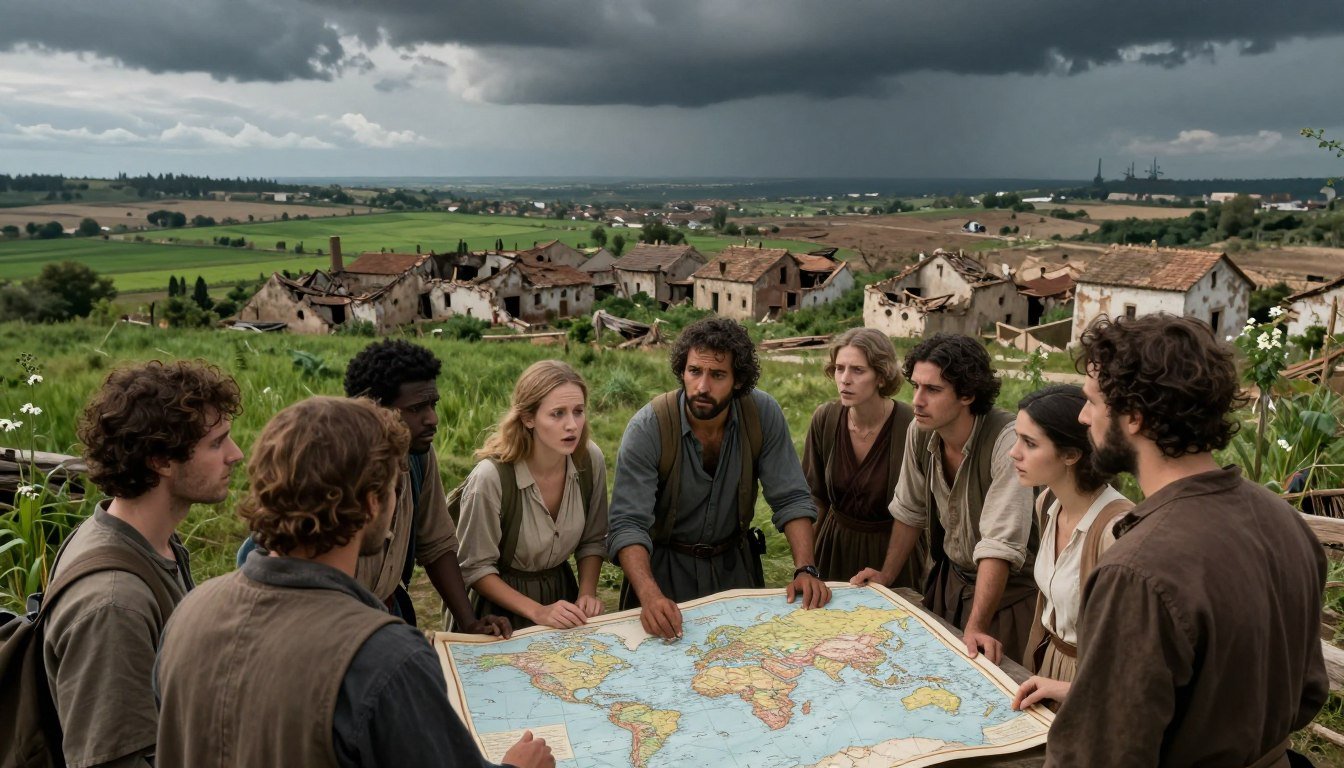
In just a few years, the Black Death may have helped drive the world’s population down from about 475 million to roughly 350–375 million.
This drop is hard to picture today. Yet it hints at the true Impact of the Black Death far beyond medieval Europe.
From about 1348 to 1350, Europe faced its most lethal wave. Many estimates put deaths near one-third of the population, while some research argues losses in parts of Western Europe were closer to 50%.
Across Eurasia and North Africa, scholars often cite total deaths ranging from 75 million to 200 million. These numbers are debated, but the scale is not.
The medieval pandemic consequences did not end when the first surge faded. Recovery could take around 80 years in much of Europe, and more than 150 years in some regions.
In England, some analyses suggest real population growth did not return until after 1500. Those long gaps reshaped land use, work, and local power for generations.
And the disease kept coming back. Historians describe a “fleet” of later outbreaks that struck again and again, with major epidemics in Europe continuing until about 1720.
These historical disease repercussions reach into every part of this story—markets and wages, family life, art, faith, public health, and the rise and fall of states. What follows tracks how one outbreak became a turning point for the world.
Key Takeaways
- The Impact of the Black Death was global, not just European.
- Europe’s peak crisis hit hardest around 1348–1350.
- Estimates often cite one-third of Europe dead, with higher figures argued for Western Europe.
- Global death toll estimates commonly range from 75 million to 200 million.
- Many communities faced decades of recovery, sometimes more than a century.
- Repeated outbreaks extended the medieval pandemic consequences for hundreds of years.
- Historical disease repercussions shaped economics, politics, religion, and culture long after the first wave.
Overview of the Black Death
The Black Death’s impact is huge in history. It spread fast, hit some places harder than others, and left us with vivid but incomplete records. For a simple primer on healing traditions and how people tried to make sense of illness, see early healing lore.
What Was the Black Death?
The Black Death was a massive pandemic tied to plague. It had harsh symptoms that appeared quickly. Many accounts describe high fever, a rash, and painful swelling in the armpits or groin.
These lumps, called buboes, could darken, burst, and leave victims weak and frightened. Other common symptoms included headaches, chills, fatigue, vomiting, and burning fevers. In many cases, people died within three to five days.
Today, researchers link the outbreak to Yersinia pestis. Genetic material recovered from bones and dental pulp in plague cemeteries has been compared with modern strains. This supports the idea that the disease spread in more than one clinical form.
Timeline of Events
One early episode was during the Siege of Kaffa in Crimea, from 1346 to 1349. A contemporary account by Gabriele de’ Mussi says corpses were hurled over city walls. This is sometimes seen as early biological warfare.
Ships fleeing the region are frequently connected to the next wave of spread. By 1347–1348, plague ships reached ports in Sicily, Genoa, and Venice. Then, they moved along trade routes to France and Spain, and later to Norway.
Records place the arrival in England around May 8, 1348, at Melcombe Regis, linked to a ship that left Bordeaux. The disease reached London by August 1348, became widespread by late September, and eased by 1351. Across much of Europe, the peak years are widely listed as 1348–1350, a period that anchors many estimates of Black Death mortality rates.
Key Areas Affected
In Europe, deaths were not evenly distributed. Some places saw lighter losses, while other communities lost vast shares of their population. Some areas were hit as hard as 80%.
Sources also describe severe outbreaks across parts of Asia and the Middle East. Reports from Hubei in China in 1334 are sometimes cited as catastrophic. Late 14th-century population estimates for China drop sharply amid epidemics and famine.
In the Middle East, chronicles describe heavy losses in cities such as Gaza, Aleppo, and Damascus. Some regional estimates suggest very high overall mortality. Scholars dispute parts of the global picture. George Sussman has argued that sources do not show a serious 14th-century epidemic in India, and Timothy Brook has questioned whether bubonic plague struck 14th-century China in the way many summaries claim.
| Place or Region | Often-Cited Outbreak Window | How Sources Describe Severity | Notes on Evidence |
|---|---|---|---|
| Crimea (Kaffa) | 1346–1349 | Linked to siege conditions and flight by sea | Account by Gabriele de’ Mussi is frequently referenced; details are debated |
| Sicily, Genoa, Venice | 1347–1348 | Early port arrivals tied to maritime traffic | Port records and chronicles support rapid coastal spread |
| England (Melcombe Regis to London) | 1348–1351 | Fast acceleration after arrival; broad disruption | Reported arrival May 8, 1348; London affected by late summer |
| Europe (varied regions) | 1348–1350 (peak often cited) | Uneven losses; some areas reported extremely high | Estimates vary by locality; used heavily in Black Death mortality rates discussions |
| Middle East (Syria, Egypt, urban centers) | 1348–1349 | High daily death counts described in major cities | Later scholarly synthesis offers regional percentages; figures differ by source |
| China (Hubei; broader late 14th century) | 1334 and later 1300s | Severe claims in some accounts; large population decline estimates | Some historians dispute plague attribution, shaping debates over the Impact of the Black Death |
Economic Consequences
The Black Death hit hard, causing empty shops and price changes. Communities had to decide what to keep or stop making. This pandemic changed how people worked and traded.
Collapse of Trade Networks
Trade routes across Eurasia were strained as disease spread. The Silk Road, once a key link, became less reliable. This hurt the Mongol Empire’s stability.
In Western Europe, wars and policies also affected markets. England and France fought, taking money from their treasuries. Rulers tried to control prices but faced challenges.
Labor Shortages and Wages
With fewer workers, survivors had more power. Historian R. H. Hilton said English peasants got better pay and more land. But wages didn’t always go up.
England tried to limit worker power with laws. But these rules were not always followed. Despite this, farm wages in England rose from 1350 to 1450.
Long-term Economic Changes
Plague shocks changed who had power, at least for a while. Walter Scheidel said this could reduce inequality. But later, population growth could undo these gains.
Farming changed to use less labor, focusing on meat and dairy. Cities saw empty buildings, like a third of London’s by 1357. This led to new ways of working and trading.
People used tools and energy more efficiently. Water mills and sail ships became more common. These changes helped in a world with fewer workers.
| Economic pressure point | What changed | How it showed up in daily life | Why it mattered for later decades |
|---|---|---|---|
| Trade connectivity across Eurasia | Routes tied to the Pax Mongolica and the Silk Road became less reliable as travel risk rose | Fewer predictable shipments, wider price swings, and delays in staple and luxury goods | Weaker long-distance links reduced steady revenue and made regional supply more important |
| War finance and market rules | Hundred Years’ War spending and emergency controls on exports and grain markets added strain | Hoarding, enforcement gaps, and tension between local needs and national orders | Policy experiments shaped later ideas about regulation, taxation, and market oversight |
| Workforce losses | Labor scarcity increased worker leverage, while inflation cut into some real earnings | Hard bargaining over pay, more movement for work, and conflict over old obligations | Reset expectations around wages and contracts, even when authorities tried to hold them down |
| Land use and productivity | Shifts from grain to pasture and wider use of labor-saving methods and power sources | Different diets, new local specializations, and changes in rural employment needs | Structural adjustment influenced inequality, investment choices, and the pace of recovery |
Social Upheaval
The plague did more than kill. It changed daily life, work, and trust. Many changes happened fast and were local, showing how crisis can change old rules. These shifts are key to understanding the Black Death’s impact.

With less labor, people saw status differently. Land changed hands, and communities changed rules. This led to different outcomes across Europe, which is why the plague’s effects are studied today.
Shift in Social Classes
With fewer workers, peasants and artisans could ask for better pay. In Western Europe, old rules weakened, and people could move up. Younger sons and women found jobs, changing class lines.
In Eastern Europe, the opposite happened. Landlords kept tight control to get more labor. Elites used laws to keep status by controlling what people wore.
| Pressure Point | Typical Pattern in Western Europe | Typical Pattern in Eastern Europe |
|---|---|---|
| Labor bargaining power | Higher wages and more leverage for workers | Stronger limits on movement and work terms |
| Land and tenancy | More flexible rents and new leases for survivors | Tighter control of peasant landholding and duties |
| Class signaling | Sumptuary laws aimed to curb rising consumption | Status guarded through stricter hierarchy and enforcement |
| Long-run direction | Manorial control weakened in many regions | Renewed serfdom expanded in several areas |
Effects on Family Dynamics
Fear of the plague hurt family bonds. Some families left sick relatives alone. Care work often stopped in panic.
Communities could become harsh. In some cases, families with illness were isolated, leading to violence. These family issues are a clear sign of the plague’s impact.
Rules about property changed as families tried to keep what they had. In some places, more people got to inherit property. This quiet change is seen in old records and court cases.
Rise of New Social Movements
New movements emerged when order felt weak. The flagellant movement spread with acts of penance. These acts were seen as a response to divine anger.
Governments tried to control labor with strict rules. In England, the Statute of Labourers (1351) capped wages and limited choices. This led to anger that later sparked the 1381 Peasants’ Revolt. These conflicts show the plague’s wide impact on law, faith, and authority.
Seen together, these changes show how the plague affected daily life. It changed what people wore, how they worked, and whom they trusted. The plague’s effects are seen in big uprisings and small household changes that reshaped communities.
Cultural Transformations
The Black Death changed more than just medicine and money. It changed what people feared and hoped for. It also changed what they remembered.
Across Europe, the plague reshaped culture. It influenced images, stories, and rituals that we see today.
Changes in Art and Literature
After 1350, art and writing showed stark scenes of loss. The danse macabre showed death takes everyone, rich and poor. It made artists create crowded, urgent scenes.
Artists started showing burial and street life openly. This was a big change from before.
Works like “The Triumph of Death” (1446) show chaos as a shared experience. The Tournai burial miniature in The Chronicles of Gilles Li Muisis turned grief into documentation. These works made realism compete with ideal beauty.
Influence on Religion and Spirituality
When cures failed, many looked to spiritual causes. People debated divine punishment, bad air, and hidden plots. The plague made people more suspicious and devoted.
Giovanni Boccaccio wondered if the disaster was God’s correction or from “heavenly bodies.” This shows the era’s split between faith and natural explanation.
Clergy losses changed parish life. Monasteries and hospitals were hit hard. New replacements had less training.
Colleges expanded and training sped up. Laywomen took on wider roles in worship. The plague changed everyday roles.
Legacy in Popular Culture
Plague memory didn’t stay in the Middle Ages. Stories of “plague ships” and quarantined ports are well-known. They fit a clear drama: a hidden threat crossing borders.
These stories carry forward the plague’s effects as symbols. Masks, bells, empty streets, and sudden rules are common.
Today, films, novels, and games use plague imagery. It signals social strain and moral tests. The plague has become a symbol of uncertainty, fear, and change.
| Domain | Examples tied to plague-era culture | Common themes | How the change spread |
|---|---|---|---|
| Painting and visual art | Danse macabre imagery; “The Triumph of Death” (1446); Pieter Brueghel the Elder’s “The Triumph of Death” | Randomness of death, crowded scenes, social collapse | Church walls, public commissions, workshops, prints |
| Manuscripts and record-keeping | Tournai burial miniature from The Chronicles of Gilles Li Muisis (Bibliothèque royale de Belgique, MS 13076–77, f. 24v) | Witnessing, civic duty, ritualized burial | Monastic copying, court libraries, urban archives |
| Religion and parish life | Debates over divine punishment versus natural causes; expanded lay participation during priest shortages | Guilt, anxiety, reform, practical adaptation | Sermons, local confraternities, university training |
| Popular culture and storytelling | Plague ships, quarantine tales, Kaffa siege stories | Contagion as threat, borders and blame, survival rules | Oral tradition, chronicles, later novels and film |
Public Health Developments
The plague years made cities act fast, even without knowing the disease cause. These early actions shaped public health planning today.
Records from then show clues about Black Death mortality rates. They reveal fear and strict controls. Many responses were practical, but explanations were often divine anger or neighbor blame.
Innovations in Medicine
Fourteenth-century healers tracked symptoms but couldn’t explain causes. Prevention didn’t include rat control. Ideas leaned toward prayer, punishment, or conspiracies.
Modern science changed the story with Yersinia pestis evidence from ancient DNA. Researchers compare this with today’s bacteria to understand outbreaks. This adds context to historical disease repercussions.
Foundations for Modern Public Health
Local leaders tried to slow disease spread with rules we know today. They blocked gates, limited travel, and watched roads and docks.
Burial practices also changed. When parish yards were full, new plague cemeteries were opened. This was a grim but organized step.
| Public health pressure | Common 14th-century response | Why it mattered |
|---|---|---|
| Movement of people and goods | Barricades, travel limits, guarded entry points | Reduced crowding and slowed contact chains during spikes in Black Death mortality rates |
| Overloaded burial grounds | New cemeteries outside standard parish space | Prevented disorder and maintained basic sanitation amid historical disease repercussions |
| Unclear cause of illness | Observation-based care mixed with spiritual remedies | Showed the gap between visible patterns and true mechanisms, a key medieval pandemic consequences theme |
Lessons Learned for Future Pandemics
Bioarchaeology gives a big-picture view without just relying on old stories. Sharon DeWitte studied skeletons to see if plague deaths were selective. This changes how we see historical disease repercussions.
Her work includes 490 skeletons from London and 291 from Denmark. She looked at age and frailty markers to compare risk. Other studies also look at burial groups before and after the plague, showing how mortality rates might change over time.
-
Connectivity accelerates spread: Pax Mongolica and maritime trade moved infection quickly, much like modern air and cargo routes, a core part of medieval pandemic consequences.
-
High lethality without treatment: accounts often cite 72–100% mortality among infected people without antibiotics, shaping how Black Death mortality rates are discussed in public health history.
-
Social fear can amplify harm: patterns of stigma and disruption echo later crises, including public reactions compared with Ebola, adding another layer to historical disease repercussions.
Political Ramifications
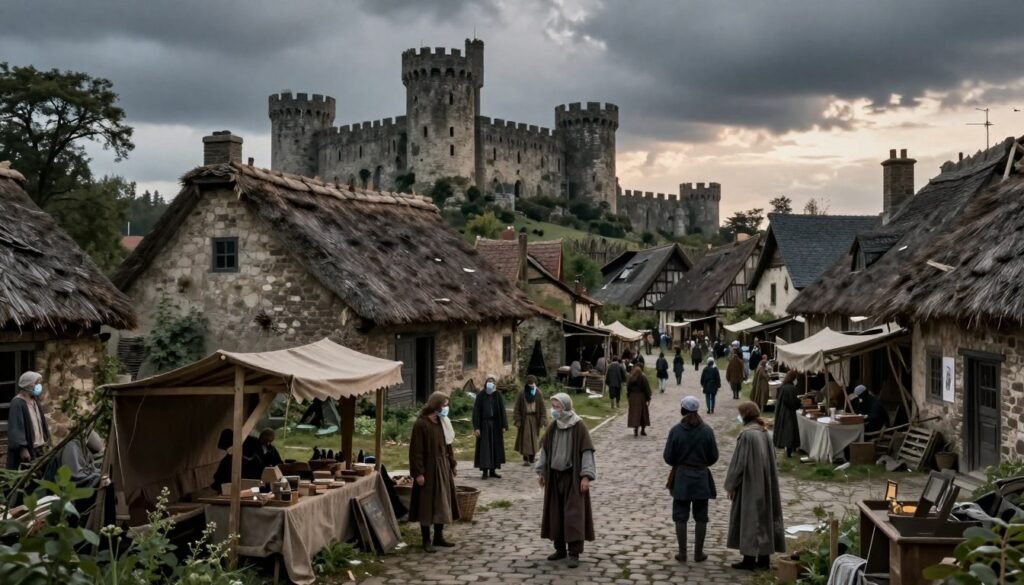
The medieval pandemic had big effects on rulers and their ways. It changed how they raised money and kept order. Governments faced many challenges, like fear, labor issues, and supply problems.
Shift in Power Among Nations
Trade stops and outbreaks hurt long-distance rule. In Eurasia, old systems weakened because of safe routes and taxes. This included parts of the Mongol world.
At the same time, new pushes for territory started. European states went overseas, and the Ottomans and Russians used gunpowder. They expanded into areas hit by the plague.
| Political pressure | What leaders tried to protect | What often shifted |
|---|---|---|
| Disrupted trade corridors and caravan routes | Customs revenue and access to goods | Weaker control at the edges of empires; more room for rivals |
| Recurring outbreaks and population loss | Stable tax base and manpower | New military bargains, including broader use of firearms |
| Competition across plague-affected frontiers | Border security and strategic ports | Faster campaigns and harsher frontier administration |
Changes in Governance
States took a strong role in markets after the Black Death. They banned food exports, punished black markets, and controlled grain prices. Some places even banned big fishing.
Labor became a big policy issue. England’s laws tried to control wages and worker movement. These rules show how disease affected contracts and courts.
Rise of Authoritarianism
Rules became stricter due to elite fears about workers. Wage freezes and limits on movement were not just economic. They showed who could negotiate after the shock.
In cities, moral control grew. In Cairo in 1438, plague was seen as punishment for bad behavior. Laws banned women from public until wealthy households complained. This shows how fear led to stricter rules, then daily needs forced changes.
Psychological Effects
The Black Death changed how people thought and acted. It affected their trust and choices under pressure. This disease spread through homes, markets, and churches, changing daily life in many ways.
Impact on Mental Health
Fear was always present. People avoided others because a cough or fever could mean death. This led to panic, sleeplessness, and a loss of trust.
Caregiving fell mainly on those bound by duty, like in religious life. Some households isolated themselves to survive. The Black Death made people feel like rules no longer applied.
Historical Trauma
Many saw the disease as punishment or a sign of the end. Sermons and talks on the street supported this view. These beliefs lasted long after the disease passed.
This fear is seen in the art and writing of the time. Images of sudden loss and moral judgment were common. The plague’s effects went beyond medicine, touching the inner lives of Europe’s cities and villages.
Coping Mechanisms of Communities
People sought structure and control. Some joined flagellant movements to atone for sins. Others used barricades and travel limits to reduce exposure.
Burial practices had to change quickly as graves filled. New cemeteries and expanded gravesites became necessary. These actions helped restore order in the face of endless grief.
| Pressure People Faced | Common Response | What It Tried to Solve |
|---|---|---|
| Fear of infection in close spaces | Self-isolation, avoiding visitors, limiting care outside close circles | Lower contact and reduce risk tied to bubonic plague effects |
| Belief that disaster carried moral meaning | Penitential rituals and public repentance, including flagellant activity | Regain spiritual certainty during historical disease repercussions |
| Rumors and distrust between neighbors | Town restrictions, guarded gates, blocked roads | Create boundaries and a sense of control amid the Impact of the Black Death |
| Overwhelming number of deaths | Expanded burial grounds and dedicated plague cemeteries | Manage grief and public health needs during bubonic plague effects |
Global Spread and Impact
The Black Death didn’t just stay in one place. It spread through daily activities like buying food and traveling. This made local outbreaks feel like a global problem, leading to long-lasting effects.
Routes of Infection Across Continents
Trade and conquest helped the plague move quickly. The Silk Road connected distant markets, and illness spread along with goods. Ports then carried the disease from harbor to harbor.
Kaffa was a key spot for the spread between 1346 and 1349. Siege conditions increased exposure, and ships carried sickness to places like Sicily and Venice. From there, it spread to France, Spain, and even Norway.
In England, the plague arrived in Melcombe Regis in May 1348. It reached London by August and caused a big outbreak by September. It then spread through roads and market towns.
Influence on Other Regions
In many European cities, the plague was worse because of crowding and poor sanitation. Places like Florence and Hamburg saw huge drops in population. London was hit hard, showing how crowded areas were more at risk.
France saw fast and big outbreaks. In Givry, deaths soared in 1348, and Perpignan lost about half its people. Norway lost over half its population in 1348-1350.
In the Middle East, cities like Aleppo and Damascus faced relentless death counts. Gaza lost a lot of people in 1348. Egypt and surrounding areas also saw severe losses.
Asia’s impact is harder to pin down. There was a big outbreak in Hubei in 1334. China’s population declined sharply by the late 1300s. But, it’s hard to know how much of this was due to the plague.
| Region | Commonly reported examples | What shaped severity |
|---|---|---|
| Italy and Western Europe | Florence population fell sharply between the 1330s and 1351; major ports saw widespread loss | Dense housing, constant trade traffic, and close-contact care for the sick |
| England and Northern Europe | Arrival at Melcombe Regis in 1348; London hit hard soon after | Busy shipping lanes, road networks, and movement between towns and fields |
| France | Givry’s 1348 death surge; Perpignan’s physician losses during rapid spread | Fast transmission in compact communities and strained medical support |
| Scandinavia | Norway’s losses in 1348–1350 often estimated above 60% | Limited medical capacity and disrupted supply routes in harsh seasons |
| Middle East | Large death totals recorded in Gaza; intense daily peaks in Aleppo and Damascus | Urban crowding, trade corridors, and repeated exposure in city life |
| East Asia | Hubei outbreak reports in 1334; major late-14th-century population decline estimates for China | Mixed drivers that may include plague, conflict, famine, and record gaps |
Long-lasting Global Effects
The plague didn’t just happen once. It came back many times, causing big epidemics and smaller outbreaks. This pattern changed how people lived, worked, and moved, lasting long after the 1340s.
Later outbreaks led to new ways of dealing with risks. Communities started using quarantines, controlling ports, and changing how they buried the dead. These changes lasted for centuries, shaping daily life in big ways.
Comparative Analysis with Other Pandemics
Looking at the Black Death and later outbreaks shows how diseases spread today. In the Middle Ages, trade routes carried the disease far and wide. Today, we see similar patterns, even with different ways of moving things around.
The Black Death was fast and deadly, causing illness and death quickly. This changed how people worked, got food, and lived together. Today, many countries face similar challenges, but not at the same scale.
Similarities and Differences
Outbreaks grow when people and goods keep moving. In the Middle Ages, roads and caravans spread disease far. Now, planes and trains do the same thing.
People react in similar ways to outbreaks, like being scared and blaming others. They also limit travel and struggle with burials. These actions show how health crises can affect communities.
| Comparison Point | Black Death (14th century) | Modern outbreaks (general pattern) |
|---|---|---|
| Mobility network | Caravan routes, ports, and regional fairs linked by long-distance trade | Air travel, highways, and commuter systems connect cities in hours |
| Typical medical tools | No antibiotics; limited supportive care and uncertain diagnosis | Lab testing, intensive care, and targeted treatments for many diseases |
| Speed and lethality | Often rapid decline; bubonic plague effects could be overwhelming in a short window | Varies widely by pathogen; severe waves can stress hospitals |
| Public response | Quarantines, flight from towns, and distrust of outsiders | Travel advisories, closures, misinformation, and community polarization |
| Economic shock | Labor loss reshaped wages and land use, adding to medieval pandemic consequences | Supply chain breaks, job losses, and uneven recovery across sectors |
Lessons from History
When people and goods move a lot, stopping outbreaks is tough. Isolation might work in one place, but trade routes can spread disease. This explains why outbreaks often last longer than expected.
Death rates are linked to health, not just chance. Sharon DeWitte’s research shows older people were more vulnerable. This helps us understand the Black Death’s impact better.
Modern Perspectives
Science now uses new tools to check old claims. Ancient DNA confirms *Yersinia pestis* in human remains. This lets us discuss the plague’s effects more accurately.
Genetics debates are ongoing. Some thought CCR5-Δ32 helped survive the plague, but it’s not clear. Jaume Bertranpetit and Mihai G. Netea’s team found signs of selection in chromosome 4. They suggest other infections might have played a role too.
Today, we compare the Black Death to outbreaks like Ebola. It shows how disease can disrupt trust and daily life. The Black Death teaches us about responding to crises today.
Conclusion and Reflections
The Black Death’s impact is seen in how historians talk about crises and recovery. Europe lost 30–50% of its people, with some areas losing nearly half. This huge loss changed life and growth plans.
Outside Europe, the world’s population fell from 475 million to 350–375 million. This big drop shocked everyone and changed life forever.
Lasting Legacy of the Black Death
The Black Death’s death rates only tell part of the story. The disease came back many times. It changed European towns and trade until about 1720.
Later, it hit Eastern Europe and the Middle East again. This long history of outbreaks explains why recovery was slow. It also kept fear alive for centuries.
Importance of Historical Understanding
The Black Death shows how fast lies can spread when people are scared. People blamed others for the disease, leading to unfair policies. This added to the social damage.
Now, we use science to understand the Black Death better. We combine old records with DNA studies. This helps us see how death and survival changed based on age, sex, and class.
Looking Towards the Future
The Black Death teaches us about the dangers of global connections. Medieval trade routes spread goods and disease, just like today. Repeated outbreaks changed economies and politics for many years.
By studying the Black Death, we can improve public health. We learn the importance of clear communication, strong systems, and realistic recovery plans.
FAQ
What was the Black Death?
What were the main symptoms described during the Black Death?
What caused the Black Death, according to modern science?
When did the Black Death hit Europe the hardest?
How did the Black Death spread into Europe?
When did the Black Death arrive in England, and how fast did it move?
How many people died in the Black Death (mortality rates and global totals)?
Were some regions hit harder than others?
Which places have well-known examples of catastrophic loss?
What evidence exists for the Black Death in the Middle East?
What about China and India—do historians agree on the scale there?
How long did it take populations to recover after the Black Death?
What was the economic impact of the Black Death on trade and the wider economy?
How did war and government policy worsen economic strain?
How did labor shortages change wages and working conditions?
What were the Ordinance of Labourers and the Statute of Labourers?
Did inflation cancel out wage gains after the Black Death?
What long-term economic changes followed the Black Death?
Did the Black Death reduce inequality?
What evidence shows cities struggled to rebound?
How did the Black Death change social classes and mobility?
Why did elites pass sumptuary laws after the Black Death?
How did fear reshape family life and community behavior?
What social movements rose after the Black Death?
Did the Black Death lead to any meaningful public health measures?
What did medieval medicine get wrong—and what did it learn?
How do scientists and bioarchaeologists study the Black Death today?
What did Sharon DeWitte’s research suggest about who died?
Did survival improve after the Black Death, even with repeated outbreaks?
What were the political ramifications of the Black Death?
How did governance change during and after the plague?
Did the Black Death encourage authoritarian or coercive policies?
What were the psychological effects of the Black Death?
Why did apocalyptic thinking grow after the Black Death?
How did communities cope in practical terms?
Why was connectivity so important to the global spread of plague?
How long did the “plague era” last after the first catastrophe?
How does the Black Death compare with other pandemics?
What lessons do historians draw for future pandemics?
What modern genetic questions are linked to Black Death survival?
Why does the Black Death matter today?
Get More Medical History
Join our newsletter for fascinating stories from medical history delivered to your inbox weekly.