The History of Healing
 Indigenous Healing Traditions: Unlocking Natural Wellness
Discover indigenous healing traditions that blend ancient wisdom with natural remedies. Explore time-tested practices for holistic wellness and balance.

Did you know 170 countries use traditional medicine today? Not years ago, but now. The World Health Organization says up to 99% of people in some places use these methods. That’s most of the world.
Why don’t we in the U.S. know more about indigenous healing? These aren’t old ideas. They’re systems of care based on thousands of years of wisdom. This wisdom teaches us how plants and rituals can heal our bodies, minds, and spirits.
The WHO says half the world can’t get basic health care. For billions, traditional medicine is their only option. That’s why the WHO started a Global Traditional Medicine Centre in 2022. It’s led by Shyama Kuruvilla to study and support these systems worldwide.
We’re going to explore how these ancient ways of healing work. We’ll look at plants, ceremonies, and the earth connection that modern medicine is just starting to see. You might be surprised by what these traditions offer, even if you’ve never thought about them before.
Think of this as your invitation to explore a world of healing that’s been right in front of us.
Key Takeaways
- Indigenous healing traditions are practiced across 170 countries and relied upon by a significant portion of the global population.
- Ancestral healing wisdom treats the whole person — body, mind, spirit, and environment — not just isolated symptoms.
- The WHO established a Global Traditional Medicine Centre in 2022 to formally research and integrate these practices into global health strategy.
- Traditional medicine practices often serve as primary healthcare for communities lacking access to conventional medical services.
- Natural wellness rooted in indigenous knowledge emphasizes deep ecological understanding and connection to the land.
- These healing systems offer personalized, nature-based remedies that complement and sometimes challenge modern medical approaches.
Introduction to Indigenous Healing Traditions
Did you know that 80% of the world uses traditional medicine? That’s billions of people. These systems have helped communities for thousands of years.
Definition and Importance
Indigenous healing traditions use nature for health. They include herbal remedies and ceremonies. The WHO says they focus on the whole person.
Native remedies are powerful because they connect us to the land. This connection helps us understand our identity and the environment.
Historical Context
These practices have been around for thousands of years. Every continent has its own tradition. Here are a few examples:
| Region | Tradition | Key Practice | Estimated Age |
|---|---|---|---|
| North America | Native American Medicine | Sweatlodge ceremonies | 10,000+ years |
| South America | Amazonian Healing | Plant-based remedies | 8,000+ years |
| Africa | Traditional African Medicine | Divination and herbalism | 5,000+ years |
| Oceania | Aboriginal Australian Healing | Bush medicine | 60,000+ years |
Contemporary Relevance
Traditional medicine is not just for the past. Today, researchers are studying these remedies. They’re also used in mental health treatment in the U.S.
This is not just history. It’s a living system that shapes our wellness today.
Core Principles of Indigenous Healing
So, what makes indigenous healing special? It’s a few key ideas that are very different from what you see in doctors’ offices. These ideas have guided communities for thousands of years. They are quite surprising once you learn about them.
The Wholistic Approach
Ancestral healing wisdom sees your body, mind, emotions, and spirit as one. Western medicine focuses on symptoms like a sore knee or anxiety. But Indigenous cultures look at the bigger picture.
Here’s how it works:
| Aspect | Western Medical View | Indigenous Wholistic View |
|---|---|---|
| Physical Health | Treated as primary focus | One of four interconnected dimensions |
| Mental Health | Often treated separately from physical | Inseparable from emotional and spiritual well-being |
| Emotional Health | Addressed through psychology | Engaged through community and ceremony |
| Spiritual Health | Rarely included in treatment | Central to all holistic healing rituals |
Every ceremony is like a re-enactment of creation. It’s a way to restore balance in your life. That’s a pretty powerful idea, right?
Interconnectedness with Nature
Talking about indigenous healing means talking about nature. These practices see humans as part of nature, not separate. Your health is connected to the land, water, seasons, and all living things.
Holistic healing rituals show this connection by:
- Using plants, stones, and water as sacred healing tools
- Aligning treatments with seasonal and lunar cycles
- Recognizing that harming nature means harming ourselves
This isn’t just a belief. It’s a way of life that shapes how communities think about wellness. It prepares us for the cultural healing techniques we’ll explore next.
Common Indigenous Healing Practices
So, what do these healing traditions look like in practice? You might be surprised. Many traditional medicine practices have roots in indigenous communities. Let’s explore the main ones.
Herbal Medicine
About 40% of today’s medicines come from nature. Native healing remedies are the base for many modern drugs. For example, aspirin comes from willow bark, used by indigenous peoples for pain relief.
The contraceptive pill was inspired by wild yam roots. Childhood cancer treatments use the rosy periwinkle plant. These examples show how ancient remedies are now part of modern medicine.
The Nobel Prize-winning research on artemisinin for malaria treatment began with ancient Chinese medicine texts. The smallpox vaccine was also inspired by global inoculation practices. Today, 170 WHO member states use herbal medicines, and 124 have laws to regulate them.
| Modern Medicine | Indigenous Plant Source | Original Use |
|---|---|---|
| Aspirin | Willow bark | Pain and fever relief |
| Contraceptive pill | Wild yam roots | Fertility management |
| Vincristine (cancer drug) | Rosy periwinkle | Various ailments |
| Artemisinin (malaria drug) | Sweet wormwood | Fever treatment |
Rituals and Ceremonies
Tribal healing ceremonies are more than symbolic. They include chanting, drumming, dancing, and plant offerings. These ceremonies aim to balance body, mind, and spirit. They address needs like grief, physical illness, and spiritual disconnection.
Energy Healing Techniques
Shamanic healing traditions focus on energy flow. Practitioners use breathwork, laying on of hands, and visualization to move energy. This work has been done for thousands of years worldwide.
Cultural Perspectives on Health and Wellness
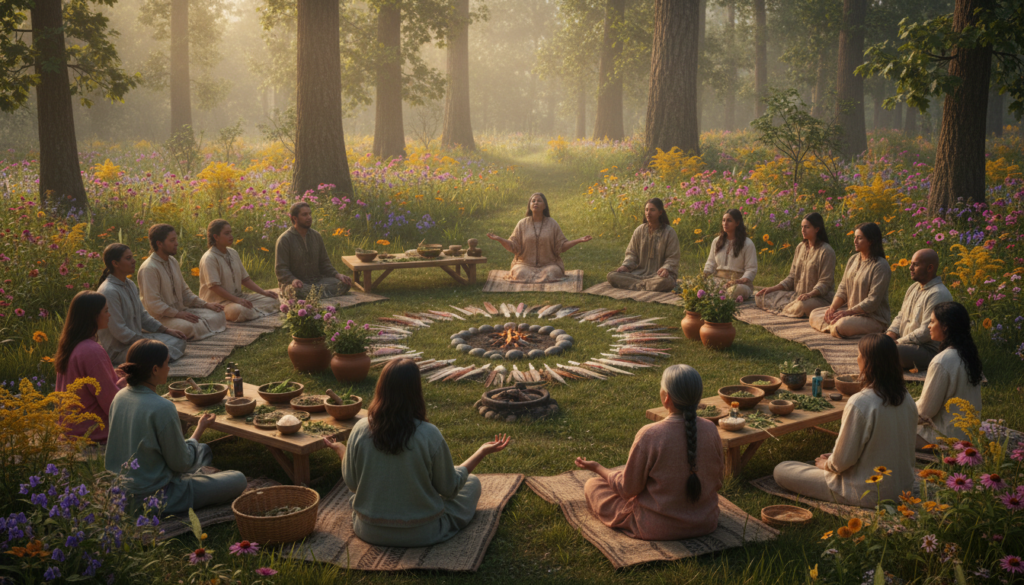
In many indigenous healing traditions, getting better isn’t just your job. It’s everyone’s job. The whole community plays a role in your wellness journey. This is a big change from how we usually think about health in Western culture, right?
Community Involvement
Indigenous-led healthcare puts the community front and center. Take Canada’s Shkaabe Makwa program at the Centre for Addiction and Mental Health (CAMH). Indigenous staff have shaped culturally responsive mental health services for First Nations, Inuit, and Métis clients. Cultural healing techniques used in these programs reflect a deep truth: healing happens in relationship with others.
For many people in remote and rural areas, traditional medicine remains the first choice. It’s trusted. It’s accessible. And it’s rooted in ancestral healing wisdom passed down through generations. That matters — a lot.
Spiritual Dimensions
You can’t separate the spiritual from the physical in holistic healing rituals. Indigenous cosmology sees balance across four key areas:
- The individual (mind, body, spirit, emotions)
- The family unit
- The broader community
- The natural world
When one area falls out of balance, the others feel it. Ceremonies, prayer, and sacred practices aren’t “extras.” They’re essential medicine.
Personal Responsibility
So does community focus mean you’re off the hook? Not at all. Indigenous healing traditions ask each person to take ownership of their choices, habits, and spiritual growth. You’re accountable — to yourself, your family, and your community. Ancestral healing wisdom teaches that personal well-being ripples outward. Your health shapes the health of everyone around you.
When we heal ourselves, we heal seven generations forward and seven generations back.
That’s the beauty of cultural healing techniques. They weave the personal and collective into one seamless fabric of care.
The Role of Nature in Indigenous Healing
Did you know nature is more than just a setting in indigenous healing? It’s the entire pharmacy. Every plant, animal, and season has a role in keeping people healthy. It’s like a living, breathing medicine cabinet, crafted over thousands of years.
Sacred Plants
Smudging is a big part of many native healing traditions. It uses plants like sage, sweetgrass, cedar, and tobacco. Places like the Centre for Addiction and Mental Health (CAMH) in Toronto grow these plants for ceremonies and treatments.
The Sweatlodge ceremony is a key example. It uses sacred plants and land-based healing to balance body and spirit. These choices come from deep spiritual ties with plants, passed down through stories and languages.
Animal and Earth Elements
Shamanic healing also uses animal spirits and earth elements. Feathers, shells, stones, and totems carry special meanings. They connect the healer and patient to the land.
“The earth does not belong to us. We belong to the earth.” — Chief Seattle
Seasonal Cycles
Timing is very important in native healing. Many remedies follow the seasons. Certain herbs are harvested at specific moons, and ceremonies happen at solstices or equinoxes.
This isn’t just tradition. It shows a deep understanding of when plants are most potent.
| Season | Healing Focus | Common Plants Used | Ceremony Type |
|---|---|---|---|
| Spring | Renewal and detoxification | Birch bark, dandelion root | Planting ceremonies |
| Summer | Growth and vitality | Sweetgrass, lavender | Sun Dance |
| Autumn | Harvest and gratitude | Sage, cedar | Thanksgiving ceremonies |
| Winter | Rest and reflection | Tobacco, white pine | Sweatlodge |
This shows a deep connection between shamanic healing and nature’s cycles. It’s powerful. Nature has its own schedule, and indigenous healing traditions knew this long before science did.
Indigenous Healing and Modern Medicine
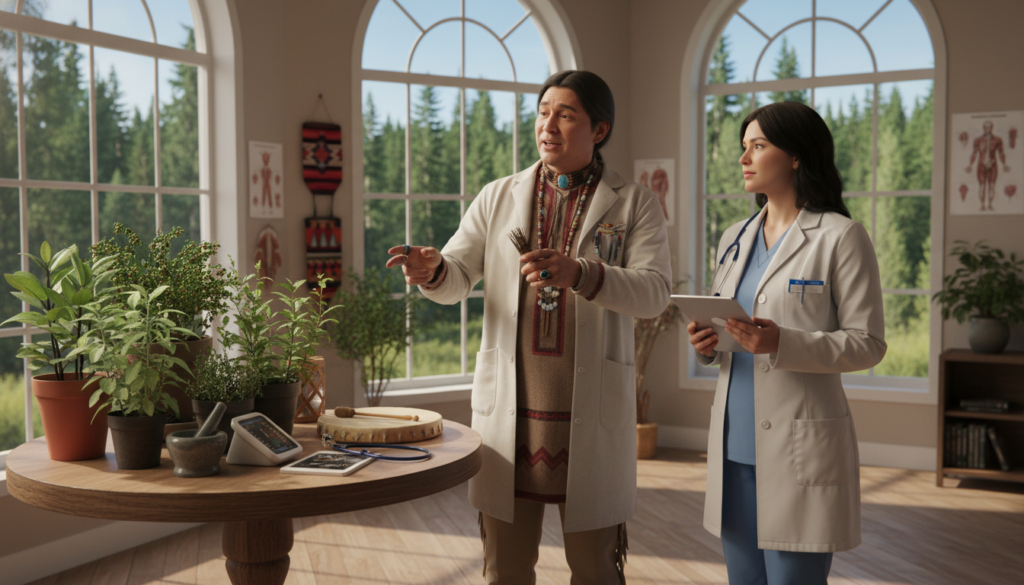
When indigenous healing meets modern medicine, amazing things happen. More places in the U.S. are using traditional medicine. Patients are seeing big improvements in their care.
Integration with Conventional Therapies
Modern medicine treats symptoms. Traditional medicine treats the whole person. This includes body, mind, spirit, and environment.
Now, things like acupuncture and herbal remedies are used with standard treatments. The World Health Organization supports this, as long as it’s safe and proven.
Real-World Examples
| Program | Location | Approach | Outcome |
|---|---|---|---|
| Indian Health Service Traditional Healing Program | Navajo Nation, Arizona | Traditional ceremonies alongside clinical care | Improved patient satisfaction and mental health outcomes |
| Southcentral Foundation’s Nuka System | Anchorage, Alaska | Alaska Native cultural healing techniques with primary care | 60% reduction in emergency room visits |
Benefits and Challenges
The benefits are clear. You get care that’s more personal and respectful. Traditional medicine focuses on prevention, helping problems before they start.
But there are challenges too:
- Building trust between doctors and traditional healers takes time
- Not all holistic rituals have been studied
- There’s a risk of cultural appropriation
- Rules for using indigenous healing are catching up
We’re moving forward. As we look at healing spaces next, you’ll see how important where healing happens is.
Healing Spaces and Environments
Healing spaces are just as important as the healing itself. Indigenous traditions know that where we heal matters. A hospital room is one kind of space. But a ceremonial ground with a fire burning under the sky is different.
Sacred Sites
Some places hold deep spiritual meaning. The Centre for Addiction and Mental Health (CAMH) in Toronto is one. It sits on land once used by the Mississaugas of the Credit.
For generations, the Mississaugas came here for important meetings. Today, CAMH has three Traditional Healing Spaces. These include a Sacred Fire, medicine gardens, and a Sweatlodge for patient treatment.
Community Health Centers
Not all healing spaces are ancient. Community health centers in North America are adding special rooms. What makes these spaces work?
- Access to natural light and outdoor areas
- Rooms designed for smudging and prayer circles
- Virtual wellness spaces (like CAMH’s ECHO Ontario First Nations, Inuit, and Métis Wellness Room)
- Cultural artwork and symbols that reflect local traditions
Natural Landscapes
Forests, rivers, and mountains are the original healing rooms. Many healing traditions rely on connecting with earth, water, and sky. Spaces can support these traditions, but they must connect with nature.
“The land remembers, even when we forget.”
This connection to nature is not just a saying. It’s the heart of tribal healing ceremonies. Modern wellness is starting to see its value.
Education and Preservation of Indigenous Knowledge
Did you know that thousands of years of healing wisdom have been passed down without textbooks? It’s amazing. Keeping these traditions alive is hard work. But, it’s happening in exciting ways today.
Importance of Oral Traditions
Elders have shared traditional medicine through stories and songs for ages. It was more than just fun tales. It was a way to teach important knowledge. Today, groups like the Navajo and Cherokee Nations use these methods to keep their healing traditions alive.
Formal Education Initiatives
Schools and universities are now paying attention. Places like the University of Arizona and the University of New Mexico offer classes on indigenous healing. Tribal colleges, like Salish Kootenai College in Montana, focus on preserving this wisdom. These efforts help younger people learn from their elders.
Role of Technology
Technology is playing a big role too. Digital archives, videos, and apps help document traditional healing. Groups like the First Nations Development Institute support these efforts. It’s a mix of old and new, keeping ancient knowledge alive.
FAQ
What exactly are indigenous healing traditions?
Why are traditional medicine practices important today?
How does the holistic approach in indigenous healing differ from Western medicine?
What modern medicines have actually come from traditional herbal remedies?
How does community involvement shape indigenous healing?
What role do sacred plants play in shamanic healing traditions?
Can indigenous healing traditions be safely integrated with modern medicine?
What are healing spaces and why are sacred sites important for indigenous medicine?
How is ancestral healing wisdom being preserved and passed down?
Get More Medical History
Join our newsletter for fascinating stories from medical history delivered to your inbox weekly.