The History of Healing
 Mayan Medicine: Uncovering Natural Remedies
Explore ancient Mayan medicine practices and discover time-tested natural remedies from traditional healers that continue to influence modern holistic healing today.

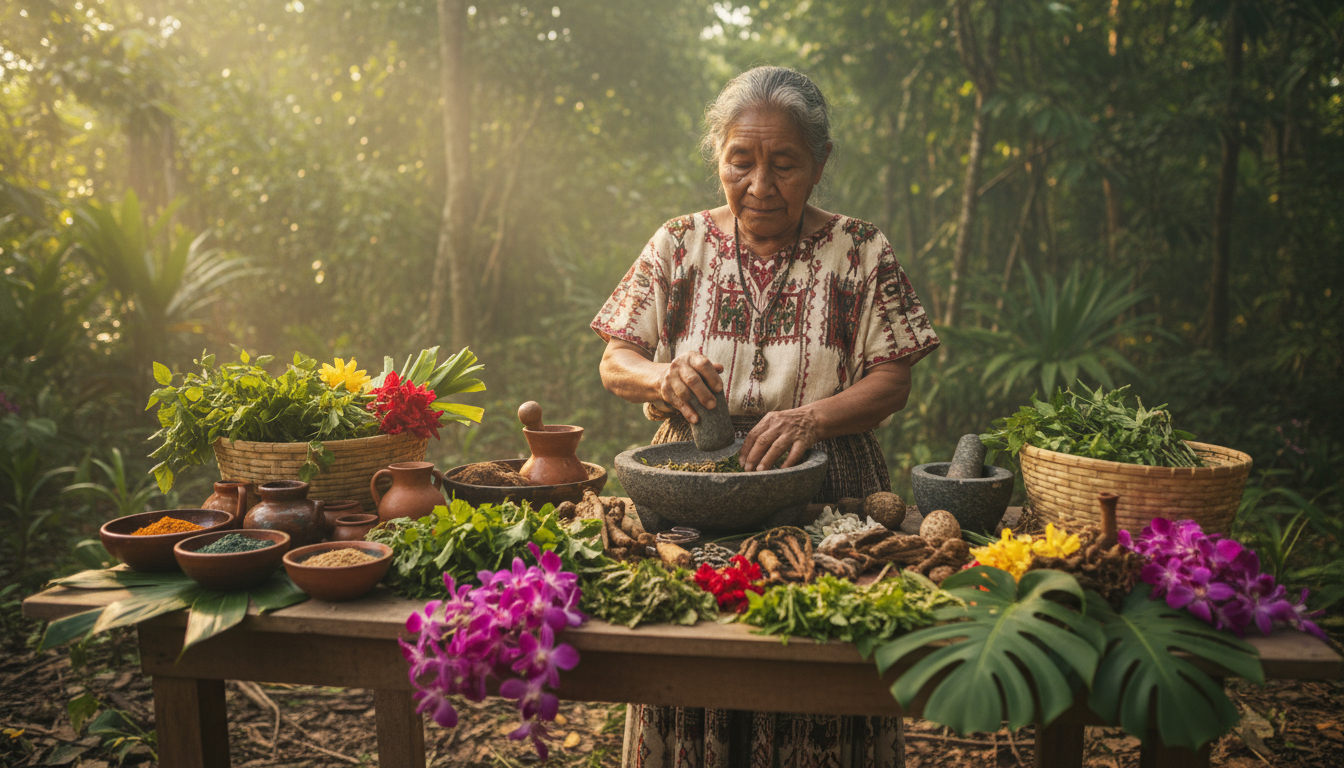
The ancient Maya found over 1,500 plants for medicine. Today, scientists are proving many of these plants work. This happened over 1,500 years ago, and their medicine is standing up to today’s science.
Pretty wild, right?
The Maya lived in what’s now southern Mexico, Guatemala, northern Belize, and western Honduras. They’re famous for their pyramids and calendar. But their medicine was just as amazing. It mixed plant science, spiritual practices, and understanding the human body.
Mesoamerica, from central Mexico to northern Central America, was home to brilliant civilizations. The Olmecs, Maya, and Aztecs built rich healing traditions. This knowledge didn’t disappear when these civilizations did. It was passed down through generations.
Now, millions of Americans are looking for alternatives to medicine with side effects. They’re exploring traditional healing practices. Mayan medicine is at the heart of this new interest.
Let’s explore what the Maya knew about staying healthy. Their secrets might amaze you.
Key Takeaways
- The Maya identified over 1,500 medicinal plants, many now validated by modern research as effective natural medicine.
- Mayan medicine was a sophisticated system combining plant-based remedies, spiritual rituals, and whole-body understanding of health.
- Mesoamerican healing traditions were shaped by multiple civilizations — including the Olmecs, Maya, and Aztecs — over thousands of years.
- Much of this ancient healing knowledge survived and is stil practiced in parts of Mexico and Central America today.
- Growing dissatisfaction with pharmaceutical side effects is driving renewed interest in traditional healing practices rooted in time-tested wisdom.
- The Maya civilization thrived across present-day southern Mexico, Guatemala, Belize, and Honduras, excelling in science, agriculture, and medicine alike.
Introduction to Mayan Medicine
Mayan medicine was a secret tradition passed down in families. It was an ancient healing knowledge system in Mesoamerica. It’s more complex than many think.
Historical Context of Mayan Healing Practices
The healers, called ah-men, were chosen by birth. They trained for years. They could change consciousness and find the cause of sickness.
The Maya believed sickness was a soul problem. Paul Kirchhoff named the area “Mesoamerica” in 1943. It was where many cultures shared traditions.
After the Spanish came, Mesoamerican healing mixed with European ways. Sadly, many traditions were lost because of colonial rules.
Importance of Nature in Healing
Nature was key in Mayan healing. Plants, animals, and minerals were seen as healing sources. The jungle was their pharmacy, with hundreds of species used for remedies.
Overview of Common Practices
Mayan medicine used many methods:
- Herbal preparations from local plants and tree barks
- Spiritual ceremonies to balance the soul
- Bloodletting to release illness
- Sweat baths (temazcal) for purification
- Bone setting and wound treatment
These traditions show how health, spirituality, and nature were linked for the Maya. Next, we’ll see how these ideas connect to today’s holistic health.
Key Principles of Mayan Medicine
What made Mayan medicine special? It wasn’t just random. The ancient Maya had a clear plan. They believed in a big idea: everything is connected. This meant your body, feelings, the world around you, and even the universe.
Holistic Approach to Health
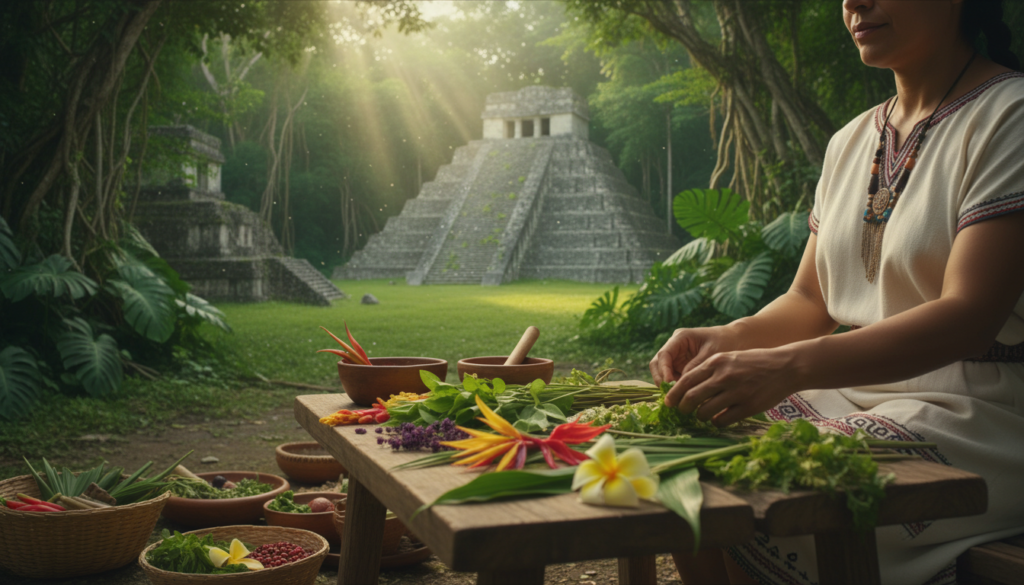
The Maya didn’t just treat symptoms. They wanted to know the reason behind them. Was it a problem in your life, relationships, or spirit? They treated the whole person, not just the symptom.
This idea was also used in ancient Greek Asklepion temples. They mixed social, environmental, and psychological factors in their treatments. The Maya did this on the other side of the world, all by themselves.
Interplay of Body, Mind, and Spirit
For the Maya, body mind spirit healing was real. They saw sickness as a sign of imbalance in any area. They used prayer, rituals, and ceremonies along with natural remedies like herbal teas.
They saw you as one whole being, not separate parts.
Role of Energy and Balance
Balance was key for the Maya. They saw humans as connected to the universe. Any imbalance could lead to sickness.
Their healing methods aimed to bring back harmony between a person and their world.
| Principle | What It Means | How It Was Applied |
|---|---|---|
| Holistic Unity | All aspects of a person are interconnected | Treating physical and spiritual causes together |
| Cosmic Balance | Humans are part of nature and the cosmos | Aligning treatments with natural cycles and seasons |
| Energy Flow | Life energy must circulate freely | Rituals, breathwork, and herbal natural medicine |
| Spiritual Harmony | The spirit influences physical health | Spiritual healing practices and ceremonies |
These Mayan medicine principles set the stage for the herbal remedies and rituals we’ll look at next.
Herbal Remedies in Mayan Medicine
The ancient Maya didn’t just pick random leaves. They built a detailed system of herbal remedies. This system was based on centuries of observation and trial. The Mesoamerican Medicinal Plant Database (MAMPDB) shows over 12,500 use-records for 2,188 plant species.
Common Plants in the Healer’s Toolkit
Mayan medicine plants included everyday items like chili peppers and cacao. They also used powerful substances like peyote and mushrooms. Even animal parts were used in natural medicine.
Guatemala’s National Vademecum on Medicinal Plants lists 101 validated herbal drugs. Of these, 42 are native species. This shows how rich Mesoamerica’s medicinal plants are.
How Healers Prepared Their Treatments
Healers used different methods to prepare their treatments. They crushed, boiled, soaked, or burned plants. Some remedies were applied as poultices, while others were brewed into teas.
Weighing the Rewards Against the Risks
Not all ancient remedies were safe. Some plants were toxic, including mind-altering varieties. Today, evidence-based phytotherapy helps us know which treatments are safe and effective.
| Plant | Traditional Use | Modern Research Status |
|---|---|---|
| Cacao | Energy, mood enhancement | Supported (antioxidant properties confirmed) |
| Chili Pepper | Pain relief, digestion | Supported (capsaicin studies ongoing) |
| Tobacco | Wound treatment, ritual use | Mixed (medicinal vs. health risks) |
| Agave | Anti-inflammatory, wound care | Promising (early-stage research) |
Studying these medicinal plants is fascinating. We’re finding that many actually work. Evidence-based phytotherapy is helping connect ancient wisdom with modern science.
Rituals and Spiritual Healing
Healing was more than just herbs for the ancient Maya. It was a spiritual event that involved the whole community. Mayan medicine rituals combined prayer, sacrifice, dance, and feasting. This mix was key to restoration.
Significance of Ceremonies in Healing
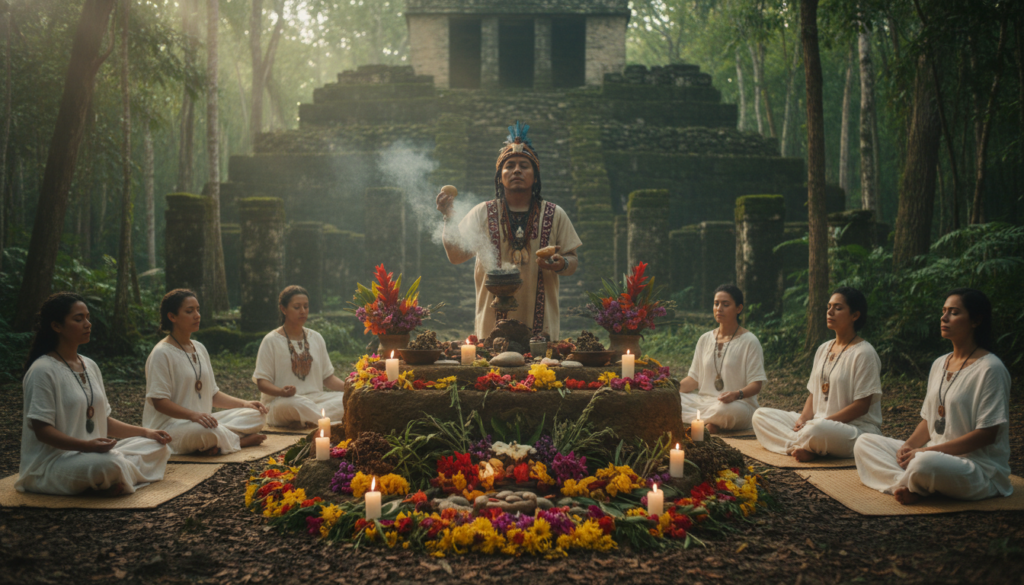
Ceremonies varied but had common elements across Maya communities. Each ritual started with a medicine man using a sacred calendar. The Ixil Maya of Guatemala used red coral tree seeds on a calendar to find the perfect day.
Before the ceremony, people fasted and abstained. This was to purify themselves spiritually. The ceremony included expelling evil spirits, burning incense, and making offerings. After, the community danced, feasted, and drank together.
The Role of Shaman and Healers
Shaman healers connected the physical and spiritual worlds. They were more than herbalists; they were spiritual guides and calendar keepers. Their knowledge came from years of training and passed-down traditions.
Connection Between Spirituality and Health
For the Maya, spiritual and physical healing were the same. Illness was seen as a spiritual or energetic imbalance. So, every treatment aimed to heal the whole person.
| Ceremony Element | Purpose | Timing |
|---|---|---|
| Calendrical divination | Selecting the ideal ritual day | Before ceremony |
| Fasting and abstinence | Spiritual purification | Days before ceremony |
| Incense burning and prayers | Invoking spiritual forces | During ceremony |
| Offerings and bloodletting | Appeasing spirits, removing illness | During ceremony |
| Dancing and feasting | Community bonding and celebration | After ceremony |
These rituals show the Maya’s deep understanding. They knew that you can’t heal the body without tending to the spirit.
The Role of Nutrition in Mayan Healing
The ancient Maya didn’t just eat to survive. They ate to heal. Their meals were filled with natural medicine. Food was their medicine.
What the Ancient Maya Actually Ate
Maize was at the heart of their diet. They ate so much that their teeth often got cavities. Chia seeds were also important for energy.
Chia seeds were grown in Mexico and Central America for over 1,500 years. The word “chia” means strength in Maya. This shows how much they valued their food.
Cacao was another key food. The Maya used it for over 2,600 years. They made a rich paste from it, mixing it with water and spices.
Ingredients That Doubled as Medicine
Many foods had deep healing powers. Cacao was full of antioxidants and mood-boosters. Chia seeds had omega-3s, fiber, and protein.
| Food | Key Nutrient | Healing Use |
|---|---|---|
| Maize | Carbohydrates, B vitamins | Sustained energy, digestive health |
| Chia seeds | Omega-3s, fiber, protein | Endurance, hydration, strength |
| Cacao | Antioxidants, magnesium | Mood support, heart health |
| Chili peppers | Capsaicin, vitamin C | Pain relief, circulation |
Food as a Path to Balance
In holistic healing, what you eat matters a lot. The Maya knew this. They focused on nourishing the whole person, not just counting calories.
Integrative Practices in Mayan Medicine
The ancient Maya used more than just herbs and prayers. They had a set of holistic healing techniques. These included steam rooms and bone-setting specialists.
Use of Massage and Bodywork Techniques
Sweat baths, or temezcal, were a big deal. Imagine stone buildings with a small opening at the top. Water splashed on hot rocks to create steam.
You’d sit inside and sweat out bad stuff, like a sauna. New moms used them to recover. Sick people went there for relief.
Archaeologists found these baths at places like Tikal and Aguateca. But the coolest find was eight stone baths for Maya royalty in Guatemala. In Chiapas, the Tzotzil and Tzeltal Maya use steambaths with plants and for postpartum care.
They also used hydrotherapy with herb-infused water. A kax-bac handled bone-setting, and surgeons used human hair and fish bones for stitches. That’s pretty cool, right?
Importance of Breathwork and Meditation
The Maya’s healing went beyond the body. They believed in the power of breath and calm. Healers taught patients to breathe deeply during ceremonies.
This helped balance the energy they believed in. It was all about calming the mind.
Community Involvement in Healing
Healing was a team effort for the Maya. They believed in community healing. Families and neighbors joined in during treatments.
Ceremonies for the sick involved the whole village. This wasn’t just nice; it was key to getting better. It made their healing feel like true care.
FAQ
What exactly is Mayan medicine, and why should you care about it today?
Who were the healers in ancient Mayan society, and how did they learn their craft?
How did the Maya approach health differently from modern Western medicine?
What kinds of medicinal plants did the Maya commonly use?
What role did ceremonies and rituals play in Mayan healing?
What did the traditional Mayan diet look like, and did it have healing properties?
What were Mayan sweat baths, and how did they work as a healing practice?
How does Mayan medicine compare to other ancient healing systems around the world?
Are traditional Mayan healing practices used today?
Can you actually integrate Mayan healing practices into modern life?
Get More Medical History
Join our newsletter for fascinating stories from medical history delivered to your inbox weekly.