The History of Healing
 Early Medical Photography
Explore the origins of Medical Photography and its impact on healthcare imaging. Learn how early techniques shaped modern medical imaging services.

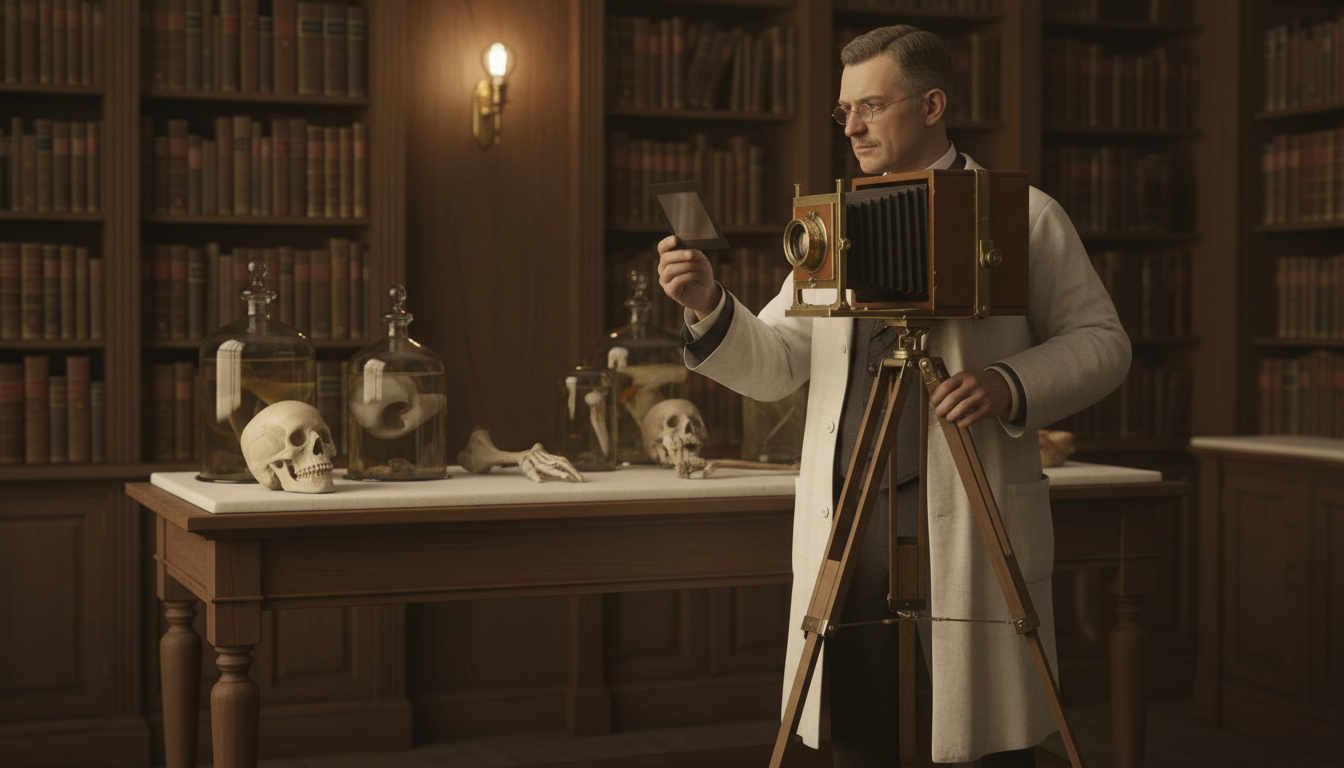
A “permanent” photo can start fading the minute it’s made. This is not a metaphor. Early Medical Photography, like shiny daguerreotypes, could tarnish from light and heat even when sealed.
This fragile truth sets the mood for our story. We’re exploring healthcare imaging as a hands-on way to capture what doctors saw. This includes a patient’s face, rash patterns, surgical setups, new medical devices, and specimens from autopsies.
Before cameras, “proof” was often written notes, oral reports, wax moulage, or drawings. While useful, sketches can lean on style, memory, and bias. Early Medical Photography felt different. It looked like reality, and people trusted it for that.
One early scene that grabs you is an 1847 daguerreotype of surgery at Massachusetts General Hospital in Boston. Doctors cluster around the patient. An anesthetist leans on the bed. Dr. John C. Warren, who commissioned the image, faces the camera like he knows this moment matters. And up in the gallery, onlookers likely sit and stare.
In this series, we’ll follow the leap from camera obscura experiments and silver nitrate chemistry to mirror-like daguerreotypes. Then, we’ll see how healthcare imaging grew into a tool for teaching, diagnosis, and research. We’ll also explore how medical photo documentation kept wrestling with the question: what counts as an honest image?
Key Takeaways
-
Early Medical Photography aimed to record clinical reality, not an artist’s interpretation.
-
Healthcare imaging documented patients, procedures, devices, and specimens—if the setup didn’t distort the truth.
-
Daguerreotypes looked objective, but they were physically fragile and easy to misread at the wrong angle.
-
The 1847 Massachusetts General Hospital surgery image shows how fast medicine saw cameras as evidence.
-
Medical photo documentation has always balanced detail, accuracy, and the risk of visual bias.
-
The storyline runs from early light experiments to modern digital workflows built for sharing and care.
The Origins of Medical Photography
Before Medical Photography was a real tool, it was just a light trick. People used the camera obscura. This device lets light into a dark box and throws an upside-down scene onto a surface. It looked magical, but the image didn’t last.
Then chemistry joined the party. Photochemical materials like silver nitrate helped “save” an image, sort of. But early results were grainy and fragile. Exposure times could stretch from hours to even days, making steady, repeatable clinical photography feel out of reach.
Historical Context of Medical Imaging
Once photography started to hold a surface, medicine got curious fast. Doctors already relied on sketches, but sketches depend on the artist’s hand and mood. With a camera, you could chase the same angle, the same distance, the same evidence (at least in theory).
That hunt for consistency is where medical photography techniques begin to sound familiar today. Control the scene, keep the subject steady, and make the details readable. The earliest attempts were clunky, but the goal was clear—turn light into a record.
Pioneers in Medical Photography
In 1839, Louis Daguerre introduced the daguerreotype, building on work with his partner Nicéphore Niépce. Suddenly, exposure times dropped to minutes, and images could be fixed on a plate you could store. That shift made Medical Photography feel less like a parlor trick and more like documentation.
Not long after, Alfred François Donné at the Charité Hospital in Paris pushed photography into the microscope. He’s credited with the first photomicrograph and used it to photograph sections of bones and teeth. In the mid-1840s, he published Cours de Microscopie, Complementaire des Études Médicales: Anatomie Microscopique et Physiologie des Fluides de L’Economie, using engravings made from his daguerreotype photomicrographs with help from Léon Foucault.
Donné’s images helped circulate early views tied to his work on platelets, leukemia, and Trichomonas vaginalis. Around the same decade, patient portraiture also started to surface. An 1840s calotype of a woman with a large goiter by Scottish photographers David Octavius Hill and Robert Adamson is an early moment where clinical photography looked directly at the patient, not just the specimen.
Evolution of Techniques
Even with better processes, early cameras demanded planning. Light had to be managed, subjects had to stay steady, and surfaces had to be prepared with care. Step by step, medical photography techniques grew into a repeatable workflow, not just a one-off experiment.
What changed wasn’t only image quality—it was intent. Medical Photography started drifting toward standards: clearer framing, stable backgrounds, and images that could be compared over time. That’s the heartbeat of clinical photography, even in its earliest, imperfect form.
| Milestone | What made it possible | Why it mattered for clinical photography |
|---|---|---|
| Camera obscura foundations | Pinhole light projection into a dark space | Showed that light could “draw” reality, even if it couldn’t be preserved yet |
| Early photochemical capture | Photosensitive chemistry such as silver nitrate | Introduced the idea of saving an image, but long exposure times limited usable medical photography techniques |
| Daguerreotype in 1839 | Louis Daguerre’s process, influenced by Nicéphore Niépce | Cut exposure time to minutes and created durable plates, supporting repeatable Medical Photography records |
| Photomicrographs in the mid-1840s | Alfred François Donné’s microscope work with engravings made from daguerreotype images, assisted by Léon Foucault | Turned tiny anatomy into shareable visuals, widening what clinical photography could document |
| Early patient portraiture in the 1840s | Calotype process used by David Octavius Hill and Robert Adamson | Made the patient’s visible condition part of the record, pushing Medical Photography toward bedside reality |
Key Developments in Early Techniques
Early healthcare imaging began with patience and chemistry. It was a lot of trial and error. Looking at the first medical photography techniques, you can feel the hard work in every frame.
The equipment was heavy and delicate. But it was key in moving medicine toward a visual record of the body.
Use of Daguerreotypes
Daguerreotypes used silver-faced copper plates, polished like mirrors. The plate was coated to be very light sensitive. After exposure, it was developed with mercury vapor and fixed with hyposulphite of soda. It was then hardened with heated gold chloride.
Creating these images took a lot of time. Long exposures meant early images were often staged. The mirror-like surface was hard to view unless held just right.
Plates aged quickly, showing green and brown rings. Today, X-ray imaging can bring back these damaged plates.
The 1847 Massachusetts General Hospital surgery daguerreotype is famous. It shows Dr. John C. Warren and a Morton ether inhaler. It shows how early medical photography was telling surgical stories, even with slow cameras.
Transition to Glass Plate Photography
Glass plates made things easier. They were easier to copy and store. This shift allowed more routine imaging in clinics and hospitals.
By 1916, photography could capture quick moments in the operating room. One image shows surgeons and a nurse working on a patient’s neck. Faster capture changed what people documented.
Advances in Lighting Techniques
Lighting was a big breakthrough. In 1883, Emil Behnke used a carbon arc lamp to photograph human vocal cords in ¼ second. This was a huge leap for body shots.
With better lighting, imaging moved beyond posed portraits. It showed anatomy and motion. This pushed medical photography equipment to evolve.
| Early method | What it was made of | What photographers gained | What kept going wrong |
|---|---|---|---|
| Daguerreotype plates | Silver-faced copper plates; bromoiodide silver layer; mercury vapor development; hyposulphite of soda fix; gold chloride hardening | Extreme detail for close study; a durable “final” image when properly sealed | Long exposure times; mirror-like viewing angle issues; oxidation that could form green and brown rings |
| Glass plate photography | Glass support with light-sensitive emulsion designed for faster, repeatable negatives | Quicker captures; easier duplication for teaching; more flexible healthcare imaging workflows | Stil needed careful handling; motion blur and imperfect results could show up in live surgery scenes |
| Stronger clinical lighting | Carbon arc lamp plus lenses and reflectors (as used by Emil Behnke in 1883) | Short exposures (down to ¼ second) and better visibility in tight spaces like the throat | Heat, glare, and harsh contrast could complicate medical photography techniques without careful control |
Significant Contributions to Medical Education
Doctors could freeze moments on film, changing teaching fast. But early wins came with challenges. Medical photo documentation needed patience, practice, and careful planning.
Early plates loved blue, violet, and ultraviolet light. This made many tones blend together, causing details to blur. Today, we know that if tone collapses, meaning does too.
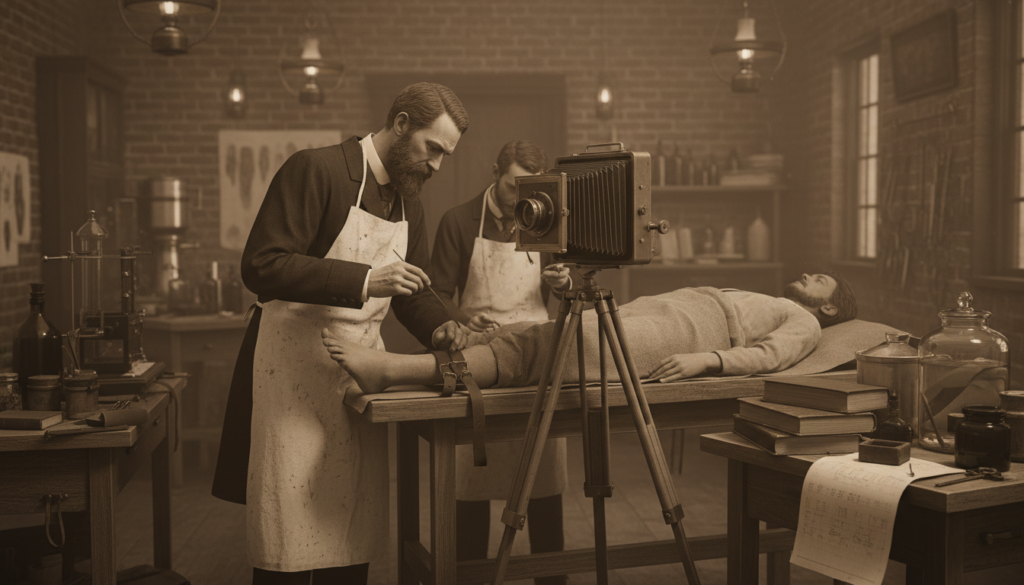
Role in Medical Textbooks
Textbook makers wanted photos to “speak for themselves.” But they didn’t yet. Shadows made subtle texture hard to see, even for sharp eyes.
Orthochromatic plates came in 1883, mostly separating blues, greens, and yellows. So, editors used retouching and strong labels to help students.
In 1861, Nicolaus Rüdinger published Atlas des peripherischen Nervensystems des menchlichen Körpers. The photos by Joseph Albert were retouched to show nerves and layers clearly. Early clinical photography needed a little help to teach well.
Impact on Teaching Hospitals
Hospitals soon saw photography as more than a hobby. They built workflows, rules, and dedicated rooms. This made clinical photography consistent, not random.
At Salpêtrière Hospital in Paris, Jean-Martin Charcot set up a medical photography unit in 1878. He hired Albert Londe, who recorded signs and symptoms systematically. Today, we see standard angles, consistent lighting, and notes with images.
In the United States, Oscar G. Mason created the first medical photography department at Bellevue Hospital in New York City. He encouraged doctors to photograph cases instead of drawing them. This made comparisons easier over time.
Case Studies Documented
By 1870, Maury and Duhring founded The Photographic Review of Medicine and Surgery. It used case studies and before-and-after images. This turned clinical photography into a shared classroom.
By the 1900s, most major medical education centers used photography. The routine nature of it mattered: steady setups, repeat poses, and images backing up what lecturers said.
| Where photography shaped learning | What made it work | What got in the way | How teams handled it |
|---|---|---|---|
| Textbooks and atlases | Frozen sections and close views that drawings struggled to match | Early materials over-responded to blue/violet/UV, flattening tone and texture | Retouching, clearer labels, and later use of orthochromatic plates (1883) to separate some colors |
| Teaching hospitals (Paris) | Formal photography unit at Salpêtrière (1878) with Albert Londe’s systematic methods | Inconsistent patient posing and lighting could break comparisons | Standard viewpoints, controlled light, and apparatus built to record visible signs reliably |
| Teaching hospitals (United States) | Bellevue Hospital department led by Oscar G. Mason (mid-1860s) | Doctors were used to sketches and didn’t always plan shots | Focus on landmark cases and repeatable setups that improved medical photography training culture |
| Published case study learning | The Photographic Review of Medicine and Surgery (1870) built around case images | Without consistent framing, “before and after” could mislead | More consistent documentation habits and tighter medical photo documentation notes alongside images |
Ethical Considerations in Early Medical Photography
Early cameras didn’t just capture faces. They captured vulnerability. In hospitals and teaching wards, clinical photography often showed people at their worst moment. The power imbalance was hard to ignore.
That’s the “uh-oh, we need rules” side of medical photo documentation. Even when the goal was education, the stakes were personal. And once an image existed, it could travel far beyond the exam room.
Consent and Patient Privacy
Consent wasn’t always clear, and privacy was even murkier. Photographs were taken in clinics, operating rooms, and sometimes autopsy settings. Where dignity could slip fast if no one slowed down.
Today, healthcare imaging makes the same issue louder. A phone camera is quick, easy, and everywhere. That speed is useful, but it also raises a simple question: did the patient truly agree, and do they understand where the image might end up?
In Canada, rules tightened after 2000. Federal and provincial legislation shaped how images can be collected, used, and disclosed. Tools built for compliance, such as ShareSmart, and major players like TELUS Health sit in that modern “solutions” ecosystem. The point isn’t the tech—it’s the guardrails around medical photo documentation.
Representation of Disease
Some early images feel clinical. Others feel like display. The line was thin, specially when a condition was rare or visually striking.
Oscar G. Mason’s well-known “Bellevue Venus” photograph—showing a woman with elephantiasis—stills comes up in debates about exposure and objectification. It’s a reminder that clinical photography can teach and harm at the same time, depending on framing, context, and respect.
Even basic choices mattered: cropping, clothing, pose, and captions. In healthcare imaging, those details don’t just show disease; they shape how viewers see the person living with it.
Impact on Public Perception
Once a photo left the hospital, it could lock in a story. Sometimes that story was careful and educational. Sometimes it drifted toward shock value, specially when audiences weren’t given medical context.
Mason also worried about credibility in another way. He testified in lawsuits involving “spirit photographers,” including William H. Mumler, pushing back on images sold as proof of the paranormal. In a strange twist, debates about fakery helped underline why healthcare imaging needed trust, standards, and a clear chain of responsibility.
| Ethical Pressure Point | What Happened in Early Practice | Why It Stills Matters in Modern Work |
|---|---|---|
| Consent | Permission was often informal, implied, or not recorded at all. | Clear consent protects patients and supports responsible medical photo documentation. |
| Privacy | Identifying details could appear in full view, from faces to unique marks. | Phones and fast sharing make privacy slips more likely in healthcare imaging. |
| Representation | Some conditions were photographed in ways that leaned toward spectacle. | Clinical photography needs context and restraint so the person isn’t reduced to a case. |
| Public trust | Photography’s “truth” was questioned amid hoaxes like spirit images. | Credibility depends on provenance, secure storage, and ethical handling. |
Integration with Medical Research
Cameras changed research by adding pictures to prove points. These images helped in discussions and debates. Medical Photography became key, focusing on records that last.
Documentation of Surgical Procedures
In 1847, Massachusetts General Hospital used a camera for the first time in surgery. Dr. John C. Warren asked for a photo of a surgery. The photo showed the setup and the people involved.
In 1916, a surgery photo showed a different side of medical work. It was real and showed the team’s effort. This kind of photo helped in understanding medical techniques.
Imaging for Clinical Trials
Cameras were great for tracking changes over time. They helped in showing before-and-after results. This made research more reliable.
Albert Londe’s work in La Photographie médicale (1893) made photos more useful. He focused on clear views and controlled images. This helped in making clinical studies more accurate.
| Research need | What early Medical Photography added | Why it mattered for comparison |
|---|---|---|
| Repeatable views over time | Fixed camera positions and consistent framing (Londe’s approach) | Before/after sets matched closely, so changes read as medical, not photographic |
| Clear procedure records | Operating-room details like tools, staff placement, and anesthesia gear | Technique could be discussed with shared evidence, not just narrative notes |
| Reliable image quality | Attention to depth of field, lens distance, and distortion control | Fewer misleading angles that could exaggerate swelling, curvature, or size |
Connection to Medical Journals
In 1870, The Photographic Review of Medicine and Surgery was launched. It shared case studies with photos. This format helped in standardizing medical photo documentation.
Across the Atlantic, Jean-Martin Charcot’s Nouvelle iconographie de la Salpêtrière (1888) focused on clinical presentation. These journals show how Medical Photography became a tool for research.
The Role of Medical Photography in Diagnosing
Diagnosis used to mean looking closely and recording what was seen. Early imaging made these records portable and shareable. A photo could go places a patient couldn’t.
When clinical photography came to hospitals, it changed how doctors described what they saw. It moved from “remembered” to “seen.” Thanks to better photography, small details were no longer missed.
Identifying Conditions Through Visuals
Some fields quickly adopted photography because it showed clues. In 1852, Dr. Hugh Welch Diamond photographed patients at the Surrey County Asylum. He grouped images by symptom, helping with diagnosis and records.
Diamond also showed photos to patients as therapy. This idea is surprisingly modern. The camera was a mirror, not just a witness. It helped show changes over time.
Comparison with Traditional Methods
Before photos, doctors relied on artists to draw what they saw. Photography cut out this middle step. Scientists liked it because it seemed more objective, even with choices like lighting.
Medical photography became a quiet superpower. It used standard distances and light for fair comparisons. Consistency was key when tracking changes.
| What gets compared | Illustration-based records | Photo-based records |
|---|---|---|
| Visual accuracy | Often filtered through an artist’s style and the doctor’s description | More direct capture of shape, texture, and proportion in clinical photography |
| Repeatability over time | Hard to match the same viewpoint across visits | Easier to repeat pose, distance, and lighting with medical photography techniques |
| Speed for teaching | Slower production; updates take time | Faster sharing in hospitals and journals as healthcare imaging expanded |
| Bias risk | Higher risk of “cleaning up” or exaggerating details | Different bias: what’s outside the frame can vanish |
Use in Dermatology and Pathology
Skin disease was a natural fit for photography. The first dermatologic daguerreotype was published in 1848. It showed a burn victim’s face and neck, highlighting the importance of photos.
By 1865, dermatology had advanced with *Photographs (colored from life) of the Diseases of the Skin* by Alexander Balmanno Squire. It used hand-colored prints with case descriptions and treatment notes. This mix of image and context became a standard for clinicians.
Medical photography also entered pathology, capturing gross specimens and autopsies. Tools like photomacrography revealed details that might be missed by the naked eye.
Adoption of Color Photography
Once you see how much medicine relies on tiny color differences, black-and-white seems too simple. Before color film was available, doctors used whatever they could to get real images. These early choices are seen in today’s digital medical photography and how medical imaging services aim for accuracy.
Transition from Black and White
Doctors really wanted color, but technology was slow. So, they colored prints by hand to make skin look real.
In 1865, Alexander Balmanno Squire published a dermatology atlas with hand-colored prints. He called them “colored from life.” It was a practical solution when black-and-white photos couldn’t show what doctors saw.
Color’s Importance in Diagnosis
Early photo materials had strong reactions to certain colors. This made it hard to get true colors. Reds could turn dark, and small color changes were lost.
This was a big deal in medical photos. A small color change could change what doctors thought they saw. The push for better color was about making images clear, a goal for today’s medical imaging and digital photography.
Case Studies in Color Imaging
In 1880, George Henry Fox released Photographic Illustrations of Skin Diseases. The photos were colored by hand by Dr. Joseph Gaertner. This made textures and tones clearer than black-and-white.
Some images were powerful and complex. Like Mason’s Bellevue Hospital photo of a woman with elephantiasis, known as “Bellevue Venus.” These images showed the importance of color in teaching and comparison. They were an early guide for today’s medical photography and clinical standards.
| Approach | How it handled color | What clinicians gained | Common trade-off |
|---|---|---|---|
| Black-and-white plates | Recorded lightness and shadow, not hue | Clear shape, surface texture, and gross anatomy | Skin tones and inflammation cues could flatten or disappear |
| Hand-colored albumin prints (1860s) | Applied pigment to match observed tones “from life” | More believable lesions, bruising, and vascular changes | Color depended on the artist’s eye and time spent per print |
| Hand-colored clinical plates in U.S. atlases (1880s) | Used photographs as a base, then refined color for clarity | Better side-by-side study for teaching and follow-up | Consistency across copies was hard to guarantee |
Modern Techniques and Equipment
Today, hospitals are different because of new technology. Digital medical photography is now a big part of care. It helps doctors and nurses work better together.
Digital Innovations in Medical Photography
Speed is the biggest change. Now, photos can be taken, seen, and stored quickly. This is thanks to digital cameras and new equipment.
But, there are new rules to follow. Things like naming files and keeping images safe are important. This ensures that photos are clear and useful in care.
High-Resolution Imaging
High-resolution images are more than just clear pictures. They help doctors see small details. This is thanks to new cameras and lighting.
Even old photos can be improved. Tools like X-rays can make damaged images clearer. This helps doctors learn from old pictures.
Portable Imaging Technology
Now, cameras can go anywhere. They are used in many places, not just studios. This makes it easier to take photos of patients.
But, taking photos with phones is tricky. Doctors need to make sure they have the right to take pictures. They also need to keep patient privacy in mind.
What does a medical photographer do every day? They often work in hospitals and clinics. Some even work with lawyers and in court.
| What’s changing | What you use day to day | Why it matters in practice |
|---|---|---|
| Faster capture and sharing for digital medical photography | DSLR or mirrorless bodies, secure storage, standardized file naming | Shortens turnaround time while keeping images traceable in clinical records |
| Higher detail expectations | Macro lenses, controlled lighting, calibrated monitors | Supports clearer comparisons over time and reduces “is that new?” guesswork |
| More mobile workflows | Portable kits, battery lights, protective cases, disinfectable accessories | Lets medical imaging services reach bedside and OR settings without losing consistency |
| More privacy risk from portable cameras | Consent checks, restricted access folders, approved capture devices | Helps prevent accidental sharing and keeps patient trust intact |
| Small team realities | Cross-trained staff, simple templates, repeatable setups | Fits departments that often run with five people or less while staying reliable |
The Future of Medical Photography
What’s next is more tools, more places, and more speed. Digital medical photography is now part of telemedicine and remote visits. Cameras are getting better, making it easier to capture and share images without delays.
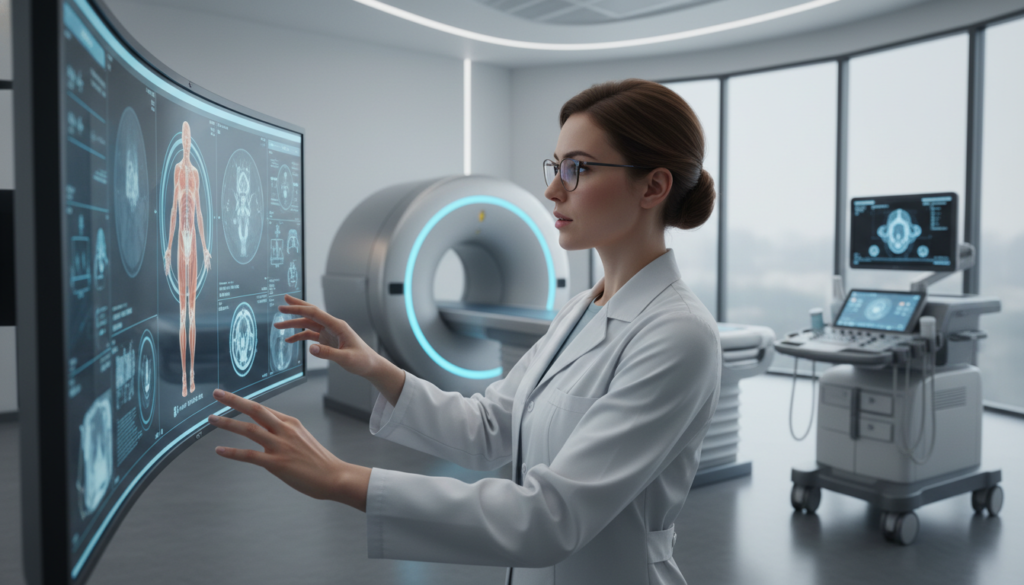
Evolving Technologies in Imaging
Cameras will soon be part of the workflow, not separate devices. We’ll see 3D imaging for surgery planning and mole mapping for skin tracking. Operating-room videos will be ready for review right away.
Consistency is key. When lighting, distance, and angle are the same, images are easier to compare. This is where medical photography training really helps, making sure scale and color balance stay the same.
Impact of AI and Machine Learning
AI needs clean, consistent images to learn from. This makes standardized clinical views even more important. It’s funny how old habits support modern computing.
Strong healthcare imaging needs stable color, controlled shadows, and clear framing. Digital medical photography becomes more than just pictures. It becomes data that can be searched, compared, and measured.
| What needs to be consistent | Why it matters for AI-ready workflows | What you practice in medical photography training |
|---|---|---|
| Framing and viewpoint | Helps algorithms and clinicians compare “same vs. same” over time | Fixed positions, repeatable patient pose, and matched magnification |
| Scale | Turns a photo into something you can measure, not just observe | Using rulers/markers correctly and keeping distance consistent |
| Color balance | Supports reliable assessment of bruising, erythema, and tissue changes | White balance control, color targets when needed, and careful editing |
| File handling and labels | Makes datasets usable and reduces mix-ups in healthcare imaging | Clean naming habits, metadata awareness, and version control basics |
Potential Ethical Challenges Ahead
The easier it is to shoot and share, the more important consent and privacy become. Mobile devices and remote care can blur boundaries fast, even with good intentions.
In Canada, laws from 2000 tightened rules on personal information. The U.S. faces similar pressures, making compliance tools like ShareSmart essential in real workflows.
Building skills for this future means more than just camera settings. You need software skills, knowledge of privacy and copyright, and people skills to keep patients comfortable. This mix makes digital medical photography trustworthy in everyday healthcare imaging.
Case Studies in Early Medical Photography
Early Medical Photography wasn’t for art shows. It was for keeping records of what doctors did and what patients showed. Looking into these studies, you see how photos started to prove things. And why pictures became key to telling medical stories.
Landmark Images That Changed Medicine
The 1847 Massachusetts General Hospital surgery photo is like a time capsule. It shows an anesthetist at work and the early Morton ether inhaler. Dr. John C. Warren asked for this photo, showing he knew a single picture could teach more than words.
Just two years later, the postmortem photo of Dr. James Howe (cholera, 1849) showed the urgent side of medicine. These images together show how photos could track medical progress and face mortality. This dual role is at the heart of medical photo documentation.
The American Civil War (1861–1865) sped up the pace. Dr. Reed B. Bontecou took photos in camps and hospitals. One famous photo shows G. Porubsky, Co. B, 46th NY volunteer, after surgery. It shows the outcomes and choices before the 1880s antiseptic era.
Famous Medical Photographers
Some names keep coming up in Medical Photography history. Alfred François Donné and Léon Foucault worked on microscopic images. Hugh Welch Diamond explored psychiatry with the camera. Guillaume-Benjamin Duchenne de Boulogne and Adrien Tournachon captured facial expressions with electricity.
Duchenne listed 53 emotions tied to muscle action in 1862. His work showed how the body signals feelings through visuals. Around the same time, Jean-Martin Charcot and Albert Londe started making structured series of photos for comparison.
- Alfred François Donné and Léon Foucault: early microscopic imaging work
- Hugh Welch Diamond: psychiatric portraiture as record
- Guillaume-Benjamin Duchenne de Boulogne and Adrien Tournachon: facial expression studies
- Jean-Martin Charcot and Albert Londe: sequenced documentation for teaching and analysis
- Oscar G. Mason and Reed B. Bontecou: hospital and wartime case imagery
The Legacy of Early Medical Visuals
Medical Photography evolved into its own field over time. Standards emerged because the work mattered: lighting, pose, and timing could change what doctors saw. This made photography a reliable method, not just a lucky shot.
By 1931, the field was strong enough to form the Biological Photographic Association at Yale University. It later became the BioCommunications Association. They published the Journal of Biological Photography, later merged into the Journal of BioCommunication. This shows medical photo documentation had become a shared practice with its own language.
| Case study moment | What the camera captured | Why it mattered to medicine | What it shaped in later clinical photography |
|---|---|---|---|
| Massachusetts General Hospital surgery daguerreotype (1847) | Operating scene with an anesthetist and the Morton ether inhaler; commissioned by Dr. John C. Warren | Made anesthesia-era practice visible as a teachable event, not just a written report | Routine intra-hospital documentation habits and clearer expectations for procedural images in Medical Photography |
| Postmortem daguerreotype of Dr. James Howe (cholera, 1849) | Direct record of death and disease impact on a known physician | Showed how images could document outcomes and public health realities with painful clarity | More careful approaches to medical photo documentation, including purpose, context, and what must be recorded |
| Reed B. Bontecou’s Civil War albums (1861–1865) | Wounds, treatments, surgeries, and hospital conditions; widely exhibited and reproduced in *Shooting Soldiers: Civil War Medical Photography By R.B. Bontecou* by Dr. Stanley B. Burns | Created a large, comparable visual record of trauma care during wartime | Case-series thinking in clinical photography, where consistent angles and timing help clinicians compare patients |
| G. Porubsky, Co. B, 46th NY volunteer (Civil War example) | Excision of the humerus with a drawn-in suspected bullet path; a documented poor functional result | Captured not only injury but outcome, including the limits of surgery before later antiseptic practice | Outcome-focused medical photo documentation that follows a patient’s course, not just the initial condition |
The Importance of Medical Photography Today
Medical photography is now a big part of healthcare. It helps doctors track changes in conditions and document injuries. It also shows how patients look before and after surgery.
In operating rooms, photographers take pictures of important steps. They also take photos of medical devices and specimens. Sometimes, they even record findings from autopsies.
Current Applications in Medicine
This work is mainly done in university hospitals and research centers. The details are very important here. Some photographers work for clinics, helping with medical-legal cases.
These teams are often small, with just a few people. They might switch between different types of photography. This depends on the question and the equipment they have.
Photography’s Role in Patient Education
Images are not just for medical records. They help patients understand their conditions. In the 1800s, doctors even showed patients their own portraits as therapy.
Today, clear digital photos help patients see changes and get second opinions. This is done through telemedicine, saving time and effort.
Preserving Medical History Through Imagery
Yes, we’re working to preserve early medical images. Daguerreotypes can tarnish and lose detail over time. But modern technology can bring back lost details.
Collections like the Stanley B. Burns M.D. Historic Medical Photography Collection keep these images alive. They let us see what doctors saw in the past.
FAQ
What is medical photography, and what does it document?
Why did early photography feel like a breakthrough compared with drawings and written notes?
How did photography start—before medical use was even on the table?
Who invented the daguerreotype, and what changed in 1839?
How were daguerreotypes made (without getting too chemistry-heavy)?
What’s the famous 1847 surgery daguerreotype at Massachusetts General Hospital?
If daguerreotypes were “permanent,” why are they so hard to view today?
Can modern medical imaging services help restore old daguerreotypes?
Who first brought photography into medicine through the microscope?
What did Alfred Donné actually show with early photomicrography?
What’s an early example of patient portraiture in clinical photography?
Why were many early medical photos staged?
When did operating-room photos become more candid?
How did lighting advances change what could be photographed in healthcare?
Why didn’t early medical photos immediately take over anatomy textbooks?
What were orthochromatic plates, and why did they matter in 1883?
Which medical textbook used photographs of frozen sections as early as 1861?
When did hospitals start formal medical photography units?
Who created the first medical photography department in the United States?
What early journals helped spread clinical case photography?
What did Albert Londe add to medical photography techniques?
How was medical photography used in psychiatry in the 1850s?
What’s an early “first” in dermatology photography?
When did the first dermatology photography atlas appear?
Why was hand-coloring a serious “hack,” not just decoration?
What’s a key example of hand-colored medical photography in the U.S.?
What is “Bellevue Venus,” and why is it controversial?
How did early medical photographs shape public perception of disease?
How did the American Civil War change medical photo documentation?
How does medical photography support research workflows and long-term comparison?
What does medical photography cover in pathology departments?
How is digital medical photography changing healthcare imaging today?
What’s the impact of smartphones on clinical photography and privacy?
What skills do you need for professional medical imaging services today?
What does medical photography equipment look like in modern hospitals?
How portable tech changes clinical documentation (and why it’s complicated)?
How common are medical photography jobs, and where do most people work?
How does AI make standardized clinical photography more valuable?
What ethical challenges are ahead for medical photography?
What are the most unforgettable landmark images in early medical photography?
Which key figures shaped early medical photography as a field?
When did medical photography become a professional specialty?
How can old, reflective daguerreotypes be studied today?
What’s the difference between medical photography and other healthcare imaging?
Is there training specific to clinical photography and healthcare imaging workflows?
Get More Medical History
Join our newsletter for fascinating stories from medical history delivered to your inbox weekly.