The History of Healing
 Medical Knowledge in Ancient Mesopotamia
Ancient Mesopotamia pioneered medical practices that shaped modern healthcare. Discover their groundbreaking treatments and surgical techniques.

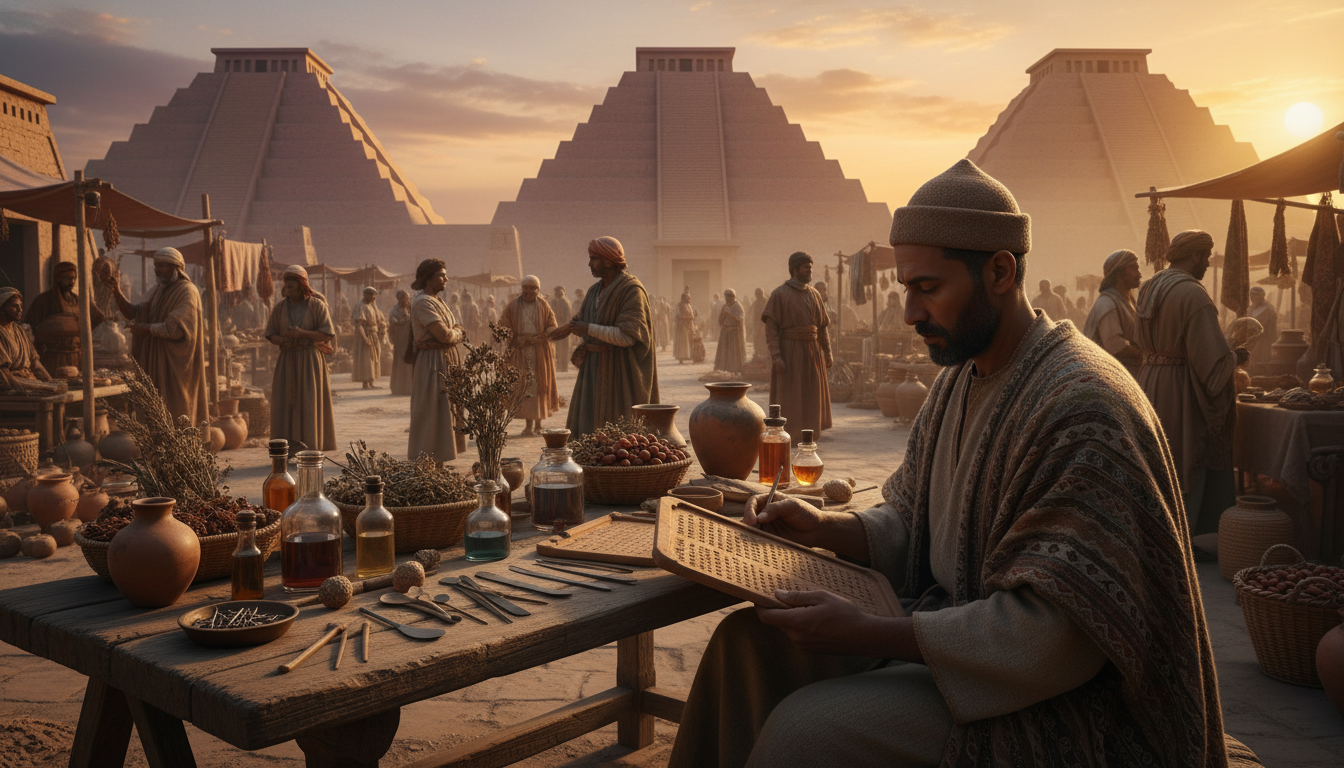
King Assurbanipal’s seventh-century libraries in Nineveh had over 5,000 medical prescriptions. This is a lot, even for today’s pharmacies. It shows that ancient Mesopotamians knew a thing or two about medicine.
Imagine 4,000 years ago, when most people relied on prayers and potions. But in Mesopotamia, doctors were already doing their thing. They had general practitioners, surgeons, dentists, and even therapists. The goddess Gula and her son Ninazu, who gave us the snake-wrapped rod, watched over them.
By the Old Babylonian Period (2000-1600 BCE), Mesopotamia’s healthcare system was impressive. These doctors were not just spiritual guides. They were skilled practitioners who wrote multiple prescriptions for the same illness. Their work over 2,000 years laid the groundwork for how we heal today.
What’s really cool about these ancient physicians? They saw themselves as channels for the gods. Yet, they documented everything, studied symptoms, and improved their treatments based on results. They balanced faith with science in a remarkable way.
Key Takeaways
- Ancient Mesopotamia preserved over 5,000 medical prescriptions in royal libraries
- The medical profession included specialists like surgeons, dentists, and therapists by 2000 BCE
- The modern medical symbol of a serpent-wrapped rod originated with the Mesopotamian god Ninazu
- Physicians developed multiple treatment options for the same diseases
- Medical knowledge evolved continuously for over 2,000 years in the region
- Healers balanced spiritual beliefs with practical documentation and observation
Overview of Mesopotamian Civilization
Imagine standing between the Tigris and Euphrates rivers thousands of years ago. You see the start of medicine as we know it. This ancient civilization gave us writing, agriculture, and organized healthcare that amazes us.
Importance of Mesopotamia in History
Mesopotamia is called the cradle of civilization for a reason. While ancient Greeks are often credited with medical breakthroughs, Mesopotamians were ahead of them. The city of Isin became a hub for medical training, centered around the goddess Gula’s temple.
Physicians were not just wandering healers. They were a respected profession with established practices.
Geographic and Cultural Context
The land between the Tigris and Euphrates was perfect for medical innovation. Cities like Ebla preserved the world’s first pharmaceutical texts around 2500 BCE. King Ashurbanipal’s library in Nineveh (668-627 BCE) collected medical tablets that show deep knowledge of anatomy and disease.
| City | Medical Significance | Time Period |
|---|---|---|
| Isin | Training center for physicians | 2000-1800 BCE |
| Ebla | First pharmaceutical texts | 2500 BCE |
| Nineveh | Ashurbanipal’s medical library | 668-627 BCE |
This cultural heritage shaped medicine for millennia. Cuneiform writing on clay tablets preserved medical knowledge. This knowledge spread across the ancient world, influencing Egyptian, Greek, and Persian healing traditions.
Ancient Medical Practices
The Sumerians created advanced healing methods. They mixed practical medicine with spiritual beliefs. Doctors were like priests, scientists, and magicians all in one. Their treatments shaped our understanding of illness and recovery for centuries.
Healing Techniques Used by Physicians
In ancient Mesopotamia, doctors were divided into two types. The asu used herbs and practical treatments, like today’s doctors. The asipu focused on magic and incantations. Both were highly respected, with texts saying “if neither medicine nor magic brings about cure.”
When you saw an asu, they made medicines right before you. A facial injury treatment from Babylon included:
- Fir-turpentine and pine-turpentine
- Tamarisk and daisy
- Special flour called Inninnu
- Mixed with milk and beer
Rituals and Spiritual Aspects of Medicine
Healing in ancient times wasn’t just about physical symptoms. It touched on religious, social, and psychological aspects too. Doctors worked from temples and made house calls, using incantations while making medicines. Researcher Barbara Boeck has found over 60 medical incantations used by these healers. This shows how spiritual practices were key in Sumerian healing.
Major Medical Texts and Sources
The Babylonians left us a treasure trove of medical knowledge. Their manuscripts show a deep understanding of healing. These documents were not just random notes but organized handbooks used by doctors.
The Diagnostic Handbook of Babylon
The Sakikku was a key ancient text. It was a huge handbook for doctors. It had over 40 tablets with symptoms, diagnoses, and patient outcomes.
The Uruanna: maštakal drug lexicon is amazing. It listed 1,300 drug terms for 340 plants. The Šammu Šikinšu manual helped healers identify medicinal herbs.
| Ancient Text | Content | Number of Entries |
|---|---|---|
| Sakikku | Diagnostic handbook | 40+ tablets |
| Uruanna: maštakal | Drug terminology | 1,300 terms |
| Šammu Šikinšu | Plant descriptions | Partial reconstruction |
| Assur Drug Inventory | Medicine catalog | 177 drugs |
Temple Libraries and Knowledge Preservation
Neo-Assyrian temples were like ancient medical libraries. Priests and scholars kept these documents alive for generations. A tablet from King Marduk-apla-iddina’s time listed 67 garden plants, half for healing.
Key Physicians and Healers
Mesopotamian medicine was more than just herbs and potions. It was a blend of trained doctors and spiritual healers. These ancient healers spent years learning their craft. They knew both practical treatments and sacred rituals.
Notable Figures in Mesopotamian Medicine
The goddess Gula was at the center of Mesopotamian healing. She wasn’t alone, though. Her family helped out too! Her husband Pabilsag judged health matters, and her children Damu, Ninazu, and Gunurra all helped in healing.
Women and men both worked in medicine in early Mesopotamia. Female doctors were common at first but became less so later. They spent 10 to 12 years learning to read and write cuneiform writing before studying medicine.
Roles of Priests and Lay Healers
Physicians in ancient Mesopotamia were easy to spot because they had shaved heads. The Gula Hymn from 1400 BCE describes their medical kits:
- Healing herbs and medicinal plants
- Health-giving incantations written on clay tablets
- Recovery texts in cuneiform writing
- Leather bags for carrying supplies
- Dressing materials and soft bandages
The line between religious medicine and practical healing was blurry. Priests handled the spiritual side, like exorcisms and therapy. Doctors focused on physical treatments.
Diagnostic and Prognostic Techniques
Doctors in ancient times faced big challenges without modern tools like X-rays. Yet, Mesopotamian physicians were surprisingly skilled. They used keen observation to diagnose illnesses, reading every small sign.
Methods of Diagnosis in Ancient Times
Mesopotamian doctors thought illnesses were often punishments from gods. They described sicknesses as “the hand of Shamash” or “touch of Ishtar.” Physical checks were key, like pulse rates. A fast pulse meant fever, while a weak one signaled serious issues.
Dreams were as important as symptoms. Seeing a dog in dreams meant bad news, but a gazelle meant recovery. These methods were not just superstition but early signs of medical insight.
Use of Prognostication in Treatment Plans
Ancient doctors used everyday observations to help patients. They made omen texts to predict outcomes:
| Sign Observed | Predicted Outcome |
|---|---|
| Black dog near patient | Death likely |
| White pig sighting | Recovery expected |
| Pig lifting tail | Patient anxiety will fade |
Doctors practiced physiognomy, reading faces and body shapes for health clues. They also used extispicy to read sheep entrails for treatment success. These practices combined observation with spiritual beliefs in unique ways.
Materia Medica: Medicinal Plants and Substances
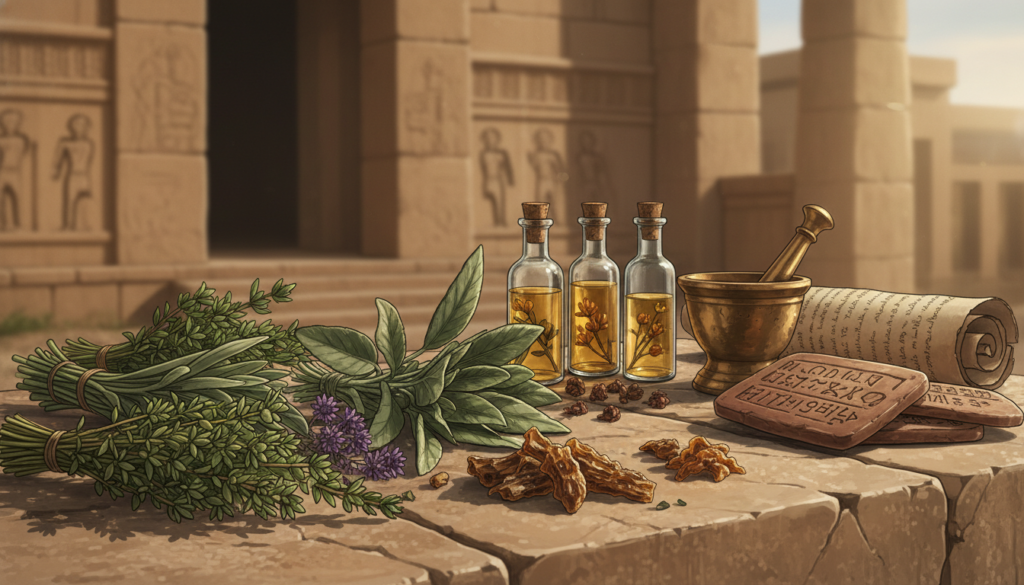
Ancient healers in the Middle East had a vast pharmacy at their fingertips. The Uruanna lexicon listed over 1,300, mostly from plants. They used every part of plants, from roots to seeds, for healing.
Common Plants and Their Uses
Many herbal remedies from ancient Mesopotamia are familiar today. Garlic and onion were used for colds and coughs. Pomegranates helped with digestion, and dates and figs were both food and medicine.
The Assyrian kings had botanical gardens with 28 medicinal trees. They used these for natural healing.
Healers were very precise in their treatments. They ground plants into flour or burned them to ash. They also tracked when and where plants were picked, knowing it was important.
Importance of Animal Products in Healing
While plants were the mainstay, animal products were also used. Healers mixed plants with animal fats for ointments. They used honey for its healing properties and milk in various treatments.
Surgery and Surgical Instruments
Ancient surgery in Mesopotamia was surprisingly advanced for its time. Despite not understanding anatomy or physiology, surgeons performed complex surgeries. These surgeries date back to the Uruk Period (4100-2900 BCE). Religious beliefs stopped them from dissecting corpses, yet they developed remarkable techniques.
Overview of Surgical Practices
Mesopotamian surgeons followed a strict three-step process for treating wounds. First, they washed the injury thoroughly. Then, they applied medicinal plasters. The final step was carefully binding the wound.
Beer mixed with hot water was the main cleaning solution. Liquid soap was also available at the time.
The risks of ancient surgery were extremely high. The Code of Hammurabi’s Law 218 said that if a surgeon caused a patient’s death, the surgeon’s hand would be cut off. This extreme punishment pushed them to create precise medical instruments and techniques. They made antiseptic mixtures from alcohol, honey, and myrrh to prevent infection.
Tools Used by Ancient Surgeons
Mesopotamian medical technology included various specialized tools. Surgeons used regular beds as operating tables, with coverlets for patient recovery. Their medical instruments ranged from bronze scalpels to bone saws.
| Instrument Type | Material | Primary Use |
|---|---|---|
| Scalpels | Bronze or copper | Making incisions |
| Forceps | Bronze | Removing foreign objects |
| Probes | Copper or silver | Examining wounds |
| Cautery tools | Iron | Stopping bleeding |
Surgeons came from two distinct backgrounds: the asu (physician-healers) and the asipu (exorcist-healers). Each brought different skills to surgical procedures. They combined practical medical knowledge with spiritual healing practices.
The Role of Religion in Medicine
Imagine walking into an ancient Mesopotamian temple. Sick people wait for divine help. Priests chant, and patients hold amulets. It was more than superstition—it was their medical system.
Divine Influence on Health and Illness
The goddess Gula controlled healing. She managed bile and intestinal fluids, like our digestive health. Every sickness was seen as a sign from the gods.
Breaking social rules or forgetting offerings could bring illness. The gods punished with sickness. This showed how spiritual health was tied to physical well-being.
Different demons targeted different body parts. Lamashtu, a scary demon, went after pregnant women and babies. Parents used Pazuzu amulets to keep their children safe.
Temples as Healing Centers
Temples were hospitals, pharmacies, and spiritual places. Priests were doctors and spiritual leaders. They used incantations to make medicines work.
Temple medicine linked plants, diseases, and gods. Each herb had special powers. Priests matched symptoms to divine displeasure, treating both body and spirit. This approach shaped medicine for centuries.
Medical Ethics in Mesopotamia
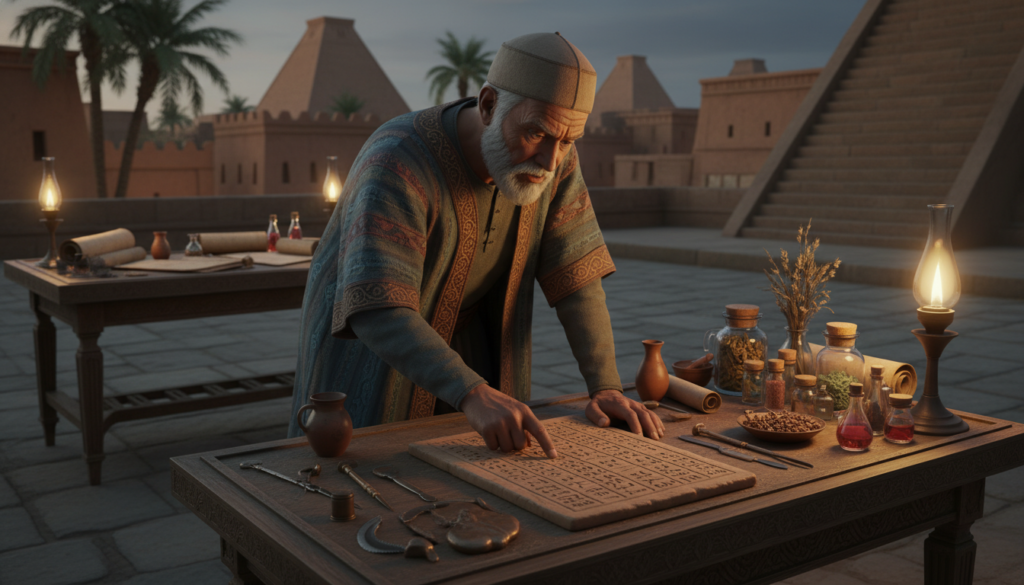
You might think ancient doctors operated without rules, but Mesopotamian physicians followed surprisingly sophisticated medical ethics. These early healthcare principles created a framework that protected both healers and the sick. They established professional standards we’d recognize today.
Principles Guiding Medical Practice
Ancient Mesopotamian doctors worked within strict guidelines that governed their practice. They treated every patient with the same prescriptions, whether dealing with royalty or farmers. This commitment to medical ethics meant a broken bone got the same treatment regardless of who you were.
The payment system tells us something fascinating about their healthcare principles. Fees worked on a sliding scale based on your social class:
- Princes paid in gold
- Merchants offered silver
- Common workers brought soup bowls or grain
What’s remarkable? Doctors never refused patient care based on ability to pay. Poor patients received treatment just like wealthy ones, though the compensation differed dramatically.
The Patient-Physician Relationship
Mesopotamian society held physicians in extremely high regard. These weren’t just healers – they were educated professionals. They maintained strict professional standards through specific appearance and conduct requirements. Kings kept personal physicians on staff, treating them as valued advisors.
The legal protections for doctors reveal sophisticated medical ethics. When physicians followed accepted treatments precisely, they weren’t held liable for failed procedures. This protected conscientious practitioners while ensuring patient care remained the priority. It’s a balance between accountability and recognizing medicine’s limitations that took other civilizations centuries to develop.
Influence of Mesopotamian Medicine on Other Cultures
Many think ancient Greek doctors started Western medicine. But, the truth is more complex. Mesopotamian healers were already diagnosing and treating illnesses a thousand years before Hippocrates. Their cultural influence reached far, touching Egypt to India.
Impact on Greek and Roman Medical Practices
The medical transmission from Mesopotamia to Greece was indirect. It went through Egypt first. Hippocrates, who started Western medicine around 460 BCE, built on Egyptian knowledge. The famous medicine symbol, the staff with serpents, also came from Mesopotamia.
Mesopotamian doctors knew a lot about plants, just like Greek doctors later did. They used over 250 plants for medicine. This knowledge helped shape healing for centuries.
Legacy in Eastern Medicine Traditions
The historical legacy also reached the East. Medical knowledge traveled with spices and silk. Indian Ayurveda shows similarities with Mesopotamian medicine, like herbal remedies and diagnosis.
| Medical Practice | Mesopotamian Origin | Later Adoption |
|---|---|---|
| Wound suturing | 3000 BCE | Egypt (2500 BCE), Greece (500 BCE) |
| Herbal compounds | 2800 BCE | India (1500 BCE), China (1000 BCE) |
| Diagnostic observation | 2500 BCE | Greece (400 BCE), Rome (100 CE) |
Understanding Disease and Illness
In ancient Mesopotamia, getting sick was seen as a divine punishment. It wasn’t about viruses or bacteria. Instead, every illness was believed to be a sign of offending the gods.
Concepts of Health and Disease
Imagine waking up with a headache and being told it’s because of your sins. That’s how they thought in Mesopotamia. Every sickness was seen as a punishment for breaking rules or missing religious duties.
The biggest fear wasn’t germs but ghosts. These were spirits of those who died violently or drowned in rivers. They were believed to cause all sorts of illnesses, from stomach aches to madness.
Social Views on Sickness
When you got sick, your neighbors’ beliefs played a big role. If you were poor, you might get a better bed to sleep in. This showed that they believed cleanliness was key to getting better.
They knew diseases could spread but thought it was because of divine punishment. Each illness needed special prayers to chase away the demon causing it.
Record Keeping and Documentation
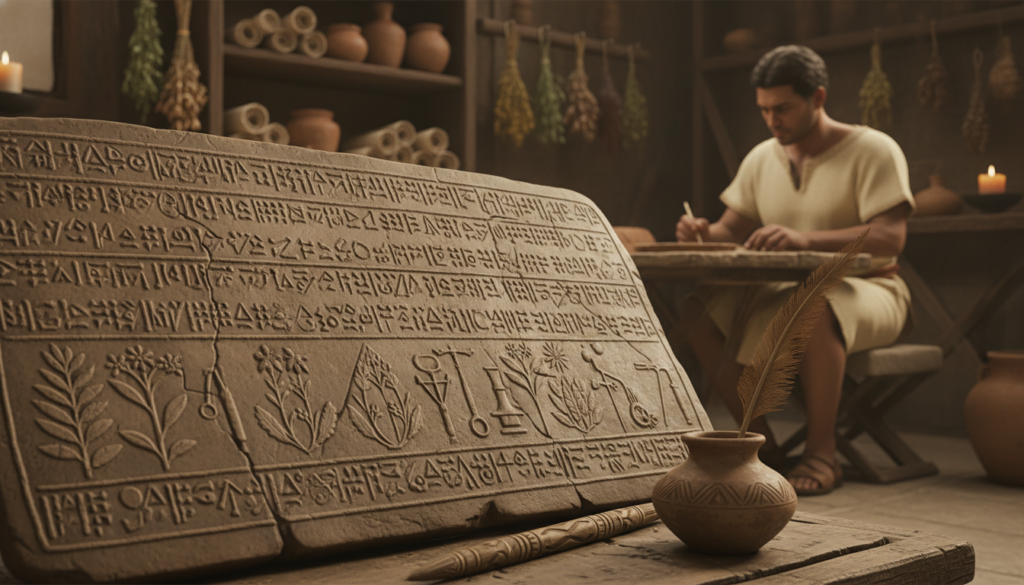
Imagine trying to recall every medical treatment without writing it down. Ancient Mesopotamians faced this problem thousands of years ago. They solved it with cuneiform writing, preserving medical knowledge for millennia.
Importance of Cuneiform in Medicine
Mesopotamian healers started writing medical records around 3500 BC. They used wedge-shaped marks on wet clay tablets. These records were detailed catalogs of treatments and prescriptions.
These tablets show great detail. Healers noted plant measurements, preparation methods, and warnings about poisonous plants. Franz Köcher spent his life studying two ancient texts, uncovering medical wisdom from over 4,000 years ago.
How Medical Knowledge was Preserved
Clay tablets were stored in organized collections. This was like today’s reference libraries. Drug inventory documents showed how to store medicines to keep them effective.
Treatment protocols were copied many times. This ensured knowledge was passed down through generations. Cuneiform writing helped these records last, unlike papyrus or parchment.
Barbara Böck recently put together a physiognomic treatise from old fragments. These had been in museums for a century. It shows that ancient records are full of secrets waiting to be found.
Medical Education and Training
Want to become a doctor in ancient Mesopotamia? You’d better clear your schedule for the next decade or two! The path to becoming a physician wasn’t just about memorizing herbal remedies. It started with mastering the basics of writing itself.
Apprenticeship Systems for Healers
Before you could even touch medical texts, you needed to become a scribe first. This meant spending 10 to 12 years learning cuneiform writing—those wedge-shaped marks pressed into clay tablets. Only after mastering this complex writing system could aspiring healers dive into medical training and specialized texts.
The education systems of ancient Mesopotamia were surprisingly structured. Students followed a strict curriculum that combined theoretical study with hands-on practice. Apprentice diviners, who often doubled as healers, learned their craft through clever teaching methods. Masters would draw colon depictions on tablets to teach students how to read organ signs during divination ceremonies.
Role of Schools and Knowledge Transfer
The city of Isin might have functioned as a major hub for professional development in medicine. This center trained physicians who then traveled to serve at temples across various cities. Knowledge transmission happened through both temple libraries and private collections, where medical texts were carefully copied and preserved.
Once you completed your extensive training, life got pretty comfortable. Recognized physicians enjoyed respected positions in society. The careful copying of medical texts ensured that healing knowledge passed from one generation to the next, creating a lasting tradition of medical expertise that influenced healing practices for centuries to come.
The Intersection of Medicine and Magic
Imagine ancient Babylon, where doctors used magic and herbs to heal. It might sound odd, but for the Mesopotamians, magical medicine was real. They mixed science and the supernatural into a powerful healing tradition.
Healing Spells and Incantations
In Mesopotamian cities, two types of healers worked together. The asipu used incantations for supernatural healing, while the asu focused on physical treatments. They believed illness could come from angry gods or demons.
For a toothache, the healer would say the “tooth worm” incantation before using medicine. People really believed these words had power.
Sexual health was also a big deal. The SA.ZI.GA texts had spells for problems like impotence and female arousal. Women could test for pregnancy by placing herbs in their underwear. The color change would show if they were pregnant.
Perception of Magic in Medical Practice
Mesopotamians saw incantations as key medicine, not just superstition. They used exorcism rituals with herbal remedies. Their religious beliefs guided every medical choice.
Choosing between magic or physical treatment wasn’t about believing in demons or nature. Both healers treated all causes.
| Treatment Type | Healer | Methods Used |
|---|---|---|
| Supernatural Healing | Asipu | Incantations, exorcism rituals, divine prayers |
| Physical Medicine | Asu | Herbal remedies, surgical procedures, dietary changes |
| Combined Approach | Both | Healing spells with medicinal substances |
Decline of Mesopotamian Medical Knowledge
Imagine thousands of clay tablets sitting in museum basements for over a century. That’s what happened to Mesopotamian medical texts. The knowledge that healed ancient civilizations slowly disappeared, waiting for someone to decipher the cuneiform script.
Factors Leading to the Loss of Medical Texts
It’s surprising how such vast medical wisdom vanished. The Greek historian Herodotus visited Babylon around 450 BCE and found no doctors there. He likely saw only local folk practices, missing the bigger picture. The story of knowledge loss is complex:
- Religious rules banned dissection, stopping anatomical research cold
- Political upheavals destroyed libraries and schools
- Cuneiform writing became a lost art as alphabets took over
- Wars scattered medical scholars across different empires
King Assurbanipal built a massive library in Nineveh around 650 BCE. His collection saved many medical texts that would have been lost. Today, scholars like Barbara Boeck work to reassemble these fragments like an ancient jigsaw puzzle.
Transition to New Medical Traditions
The medical evolution didn’t stop—it just changed direction. Egyptian medicine became prominent, focusing on direct observation. Greeks learned from Egypt, not Mesopotamia. This shift marked a turning point towards empirical methods in medicine.
Conclusion: The Legacy of Mesopotamian Medicine
Many think Western medicine started with the Greeks. But that’s not the whole story. Mesopotamian healers’ wisdom shaped our medical legacy a thousand years before Hippocrates.
Those clay tablets buried in the desert sand held secrets. These secrets traveled from Egypt to Greece, laying the foundation of modern medicine.
Lasting Contributions to Modern Medicine
Mesopotamia’s historical contributions are vast. They set standards for diagnosis and wound treatment. They knew the importance of cleanliness and used antiseptics before bacteria were discovered.
They monitored patients’ pulses and created sliding fee scales for the poor. Their medical libraries preserved knowledge for thousands of years, listing 340 medicinal plants.
Recognizing Historical Significance
The medical symbol with intertwined serpents at hospitals comes from Mesopotamia, not Greece. Barbara Boeck believes we might find unknown medication forms in their drugs. These early physicians’ contributions are worth recognizing.
Their wisdom influenced Egyptian medicine and led to our modern medicine. It’s time to give credit where it’s due and acknowledge Mesopotamia’s role in our medical legacy.
FAQ
Did ancient Mesopotamia really have doctors, or is that just a myth?
Where did the medical symbol with snakes actually come from?
What kinds of medicines did Babylonians use?
How did someone become a doctor in ancient Mesopotamia?
Did they perform surgery in the cradle of civilization?
How much did medical treatment cost along the Tigris and Euphrates?
What role did religion play in Mesopotamian medicine?
How did ancient Mesopotamian medicine influence modern healthcare?
Get More Medical History
Join our newsletter for fascinating stories from medical history delivered to your inbox weekly.