The History of Healing
 Roman Military Medicine and Surgery
Roman Military Medicine shaped modern battlefield care through innovative surgery techniques that transformed how armies treat wounded soldiers today.

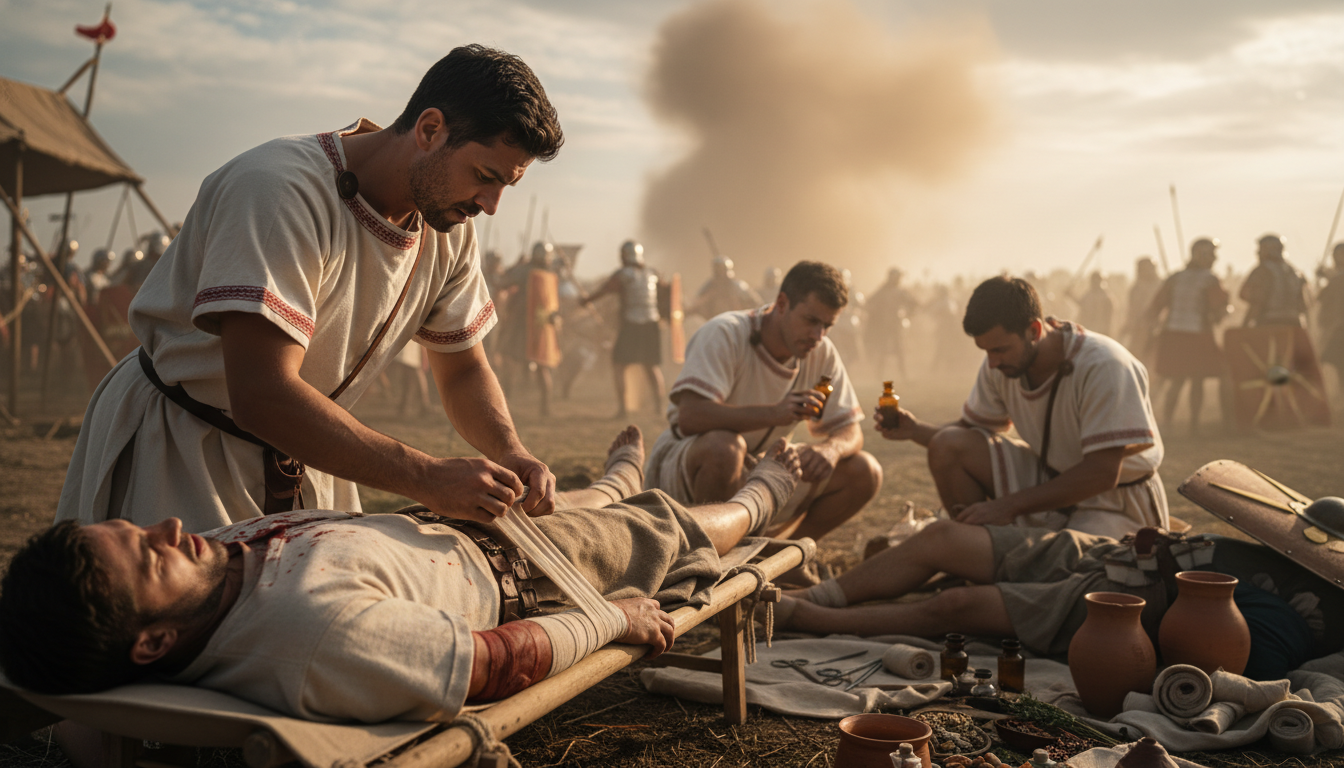
Every Roman legion had 600 trained medical staff. This was more than many modern armies have today. Despite a short life expectancy in ancient Rome, soldiers who made it past their first battle could live into their 50s. This was thanks to their advanced military healthcare system.
The Roman Empire didn’t just conquer through force. They had the world’s first organized Military Medicine program. This kept their soldiers healthy across three continents. The capsarii, seen on Trajan’s Column, were the first combat medics, treating wounds under fire.
Augustus changed history by creating a professional army in 27 BCE. His reforms gave soldiers guaranteed medical care for the first time. This wasn’t just any care; it was provided by trained medical staff who were exempt from other duties.
Rome controlled vast territories from Britain to North Africa, and from Spain to Syria. Millions of square miles were defended by soldiers who knew they had medical support. This support allowed Roman legions to march 20 miles a day and fight effectively, a feat not seen again for a thousand years.
Key Takeaways
- Roman legions employed 600 medical personnel per unit, creating the first organized battlefield medical care system
- Capsarii were specialized combat medics exempted from regular duties to focus on Military Medicine
- Augustus’s reforms in 27 BCE established permanent medical staff within the professional army
- Roman soldiers had significantly higher life expectancy than civilians due to their military healthcare system
- The Roman medical corps covered millions of square miles of territory across three continents
- Medical support enabled Roman legions to maintain combat effectiveness during long campaigns
Overview of Roman Military Medicine
You might think ancient Rome won battles just by force. But they actually had a secret: healthy soldiers meant victory. The Roman army created one of history’s first organized medical systems. This was more than just fixing wounds; it was a network that kept legions strong across three continents.
The Importance of Medicine in the Roman Army
Augustus changed everything by setting up permanent military hospitals. He knew good medical care saved lives and boosted morale. Knowing skilled medics were there for you made you fight harder.
The Romans built valetudinaria (military hospitals) with advanced features. These weren’t just tents; they were stone buildings with up to fourteen rooms for two hundred patients.
Key Medical Practitioners in Rome
The medical hierarchy was well-organized. At the bottom, capsarii were the first responders on the battlefield. Above them, the medicus ordinarius had centurion rank, and the medicus legionis oversaw entire legions. These doctors received special training, exempting them from regular duties.
Medical Knowledge and Practices
Roman doctors knew about infection control long before germ theory. They used honey dressings, isolated sick patients, and kept water sources clean. Marcus Terentius Varro even described invisible organisms causing disease in 36 BC!
Historical Context of Roman Military Medicine
The Roman military’s medical care changed a lot during the Empire’s growth. Before Augustus, wounded soldiers had a tough time. Julius Caesar’s De Bello Gallico shows how bad it was – sick soldiers were left behind in towns.
Imagine a soldier with a spear wound, watching his unit leave. It was a desperate situation.
Warfare and Its Impact on Medical Practices
Roman warfare made their medical care unique. Soldiers got hurt by swords, axes, and arrows. These injuries helped doctors learn about the body.
War became a way for doctors to study anatomy. They treated wounds that showed what was inside the body.
Evolution of Military Medicine During the Empire
The army changed from citizen soldiers to professionals. This meant soldiers were seen as investments. Rome needed healthy troops for its wars.
The Empire built field hospitals and trained doctors. This was not just about helping soldiers. It was also about keeping the army strong.
Roman Medical Hierarchy in the Military
The Roman army’s medical system was like a well-oiled machine. Each person knew their exact role. Imagine being a wounded soldier on the battlefield, and a medical team saves you. They followed a strict chain of command, just like today’s military medics.
This structured approach changed how armies cared for their troops. It was a big step forward in tactical medical procedures.
Roles of the Medical Staff
The medicus ordinarius was at the top, with the same rank as a centurion. They supervised the capsarii, who were the first responders on the battlefield. These guys carried medical boxes over dangerous terrain.
The medicus legionis worked at the legion level. The medicus cohortis took care of entire cohorts of soldiers.
Regular soldiers also helped with medical duties. They carried bandage boxes and learned basic wound care. This helped their fellow soldiers during fights.
Research from archaeological digs in Baden shows these medical professionals stayed with their units. They were a permanent part of the army.
Distinction Between Surgeon and Medic
Roman military medicine had clear lines between different medical roles:
| Medical Role | Primary Duties | Modern Equivalent |
|---|---|---|
| Medicus Ordinarius | Supervised all medical operations | Chief Medical Officer |
| Medicus Legionis | Treated legion-level injuries | Battalion Surgeon |
| Capsarii | First aid and bandaging | Combat Medic |
Surgical Techniques Used in Roman Times
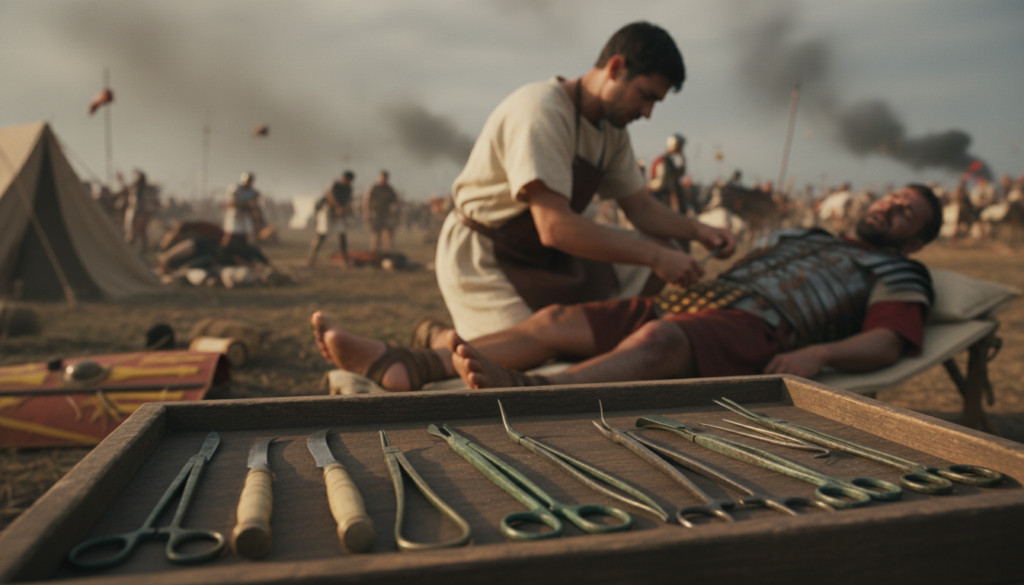
Imagine being a Roman soldier with an arrow in your shoulder. Who would help you? Roman surgeons had clever methods that made Military Medicine surprisingly advanced for ancient times. They didn’t just pull arrows out and hope for the best. Instead, they used sophisticated techniques to save many lives on the battlefield.
Common Surgical Procedures
Roman surgeons faced flesh wounds every day. But they didn’t just treat simple cuts and scrapes. They used a tool called the Dioclean cyathiscus, a spoon-like device with a hole, to remove spearheads stuck in tissue.
They also used a technique called fibulae stitching. This involved passing copper pins through wounds and wrapping thread around them in a figure-eight pattern. As Celsus explained, this kept wounds open to drain fluid buildup.
Tools and Instruments Utilized
A Roman surgeon’s kit was quite impressive. It included probes, hooks, and forceps that could stop bleeding. Excavations have found needles, cautery tools, and scalpels. Battlefield medical care required quick action, and these tools helped surgeons work fast.
Roman medical staff also took hygiene seriously. They bathed every morning and cleaned their facilities every night.
The Role of Field Hospitals in the Army
Imagine stepping into a Roman field hospital. It was not just a simple tent. The Romans built valetudinaria, permanent structures that changed how they cared for the wounded. These early hospitals started as simple camps but grew into impressive stone and wood buildings.
Design and Layout of Military Hospitals
Roman military hospitals were designed with healing in mind. The hospital at Housesteads fort was built behind the main military area. It had small rooms around a central courtyard for fresh air.
The Baden hospital ruins show an even more impressive design. It had a grand entrance with fourteen rooms, each with wooden partitions for privacy.
Where the hospital was built was just as important as its design. Engineers chose locations with clean water and good ventilation. This helped keep the air clean and infections under control, a technique used in combat medic training today.
Conditions and Treatments Offered
These hospitals could treat about 5% of a military unit at a time. They treated everything from arrow wounds to broken bones. Soldiers needing more time to recover got passes to healing centers.
Some troops went to Bridlington’s coast for seawater baths. This was a form of therapy that even Ptolemy wrote about.
Medical Supplies in the Roman Army
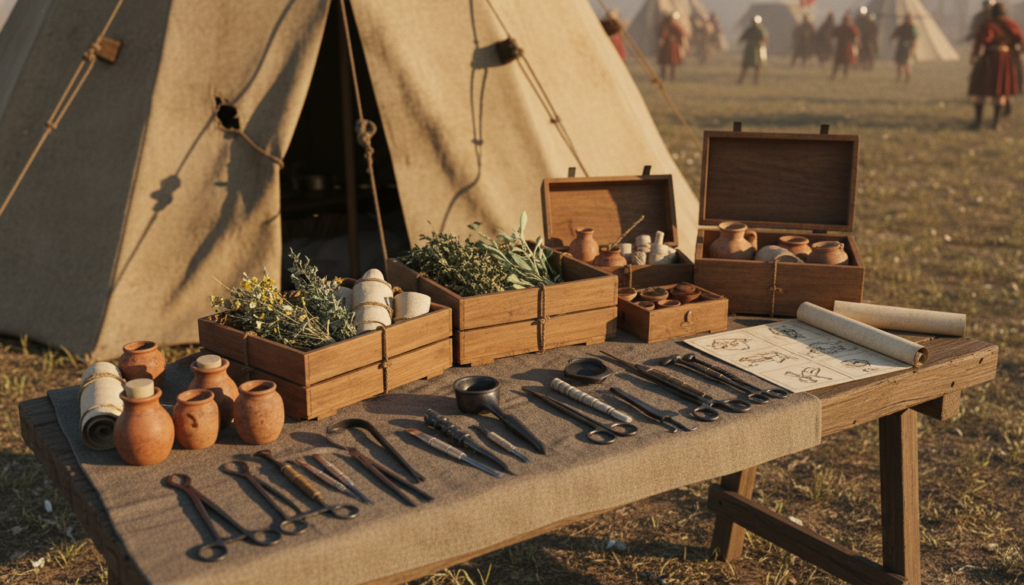
Modern combat medicine might seem advanced, but the Roman legions had medical supplies that were surprisingly sophisticated. Their medical advancements were so ahead of their time that we’re only now catching up. Imagine soldiers going into battle with medical teams, called capsarii, carrying boxes of bandages on their hips.
Types of Medications Utilized
Roman army doctors had a wide range of medicines. Pliny the Elder wrote about these remedies in his Naturalis Historia. They used unwashed wool soaked in honey for old sores. They also mixed egg yolks, crushed shells, poppy juice, and wine to treat dysentery.
These remedies were not just random. They were tested and proven to save lives on the battlefield.
| Common Ailment | Roman Remedy | Active Components |
|---|---|---|
| Infected wounds | Honey dressings | Natural antibacterial properties |
| Dysentery | Egg and poppy mixture | Proteins, calcium, pain relief |
| Open sores | Wool with wine/vinegar | Lanolin, antiseptic acids |
Bandaging and Wound Management Supplies
The Roman army’s surgical kits included probes, hooks, forceps, needles, and cautery tools. They used copper-alloy skewers to close wounds with a figure-eight threading. They also had special forceps for removing bone fragments and stopping bleeding.
Medical tents near battlefields had scalpels and anesthetics ready for casualties. The Romans even had the first ambulances, with groups of litter bearers rushing wounded soldiers to treatment areas.
Training of Military Surgeons
Roman military surgeons didn’t start with scalpels. They learned through tough training that’s similar to today’s combat medic programs. The Roman army had a system to pick and train medical staff. It mixed book learning with real-world experience.
Educational Pathways for Roman Surgeons
Young soldiers went through tough tests to become medici. The selection began in basic training, lasting four months. Instructors looked for recruits with steady hands and quick thinking.
Those picked for medical roles left combat drills to learn about wounds, herbs, and surgery.
Medical recruits got breaks from guard duty and construction. This gave them time to study and practice bandaging. They hoped to do it without causing more harm.
Practical Experience in the Field
Battlefield wounds taught Roman surgeons a lot. They saw deep cuts that exposed muscles and organs. This hands-on learning made them skilled in saving lives.
They developed new ways to treat wounds while racing against time. Their innovations changed medicine for centuries.
The Influence of Greek Medicine
Many think Roman medicine was developed alone, but it’s more complex. The Romans changed their military healthcare by moving away from old beliefs and embracing science. They turned temple visits and rituals into effective battlefield medicine.
Adoption of Greek Medical Texts
The Romans didn’t just conquer Greek lands; they also took their medical knowledge. Greek doctors wrote about anatomy, surgery, and treating diseases. Roman doctors studied these texts, translating them into Latin and applying them to war.
This wasn’t just copying—it was smart adaptation. It led to big advances in military medicine, beyond what either culture had done before.
Interaction with Greek Medical Practices
The magic happened when Roman practicality met Greek theory. Greek medicine focused on observing and diagnosing, while Romans were great at organizing and logistics. This mix changed military healthcare in lasting ways:
- Evidence-based treatments replaced religious ceremonies
- Isolation protocols for infectious diseases
- Running water systems in military hospitals
- Strategic placement of medical facilities near battlefields
Roman doctors observed wounds, tested treatments, and kept what worked. They understood infections before germ theory was known. Their focus on results over tradition helped start scientific medicine.
Battle Injuries and Treatments
Roman soldiers faced injuries that would make your stomach turn. Imagine getting slashed by a sword so deeply that your internal organs peeked through the wound. The reality of military trauma care in ancient Rome was brutal – yet these warriors had surprisingly effective ways to patch up their wounded comrades.
Common Injuries Suffered by Soldiers
Fighting against British tribes meant dealing with an arsenal of nasty weapons. Enemy warriors came at Roman soldiers with spears, knives, axes, and stone sling shots. You can imagine the damage – fractured skulls, pierced chests, and arrows stuck in places you really didn’t want them stuck.
The most common wounds? Deep sword cuts that exposed muscle and bone. Eye injuries from flying debris. Abdominal wounds that required immediate war zone medical treatment to prevent soldiers from bleeding out on the battlefield.
Treatment Protocols for Battlefield Injuries
Romans organized their military trauma care into three stages. First, capsarii (think combat medics) rushed to fallen soldiers with bandages and basic supplies. They cleaned wounds, stopped bleeding, and decided who needed urgent help.
| Injury Type | Treatment Method | Recovery Location |
|---|---|---|
| Surface cuts | Clean, bandage, return to duty | Field tent |
| Deep wounds | Stitch with fibulae technique | Medical tent |
| Embedded weapons | Extract with Dioclean cyathiscus | Valetudinarium |
| Arterial bleeding | Clamp with specialized forceps | Valetudinarium |
Surgeons used the Dioclean cyathiscus – a rotating extractor that grabbed arrowheads without causing more damage. Smart design for war zone medical treatment, right? Soldiers with serious injuries got carried on litters to the valetudinarium for extended care.
Impact of Religion on Roman Medicine
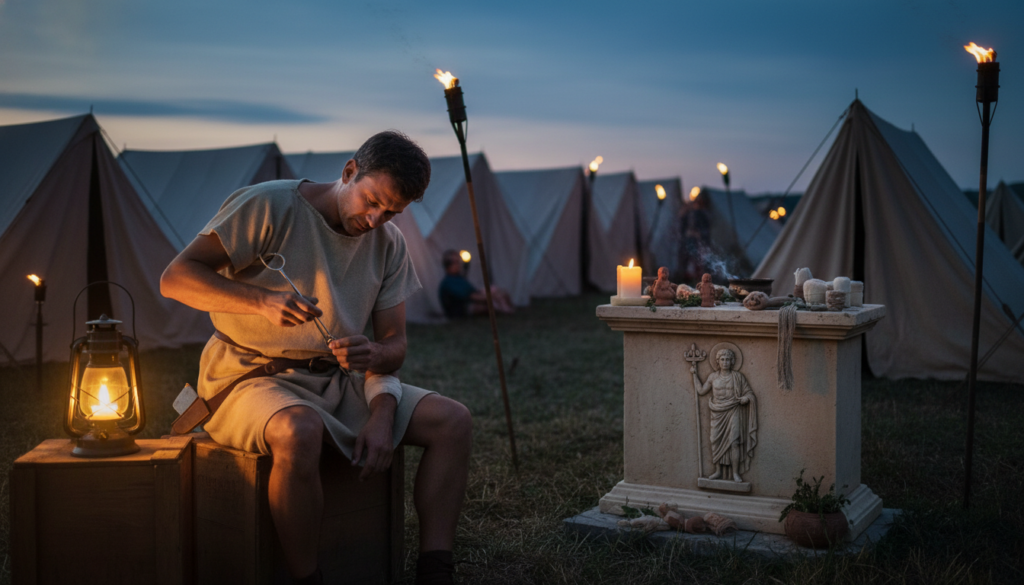
Imagine being a Roman soldier with a bad arrow wound. You might pray to Asclepius or get actual surgery. Early Romans chose prayer over surgery. Their medicine was all about pleasing the gods with rituals and offerings.
Got a fever? Sacrifice a chicken. Broken bone? Visit the shrine. It was their way of life.
The Role of Divine Intervention
Romans thought illness was a sign from the gods. Pliny the Elder wrote about remedies that mixed herbs with prayers. Soldiers wore amulets and prayed to Mars for safety.
Temple priests were both healers and spiritual leaders. They gave medicines and performed rituals. It was more than just superstition; it was their belief system.
Religious Practices in Healing
But then, military medicine changed everything. Augustus created a professional medical corps. This led to a shift from prayers to practical treatments.
Army doctors focused on what saved lives: clean water, air, and surgery. They kept records of what worked. This approach changed Roman healthcare.
Soldiers healed faster with science than with prayers. The army’s methods were so good that civilian hospitals followed. While religion stayed, science proved more effective in saving lives.
Medical Ethics and Practices
The Roman military healthcare system had strict standards, similar to today’s medical staff. Roman medical officers didn’t just treat wounds; they followed strict ethics. They cared for soldiers with both practical skills and genuine concern.
Ethical Considerations in Roman Medical Care
Roman doctors took hygiene very seriously. They bathed every morning before treating patients. They knew cleanliness was key to preventing complications.
They also separated wounded soldiers from those with diseases. This showed they understood how infections spread. It was a deliberate policy, not just luck.
The medical hierarchy ensured accountability. Capsarii were the first responders, while medicus ordinarius supervised all medical procedures. Young recruits were checked before joining. If they weren’t fit, they didn’t serve.
Patient Rights and Responsibilities
Wounded soldiers got special diets to aid recovery. The military gave sick leave for serious injuries. They knew rushing soldiers back hurt their long-term effectiveness.
Orderlies cleaned facilities every night. This kept standards high and protected recovering troops.
Trust between soldiers and medics was key. The practice of decimation (executing every tenth soldier for cowardice) ensured wounded men knew they wouldn’t be left behind. This harsh discipline built trust in medical help on the battlefield.
Contributions to Modern Medicine
It’s amazing how much the Roman military’s medical work has shaped today’s hospitals. Those ancient surgeons did more than just fix wounds. They set the stage for medical practices we use today.
Lasting Effects of Roman Medical Techniques
The Roman valetudinarium was the first model for modern hospitals. These military medical centers had special rooms for sick patients, clean water systems, and were close to water sources. You’ll see these same features in hospitals today.
Roman doctors knew about germs long before we did. They followed strict hygiene rules for their staff and protected water sources. These ideas are key in modern medicine.
Integration of Roman Practices into Modern Medicine
Today’s combat medics are like the Roman capsarii but with better tools. The Roman military’s medical structure is similar to today’s army medical corps. Their system for moving wounded soldiers around was centuries ahead of Napoleon’s “flying ambulance.”
Roman surgery innovations are also part of today’s medicine. Their fibulae method for closing wounds is similar to modern suturing. The Dioclean cyathiscus principle is used in today’s surgical tools. Basic health measures like sewer systems, ventilation, and clean water also come from Roman times.
Literature on Roman Military Medicine
The Roman military’s medical history is filled with ancient texts that shaped healthcare for centuries. These texts are key in today’s combat medic training. They come from battle commanders and physicians, each adding to the medical puzzle.
Key Texts and Authors
Julius Caesar’s De Bello Gallico shows early battlefield medicine. It reveals how sick soldiers were often left behind. Suetonius’s Divus Augustus talks about Augustus’s military reforms, including better medical care.
Celsus wrote about surgical techniques, like keeping wounds open. Dioscorides, a military doctor, noted honey’s healing powers. Pliny the Elder’s Naturalis Historiae mixed treatments with religious practices.
Analysis of Medical Writings
Marcus Terentius Varro talked about tiny disease-causing organisms in Rerum rusticarum libri III. De Munitionibus Castrorum showed how to build field hospitals. Trajan’s Column also shows medical care in ancient times.
These texts laid the groundwork for modern combat medic training. They connect ancient knowledge to today’s military academies.
Conclusion: Legacy of Roman Military Medicine
The Roman military changed medicine forever. Today’s war zone medical treatment owes a lot to the Romans. They didn’t just treat wounds and hope for the best. Instead, they created the first professional medical corps and built hospitals with isolation wards.
They also developed surgical techniques that doctors use today. These innovations were not accidents. They were the result of deliberate efforts to improve care in ancient warfare.
Summary of Contributions to Medical Knowledge
The capsarii, Rome’s battlefield medics, set the standard for all combat medics. Their hospitals, the valetudinarium, had running water, ventilation, and separate wards for different conditions. This might sound familiar today.
Roman surgeons were experts in wound cleaning, bone setting, and even cataract surgery. They discovered that clean water and proper sewage systems prevent disease. This was not magic, but the result of careful observation and experimentation.
They moved away from religious superstition and towards evidence-based treatment. This laid the foundation for scientific medicine.
Continuing Influence on Contemporary Medical Practices
Modern hospitals owe a lot to Roman ideas. Military trauma care protocols, developed by the Romans, guide emergency rooms today. The triage system, where wounded are sorted by severity, was also theirs.
Isolation wards for contagious diseases and public health measures like clean water and waste management were also Roman innovations. Every paramedic, surgeon, and nurse today uses concepts pioneered by Roman military doctors.
FAQ
Who were the capsarii in the Roman military?
What was the Roman military medical hierarchy like?
What surgical procedures did Roman military surgeons perform?
What were Roman military hospitals (valetudinaria) like?
How did Romans treat battlefield wounds?
What kind of training did Roman military medics receive?
How advanced was Roman understanding of disease and infection?
What lasting impact did Roman military medicine have?
How did Roman military medicine differ from civilian medicine?
What medical supplies did Roman armies carry?
Get More Medical History
Join our newsletter for fascinating stories from medical history delivered to your inbox weekly.