The History of Healing
 The Superbug Fungus: A Captivating Historical Perspective
Dive into the captivating superbug fungus history and learn how this fungus has impacted medical discoveries over time. We share surprising insights.

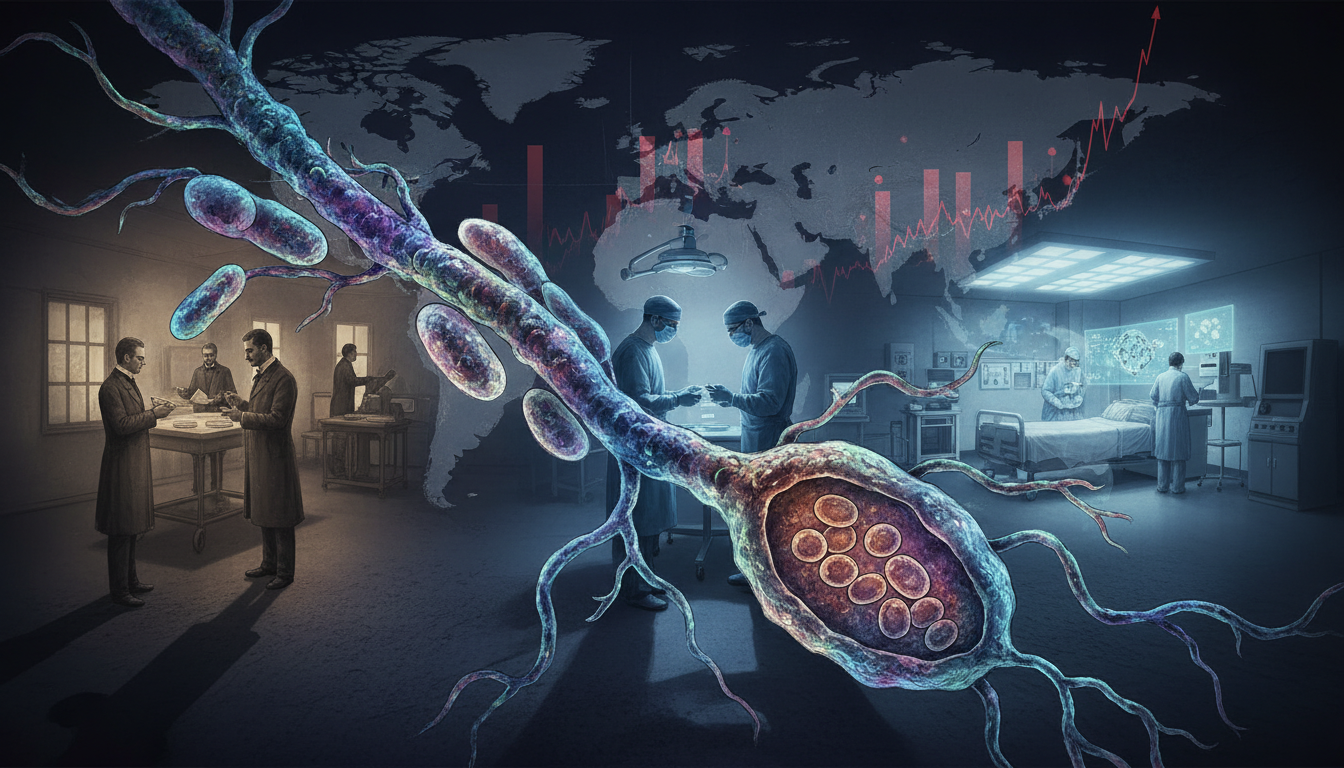
What if we told you a single germ could shut down entire hospital wards? In 2009, doctors in Japan identified a new yeast in a patient’s ear. It seemed like a simple infection. But this discovery would soon spark a global health alert.
This isn’t a story about bacteria. We’re talking about a yeast called Candida auris. It acts more like a bacteria than a typical fungus. It spreads directly between people and survives for weeks on surfaces.
The organism appeared simultaneously on three different continents. How? That remains one of its biggest mysteries. It resists most antifungal drugs, making treatment incredibly difficult.
We’re going to walk through the timeline of this threat. From its quiet start to the intense global outbreaks today. The story is both fascinating and a little frightening. Let’s dive in.
Key Takeaways
- Candida auris is a drug-resistant yeast, not a bacterium, making it a unique “superbug.”
- It first emerged in 2009 and has since been identified on multiple continents at the same time.
- This pathogen spreads easily in healthcare settings and can survive on surfaces for long periods.
- Treating infections is challenging due to its resistance to multiple antifungal medications.
- The simultaneous global appearance of Candida auris is an ongoing scientific puzzle.
- Hospitals have had to reinforce strict hygiene protocols to contain its spread.
Exploring the Superbug Fungus History
You might expect a new pathogen to start in one place and slowly spread. Candida auris didn’t follow the rules. Its early history is a head-scratcher that still puzzles experts today.
Understanding the Rise of Candida auris
It all started in 2009. Scientists in Japan found a new type of yeast in a patient’s ear. They named it Candida auris, after the Latin word for “ear.” Seems simple, right?
But here’s the twist. Almost at the same time, a similar case popped up in South Korea. Then another. A one-year-old boy and a 74-year-old man, with no connection to each other or the Japanese patient, both had it.
Key Historical Milestones
Within a few short years, things got wild. This yeast was suddenly causing infections in countries like India, South Africa, and Spain. It was happening all at the same time.
The real shock came when scientists looked at the genetics. The strains from different continents were unique. This wasn’t one species traveling the globe. It was like it emerged independently in multiple countries at once.
Over the years, Candida auris has been found in over 30 nations around the world. What began as a medical curiosity is now a serious global challenge.
Early Discoveries and Global Spread

What began as a routine hospital case in Tokyo would soon rewrite our understanding of infectious diseases. The journey of this remarkable pathogen started quietly but spread with alarming speed.
The First Reported Cases and Initial Identifications
Back in 2009, doctors in a Tokyo hospital encountered something puzzling. A 70-year-old woman had a stubborn ear infection that wouldn’t respond to antibiotics. The persistent oozing made them suspect something different was at work.
When they swabbed that ear and cultured the sample, they found a yeast nobody had seen before. This wasn’t just another routine case—it was the discovery of what we now know as Candida auris. That single patient’s infection marked the beginning of a global medical mystery.
International Outbreaks and Genetic Diversity
Fast forward to 2013, and the United States recorded its first case. Just one person infected. But here’s what shocked experts: by mid-2017, the CDC documented 98 cases across nine states. New York reported 68 cases alone.
The UK saw a similar pattern with their first official infection in 2013. But there’s a twist—many earlier cases were likely misidentified. Standard lab tests kept confusing this yeast with less dangerous species.
More than 80% of patients carrying this pathogen were initially misdiagnosed. Samples had to go to specialized labs for proper identification. By then, the person had often been in a hospital for weeks, potentially spreading it to others.
Each new outbreak revealed the same pattern. Sudden appearance. Rapid spread within healthcare settings. Countries that had never seen this yeast before suddenly had multiple hospital cases. The global spread wasn’t following typical patterns—it was emerging simultaneously worldwide.
Medical Impact and Hospital Infection Control Challenges

The battle at Royal Brompton Hospital revealed just how stubborn this pathogen could be against even the most rigorous protocols. This London facility faced a nightmare scenario that changed how hospitals worldwide approach infection control.
Hospital Outbreaks and the Role of ICU Settings
Starting in 2015, Royal Brompton Hospital encountered an outbreak involving over 50 patients. Despite throwing everything at the problem, the yeast kept spreading.
They implemented strict isolation, required full protective gear for staff, and cleaned rooms three times daily. When patients left, they used hydrogen peroxide vapor to sanitize everything. Yet the pathogen persisted on beds, floors, and other surfaces.
The situation became so dire that the hospital had to temporarily shut down its ICU. CDC’s Dr. Tom Chiller called this “the Cadillac of drastic actions”—something hospitals rarely consider.
Effective Cleaning and Isolation Protocols
Why was this so difficult to eliminate? Research shows Candida auris survives on surfaces for at least seven days. Colonized patients shed yeast from their skin, contaminating everything they touch.
Most hospital disinfectants don’t work effectively against this strain. Chlorine bleach does the job but damages equipment and irritates staff. Plus, hospitals often miss surfaces like privacy curtains during routine cleaning.
The Royal Brompton experience became a global wake-up call. Standard infection control measures simply weren’t enough for this uniquely challenging pathogen.
Candida auris: Resistance, Treatment, and Unique Fungal Traits
Imagine having only three weapons to fight an enemy that’s rapidly learning to dodge them all. That’s the scary reality doctors face with this stubborn yeast. The treatment options are painfully limited compared to what we have for bacterial infections.
Drug Resistance and the Limitations of Antifungals
Right from its discovery, Candida auris showed resistance to first-choice antifungal drugs. The CDC found over 90% of samples resist azoles—our go-to oral treatment. Even backup options like amphotericin cause severe reactions doctors call “shake and bake.”
Some strains resist all three drug classes. When that happens, medical teams have nothing left to try. What’s truly alarming? Resistant strains spread just as easily as treatable ones.
Distinctive Characteristics Compared to Other Candida Species
This organism behaves completely differently from its Candida cousins. Unlike other species that live peacefully in our gut, auris prefers skin surfaces. It thrives in warm, moist areas like armpits.
This skin preference lets it spread person-to-person like bacteria. When a patient has medical devices like catheters, the yeast can sneak into the bloodstream. This unique behavior makes containment incredibly challenging for any hospital infection control team.
Mortality rates range from 30-60%, with many patients already critically ill. The combination of drug resistance and unusual spread patterns creates a perfect storm in healthcare settings.
Technological Advances and Evolving Research in Fungal Infections

Picture this: doctors know something dangerous is spreading, but their tests keep telling them it’s something harmless instead. For years, this was the frustrating reality with Candida auris. Standard lab methods kept misidentifying it as less risky yeasts.
Innovations in Diagnosis and Genomic Analysis
The CDC had to publish detailed guidance explaining how seven different testing methods were making mistakes. They urged labs to contact them directly whenever this pathogen was suspected.
Genomic analysis became a game-changer. When an Oklahoma hospital found one case, a CDC team collected 73 samples for genetic sequencing. Their quick action prevented an outbreak.
Enhancing Laboratory Techniques for Accurate Identification
Recent research has finally produced accurate diagnostic tests. These new tools help healthcare workers catch infections early.
Comparing genetic sequences from around the world revealed different strains on each continent. This deepened the mystery of its simultaneous global emergence.
Funding and Global Research Initiatives
Fungal infection research has historically received minimal funding. Unlike bacterial diseases, these pathogens weren’t a high priority.
Researchers like Rebecca A. Drummond at University of Birmingham are working to change this. But they face an uphill battle for resources in an underfunded field.
The Candida auris problem exposed critical gaps in our infectious disease infrastructure. We need better diagnostic technology and more investment in understanding how fungi evolve.
Future Directions in Managing Fungal Infections

The COVID pandemic threw healthcare into chaos, but it also revealed something unexpected about infection control. Seriously ill people needed ventilators and long ICU stays—perfect conditions for auris infections to thrive. Cases actually tripled between 2019 and 2021.
Improving Infection Control and Hospital Hygiene
Here’s the surprising part: the best protection might be the simplest. We’re talking about basic hygiene that doctors championed centuries ago. Washing hands, wearing gloves, keeping things clean.
Sounds easy, right? But getting exhausted healthcare workers to follow these steps every time is the real challenge. Consistent compliance is our best way forward.
Emerging Therapies and Strategic Responses
Most people carrying this yeast never get sick. The real problem starts when it enters through wounds or IV lines. That’s when patients need protection.
Hospitals must screen high-risk people and trace contacts. Without close monitoring, we could see more auris infections. Prevention is our smartest strategy for public health.
Every person in healthcare plays a role in infection control. Simple measures make a huge difference for everyone’s health.
Conclusion
If there’s one lesson this medical mystery teaches us, it’s that nature always has surprises waiting in the wings. Candida auris arrived without warning, challenging everything we thought we knew about how fungi behave.
This organism doesn’t follow the rules. It colonizes skin like bacteria and survives where other yeast species can’t. Over the years, we’ve watched it spread across the world, causing outbreaks that shut down entire hospital units.
The genetic puzzle of its simultaneous emergence remains unsolved. But we’re learning fast. Enhanced awareness and better tools are helping us fight back. Recent research on Candida auris outbreaks shows we’re making progress.
For most people, this isn’t a direct threat. But the broader implications affect everyone. We need sustained vigilance against emerging pathogens that don’t play by the expected rules.
FAQ
What is Candida auris and why is it such a big deal?
When and where was Candida auris first discovered?
How does Candida auris spread in hospitals?
Why are antifungal drugs sometimes ineffective against this infection?
How is Candida auris different from other common fungal infections?
What can hospitals do to prevent outbreaks?
What research is being done to fight this superbug?
Get More Medical History
Join our newsletter for fascinating stories from medical history delivered to your inbox weekly.