The History of Healing
 Ventilators: A Historical Overview
Discover the evolution of ventilators, from early designs to modern ICU lifesavers, shaping respiratory care in medical history.

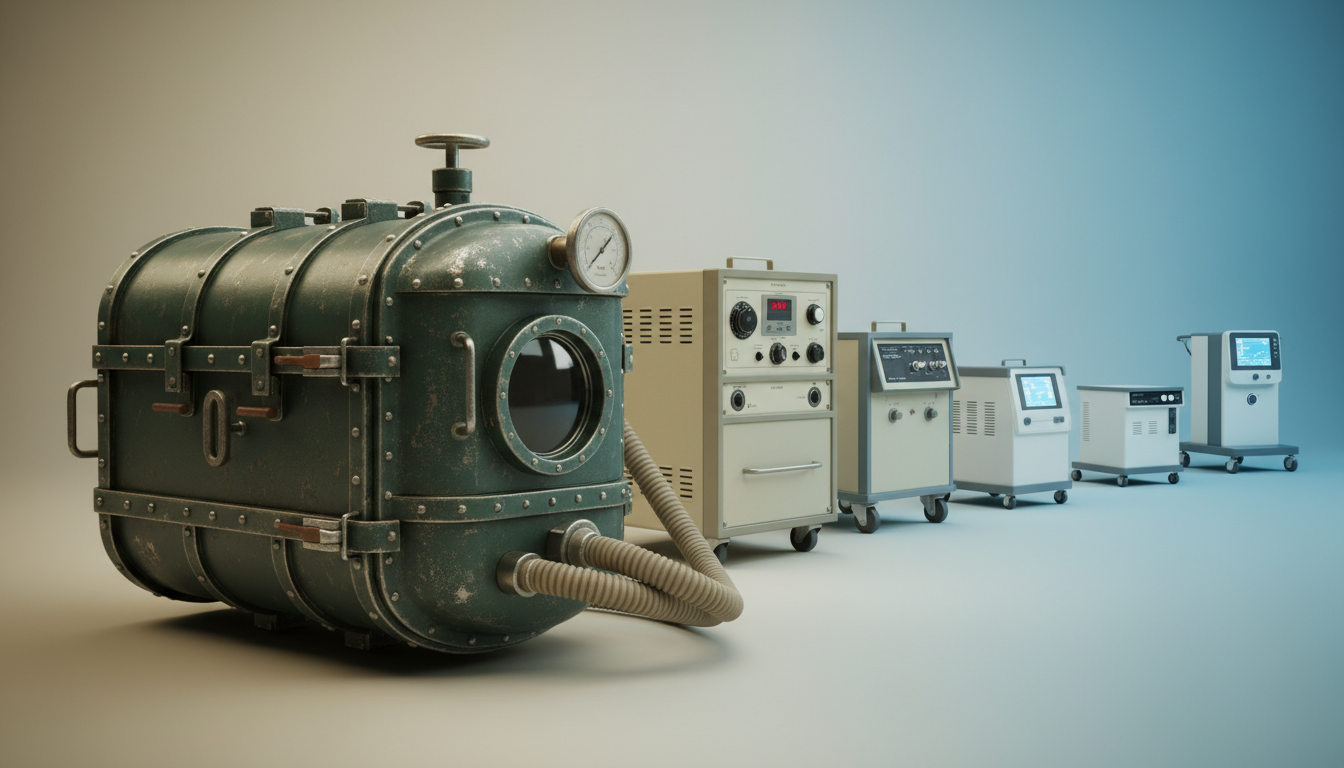
In 1931, the United States was hit hard by polio. Hospitals were short on breathing machines. This sounds familiar, right?
During COVID-19, ventilators became a big topic. They were talked about everywhere. It was a national problem: how many lives could be saved with how many machines?
But ventilators have been around for a long time. People have tried to help others breathe for centuries. They used simple methods and even tools that look strange today.
Then, big machines came along. These were iron lungs that looked like beds. They were loud and had rows of patients needing the same rhythm to breathe.
Over time, diseases and new technology kept changing ventilators. They got smaller and smarter, with lots of microchips.
This story is about how ventilators have changed. From big metal tanks to small, portable systems. And one thing is clear: when people need to breathe, ventilators get better fast.
Key Takeaways
- Ventilators became important during COVID-19, but there were shortages before, like in 1931.
- The basic idea is to help lungs breathe when they can’t on their own.
- Long before today’s machines, people tried simple ways to help others breathe, like mouth-to-mouth.
- The iron lung era showed how big diseases can lead to quick changes in medical tech.
- Today’s ventilators are smaller and use microchips, designed for speed and precision.
- This history shows a pattern: new threats make ventilators better, and medicine adapts quickly.
Introduction to Ventilator Technology
When you think of a ventilator, you might picture a big box with tubes and alarms. But it’s really simple. A ventilator machine helps move air in and out when your body can’t do it well.
Today’s devices are not just fans pushing air. They use sensors and microchips to time each breath. This way, they can adjust flow and control pressure.
Definition and Purpose of Ventilators
A ventilator machine delivers air with the right pressure and rhythm. It adds oxygen, keeps airways open, and reduces the work of breathing. It’s for people who are too weak, too sedated, or too sick to breathe effectively.
But, a ventilator doesn’t cure diseases like pneumonia or asthma. It buys time so treatments can work while the lungs rest.
- Assists breathing when lungs are working but falling short
- Replaces breathing when a person can’t breathe safely on their own
- Stabilizes gas exchange by supporting oxygen in and carbon dioxide out
Importance in Modern Medicine
In real hospitals, ventilators are just one part of a team effort. Clinicians, respiratory therapists, and nurses all play a role. They make sure ventilation fits the patient’s goals and advance directives.
This teamwork is key because the ventilator can help or harm. Settings must match lung mechanics, sedation plans, and vital signs. Even small tweaks can make a big difference in comfort and safety.
| What’s involved | What you’ll notice at the bedside | Why it matters for safety |
|---|---|---|
| Airflow and pressure control inside a ventilator machine | Breaths delivered on a set rhythm, with measured pressures and volumes | Too much pressure can injure fragile lungs; too little support can cause fatigue |
| Patient-specific tuning for a ventilator for breathing support | Settings adjusted based on blood oxygen, carbon dioxide, and breathing effort | Personalized support helps avoid under- or over-ventilation as the illness changes |
| Clinical decision-making and goals-of-care checks | Clear conversations about risks, benefits, and advance directives | Ensures ventilation matches the patient’s wishes and the medical plan |
| Monitoring, alarms, and complication prevention | Frequent assessments, suctioning when needed, and alarm response | Catches tube issues, infection risks, and breathing changes before they escalate |
Early Beginnings of Ventilation
Breathing support is not new. People tried to push air into lungs by hand long ago. This was like mouth-to-mouth, simple and no cords needed.
Back then, anything that worked was used. Hands, breath, and basic tools were the tools. The goal was to move air when the body couldn’t.
Ancient Techniques for Breathing Assistance
Early reports show rescuers pushing air into someone who wasn’t breathing. It was a real method to get oxygen moving again. It looked like direct breathing into another person’s mouth.
Then, people wondered if a device could do the pushing. In the 1600s, Robert Hooke used bellows to blow air into a dog’s lungs. This showed that airflow could be powered by something other than muscles.
Development in the 19th Century
In the 1800s, the focus turned to negative pressure. This meant pulling air in by changing pressure around the chest. These systems tried to copy natural breathing mechanics from the outside.
One big milestone was in 1838. Scottish physician John Dalziel described a full-body “tank ventilator.” It was an airtight box around the patient’s body with the head outside. By manually pumping air in and out of the box, the pressure changed and the chest rose and fell.
| Era | Approach | How it moved air | Typical ventilator equipment | Why it mattered |
|---|---|---|---|---|
| Biblical-era references | Positive pressure by rescuer | Air forced in through mouth-to-mouth breathing | Human breath, hands for airway positioning | Showed the basic concept behind a respiratory ventilator: air can be delivered, not just drawn in |
| 17th century (Robert Hooke) | Positive pressure with a tool | Bellows pushed air into the lungs | Bellows, tubing, a tight seal at the airway | Demonstrated that mechanical force could replace weak breathing effort |
| 19th century (John Dalziel, 1838) | Negative pressure tank method | Pressure shifts around the body caused the chest to expand and recoil | Airtight chamber, hand pump, seals around the neck opening | Set the stage for later negative-pressure machines and shaped early ventilator equipment design |
Innovations in Mechanical Ventilation
In 1931, a U.S. hospital ward was filled with polio patients. Many were kids who couldn’t breathe on their own. This need for help breathing led to the creation of hospital ventilators and ICU ventilators we know today.
The Iron Lung and Its Impact
The iron lung was invented in 1930 at Harvard Medical School. It was a big metal box that could hold a person’s body. The head stuck out, resting on a soft collar.
Inside, air pumps made by two vacuum cleaners changed pressure. This pressure change helped the body breathe. It was a simple idea but very important.
By 1939, the National Foundation for Infantile Paralysis started giving out iron lungs. Each one cost about $1,500. That’s a lot of money, like buying a house back then.
Birth of Positive Pressure Ventilation
In the 1950s, there were not enough iron lungs. Doctors started using tubes to force air into patients’ lungs. This was a new way of caring for patients.
This change led to positive-pressure ventilation. Air was pushed into the lungs, not pulled. This idea helped shape today’s hospital ventilators and ICU ventilators.
| Innovation | How it moved air | What it looked like in practice | Why it mattered in hospitals |
|---|---|---|---|
| Iron lung (negative pressure) | Pressure shifts around the chest pulled air in and out | Whole body inside a metal box; head outside with a sealed collar | Scaled up emergency respiratory care during polio waves and influenced expectations for hospital ventilators |
| Early positive-pressure ventilation | Air pushed into lungs through a tube, then allowed to exit | Intubation or tracheotomy with close bedside monitoring | Helped bridge shortages and pushed the direction of design toward what an ICU ventilator would later standardize |
Evolution of Ventilator Design
Imagine the old negative-pressure tanks. They were huge, loud, and hard to move. Then, the 1960s came, and everything changed. Ventilators started pushing air into lungs with positive pressure. This small change made a big difference in size, comfort, and control.
Robert Kacmarek of Massachusetts General Hospital and Harvard Medical School wrote about this change in 2011. He said ventilators evolved from simple machines to smart systems. They can now support any kind of breathing need.
Transition to Modern Ventilator Systems
With positive-pressure support, doctors could adjust air flow as needed. For mild cases, air could go through a mask. For serious cases, a tube connected to a ventilator was used. This made ventilators smaller and more flexible.
This change also made portable ventilators a reality. Moving patients became easier without constant manual bagging. Ventilators could now travel with you, keeping settings steady.
Key Features Introduced
Design improvements went beyond size. They made ventilators easier to read, adjust, and trust in tight spaces.
| Design shift you can picture | What changed in real life | Why it mattered to you in a busy unit |
|---|---|---|
| Smaller footprint and cleaner layouts | More room around the bed for IV pumps, monitors, and staff | Less crowding during emergencies and bedside procedures |
| Clearer displays and on-screen waveforms | Breath timing, pressures, and alarms became easier to spot fast | Quicker decisions when a patient coughs, leaks, or fights the breath |
| Microprocessor control replacing purely mechanical timing | Finer adjustments to triggering, cycling, and ventilation modes | Better syncing between patient effort and the ventilator machine |
| Battery power and rugged casings | True portability during transport and short power interruptions | A portable ventilator could keep support steady on the move |
| Improved alarm logic | More specific alerts for disconnection, high pressure, or low volume | Fewer missed problems, fewer nonstop nuisance beeps |
Today, ventilators are sleek, have sharp screens, and easy controls. They fit the fast pace of hospitals. The ventilator machine at the bedside keeps getting smarter, making care easier.
The Role of Ventilators in the 20th Century
In the 20th century, breathing support became common in hospitals. Ventilators were seen as essential tools, not just lab equipment. They were used in busy wards, helping many patients breathe.
Respiratory outbreaks, like polio, made ventilators a must. Hospitals filled with rows of devices and trained teams. This shift was fast and clear.
Ventilators during World War II
World War II changed hospitals a lot. Surgeons and nurses faced new challenges. Chest injuries and infections needed breathing support to survive.
Ventilators had to be tough and easy to fix. Supplies were often scarce. This made them even more important.
Medical work became part of everyday life. A 1959 Rochester Review talked about John H. McKeehan in Syracuse. He kept chest shell respirators running for neighbors with polio. He greased them, checked batteries, and rebuilt them twice a year.
He called it “a pretty tense job.” It showed that ventilators weren’t the only machines keeping people alive. Support systems were also in garages and basements.
Advances in Critical Care Medicine
By mid-century, hospitals learned ventilation’s power and risks. Too much pressure could hurt lungs. Too little could exhaust patients.
Once on ventilators, new problems could arise. Like pneumonia, skin ulcers, and deep weakness from being too long in one position.
Memories from the University of Rochester’s Strong Hospital during a polio outbreak show this. Two wings were filled with patients in iron lungs. Physician Eugene Farley remembered the intense work and the need for ventilators to run without fail.
Clinicians noticed a tricky balance. Sedation helped patients tolerate the machine but made it harder to wean off. So, ICU routines evolved. More monitoring, careful settings, and team-based decisions became common.
| What changed in 20th-century care | What it meant at the bedside | Why it mattered for ventilator equipment |
|---|---|---|
| Polio-era wards filled with iron lungs and chest shell respirators | Long-duration support became normal, not rare | Devices had to run continuously, with dependable power and parts |
| Growing ICU-style monitoring (vitals, airway checks, frequent reassessment) | Settings were adjusted more often to match the patient | Controls and alarms needed to be clear, responsive, and consistent |
| Recognition of ventilation risks (pressure injury, pneumonia, ulcers, weakness) | Staff balanced support with harm prevention day after day | Hospital ventilators had to allow safer pressure and volume control |
| More sedation use—and more awareness of its downsides | Weaning could be delayed if patients stayed too deeply sedated | Ventilator equipment had to support gradual step-down and close observation |
Understanding Different Types of Ventilators
Ventilators come in many types. Some use a mask to help you breathe. Others use a tube and do more work. In hospitals, you might hear “respiratory ventilator” for all types. But “ICU ventilator” usually means the most advanced ones for very sick patients.
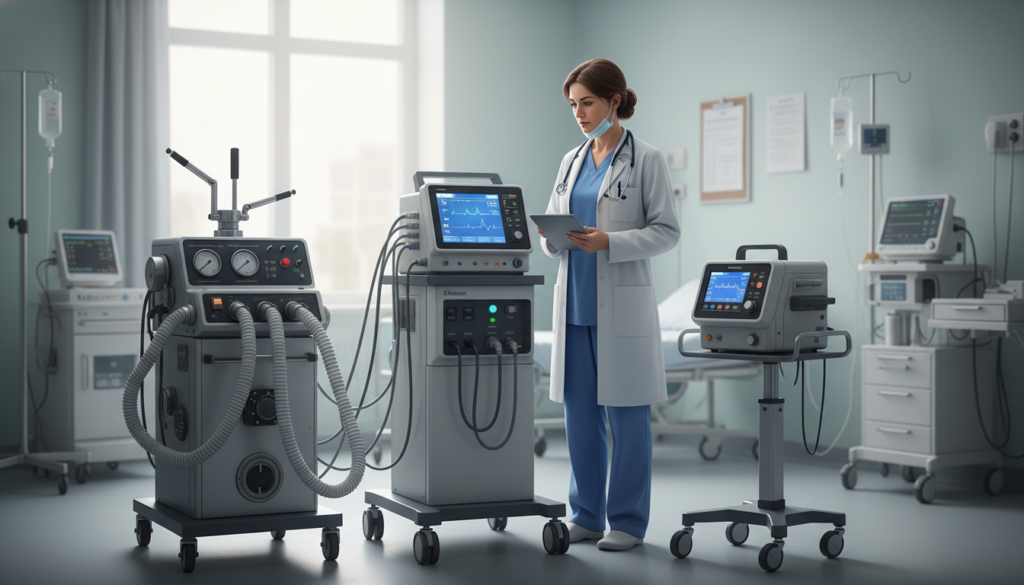
There are two main questions. How does air get into your lungs? And how does the machine give each breath? Once you understand these, the different types become clearer.
Invasive vs. Non-Invasive Ventilation
Non-invasive ventilation uses a mask to push air into your lungs. CPAP sends air through a small nose mask. It’s used for sleep apnea and in NICUs for babies with breathing problems.
During COVID-19, CPAP was not always used. Studies showed it could spread the virus. This was a concern without the right setup and protection.
BiPAP is a bit more advanced. It has higher pressure when you inhale and lower when you exhale. It’s used for sleep apnea, COPD, and other breathing issues. Hospitals might adjust settings for COVID-19 patients.
Invasive ventilation is for when you can’t breathe on your own. Air goes through a tube in your airway. ICU ventilators are key here, watching pressures and oxygen levels closely. You’ll also find them in operating rooms as anesthesia ventilators.
High-Frequency and Conventional Ventilators
After knowing how air gets in (mask or tube), we look at how breaths are given. Conventional ventilators give a set number of breaths per minute. Clinicians can adjust the size and support of each breath.
High-frequency ventilation uses very small, fast breaths. It’s for delicate situations where big breaths might be too much.
| Type | How it delivers air | Typical places you’ll see it | Why it’s chosen |
|---|---|---|---|
| Non-invasive (CPAP) | Single, steady pressure through a nose or face mask | Sleep labs, home therapy, NICUs, step-down units | Keeps airways open and supports breathing without intubation |
| Non-invasive (BiPAP) | Higher pressure on inhale, lower pressure on exhale through a mask | Emergency departments, respiratory floors, monitored units | Helps with ventilation when breathing is weak or labored |
| Invasive ICU ventilator | Air through an airway tube with detailed control of pressure, volume, and oxygen | ICU and some transport settings | Full support for severe respiratory failure and tight monitoring |
| Conventional respiratory ventilator modes | Normal-sized breaths at a set rate, with adjustable support | ICU, post-op recovery, long-term acute care | Flexible “default” approach that fits many lung problems |
| High-frequency ventilation | Tiny breaths delivered very rapidly | Specialty ICUs and NICUs | Alternative strategy when lung protection is a priority |
The main idea is simple. Machines can be non-invasive or invasive. They can give breaths in conventional or high-frequency patterns. This is why the same ICU ventilator can help in many ways. And why “respiratory ventilator” can mean anything from mask support to full life support.
The Impact of the COVID-19 Pandemic
In early 2020, ventilators became a big topic at home. Everyone was worried: were we ready for this? Ventilators became a symbol of hope and limits.
When hospitals get full, having enough equipment is urgent. It’s not just a theory anymore.
Surge in Demand for Ventilator Use
COVID-19 patients with severe breathing problems needed ventilators. This made ventilators very important in ICUs.
But it’s not just one machine for each patient. Ventilators need a whole setup. This includes tubing, filters, and oxygen. When cases went up, everything got tighter.
Challenges in Production and Distribution
On April 7, 2020, Canada aimed to make 30,000 ventilators. It was a big promise. But it raised questions about accountability.
Building ventilators is just the start. Getting them to patients is hard. It involves quick shipping and trained staff ready to use them safely.
| Pressure Point | What “making ventilators” involves | What “getting ventilators used” involves | Why it mattered during COVID-19 |
|---|---|---|---|
| Supply chain | Sourcing parts like valves, sensors, and microcontrollers | Ensuring consumables and accessories arrive with each ventilator for breathing support | A single missing component could delay readiness even when frames were built |
| Quality and safety | Testing alarms, pressure control, and reliability under continuous use | Verifying hospital compatibility (oxygen hookups, power backup, infection control routines) | In a surge, ventilators needed to work flawlessly for long runs |
| Allocation | Meeting overall production targets for ventilators | Sending the right model to the right unit (ICU vs. step-down vs. transport) | Demand wasn’t evenly spread; hotspots needed rapid, specific support |
| Staffing and training | Providing manuals and basic onboarding materials | Training teams to manage settings, sedation coordination, and troubleshooting | A ventilator for breathing support is only as effective as the team running it |
Key Manufacturers of Ventilators
When you think of a “medical ventilator,” you might imagine one size fits all. But in real hospitals, it’s more like a tool wall. Each ventilator is made for a specific job, from ICU care to quick transport.
Did you know “respirator” used to mean ventilator? Now, it usually means a face mask. Knowing this makes old texts easier to understand.
Overview of Leading Brands
In U.S. hospitals, a few names keep popping up. You’ll see ICU systems from GE HealthCare, Philips, Medtronic, and Dräger. Hamilton Medical is also popular, known for its flexible modes and clean interface.
Scale is also key. During COVID, the push to make more ventilators showed it’s not just about design. It’s about factories, parts, teams, and getting devices where they’re needed fast.
| Manufacturer | Where you’ll often see it | What people notice day to day | Why supply capacity matters |
|---|---|---|---|
| Medtronic | ICUs and emergency surge planning | Clear alarms, practical workflows, strong training materials | Large production networks can help stabilize availability when demand spikes |
| Philips | Critical care units and step-down settings | Readable screens and settings that feel familiar across models | Consistent parts and field support reduce downtime for a ventilator machine fleet |
| GE HealthCare | Hospital systems standardizing equipment across campuses | Integrated monitoring approach and straightforward controls | System-wide purchasing can move faster when supply chains are stressed |
| Dräger | High-acuity ICU environments | Robust build, strong ventilation options, solid usability under pressure | Global manufacturing and logistics can improve resilience during shortages |
| Hamilton Medical | ICUs that prioritize flexible ventilation strategies | Adaptive behavior and interface choices that reduce knob-twisting | Reliable shipments and service coverage keep planned expansions on track |
Innovations from Specific Companies
Innovation means making the ventilator machine react to each patient. Modern control lets it adjust airflow and pressure for each breath. This is based on what sensors pick up.
Better displays are another big step. They don’t just look good; they help spot problems faster. This is important at 2 a.m. when you’re moving fast.
True portability is also key. Transport ventilators used to be a compromise. Now, many systems aim for stable performance during moves. They have battery life, sturdy mounts, and controls that don’t slow you down.
Regulatory Framework for Ventilator Approval
When you hear “FDA cleared” or “FDA approved,” it’s not just paperwork. It’s a safety net for real people on real machines. Ventilator equipment in small settings can have big consequences, making lungs more fragile.
Clinicians like Elizabeth Palermo at the University of Rochester have pointed out a tough truth. Too much pressure can worsen lung injury. Risks like pneumonia, skin ulcers, weakness, and heavy sedation make weaning harder. This shows why rules matter, as hospital ventilators don’t get endless second chances in a packed ICU.
FDA guidelines for ventilator devices
In the U.S., the FDA expects ventilator equipment to show it can perform as intended and fail safely when something goes wrong. This means testing that goes beyond “it turns on.” It includes alarms, accuracy, and what happens during power loss or a sudden leak.
For hospital ventilators, the FDA also looks closely at labeling and instructions. Misuse is a real risk under stress. Clear setup steps, warnings, and compatible accessories matter, as one wrong part can throw off delivered pressure or oxygen.
| What the FDA focuses on | Why you should care in real care settings | What it can look like on the device |
|---|---|---|
| Performance testing | Helps prevent over- or under-support when breathing needs change fast | Verified accuracy for pressure, volume, and oxygen delivery ranges |
| Alarms and alerts | Early warning when tubing disconnects, filters clog, or pressure spikes | Audible/visual alarms for high pressure, low tidal volume, and apnea |
| Human factors and usability | Reduces setup mistakes when teams are tired and time is tight | Readable displays, lockouts for critical settings, guided workflows |
| Software and cybersecurity expectations | Keeps updates and network features from creating new failures | Version control, error logs, secure configuration options |
| Labeling and compatible components | Helps prevent mismatched circuits and accessories that change ventilation | Clear instructions for masks, circuits, filters, and humidification |
Post-market surveillance of ventilators
Here’s the part most people never see: the FDA’s job doesn’t stop when ventilator equipment hits the market. Once devices are used in busy hospitals, edge cases show up. This includes condensation in tubing, alarm fatigue, unexpected interactions with sedation routines, or failures that only appear after weeks of constant use.
Post-market surveillance is how those signals get tracked and acted on for hospital ventilators. It leans on real-world reporting, trend spotting, and follow-up from manufacturers. This way, fixes can happen through updated instructions, software changes, field corrections, or recalls when needed.
- Adverse event reports that flag harm or near-misses tied to ventilation or device behavior
- Complaint tracking that catches repeating issues before they become widespread
- Corrective actions such as labeling updates, replacement parts, or firmware patches
- Ongoing quality checks to make sure production units match tested performance
Future Trends in Ventilation Technology
Microchips changed everything. They made ICU ventilators more than just pumps. They became responsive partners at the bedside.
Today, machines adjust timing, flow, and pressure to match your lungs. As ventilators get smaller and smarter, they can make quicker, cleaner changes anywhere care happens.
Integration of Artificial Intelligence
AI is the next big thing. It can spot patterns humans can’t see for hours. This is huge during long ICU shifts, where small changes add up.
Clinicians want simple but big changes. They want better patient-vent sync, clear data screens, and helpful alarms. AI could make these changes happen, reducing complications.
| Bedside need | What “smarter” control could do | What you might notice |
|---|---|---|
| Better patient-vent synchronization | Detects effort and adjusts trigger and cycling faster | Less “fighting the vent” and smoother breaths |
| Clearer data displays | Highlights key trends (compliance, resistance, tidal volume drift) | Faster read of what’s changing, even in a busy room |
| Alarms that help | Groups related alerts and flags the most urgent cause | Fewer false alarms, quicker troubleshooting |
| Lower complication risk | Suggests protective strategies and checks for risky patterns | More consistent support when staffing is stretched |
Potential for Remote Monitoring
With smart electronics, remote monitoring isn’t far off. Imagine dashboards for respiratory therapists to check on patients without rushing around.
This could be key during surges. Thin staffing means an ICU ventilator sharing data can help teams work faster and focus on urgent patients.
Conclusion: The Ongoing Importance of Ventilators
Ventilators are key in medicine, helping when breathing stops. They give lungs time to heal. But, they need constant care, not just setup and forget.
Ensuring access and equity in healthcare is vital. History shows us that ventilator shortages affect who gets help. This happened in polio times and COVID-19. We need to stock up and make sure everyone knows where to find them.
Ventilators can also harm lungs if not used right. Too much pressure is not good. It takes a team to use them safely. Clinicians, therapists, and nurses must work together.
The future of ventilator use in medicine looks bright. We’ll have smaller, more portable ventilators. There will also be better alarms and monitoring. But, the most important thing is fair distribution and strong teams.
FAQ
What does a medical ventilator actually do?
Why can’t hospitals “just buy more ventilator machines” during a crisis?
Is the idea of breathing support really that old?
Who proved that mechanical ventilation could work?
What is negative-pressure ventilation, and how did early machines use it?
What was the iron lung, and why did it become so famous?
How did the 1931 polio epidemic mirror COVID-19 ventilator shortages?
How much did an iron lung cost, and how widely were they distributed?
FAQ
What does a medical ventilator actually do?
A medical ventilator helps you breathe when your lungs can’t. It moves air in and out by controlling airflow and pressure. Ventilators don’t cure diseases—they give your lungs a break so treatments can work.
Why can’t hospitals “just buy more ventilator machines” during a crisis?
Hospitals need more than just machines. They need trained teams to use them safely. Without the right people, lots of ventilators don’t help much.
Is the idea of breathing support really that old?
Yes, it’s very old. Ancient people used mouth-to-mouth to help others breathe. The idea of pushing air into lungs is thousands of years old.
Who proved that mechanical ventilation could work?
Robert Hooke showed it in the 1600s. He used bellows to blow air into a dog’s lungs. This was an early proof that machines could help with breathing.
What is negative-pressure ventilation, and how did early machines use it?
Negative-pressure ventilators pull air into the lungs. In 1838, a Scottish doctor used a tank ventilator. It was a box that changed pressure to move air in and out.
What was the iron lung, and why did it become so famous?
The iron lung was a famous negative-pressure machine. It was used for polio patients. Invented in 1928, it was a metal box that fit your whole body.
How did the 1931 polio epidemic mirror COVID-19 ventilator shortages?
Both crises had too many patients needing breathing help. Hospitals were filled with people who couldn’t breathe. Both times, there weren’t enough ventilators or staff.
How much did an iron lung cost, and how widely were they distributed?
By the late 1930s, iron lungs were common. The National Foundation for Infantile Paralysis distributed them widely. Each cost about
FAQ
What does a medical ventilator actually do?
A medical ventilator helps you breathe when your lungs can’t. It moves air in and out by controlling airflow and pressure. Ventilators don’t cure diseases—they give your lungs a break so treatments can work.
Why can’t hospitals “just buy more ventilator machines” during a crisis?
Hospitals need more than just machines. They need trained teams to use them safely. Without the right people, lots of ventilators don’t help much.
Is the idea of breathing support really that old?
Yes, it’s very old. Ancient people used mouth-to-mouth to help others breathe. The idea of pushing air into lungs is thousands of years old.
Who proved that mechanical ventilation could work?
Robert Hooke showed it in the 1600s. He used bellows to blow air into a dog’s lungs. This was an early proof that machines could help with breathing.
What is negative-pressure ventilation, and how did early machines use it?
Negative-pressure ventilators pull air into the lungs. In 1838, a Scottish doctor used a tank ventilator. It was a box that changed pressure to move air in and out.
What was the iron lung, and why did it become so famous?
The iron lung was a famous negative-pressure machine. It was used for polio patients. Invented in 1928, it was a metal box that fit your whole body.
How did the 1931 polio epidemic mirror COVID-19 ventilator shortages?
Both crises had too many patients needing breathing help. Hospitals were filled with people who couldn’t breathe. Both times, there weren’t enough ventilators or staff.
How much did an iron lung cost, and how widely were they distributed?
By the late 1930s, iron lungs were common. The National Foundation for Infantile Paralysis distributed them widely. Each cost about $1,500, which was a lot back then.
When did modern positive-pressure ventilation take over?
The shift to modern ventilation started in the 1950s and 1960s. Clinicians began using positive-pressure ventilators more. This was a big change from the old iron lungs.
What’s the difference between invasive and non-invasive ventilation?
Non-invasive ventilation uses a mask to help breathing. Invasive ventilation uses a tube in your airway. It’s used in ICUs and operating rooms.
What are CPAP and BiPAP, and when are they used?
CPAP delivers air through a nose mask. It’s used for sleep apnea and in NICUs. BiPAP is used for sleep apnea, COPD, and other breathing issues.
Why was CPAP controversial during COVID-19?
Early on, CPAP was questioned because it might spread virus. But, it was used for COVID-19 patients when safe. This was after infection control measures were in place.
What do “high-frequency” and “conventional” ventilators mean?
High-frequency ventilators use fast, small breaths. Conventional ventilators give breaths in a typical rhythm. Both aim to get oxygen in and carbon dioxide out.
How did ventilators evolve from iron lungs to today’s microchip-controlled systems?
Ventilators got smaller and smarter over time. By the 2010s, they were controlled by microchips. Today, they can adjust to fit your needs better.
What practical features changed the day-to-day experience in the ICU?
Modern ventilators are easier to use and move. They have clearer screens and better alarms. This makes ICU care safer and more efficient.
What did ventilator care look like during major polio outbreaks?
Care was intense and deeply human. During polio outbreaks, hospitals were filled with iron lungs. Doctors and nurses worked hard to help patients.
Who kept older ventilator equipment running outside big hospitals?
Local experts and determination kept older ventilators going. In Syracuse, one man maintained chest shell respirators for neighbors with polio.
What are the biggest risks of being on a ventilator?
Ventilators can save lives but also harm lungs. They can cause lung injury, pneumonia, and skin ulcers. Heavy sedation can make it hard to stop using the vent.
Why did ventilators become the center of a national debate during COVID-19?
COVID-19 caused a surge in ICU ventilator use. This led to shortages and debates about distribution. It was similar to the polio era.
What was the April 7, 2020 ventilator production promise, and why did it raise questions?
The Prime Minister promised to make 30,000 ventilators. But, questions arose about production numbers and distribution. It showed the challenge of getting ventilators to the right places.
Who makes ventilators that people recognize in hospitals?
In U.S. hospitals, you’ll see brands like Philips and GE HealthCare. Availability depends on contracts and what each facility uses.
What does “innovation” in a portable ventilator look like in real life?
Innovation means reliable battery life and clear displays. It also means smart control that adjusts to the patient. This ensures safe breathing support, even during transport.
Why did older sources call ventilators “respirators”?
In the past, “respirator” meant a breathing device, like an iron lung. Today, it usually means a protective mask. So, historical accounts use the term differently.
How are hospital ventilators regulated in the United States?
In the U.S., ventilators are regulated for safety and performance. The goal is to ensure they work well in hospitals, where things can get complicated.
What is post-market surveillance, and why does it matter for ventilator devices?
Post-market surveillance watches ventilators after they’re used. It’s important because problems can show up in real-world use. This helps catch and fix safety issues quickly.
How could AI change ventilators in the near future?
AI could make ventilators smarter and more efficient. It could help adjust settings and reduce alarm fatigue. This could lead to better care and fewer complications.
Could ventilators be monitored remotely?
Yes, ventilators could be monitored from afar. This would be helpful during surges when staff is stretched thin. It could help track patient trends and settings.
What should you remember when you hear “ventilator for breathing support” on the news?
Ventilators are lifesaving but need teamwork. They require clinical decisions, skilled respiratory therapists, and careful nursing. It’s not just about the machines—it’s about people and training.
,500, which was a lot back then.
When did modern positive-pressure ventilation take over?
The shift to modern ventilation started in the 1950s and 1960s. Clinicians began using positive-pressure ventilators more. This was a big change from the old iron lungs.
What’s the difference between invasive and non-invasive ventilation?
Non-invasive ventilation uses a mask to help breathing. Invasive ventilation uses a tube in your airway. It’s used in ICUs and operating rooms.
What are CPAP and BiPAP, and when are they used?
CPAP delivers air through a nose mask. It’s used for sleep apnea and in NICUs. BiPAP is used for sleep apnea, COPD, and other breathing issues.
Why was CPAP controversial during COVID-19?
Early on, CPAP was questioned because it might spread virus. But, it was used for COVID-19 patients when safe. This was after infection control measures were in place.
What do “high-frequency” and “conventional” ventilators mean?
High-frequency ventilators use fast, small breaths. Conventional ventilators give breaths in a typical rhythm. Both aim to get oxygen in and carbon dioxide out.
How did ventilators evolve from iron lungs to today’s microchip-controlled systems?
Ventilators got smaller and smarter over time. By the 2010s, they were controlled by microchips. Today, they can adjust to fit your needs better.
What practical features changed the day-to-day experience in the ICU?
Modern ventilators are easier to use and move. They have clearer screens and better alarms. This makes ICU care safer and more efficient.
What did ventilator care look like during major polio outbreaks?
Care was intense and deeply human. During polio outbreaks, hospitals were filled with iron lungs. Doctors and nurses worked hard to help patients.
Who kept older ventilator equipment running outside big hospitals?
Local experts and determination kept older ventilators going. In Syracuse, one man maintained chest shell respirators for neighbors with polio.
What are the biggest risks of being on a ventilator?
Ventilators can save lives but also harm lungs. They can cause lung injury, pneumonia, and skin ulcers. Heavy sedation can make it hard to stop using the vent.
Why did ventilators become the center of a national debate during COVID-19?
COVID-19 caused a surge in ICU ventilator use. This led to shortages and debates about distribution. It was similar to the polio era.
What was the April 7, 2020 ventilator production promise, and why did it raise questions?
The Prime Minister promised to make 30,000 ventilators. But, questions arose about production numbers and distribution. It showed the challenge of getting ventilators to the right places.
Who makes ventilators that people recognize in hospitals?
In U.S. hospitals, you’ll see brands like Philips and GE HealthCare. Availability depends on contracts and what each facility uses.
What does “innovation” in a portable ventilator look like in real life?
Innovation means reliable battery life and clear displays. It also means smart control that adjusts to the patient. This ensures safe breathing support, even during transport.
Why did older sources call ventilators “respirators”?
In the past, “respirator” meant a breathing device, like an iron lung. Today, it usually means a protective mask. So, historical accounts use the term differently.
How are hospital ventilators regulated in the United States?
In the U.S., ventilators are regulated for safety and performance. The goal is to ensure they work well in hospitals, where things can get complicated.
What is post-market surveillance, and why does it matter for ventilator devices?
Post-market surveillance watches ventilators after they’re used. It’s important because problems can show up in real-world use. This helps catch and fix safety issues quickly.
How could AI change ventilators in the near future?
AI could make ventilators smarter and more efficient. It could help adjust settings and reduce alarm fatigue. This could lead to better care and fewer complications.
Could ventilators be monitored remotely?
Yes, ventilators could be monitored from afar. This would be helpful during surges when staff is stretched thin. It could help track patient trends and settings.
What should you remember when you hear “ventilator for breathing support” on the news?
Ventilators are lifesaving but need teamwork. They require clinical decisions, skilled respiratory therapists, and careful nursing. It’s not just about the machines—it’s about people and training.
When did modern positive-pressure ventilation take over?
What’s the difference between invasive and non-invasive ventilation?
What are CPAP and BiPAP, and when are they used?
Why was CPAP controversial during COVID-19?
What do “high-frequency” and “conventional” ventilators mean?
How did ventilators evolve from iron lungs to today’s microchip-controlled systems?
What practical features changed the day-to-day experience in the ICU?
What did ventilator care look like during major polio outbreaks?
Who kept older ventilator equipment running outside big hospitals?
What are the biggest risks of being on a ventilator?
Why did ventilators become the center of a national debate during COVID-19?
What was the April 7, 2020 ventilator production promise, and why did it raise questions?
Who makes ventilators that people recognize in hospitals?
What does “innovation” in a portable ventilator look like in real life?
Why did older sources call ventilators “respirators”?
How are hospital ventilators regulated in the United States?
What is post-market surveillance, and why does it matter for ventilator devices?
How could AI change ventilators in the near future?
Could ventilators be monitored remotely?
What should you remember when you hear “ventilator for breathing support” on the news?
Get More Medical History
Join our newsletter for fascinating stories from medical history delivered to your inbox weekly.