The History of Healing
 A Historical Timeline of Cholera Outbreaks
Explore the pivotal moments in history with our timeline of Cholera Outbreaks, understanding causes, prevention, and impact on global health.

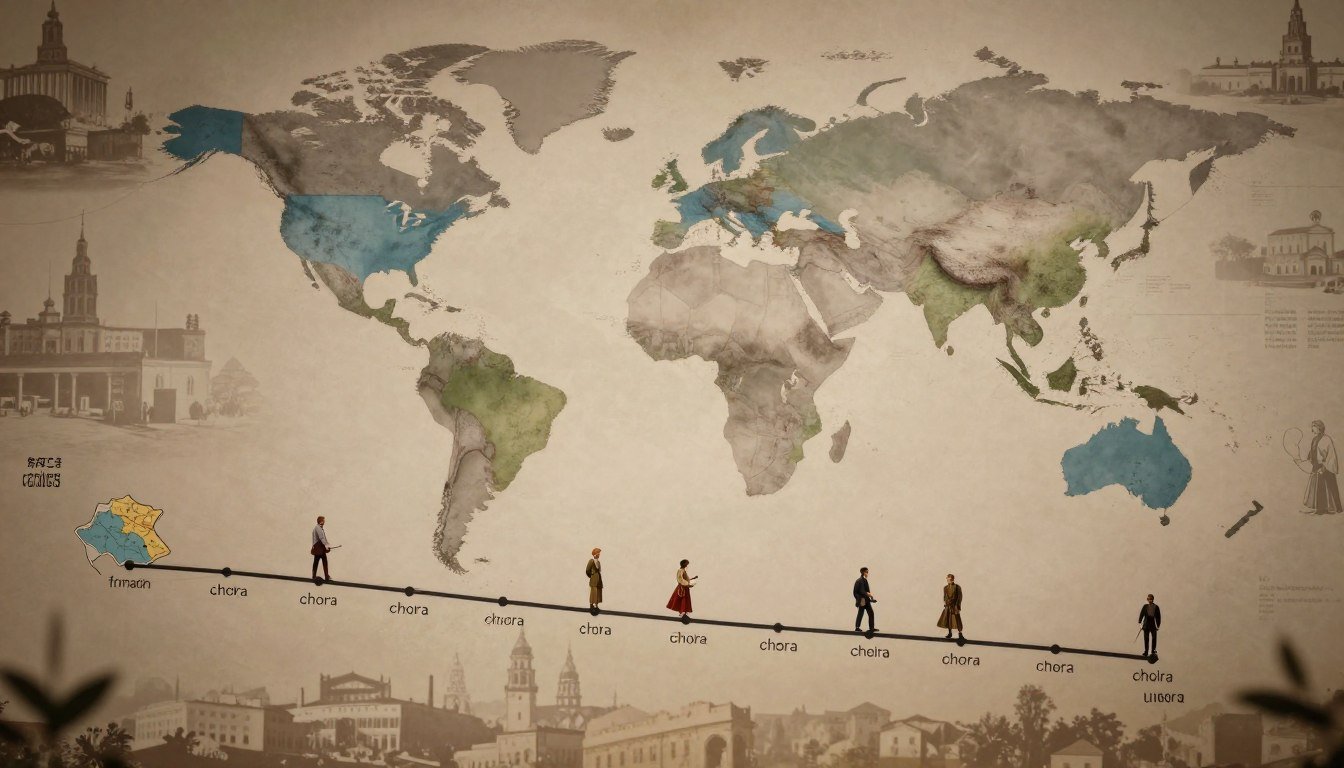
In just 100 years, cholera killed tens of millions of people across continents. In India alone, estimated deaths exceeded 15 million from 1817 to 1860, and another 23 million from 1865 to 1917. This scale is why cholera outbreaks history is important for the United States today.
This article tracks Cholera Outbreaks over the last 200+ years. It looks at the U.S. and the world. Seven cholera pandemics have hit the world in that time. The first began in India in 1817, and the seventh has been ongoing officially from 1961, according to a World Health Organization factsheet from March 2022.
Not every crisis fits neatly into the classic pandemic list. The 1991–1994 South America surge and the 2016–2021 Yemen cholera outbreak show how a modern cholera epidemic can explode when safe water systems fail.
The pattern is painfully consistent. War, civil unrest, and natural disasters can contaminate water and food. They pack people into crowded shelters and break sanitation. When that happens, Cholera Outbreaks can move fast, even in places that have not seen cases for years.
This timeline also previews turning points that reshaped public health. John Snow tied cholera to contaminated water. Filippo Pacini identified Vibrio cholerae in 1854, and Robert Koch confirmed it in 1883. By the late 1800s, early immunization work linked to Louis Pasteur helped push vaccine science forward, including the first cholera vaccine efforts.
From port cities to battlefields, the cholera outbreaks history is a story of trade, migration, and infrastructure. Understanding where each cholera epidemic spread, and why, helps explain how modern water safety and disease surveillance became national priorities.
Key Takeaways
- Cholera has fueled seven global pandemics over the past 200+ years, shaping how public health works today.
- The first pandemic began in India in 1817; the seventh pandemic has been ongoing from 1961.
- Massive death tolls were recorded over decades, including millions in India and more than 2 million in the Russian Empire.
- “Local but massive” events like South America (1991–1994) and Yemen (2016–2021) show how quickly cholera can return.
- Cholera outbreaks often follow breakdowns in clean water, sanitation, and stable housing after conflict or disasters.
- Key discoveries by John Snow, Filippo Pacini, and Robert Koch helped prove how cholera spreads and how to fight it.
Understanding Cholera: Causes and Symptoms
Cholera is a fast-spreading illness that happens when we don’t have clean water and sanitation. The World Health Organization says it’s caused by eating food or drinking water with Vibrio cholerae bacteria. Knowing how it starts helps us understand why it keeps happening in emergencies.
Long ago, people thought bad air or weather caused outbreaks. In the early 1800s, cities like New York warned about air and smells. But back then, they didn’t know the real cause of cholera.
What Causes Cholera?
Cholera is caused by certain types of Vibrio cholerae. Only two types, O1 and O139, cause big outbreaks. V. cholerae O1 is behind all recent outbreaks, while O139 is rare now.
Cholera spreads when human waste gets into water. This can happen through wells, pipes, and rivers. Lakes and coastal waters can also carry the bacteria, making it hard to stop outbreaks.
Food can also spread cholera. Raw or undercooked seafood, like shellfish, can carry the bacteria. When seafood travels far, it can spread the risk to new places.
| Driver | What happens | Why it matters for spread |
|---|---|---|
| Untreated human feces | Bacteria enter drains, soil, and waterways through open defecation or failing sewers | Raises the dose in the environment and increases person-to-person exposure through shared water |
| Untreated drinking water | Water is collected from contaminated sources or stored in unsafe containers | Creates repeated daily exposure, which accelerates outbreaks in households and shelters |
| Natural water reservoirs | Vibrio cholerae persists in brackish and coastal environments | Allows re-introduction after storms and makes control depend on water management |
| Seafood moved through trade | Contaminated seafood is transported and sold far from its origin | Extends risk to new markets, specially where food handling is not consistent |
Recognizing Symptoms
Symptoms of cholera appear 12 hours to 5 days after infection. Many people don’t show symptoms but can spread the bacteria. This is why cholera can spread fast.
When symptoms do appear, the main sign is sudden, severe diarrhea. Vomiting and leg cramps may follow. Dehydration is very dangerous and can be fatal in hours without treatment.
Most cases are mild and can be treated with oral rehydration solution (ORS). Severe cases need IV fluids and ORS. Antibiotics may also be used to shorten diarrhea. Quick treatment is key because dehydration is the main danger.
The First Cholera Pandemic: 1817-1824
The first global cholera wave started in Bengal, India, near Calcutta, now Kolkata. It’s often dated to 1817–1824, but some say it was from 1817–1821. This shows how fast a local issue turned into a big epidemic.
Human movement played a big role in spreading cholera. As trade grew and ships traveled more, the disease moved with people, water, and goods. By 1820, it had spread across much of India and then along busy routes.
Origin and Spread
“Asiatic cholera” first moved from India to nearby ports and cities. Then it went west and east, following trade routes. It reached Southeast Asia and the Middle East, including Muscat, Baghdad, and Tehran.
From the Indian Ocean, it spread to Eastern Africa and near the Caspian Sea. In these places, it was often linked to bad water and poor sanitation during travel and military activities.
Key Affected Regions
India lost hundreds of thousands of people. British troops also suffered, with about ten thousand dying. These numbers highlight the pandemic’s early impact.
East and Southeast Asia also faced severe damage. China and Indonesia were hit hard, with over 100,000 deaths on Java alone. In 1821, Korea saw up to 100,000 deaths, showing how fast cholera could spread.
| Area noted in records | How it was connected | Reported impact |
|---|---|---|
| Bengal region near Calcutta (Kolkata) | Dense river networks, crowded settlements, and regional travel | Commonly cited starting point in cholera outbreaks history (1817) |
| Across India (by 1820) | Overland routes, troop movement, and internal trade | Hundreds of thousands of deaths reported in historical summaries |
| Indonesia (Java) | Maritime shipping lanes and port-to-port movement | More than 100,000 deaths reported on Java |
| Korea (1821) | Regional travel and connected coastal routes in East Asia | Up to 100,000 deaths estimated in some accounts |
| Muscat, Baghdad, Tehran | Trade corridors linking India with the Middle East | Frequently cited waypoints in descriptions of early cholera transmission |
| Caspian Sea region | Land and river routes extending northwest from earlier outbreak zones | Evidence of reach beyond South Asia into wider Eurasia |
The Second Cholera Pandemic: 1829-1851
Historians often date this wave to 1826–1837. Yet, many timelines keep the broader 1829–1851 span. This reflects how long communities stayed on edge. As trade routes grew and more people moved for work or war, cholera outbreaks followed ships, roads, and river towns.
In Europe and North America, this cholera epidemic tested what cities could handle. Cities had crowded housing and limited clean water.
Critical Milestones
By 1831, the disease had reached Russia, Hungary, and Germany. Hungary reported about 100,000 deaths. That same year, Egypt lost roughly 130,000 people, showing how fast a cholera epidemic could overwhelm ports and inland markets alike.
In 1832, cholera outbreaks hit the United Kingdom and France with stark numbers. The UK reported more than 55,000 deaths, including 6,536 in London. Paris lost about 20,000 and France about 100,000 overall. These tallies pushed officials to track deaths, map clusters, and argue over what “spread” really meant.
North America saw the threat move along major corridors. In 1833, cholera outbreaks reached Quebec, Ontario, Nova Scotia, and New York. Then, it pushed inland along rivers and steamboat traffic. By 1834, reports placed the disease on the Pacific coast, showing how mobility could outrun local cholera prevention plans.
| Year | Place | Snapshot | Why It Mattered |
|---|---|---|---|
| 1831 | Hungary | ~100,000 deaths | Large-scale mortality sharpened debates on sanitation, poverty, and containment. |
| 1831 | Egypt | ~130,000 deaths | Port-to-inland spread highlighted gaps in quarantine practice and water safety. |
| 1832 | United Kingdom (London) | >55,000 deaths nationwide; 6,536 in London | City records and local boards expanded early surveillance tied to cholera prevention. |
| 1832 | France (Paris) | ~100,000 deaths in France; 20,000 in Paris | Urban crowding and fear drove new rules for burials, cleaning, and reporting. |
| 1833–1834 | Canada and U.S. corridors | Quebec, Ontario, Nova Scotia, New York by 1833; Pacific coast by 1834 | Rivers and steamboats acted as fast conduits for cholera outbreaks. |
In the United States, firsthand accounts captured the daily toll. In Washington, D.C., diarist Michael Shiner wrote that cholera was raging from June through September 1832. “Twelve or 13 carried out to their graves a day.” The Navy also noted cases: Commodore Lewis Warrington reported cholera at the Gosport Navy Yard in Virginia in August 1832, with multiple deaths and 15–16 additional cases, backed by Gosport Naval Hospital registers.
Impact on Public Health
Medical thinking was split. Many physicians argued that filth, heat, and poverty drove a cholera epidemic. Others warned of person-to-person contagion. In the U.S., some voices blamed recent immigrants, including the Irish, and this stigma shaped how communities talked about risk and responsibility.
Governments responded with measures that later influenced cholera prevention, even when results were uneven. Egypt set up the Egyptian Quarantine Board in 1831 and built a modern lazaretto in Alexandria in 1833. The Ottoman government created a permanent quarantine complex in Istanbul in 1831 and, in 1838, a Supreme Council of Health that oversaw 59 quarantines—steps that proved largely ineffective for cholera, yet strengthened defenses against plague.
Across the Americas, officials tried strict controls during cholera outbreaks. In Mexico’s 1833 and 1850 crises, authorities quarantined populations and fumigated buildings in major cities, but epidemics remained disastrous. These actions show how cholera prevention often relied on visible controls, even when the real drivers—unsafe water and poor sanitation—were harder to fix quickly.
The Third Cholera Pandemic: 1852-1860
The third cholera wave spread fast across ports and cities. Russia lost over a million people. Symptoms could turn deadly in hours, causing fear.

By the 1840s and 1850s, the crisis was widespread. Pilgrimage routes and trade helped the disease spread. Clean water was rare in cities, affecting treatment and risk.
Major Outbreaks Worldwide
Europe, the Americas, and Asia saw high death rates. Mecca lost 15,000 in 1846. England and Wales lost 52,000 from 1848 to 1850.
In Ireland, 1849 was a bad year. Liverpool and Hull in England lost thousands. London’s 1849 death toll was 14,137.
Vietnam and Cambodia lost hundreds of thousands in 1849. Spain’s 1854-1855 wave killed over 236,000. Gran Canaria lost 6,000 in 1851.
In the U.S., the Mississippi River system was hit hard. James K. Polk died of cholera. Cities like St. Louis and New Orleans lost thousands.
Mexico lost 200,000 in 1849. Puerto Rico lost 25,820 from 1855 to 1856.
Movements like the California Trail led to 6,000 to 12,000 deaths. Chicago lost 3,500 in 1854. Providence, Rhode Island, was hit hard in 1854.
| Place and period | Reported impact | Why it mattered in cholera outbreaks history |
|---|---|---|
| Russia (1850s) | Over 1,000,000 deaths reported in historical accounts | Showed how fast cholera could surge across a vast region with limited sanitation |
| London (1849; 1853–1854) | 14,137 deaths; then 10,739 deaths | Kept pressure on officials to track water sources and street-level spread |
| Vietnam and Cambodia (summer 1849) | ~589,000 to 800,000 deaths within one year | Linked epidemics with displacement, food shortages, and overwhelmed care systems |
| United States river cities (mid-1800s) | St. Louis >4,500; New Orleans >3,000; thousands in New York | Highlighted how waterways and commerce could accelerate outbreaks inland |
| Spain (1854–1855) | >236,000 deaths | Marked the scale of recurring waves in Europe during rapid urban growth |
| Puerto Rico (Nov 1855–Dec 1856) | 25,820 deaths; cemeteries expanded | Documented how community infrastructure strained under mass mortality |
Innovations in Treatment
This era saw a shift from rumors to facts. In 1854, John Snow linked contaminated water to outbreaks. Removing the Broad Street pump handle helped stop the spread.
Science also advanced. Filippo Pacini found Vibrio cholerae in 1854. Robert Koch confirmed it in 1883. This led to better prevention and treatment.
Today, cholera is treated as an emergency. Dehydration can get worse fast. Treatment includes oral rehydration, IV fluids, and antibiotics for serious cases.
The Fourth Cholera Pandemic: 1863-1875
In 1863, a new cholera epidemic started in the Ganges Delta. It spread along trade routes and religious travel. It reached Mecca with Muslim pilgrims, killing about 30,000 of 90,000 pilgrims in its first year.
This shocked health officials and made cholera prevention a public issue. It was no longer just a medical problem.
From the Middle East, cholera spread to ships and then to port cities. It moved inland along rivers and canals. Waves reached Russia, Europe, Africa, and North America, causing outbreaks where crowded housing and unsafe water existed.
These routes showed how quickly a local problem could become an international epidemic.
Changes in Infection Rates
The pandemic’s hotspots shifted fast. Northern Africa saw major spread in 1865. Sub-Saharan Africa faced severe losses soon after.
In Zanzibar, an outbreak in 1869–1870 killed about 70,000 people. This showed how cholera transmission could surge when clean water systems failed.
Europe and Russia also saw steep spikes. Russia reported roughly 90,000 deaths in 1866. During the Austro-Prussian War era, a wider 1866 wave was estimated to take about 165,000 lives in the Austrian Empire.
Other tallies listed about 115,000 deaths in Germany and 30,000 in Belgium in the same period.
| Year(s) | Place | Estimated Deaths | What the Pattern Suggested |
|---|---|---|---|
| 1863 | Mecca (pilgrimage season) | ~30,000 of 90,000 pilgrims | Mass travel could accelerate a cholera epidemic within weeks |
| 1865 | Northern Africa | Major regional spread reported | Coastal entry points could seed inland outbreaks via waterways |
| 1866 | Russia | ~90,000 | Large populations faced high risk when sanitation lagged behind growth |
| 1866 | Austrian Empire (war-era wave) | ~165,000 | War conditions and crowding amplified cholera transmission |
| 1869–1870 | Zanzibar | ~70,000 | Island ports could become intense hotspots without safe water supplies |
| 1870s | United States (Mississippi route) | ~50,000 | River trade spread disease from port to port when systems were inadequate |
Response Strategies
Some cities started using today’s familiar responses. They protected drinking water, separated sewage, and traced sources fast. London’s 1866 East End outbreak killed 5,596 people while the city was finishing major sewage and water treatment work.
The East End was not yet fully connected. William Farr identified the East London Water Company as the contamination source. This built on John Snow’s earlier evidence, and quick action helped limit further harm.
Smaller places offered sharp lessons, too. In South Wales at Ystalyfera, contaminated canal water used by local water works triggered a minor outbreak. 119 people died, mostly workers and families tied to the water company.
This showed that cholera prevention depends on routine water safeguards, not just emergency cleanup.
In North America, outbreaks in the 1870s killed about 50,000 Americans. Disease spread from New Orleans to other Mississippi ports and tributaries. In many towns, inadequate sanitation let a water-supply problem become household exposure.
Public measures that reduced cholera transmission started to move from theory into day-to-day practice. Clean intakes, better waste removal, and rapid isolation during a cholera epidemic became common.
The Fifth Cholera Pandemic: 1881-1896
In the late 1800s, cholera spread fast through shipping lanes and rail lines. This period shows how trade and unsafe water made a local problem global. Across ports and towns, the same issues kept happening: contaminated water, delayed action, and panic.
Global Impacts
The 1883–1887 phase was very hard. A. J. Wall said about 250,000 people died in Europe and at least 50,000 in the Americas. Russia lost 267,890 lives in 1892, Spain about 120,000, Japan 90,000, Persia over 60,000, and Egypt more than 58,000.
Hamburg was a big event in Europe. In 1892, it lost about 8,600 people. After that, many cities worked harder on water and sewage, changing how outbreaks happened.
The social side of cholera was as deadly as the disease. In 1892, the cholera vibrio was found in Baku, but officials didn’t act fast. People moved to Astrakhan, spreading the risk.
When Astrakhan started quarantining, riots broke out. Medical workers were killed, the hospital was burned, and sick patients were sent home. Between June 14 and September 20, 1892, over 3% of Astrakhan’s people died, with 480 cases and 316 deaths per 10,000 residents.
Records show who was hit the hardest. About 73% of hospital admissions were workers in hostels, 5% were from ships, and 12% were artisans. Most cases were seasonal migrants—about 89%—showing how movement and crowding were key causes.
| Location (1881–1896) | Reported deaths | What made cholera outbreaks worse | Public health leverage that mattered |
|---|---|---|---|
| Europe (1883–1887 phase) | ~250,000 | Dense cities, shared wells, and rapid travel between industrial centers | Safer water works, sewer separation, and routine monitoring of supplies |
| Americas (1883–1887 phase) | ≥50,000 | Port exposure, uneven sanitation, and limited early detection in growing cities | Port sanitation rules, clean water access, and faster reporting systems |
| Russia (1892) | 267,890 | Migrant labor flows, crowded lodgings, and delayed recognition of spread | Isolation with trust-building, stable care sites, and protected medical staff |
| Hamburg (1892) | ~8,600 | Contaminated drinking water and heavy river commerce | Filtration, water testing, and infrastructure upgrades after the crisis |
Advances in Bacteriology
This era was a turning point in understanding cholera. Filippo Pacini described the organism in 1854, and Robert Koch identified Vibrio cholerae in 1883. This evidence proved that cholera was caused by a specific germ, not bad air.
Science then led to new ways to prevent cholera. Louis Pasteur’s work helped start thinking about vaccines. The first cholera vaccine came out in this time, showing the power of science in fighting disease.
The Sixth Cholera Pandemic: 1899-1923
The sixth cholera pandemic hit during the steam travel era. It spread fast in crowded ports and during troop movements. It was hard to stop in places without clean water and sewers.
In Western Europe, big cities with good sanitation helped control the disease. But in other places, war and moving people around made it tough to fight cholera.
Geographic Reach
Major Russian cities and parts of the Ottoman Empire saw a lot of deaths. Russia lost over 500,000 people from 1900 to 1925. Wars and revolutions made hospitals and supplies hard to reach.
In India, the pandemic was very bad, with over 800,000 deaths. The hajj also showed how travel could spread the disease. Cholera broke out 27 times at Mecca from the 19th century to 1930.
In the Philippines from 1902 to 1904, cholera killed about 200,000 people. Apolinario Mabini died during this time. This shows cholera affected everyone, not just the poor.
Military movements also spread the disease. During the Second Balkan War in 1913, a Romanian Army outbreak killed about 1,600 people in Romania and Bulgaria.
In the United States, the last outbreak was in 1910–1911. The steamship Moltke brought infected travelers from Naples to New York City. Authorities quarantined patients on Swinburne Island; 11 people died, including a health worker.
| Place and date | Estimated deaths | Why spread accelerated | Measures used |
|---|---|---|---|
| Russia (1900–1925) | More than 500,000 | Revolution, warfare, and damaged utilities disrupted safe water access | Quarantine efforts, surveillance, and emergency sanitation where possible |
| India (1899–1923) | More than 800,000 | Dense cities and limited water treatment increased exposure | Cholera prevention campaigns focused on safer water, latrines, and reporting |
| Philippines (1902–1904) | About 200,000 | Urban crowding and fragile water systems fueled rapid transmission | Isolation, street-level disinfection, and stricter port health controls |
| Romanian Army, Second Balkan War (1913) | About 1,600 | Troop camps and contaminated water sources increased risk | Field quarantine, camp hygiene rules, and rapid case tracking |
| New York City (1910–1911) | 11 | Maritime importation on the steamship Moltke from Naples | Harbor quarantine on Swinburne Island and close monitoring of contacts |
Public Health Responses
By then, officials used better surveillance and quick isolation, mainly in ports. Maritime quarantine was key to stop outbreaks fast.
Improving sanitation was also important. Better filtration, chlorination, and waste removal helped fight cholera at the local level.
Treatment focused on replacing lost fluids and salts. Quick care and clean water were key to survival.
Stigma sometimes made things worse. In Italy, Jews and Romani were blamed. In British India, Hindu pilgrims were targeted. In the United States, Filipino immigrants faced suspicion. This made it harder to stop outbreaks.
Cholera in the United States: Early Cases
Early Cholera Outbreaks in the United States followed the second pandemic across the Atlantic. Ports were first hit, then infections spread through travel, trade, and crowded places. This part of cholera history shows how fast disease moved before modern sanitation.

From 1832 to 1834, cholera spread through the young nation. River towns and canal hubs were hit as people and goods moved inland. Steamboats connected cities, with New York seeing heavy impact by 1833.
First Known Outbreaks
Records from Washington, D.C. and Virginia show the human side of the outbreaks. Michael Shiner described daily burials in 1832, capturing the fear. In Virginia, Commodore Lewis Warrington confirmed cholera at the Gosport Navy Yard, reporting deaths and cases.
Public warnings were given, but they often missed the real cause. A 1832 New York City Board of Health handbill showed old ideas about “bad air” and cleanliness. The gap between advice and reality made prevention hit-or-miss, even with rules followed.
Government Response
Local health boards tried cleaning streets, emergency hospitals, and travel limits. But, enforcement was not always the same. By 1910–1911, New York isolated cases on Swinburne Island after the Moltke importation. Eleven deaths were recorded, showing a stronger effort to keep the sick separate.
This shift was important because cholera seemed to fade from the Americas for much of the 20th century. Yet, it could return, as seen in the Caribbean at the end of the century. For public health, the lesson is clear: Cholera Outbreaks can pause and then come back. So, prevention needs constant work in safe water, sewage control, and quick isolation when cases appear.
| Time period | Where it showed up | How it spread | What officials did | Limits seen at the time |
|---|---|---|---|---|
| 1832–1834 | Coastal entry points, then inland cities and river towns; New York affected by 1833 | Travel and commerce, including rivers and steamboat routes connecting cities | Local health actions, public notices, emergency care sites, uneven travel controls | Weak understanding of water and fecal contamination reduced effective cholera prevention |
| August 1832 | Washington, D.C.; Gosport Navy Yard and Gosport Naval Hospital in Virginia | Close quarters and routine movement tied to military and port operations | Documentation by Michael Shiner; confirmation and reporting by Commodore Lewis Warrington; hospital case recording | Response was shaped by limited tools and incomplete transmission knowledge |
| 1910–1911 | New York City (Moltke importation) | Imported cases linked to international travel and port entry | Isolation on Swinburne Island and stricter containment methods | 11 deaths showed that containment reduced spread risk but could not erase danger once cases arrived |
| Mid-to-late 20th century | Americas saw long gaps, then cholera reappeared in the Caribbean late in the century | Reintroduction into vulnerable water and sanitation settings | Greater focus on surveillance, sanitation, and targeted controls as risk returned | Gaps in infrastructure left openings for new Cholera Outbreaks despite past declines |
The Great Cholera Epidemic of 1849
In 1849, a cholera epidemic spread quickly. It followed the paths people took for work, trade, and travel. The crowded ports and waterways made it easy for the disease to spread.
Immigrant ships were thought to spread the disease. Irish ships passed through British ports before reaching North America. Once it hit major rivers, steamboats and commerce carried it further.
Causes and Consequences
At first, officials didn’t agree on what caused it. But the pattern was clear: outbreaks happened where water was dirty and places were crowded. Markets, docks, and boardinghouses brought people together, making it hard to stop the epidemic.
| Place (1849) | Documented impact | Why it mattered |
|---|---|---|
| London | 14,137 deaths | Dense neighborhoods and shared water sources magnified exposure risks. |
| Liverpool | 5,308 deaths | A major port city where maritime traffic increased cholera transmission. |
| Hull | 1,834 deaths | Smaller city, but hit hard where sanitation systems lagged. |
| Ireland | Many Irish Famine survivors died after being weakened by starvation and fever | Malnutrition and prior illness made severe dehydration more deadly. |
| United States (Mississippi River corridor) | Over 4,500 deaths in St. Louis; over 3,000 in New Orleans; thousands in New York; former President James K. Polk died | River travel and urban crowding helped a cholera epidemic spread between ports and inland towns. |
| Mexico | 200,000 deaths | Large-scale loss showed how quickly cholera can overwhelm public services. |
| Overland trails (1849–1855) | 6,000–12,000 deaths along the California, Mormon, and Oregon Trails | Limited clean water and delayed cholera treatment increased fatal outcomes. |
On overland routes, danger grew when camps used the same water sources. Vomiting and diarrhea could lead to quick decline. Without quick treatment, death from fluid loss was common.
Modern Relevance
The 1849 crisis changed how we think about water and health. John Snow’s work in 1849 and 1854 showed the link between water and disease. His findings are key to controlling cholera today.
Today, we focus on quick action and basic steps. Oral rehydration solution (ORS) is the first choice for treatment. In serious cases, IV fluids and antibiotics are used to shorten illness and reduce bacterial spread.
Twentieth-Century Cholera Outbreaks
Many thought cholera would disappear with better sewers and water lines. But it kept coming back in crowded, conflict-hit areas with poor services. The 1900s cholera outbreaks show how fast it spreads without clean water and quick tests.
Throughout the century, a clear pattern emerged: when water mixes with waste, risk goes up. Yet, public health efforts evolved. Governments started linking sanitation with reporting, lab tests, and tighter border checks.
Notable Cases
In Russia from 1900 to 1925, over 500,000 died due to revolution and war. Bad water systems, moving people, and weak healthcare kept cholera around. It’s a harsh reminder of how gains can be lost quickly.
In the Philippines from 1902 to 1904, about 200,000 died in a severe wave. A 1905 report showed strict marine quarantine efforts. These efforts were to stop cholera from spreading with ships and coastal trade.
In the United States, a 1910–1911 outbreak came from the ship Moltke from Naples to New York. Quarantine at Swinburne Island tried to stop it, but 11 died, including a health worker. This shows even in a country improving, outbreaks can happen.
Big gatherings also played a role. The Mecca pilgrimage saw outbreaks 27 times from the 19th century to 1930. The crowds, shared water, and long travel made it a perfect storm for spreading.
| Setting | Timeframe | What raised risk | Common public health response |
|---|---|---|---|
| Russia | 1900–1925 | War disruption, displacement, damaged water and sewage systems | Emergency isolation, basic water control, expanded reporting where possible |
| Philippines | 1902–1904 | Port traffic, dense communities, unsafe water supplies | Marine quarantine, inspection of vessels, isolation facilities |
| New York (Swinburne Island) | 1910–1911 | Importation by ship from Naples, close contact during travel | Quarantine station control, separation of suspected cases, monitoring of contacts |
| Mecca pilgrimage routes | 19th century–1930 | Mass gathering crowding, shared water sources, long-distance travel | Travel screening, sanitation measures, temporary isolation and care sites |
Preventive Measures Implemented
Over time, fighting cholera got smarter and more scientific. Maritime quarantine and isolation stayed key, for ports and shipping lanes. Also, better pipes, filters, and chlorination lowered risks where systems worked.
Health agencies got better at confirming cases. Stool tests and stronger tracking helped spot cholera faster. This mix of systems and tracking shaped later prevention, across borders.
Today, we see why we must stay alert. Experts say 1.3–4.0 million cases and 21,000–143,000 deaths happen yearly. WHO reported 535,321 cases and 4,007 deaths in 2023 from 45 countries. Underreporting is common, tied to limited tracking and worries about trade and tourism.
The main lesson from cholera history is about fairness: poor water, sanitation, and hygiene areas face the biggest risks. WHO pushes for strong tracking and WASH investment. In reality, stopping cholera needs quick detection, safe water, and support for public health efforts.
The Role of Vaccination in Cholera Control
Vaccination is key in controlling outbreaks, where clean water is scarce. It helps prevent cholera and supports treatment for severe dehydration.
Today, vaccines are seen as part of a bigger plan. They work best with safe water, sanitation, and hygiene. This combo cuts down on the spread of cholera. It also lowers deaths by treating dehydration quickly.
Vaccine Development
Science has made big strides in vaccine development. Filippo Pacini first found Vibrio cholerae in 1854. Robert Koch confirmed it in 1883, guiding researchers towards prevention.
In the late 1800s, early vaccine work grew with Louis Pasteur’s discoveries. This led to today’s oral cholera vaccines used in health campaigns and emergencies.
The World Health Organization lists three oral vaccines as prequalified. Dukoral®, Euvichol-Plus®, and Euvichol-S® (simplified in 2024). Shanchol is no longer made, affecting vaccine planning for big outbreaks.
| WHO-prequalified oral cholera vaccine | Key campaign features | Notes for cholera prevention planning |
|---|---|---|
| Dukoral® | Oral vaccine used for individual and some targeted uses | Often considered when programs can manage more controlled delivery alongside WASH and rapid cholera treatment access |
| Euvichol-Plus® | No buffer needed; can be given to people older than 1 year | Common option for mass campaigns through the Global OCV Stockpile supported by Gavi, the Vaccine Alliance |
| Euvichol-S® | Simplified version of Euvichol-Plus®; no buffer needed; can be given to people older than 1 year | Helps expand campaign reach when logistics are tight and demand for cholera vaccines is high |
Success Stories
Studies show two doses protect adults fully. But one dose of Euvichol-Plus® or Euvichol-S® offers quick protection. This is vital during fast-moving outbreaks.
Starting October 2022, a global shortage has changed campaign strategies. WHO’s SAGE has approved one-dose regimens. This helps stretch vaccine supply, and OCV is safe during pregnancy.
Vaccines work best with basic measures: safe water, handwashing, and sanitation. In the same areas, having oral rehydration and timely care is key for treating cholera.
Contemporary Cholera Outbreaks and Responses
Cholera is a big problem worldwide. The World Health Organization says the seventh pandemic is ongoing. Many countries face this issue because of poor water and sanitation.
The current wave started in 1961 in Indonesia. It spread to East Pakistan in 1963, India in 1964, and the Soviet Union in 1966. By 1973, it reached Italy from South America, with smaller outbreaks in Japan and the South Pacific.
Current Trends
Major outbreaks happened in South America (1991–1994) and Yemen (2016–2021). These show cholera is not gone. It spreads where people lack safe water and sanitation.
Conflict, displacement, and climate changes make it worse. This is because WASH systems are often not funded enough.
Lessons Learned from History
Today, we know to protect water and treat cholera fast. WHO says WASH is key for prevention. During outbreaks, we monitor water quality and promote hygiene.
Care centers aim for low death rates by providing quick treatment. They use oral rehydration solution, IV fluids, and antibiotics. Rapid tests help track the disease, with lab confirmation for accuracy.
WHO’s strategy includes water safety, treatment, surveillance, and vaccination. This plan aims to cut deaths by 90% by 2030.
FAQ
What is cholera?
What causes cholera outbreaks and cholera epidemics to start?
How is cholera transmission most likely to happen?
Which strains of Vibrio cholerae cause outbreaks?
How many cholera pandemics have occurred in the last 200+ years?
Why does cholera remain a global public health threat today?
What is the long-run mortality impact of historic cholera outbreaks?
What were the key misconceptions about cholera causes in the 1800s?
When do symptoms of cholera appear after exposure?
What are the most common symptoms of cholera?
How quickly can cholera become fatal?
What is the recommended cholera treatment?
What does cholera prevention look like during an outbreak?
Where did the first cholera pandemic begin, and how did it spread?
What were major impacts of the first pandemic outside India?
Why did the second cholera pandemic hit North America and Europe so hard?
What are key mortality snapshots from the second pandemic in Europe and North Africa?
When did cholera first strike the United States, and how did it spread?
What U.S. firsthand accounts document the 1832 outbreak?
What major public health steps emerged from early cholera crises?
What made the third cholera pandemic so deadly worldwide?
What were some major third-pandemic outbreaks and death tolls?
How did cholera shape the United States during the 1849 crisis?
Why is the 1854 Broad Street outbreak considered a turning point?
Who discovered Vibrio cholerae, and when?
How did the fourth pandemic spread, and what role did mass gatherings play?
What response strategies during the fourth pandemic foreshadowed modern water-system interventions?
What defined the fifth cholera pandemic’s global impacts?
Why is the 1892 Hamburg outbreak often called Europe’s last major cholera crisis?
How can social unrest worsen a cholera epidemic?
What was the sixth cholera pandemic’s reach and impact?
What are notable 20th-century outbreaks tied to conflict and instability?
What was the last U.S. cholera outbreak, and how did officials respond?
Did cholera disappear from the Americas, and when did it return?
When did the seventh cholera pandemic begin, and why is it considered ongoing?
What are key milestones in the spread of the seventh pandemic?
What “local but massive” outbreaks show cholera’s modern threat?
How big is cholera’s current global burden?
What cholera vaccines are used today?
How are oral cholera vaccines used in outbreaks, and what is the global stockpile?
Why have some campaigns used a one-dose strategy for cholera vaccination?
Are cholera vaccines enough to stop cholera long term?
What is WHO’s strategy for reducing cholera deaths by 2030?
What are the most important lessons from cholera outbreaks history for today’s response?
What tools does WHO recommend for modern outbreak control and surveillance?
Get More Medical History
Join our newsletter for fascinating stories from medical history delivered to your inbox weekly.