The History of Healing
 Exploring the Intriguing History of Trepanation
Discover the fascinating leech therapy history from ancient medicine to modern surgical applications and its remarkable journey through the centuries.

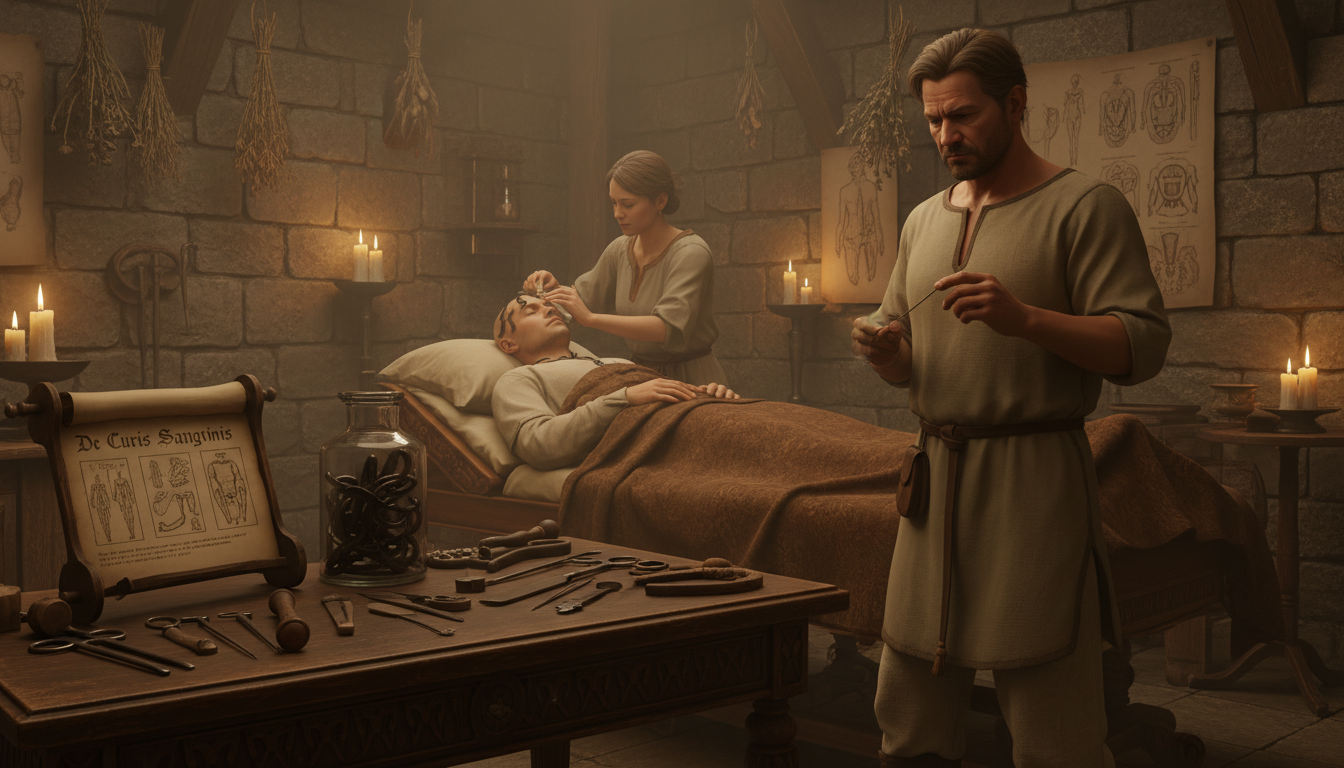
Did you know the FDA lets companies sell leeches as medical devices in the U.S. starting 2004? One company, Biopharm, sends about 20,000 leeches to hospitals yearly. Even with modern tech, doctors use these ancient creatures.
Leech therapy has a long history. Egyptians, French aristocrats, and American soldiers used them. These worms were a key part of medicine for thousands of years.
Robert Hicks, the Mütter Museum director, loves leeches. He even has a pet leech named Harvey. This shows how interesting leeches are.
Leeches have been used for healing in ancient Greece, Rome, and Egypt. They believed in balancing body “humors” for health. Today, we know leech saliva helps with surgery and healing.
We’re going to explore the history of leeches in medicine. From ancient times to today, leeches have played a big role. This story is full of surprises and interesting facts.
Key Takeaways
- Leech therapy history spans thousands of years, from ancient Egypt and Greece to modern American hospitals.
- The FDA approved leeches as a medical device in 2004, and companies like Biopharm distribute about 20,000 annually in the U.S.
- Leech saliva contains natural anticoagulants and anti-inflammatory compounds that benefit modern microsurgery.
- Civilizations across every continent — including the Maya, Romans, and colonial Americans — practiced some form of leech-based treatment.
- The medicinal leeches history challenges the assumption that ancient medicine was purely superstition — real science backs some of these old practices.
- Robert Hicks of the Mütter Museum in Philadelphia keeps a pet leech named Harvey, reflecting ongoing fascination with these creatures.
What is Trepanation and How It Was Practiced
Trepanation was a wild medical procedure in ancient times. It was not the only bold intervention. Ancient healers also used leech therapy and skull drilling. These practices might seem strange today but were considered advanced back then.
Definition and Purpose
Trepanation is when someone drills a hole in a living person’s skull. It sounds simple but is quite scary. The goal was to release evil spirits, relieve pressure, or cure ailments like headaches.
Like leech therapy, trepanation aimed to balance the body. The ancient Greeks believed in humoral theory. They thought four fluids needed to be in harmony. Trepanation was like bloodletting for the brain, trying to fix imbalances.
“The physician who knows how to restore the balance of humors knows how to cure disease.” — Adapted from Hippocratic teachings, circa 400 BCE
Tools and Techniques Used
Early practitioners used tools like sharpened flint, obsidian blades, or seashells. Later, they used bronze and iron. The main techniques included scraping, cutting, and drilling.
- Scraping bone away gradually with an abrasive tool
- Cutting intersecting lines to lift out a square of skull
- Drilling circular holes using a bow-driven device
Historical Context and Cultural Significance
Trepanation was not rare; it was practiced across many cultures and time periods. Like leech therapy, it was found in ancient Egypt, Greece, and India. It was a respected practice, often done by top healers in a community.
Ancient Trepanation: Case Studies from History
Trepanation is one of the oldest surgeries known. It was used along with ancient leech therapy. These were early ways to fix the body by touching it directly. Let’s look at some examples of how trepanation worked in ancient times.
Trepanation in Prehistoric Times
Skulls with trepanation holes are over 7,000 years old. Places like Ensisheim in France have some of the oldest ones. These skulls show bone grew back around the holes, meaning people lived for years after.
Like using leeches, trepanation shows early humans tried to fix body problems. These actions were not random. They were done over and over, passed down through generations. The start of leech therapy also comes from this time of trying new things to heal.
Evidence from Ancient Egyptian Practices
The Egyptians kept detailed records. The Edwin Smith Papyrus (circa 1600 BCE) talks about head injuries and treatments. They knew about the skull and used trepanation and leeches in their medicine.
Maya and Incan Approaches to Trepanation
In the Americas, the Inca had amazing success rates. By the 1400s, they had a survival rate of 75-83%. The Maya also used trepanation, for both rituals and medicine.
| Civilization | Time Period | Estimated Survival Rate | Primary Purpose |
|---|---|---|---|
| Neolithic Europe | 5000+ BCE | 50-60% | Healing head trauma |
| Ancient Egypt | 1600 BCE | 60-70% | Medical treatment |
| Maya | 250-900 CE | 65-70% | Ritual and medical |
| Inca | 1000-1500 CE | 75-83% | Battlefield injuries |
It’s amazing, right? These ancient healers were doing brain surgery centuries before we were.
Trepanation in Various Cultures
Trepanation was not just a weird idea of one civilization. It was practiced by cultures all over the world. They drilled holes in skulls, even though they never met. This shows how ancient healers were creative and sometimes scary.
Ancient Greece and Rome
The Greeks and Romans were serious about skull surgery. Hippocrates wrote about it around 400 BCE. They used leeches too, along with drilling holes.
They believed in the humoral theory. This idea lasted for centuries. Leech therapy started with these Greek ideas. Later, William Harvey’s discovery changed how people saw leeches.
Asian Historical Perspectives
In ancient China and India, trepanation was different. Chinese texts talk about skull surgeries for thousands of years. Indian Ayurveda also did cranial surgeries and used leeches.
Both traditions aimed to release pressure or “bad energy” from the head.
Practices Among Indigenous Cultures
Indigenous groups in Africa and the Pacific Islands also trepanated skulls. They had high success rates, like over 90% in some Kenyan communities. They used:
- Sharpened obsidian or flint tools
- Herbal mixtures to prevent infection
- Ritual ceremonies before and after surgery
These cultures also used leech therapy. They mixed spiritual beliefs with medicine in a surprising way.
Scientific Perspectives on Trepanation
Trepanation was used across cultures and continents. But what did ancient healers actually think they were doing? Does modern science support their methods? Let’s explore the gap between ancient beliefs and today’s neuroscience.

Medical Theories of Ancient Healers
Ancient healers believed in a system of four fluids. They thought the body needed perfect balance. When someone got sick, they tried to fix it by draining fluids.
Practices like bloodletting and medical leech therapy were common. Trepanation was similar, aiming to let bad stuff escape. It was based on a framework, even if it was wrong by today’s standards.
Trepanation and Neuroscience Today
Modern neuroscientists find trepanation interesting because it sometimes worked. Skull bones show signs of healing, meaning patients survived. Craniotomies, the modern version, are used today.
Leech therapy benefits are recognized in modern surgery. The history of leech therapy shows ancient instincts about circulation were not entirely wrong.
Debunking Myths Surrounding Trepanation
Many think trepanation was just “drilling holes to release demons.” That’s not true. Here’s what the evidence shows:
- Many trepanned skulls show trauma near the surgical site — suggesting it treated head injuries
- Survival rates in some ancient populations exceeded 70%
- Spiritual explanations often coexisted with practical medical reasoning
The real story is complex and fascinating. It’s more than any single myth.
Trepanation and Mental Health
Here’s something really interesting — and a bit weird. For thousands of years, people thought holes in the skull could heal the mind. Trepanation wasn’t just for head injuries. It was linked to ancient views on mental illness.
It wasn’t the only extreme treatment used. Historical leech treatment and skull drilling were often used together by healers.
Historical Beliefs on Mental Illness
Ancient healers didn’t have modern tools like brain scans. They believed in humoral theory. This said your body had four fluids: blood, phlegm, yellow bile, and black bile.
When these fluids were out of balance, they thought you might get depression, anxiety, or psychosis. They thought too much blood was the problem.
So, they used bloodletting to fix it. They also used leech therapy to drain “bad blood” from the mind. Sometimes, they did it before symptoms even showed up.
Trepanation as a Treatment for Mental Ailments
When leeches and bloodletting didn’t work, they tried something bigger. Drilling into the skull was thought to release evil spirits or relieve pressure. Leech therapy came first for gentle treatments. But for serious cases, trepanation was used.
- Seizures and convulsions were common reasons for the procedure
- Voices and hallucinations were attributed to trapped spirits
- Melancholy (depression) sometimes warranted skull surgery
Modern Views on Trepanation Related to Psychiatry
Today, psychiatrists don’t use drills or leeches. But looking back at these old practices is helpful. It shows how people have always tried to find relief from mental pain.
Our methods have changed, but the need to help hasn’t.
Trepanation Techniques Through the Ages
Trepanation gets a lot of attention for ancient surgery. But leech therapy has a long history too. And the leeches didn’t need sharpening because they were alive.
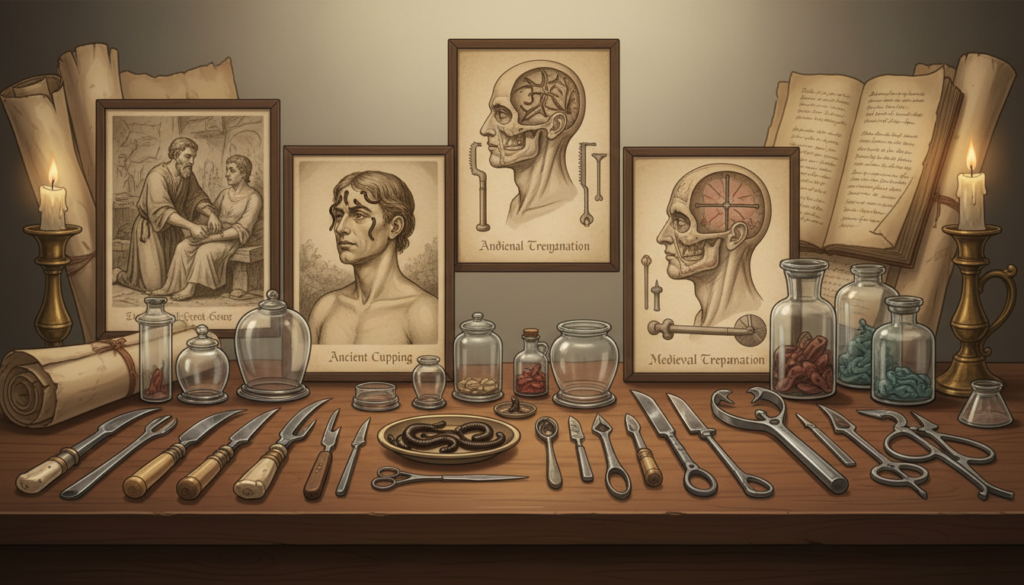
Evolution of Surgical Instruments
Medical leech therapy is unique because the leech is the treatment. The Hirudo medicinalis has tiny jaws and teeth. Dr. Stephen Kovach calls it “the world’s most perfectly engineered blood-sucking animal.”
Over time, how we stored and used leeches changed. Early on, people just picked them from ponds. By the 1800s, fancy jars with air holes were used. Now, leeches are kept in refrigerated solution in pharmacies.
A Comparative Look at Methods
| Era | Leech Source | Storage Method | Delivery to Patient |
|---|---|---|---|
| Ancient Period | Wild pond collection | Clay pots or basins | Applied by hand directly |
| 18th–19th Century | Leech farms and importers | Ornate ceramic jars with ventilation | Placed using tubes or fingers |
| Modern Day | Certified breeding facilities | Refrigerated hospital pharmacy | Sterile application by trained staff |
Anesthetic Practices Across Cultures
Pain management has changed over time. Leeches have natural anesthetics in their saliva. This made treatments less painful for patients.
Trepanation patients didn’t have it so easy. They used herbal remedies, alcohol, or willpower instead.
The history of leech therapy shows us nature’s ingenuity. Sometimes, nature creates better tools than humans can.
Trepanation in Modern Times: Revival or Folly?
Some ancient medical practices are making a comeback. Just like the fascinating medicinal leeches history, old techniques are finding new life. Let’s explore what’s happening today.
A Surprising Comeback in Surgery
In the 1970s, U.S. surgeons faced a big problem. Severed fingers or ears would clog veins. This made it hard for blood to flow, risking tissue loss.
Doctors turned to leeches as a solution. Leech therapy history took a new turn. They used leeches as temporary veins to keep blood flowing.
Dr. James Bradley at Temple University found leeches help veins open up. This gives tissue a chance to survive. The FDA now allows leeches for medical use. Biopharm distributes about 20,000 leeches a year in the U.S.
Studies show leech therapy works, not just tradition.
Ethical Questions and Real Risks
Medical leech therapy raises questions. There’s a risk of infection and animal welfare concerns. Some patients also feel uneasy about it.
Here are the main worries:
| Concern | Details | Current Mitigation |
|---|---|---|
| Infection Risk | Bacteria in leech gut (Aeromonas) | Prophylactic antibiotics prescribed |
| Patient Consent | Psychological discomfort with live leeches | Thorough informed consent process |
| FDA Regulation | Classified as medical devices in 2004 | Strict breeding and distribution standards |
Global Clinics Embracing the Practice
It’s not just in the U.S. Delhi has clinics using leech therapy for blood issues. They use ancient knowledge with modern safety.
These clinics show leech therapy’s benefits go beyond surgery.
Trepanation in Literature and Popular Culture
Skull surgery and bloodletting have always caught the eye of writers and filmmakers. The history of leech therapy is vast. Trepanation, too, has a long story. These old practices appear in books, movies, and museums, fascinating us.
Depictions in Historical Literature
From ancient Egypt to colonial America, leeches and skull drilling are documented. They were used by pharaohs, French nobles, and American doctors. At the Mütter Museum in Philadelphia, director Robert Hicks keeps this tradition alive. He even has a pet leech named Harvey, after William Harvey.
Trepanation in Contemporary Films and Media
Today’s movies and TV shows love to show ancient brain surgery. They use it to show “primitive” medicine, alongside leech therapy. These scenes are shocking but rarely show the skill of early doctors.
Public Perception and Misconceptions
Most people think trepanation was just random and cruel. But it wasn’t. Many patients lived, and their skulls show it. Leeches, too, are back in medicine today.
People often see ancient medicine as weird and dangerous. But, it was actually quite advanced for its time.
FAQ
What exactly is leech therapy, and why was it practiced for so long?
How far back does the history of leech therapy actually go?
What role did ancient Greece and Rome play in the development of medical leech therapy?
What did ancient healers actually believe about how the body worked?
Were leeches really used to treat mental illness?
How have the tools and techniques of leech therapy evolved over time?
How are medicinal leeches used in modern medicine today?
Where can you find leech therapy represented in historical literature and museums?
Get More Medical History
Join our newsletter for fascinating stories from medical history delivered to your inbox weekly.