The History of Healing
 Uncover the Fascinating History of Herbal Medicine
Discover temple medicine practices, ancient healing wisdom, and spiritual therapies used in sacred spaces for holistic wellness and transformation.

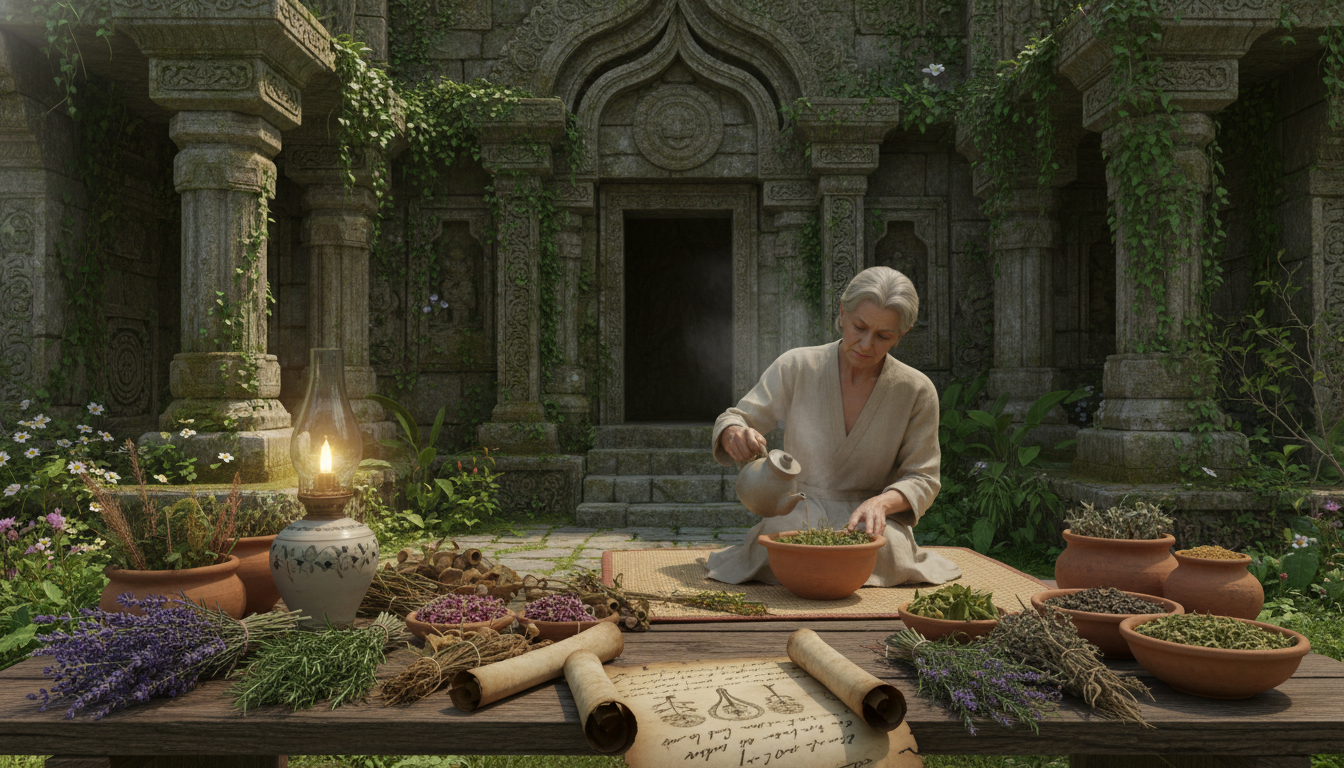
Did you know that about 80% of the world’s people use herbal remedies for health? This is according to the World Health Organization. Billions of people trust plants for health, just like their ancestors did thousands of years ago. The story of how we got here is truly amazing.
Before modern hospitals, sacred spaces were the main healthcare centers. Temple medicine was the first healthcare system. In places like Egypt, Greece, India, and China, temples were not just for worship. They were also healing centers where priests and healers worked.
These ancient practices mixed spiritual wellness with treatment in a surprising way. Healers were like the first medical detectives. They observed symptoms, used herbs, and shared their knowledge for generations. This tradition of holistic healing evolved but never disappeared.
Today, we see the same spirit in places like the Temple Heart & Vascular Institute. Ted N. was diagnosed with a rare condition by Dr. Anjali Vaidya. This shows how ancient temple healers and modern specialists are connected.
Get ready to explore ancient Egyptian papyrus scrolls, Greek innovations, medieval monks, and modern herbal healing. It’s a journey from ancient times to today.
Key Takeaways
- Temple medicine was the start of organized healthcare in ancient times.
- Sacred sites were healing centers where priests used plant remedies.
- Early medicine mixed spiritual wellness with physical health.
- Today’s holistic healing comes from ancient temple medicine.
- Herbal medicine’s history goes from ancient times to modern science.
- About 80% of the world’s people use herbal remedies for health.
The Roots of Herbal Medicine: An Ancient Tradition
Long before pharmacies or writing existed, our ancestors found healing plants. This was tens of thousands of years ago. Their methods are more interesting than you might think.
The Use of Plants in Prehistoric Cultures
Early humans learned about healing through trial and error. They watched animals eat certain plants when sick. This observation became knowledge passed down through generations.
Archaeological digs show this. A 60,000-year-old Neanderthal burial site in Iraq had pollen from yarrow and other plants. This proves early humans knew about plant healing.
Traditional Healing Practices Across Continents
What’s amazing is that traditional remedies appeared independently worldwide. Different cultures, far apart, found similar healing plants.
| Region | Healing Tradition | Key Plants Used |
|---|---|---|
| Indigenous Australia | Bush medicine | Tea tree, eucalyptus |
| Native America | Herbal shamanism | Echinacea, willow bark |
| Sub-Saharan Africa | Traditional healers (Sangoma) | Devil’s claw, African ginger |
In these cultures, healers were spiritual leaders too. Sacred sites were the first temples of medicine. Here, plant treatments and rituals merged. Physical and spiritual healing were one thing.
These roots are deep and set the stage for herbal medicine’s future.
Ancient Civilizations and their Herbal Knowledge
Three ancient powers — Egypt, Greece, and China — built medical systems around plants. They practiced temple medicine in sacred spaces. This blended spiritual ritual with herbal treatment. Let’s explore what made each civilization unique.
Egyptian Medicine: Wisdom in the Papyrus
Imagine it’s 1550 BCE. Egyptian healers write over 700 plant-based formulas on a scroll. This is the Ebers Papyrus, one of the oldest medical texts.
Egyptian temples were more than places of worship. They were holistic healing centers. Priests mixed herbal remedies and performed rituals, treating the mind-body connection as key to recovery.
Greek Innovations in Herbal Treatments
Hippocrates cataloged over 400 herbs and focused on observation-based medicine. He wanted proof, not just tradition. Dioscorides went further with De Materia Medica, a guide used for 1,500 years.
| Civilization | Key Text | Approximate Date | Remedies Documented |
|---|---|---|---|
| Egypt | Ebers Papyrus | 1550 BCE | 700+ formulas |
| Greece | De Materia Medica | 50–70 CE | 600+ plants |
| China | Shennong Ben Cao Jing | ~200 CE (compiled) | 365 substances |
Healing Herbs in Chinese Medicine
The Shennong Ben Cao Jing classified 365 medicinal substances. It laid the groundwork for Traditional Chinese Medicine. It tied herbal formulas to acupuncture and energy flow, showing a true mind-body connection.
The Influence of Religion on Herbal Medicine
For most of human history, healing the body and soul were the same thing. People couldn’t separate plant remedies from prayers. Religion and herbal medicine grew together, like vines on a trellis.
This connection shaped how civilizations understood health. It’s why we think about health in certain ways today.
Herbal Practices in Ancient Religions
In ancient Greece, temples of Asclepius were medical centers. Patients slept in sacred rooms, hoping for visions of their cures. This was temple medicine at its peak — a mix of hospital and spiritual retreat.
Hindu texts linked herbs to chakra balancing and purification. Tulsi, or holy basil, was sacred to Vishnu. Buddhist monks spread herbal knowledge, using temples in places like Thailand for healing.
| Religious Tradition | Key Herbal Practice | Spiritual Purpose |
|---|---|---|
| Ancient Greek | Dream incubation at Asclepius temples | Divine healing guidance |
| Hindu Ayurveda | Tulsi and ashwagandha rituals | Chakra balancing and purification |
| Buddhism | Monastic herbal formulas | Compassionate care for all beings |
The Role of Herbalism in Spiritual Healing
These traditions aimed to balance body, mind, and spirit. This is similar to today’s energy medicine and mind-body connection.
Ancient healers used what we call alternative therapy today. Their approach to wellness is the basis for holistic health ideas that many people follow now.
“The physician treats, but nature heals.” — Hippocrates
This sacred herbal knowledge didn’t disappear when empires fell. It found a new home in monasteries during the Middle Ages.
The Middle Ages: Preservation of Herbal Knowledge
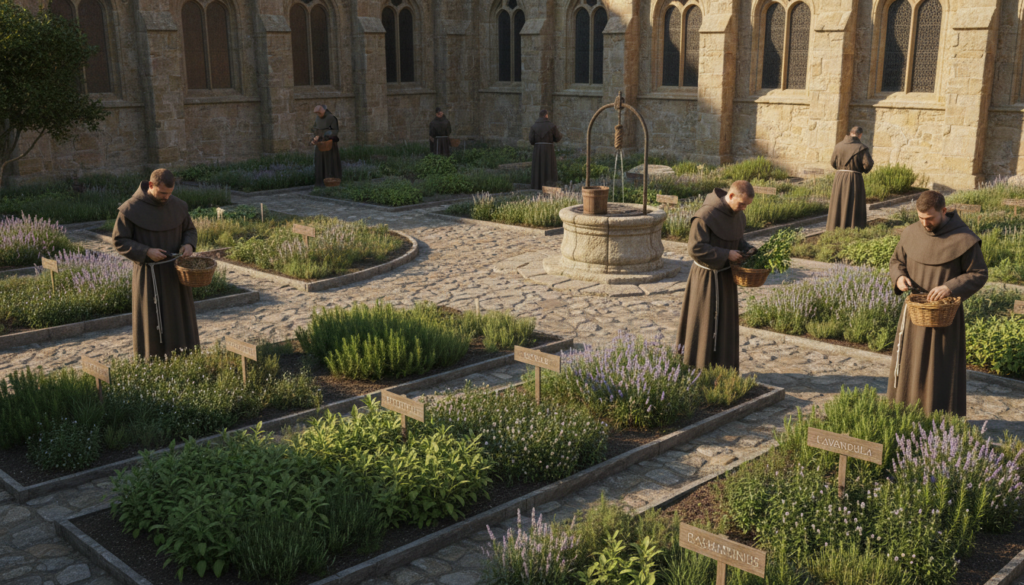
So Rome fell. And with it, centuries of medical wisdom nearly vanished into thin air. But here’s the thing — that knowledge didn’t disappear completely. It found refuge behind monastery walls, where monks became the unlikely heroes of natural healing in medieval Europe.
Monasteries as Centers of Herbal Learning
Benedictine monks didn’t just pray all day. They grew physic gardens packed with medicinal plants. They copied ancient Greek and Roman medical texts by hand — page after painstaking page. These monasteries functioned as the medieval version of temple medicine, guarding sacred healing knowledge just as temples once did in Egypt and Greece.
One standout figure? Hildegard of Bingen (1098–1179). She wrote detailed works on medicinal herbs, blending careful botanical observation with spiritual insight. Her approach was basically holistic healing centuries before that phrase existed.
“The earth which sustains humanity must not be injured. It must not be destroyed.” — Hildegard of Bingen
Across the Islamic world, scholars carried this torch even further. Ibn Sina (Avicenna) compiled The Canon of Medicine, a massive work that preserved and expanded Greek and Roman herbal knowledge. It became a go-to medical reference for centuries.
The Compendium of Herbal Remedies
Monastery infirmaries treated the sick using traditional remedies drawn straight from their gardens. Monks compiled detailed herbal compendiums — basically recipe books for healing — that spread across Europe.
| Source | Region | Key Contribution |
|---|---|---|
| Hildegard of Bingen | Germany | Wrote Physica, cataloging plant-based cures |
| Ibn Sina (Avicenna) | Persia | Compiled The Canon of Medicine with 800+ herbal entries |
| Benedictine Monasteries | Western Europe | Maintained physic gardens and hand-copied ancient texts |
These sacred spaces kept the flame of temple medicine alive during some of Europe’s darkest centuries. Without them, much of what we know about natural healing and traditional remedies would’ve been lost forever. Pretty incredible when you think about it.
The Renaissance Era and the Rebirth of Herbal Studies
The Renaissance changed everything. For centuries, herbal knowledge was hidden in monasteries. But with the printing press, books on medicinal plants became public. This era moved healing from temples to a secular world of study.
Botanical Illustrations and Exploration
Three pioneers changed how we identify plants. Leonhart Fuchs, Otto Brunfels, and Hieronymus Bock published detailed herbals. Their work helped doctors and healers tell plants apart, which was very important.
European explorers brought back plants from far places. This added many new plants to European pharmacies. The number of known medicinal plants exploded almost overnight.
| Renaissance Herbalist | Key Contribution | Published Work |
|---|---|---|
| Leonhart Fuchs | Over 500 precise plant illustrations | De Historia Stirpium (1542) |
| Otto Brunfels | Pioneered life-like botanical art | Herbarum Vivae Eicones (1530) |
| Hieronymus Bock | Described plants from direct observation | New Kreüterbuch (1539) |
The Impact of Alchemy on Herbal Medicine
Paracelsus (1493–1541) was a game-changer. He said that specific chemical compounds in plants were key, not magic. This idea started modern pharmacology.
Even though alchemy and spirituality were big, the shift was clear. Healing was moving towards science. This change would last for centuries.
The Age of Enlightenment and Scientific Inquiry
The 17th and 18th centuries were big changes. Thinkers in Europe asked a bold question: what if we could actually prove how healing works? This era saw a battle between old temple medicine and new science demands.
When Herbs Met the Scientific Method
Carl Linnaeus, a Swedish botanist, introduced the binomial naming system in 1753. This was a big deal. It made plant names clear for scientists everywhere.
William Withering then found digitalis in foxglove. This was a huge breakthrough. It showed folk wisdom could lead to real medicine.
“The knowledge of the common people is sometimes ahead of the physicians.” — William Withering, 1785
Key Figures in Herbal Research
Nicholas Culpeper was important. His 1653 book, The Complete Herbal, made herbal knowledge easy to understand. He believed in healing yourself.
| Researcher | Major Contribution | Year | Impact on Herbal Medicine |
|---|---|---|---|
| Carl Linnaeus | Binomial plant classification | 1753 | Standardized botanical naming worldwide |
| Nicholas Culpeper | The Complete Herbal | 1653 | Made herbal knowledge accessible to the public |
| William Withering | Digitalis research from foxglove | 1785 | Bridged folk remedies and pharmaceutical science |
This time laid the groundwork for big changes in the 19th century. But, the roots of alternative therapy and holistic healing stayed strong.
The 19th Century: Herbal Medicine and Pharmaceuticals
Things got really interesting in the 1800s. This time changed how we view natural healing. Scientists began studying plants and finding their active parts. This change split the medical world in two.
The Rise of Chemical Medicine
In 1804, Friedrich Sertürner found morphine in opium poppies. This was a big deal. Soon, quinine from cinchona bark and salicin from willow bark were discovered too. These finds started the pharmaceutical industry.
Now, pills and synthetic drugs seemed more “scientific” than old remedies. Temple medicine, once top-notch, seemed old-fashioned to doctors. Herbalists were pushed aside.
| Compound | Plant Source | Year Isolated | Modern Use |
|---|---|---|---|
| Morphine | Opium Poppy | 1804 | Pain relief |
| Quinine | Cinchona Bark | 1820 | Malaria treatment |
| Salicin | Willow Bark | 1828 | Aspirin precursor |
Influential Herbalists of the 1800s
Not everyone followed the new drug trend. Samuel Thomson created a herbal system for home use. No doctor needed.
The Eclectic medicine movement, led by Wooster Beach and John King, fought for plant-based treatments. They mixed science with respect for natural healing.
- Samuel Thomson — made herbal self-care accessible to everyday people
- Wooster Beach — founded the Eclectic medical movement
- John King — authored key texts on plant-based treatments
This time created a big divide between drugs and natural remedies. We’re stil arguing about it today. This debate didn’t start recently. It began in the 1800s.
The 20th Century: A Shift in Perception
Something wild happened in the 1900s. People started questioning pills and prescriptions. The side effects were real. Doctor visits felt hollow.
The Resurgence of Natural Remedies
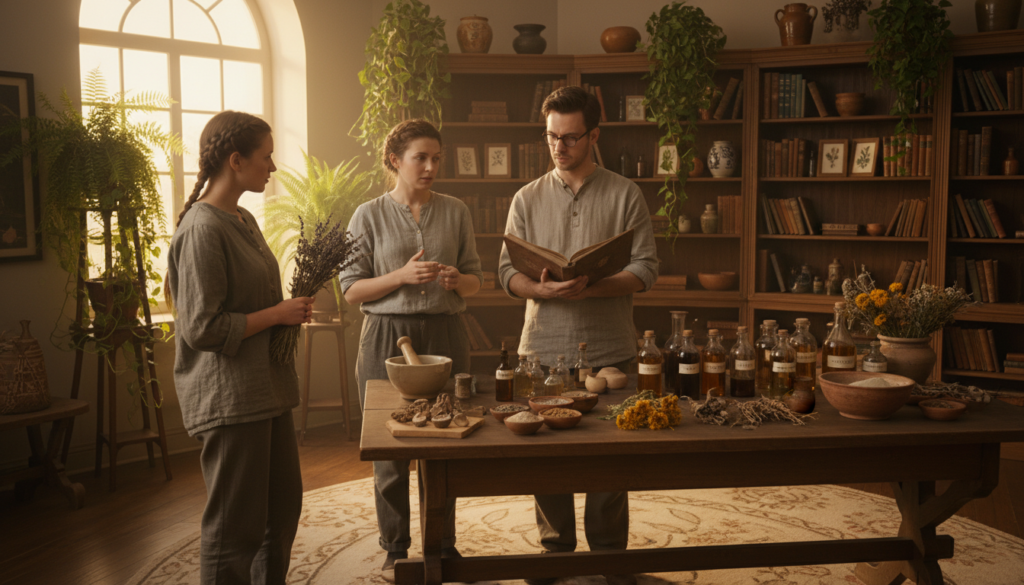
The 1960s and 1970s saw big changes. Young people got into herbalism, meditation, and Eastern healing. It was more than rebellion. It was about spiritual wellness and ancient wisdom.
By 1978, the World Health Organization recognized traditional medicine. This included herbal practices. It was a big win for the old ways.
Dr. Andrew Weil led the way in integrative medicine. He mixed conventional treatments with plant-based therapies. His books helped millions rethink their health.
The Role of Herbal Medicine in Holistic Health
Modern medicine started treating the whole person. This was like ancient temple medicine. Healers focused on body, mind, and spirit.
Today, holistic healing combines different approaches. Take Ted N.’s case with Temple Health. Dr. Anjali Vaidya used medication pumps and telemedicine. Ted and his wife could care for him in Pennsylvania and Montana.
- Herbal supplements became a multi-billion-dollar industry by the late 1990s
- Acupuncture and energy medicine gained insurance coverage in many states
- Medical schools began teaching integrative and holistic approaches
The 20th century showed that old and new can work together. This set the stage for today.
Modern Herbal Medicine Practices
Herbal medicine is not just surviving; it’s thriving. After thousands of years, it has grown into a modern movement. This movement is changing how we view healthcare. And the best part? Science is now supporting what traditional healers knew.
Popular Herbal Remedies Today
When you visit a health food store, you’ll see many herbal supplements. Some of the most popular include:
- Turmeric — used for inflammation and joint support
- Echinacea — a go-to for immune defense during cold season
- Ginger — trusted for nausea and digestive comfort
- Valerian root — a classic sleep aid
- St. John’s wort — popular for mild mood support
- Ashwagandha and rhodiola — adaptogenic herbs used for stress relief
These remedies connect the mind and body, as ancient cultures knew. People are looking for more than just symptom relief. They want to find wellness through traditional methods.
Herbal Medicine in Integrative Healthcare
Integrative healthcare is really exciting. Major medical centers are adding herbal medicine to their treatments. Oncology departments offer herbal consultations with chemotherapy. Pain management clinics use botanical therapies too.
This is holistic healing in action, in real hospitals. The spirit of temple medicine is coming back. Wellness centers and clinics are creating a caring environment for patients.
At Temple Health, they use a mix of treatments. Ted N. got a treatment plan with pills, a pump, and oxygen. This approach helped him practice karate and play baseball with his grandkids. It shows how natural healing and science can help people live better lives.
Challenges and Controversies in Herbal Medicine
Herbal medicine has a rich history, but it faces challenges today. There’s a big debate between those who trust traditional remedies and those who want scientific proof. Let’s explore why this debate is so intense.
Regulation and Safety Concerns
In the U.S., herbal supplements are regulated by the Dietary Supplement Health and Education Act (DSHEA) of 1994. This means they don’t get the same testing as drugs. This is a big issue.
There are real risks. We’re talking about bad interactions with drugs, contamination, wrong labels, and uneven dosages. Anyone using herbs for healing needs to know what they’re taking. But it’s hard when standards are all over the place.
| Concern | Impact on Consumers | Current Status |
|---|---|---|
| Herb-Drug Interactions | St. John’s Wort can reduce effectiveness of birth control | FDA warnings issued |
| Contamination | Lead and mercury found in some imported products | Sporadic testing only |
| Mislabeling | Products may not contain listed ingredients | Limited enforcement |
Scientific Evidence vs. Traditional Beliefs
This debate is fascinating. Some want randomized controlled trials. Others believe in the centuries of use of temple medicine and herbalism. Who’s correct?
Some herbs, like willow bark for pain, have strong science backing them. But many alternative therapies lack solid research. The challenge is to respect traditional wisdom while ensuring safety for all who seek holistic healing.
The Future of Herbal Medicine
We’re at a crossroads. Ancient plant wisdom meets modern tech. The future of herbal medicine is exciting.
Trends in Research and Development
Ethnobotanists are racing to save traditional plant knowledge. They use AI to find new medicines in ancient formulas. This is a big deal.
Pharmacogenomics shows how genes affect herbal medicine. Adaptogens and mushrooms are becoming popular. They help with energy and wellness.
“The doctor of the future will give no medicine, but will interest his patients in the care of the human frame, in diet, and in the cause and prevention of disease.” — Thomas Edison
The Role of Technology in Herbal Healing
Telemedicine lets you talk to herbalists from home. Blockchain ensures herbal products are genuine. This is all about trust and access.
| Technology | Application in Herbal Medicine | Impact on Spiritual Wellness |
|---|---|---|
| Artificial Intelligence | Analyzing ancient formulas for new compounds | Preserving traditional energy medicine knowledge |
| Pharmacogenomics | Personalizing herbal treatments by genetics | Tailoring natural healing to individuals |
| Blockchain | Tracking herbal product supply chains | Building trust in temple medicine sourcing |
| Telemedicine | Remote herbal consultations | Expanding access to spiritual wellness guidance |
The future is all about you. It’s personalized and based on ancient wisdom. It’s pretty amazing.
Conclusion: The Timeless Relevance of Herbal Medicine
Our journey has shown us something amazing. From ancient times to today, the idea of healing has stayed the same. It’s about treating the whole person, not just the body.
This idea of treating the whole person is not new. It’s something our ancestors knew. And now, science is backing it up.
Lessons from History for Modern Healing Practices
History teaches us that healing is more than just medicine. Ted N.’s story is a great example. He couldn’t walk much, but with the right care, he started karate again.
His care team used both traditional and modern medicine. This shows how combining different approaches can lead to amazing results.
Promoting a Balanced Approach to Health
So, what does this mean for you? Be open to trying new things. Ask your doctors about herbal medicine. Look into spiritual practices that feel right to you.
But make sure you’re working with experts. They should know both science and tradition. You don’t have to choose between old and new.
The future of health is about finding a balance. This balance is what healers have been saying for thousands of years. Your health journey can use the best from every era.
FAQ
What exactly is temple medicine, and why does it matter today?
How did prehistoric humans first figure out which plants could heal them?
What is the Ebers Papyrus, and why is it so important to the history of herbal medicine?
How did Greek physicians like Hippocrates and Dioscorides advance herbal medicine?
What role did Traditional Chinese Medicine play in the history of herbal healing?
How were monasteries connected to herbal medicine during the Middle Ages?
What happened to herbal medicine during the Renaissance?
Who was Nicholas Culpeper, and why was his herbal guide so revolutionary?
How did the discovery of plant compounds like morphine and aspirin change herbal medicine?
What sparked the modern resurgence of interest in herbal and holistic medicine?
What are the most popular herbal remedies people use today?
Are herbal supplements regulated in the United States?
Is there scientific evidence that herbal medicine actually works?
How is technology shaping the future of herbal medicine?
What can we learn from the history of herbal medicine for our health today?
Get More Medical History
Join our newsletter for fascinating stories from medical history delivered to your inbox weekly.