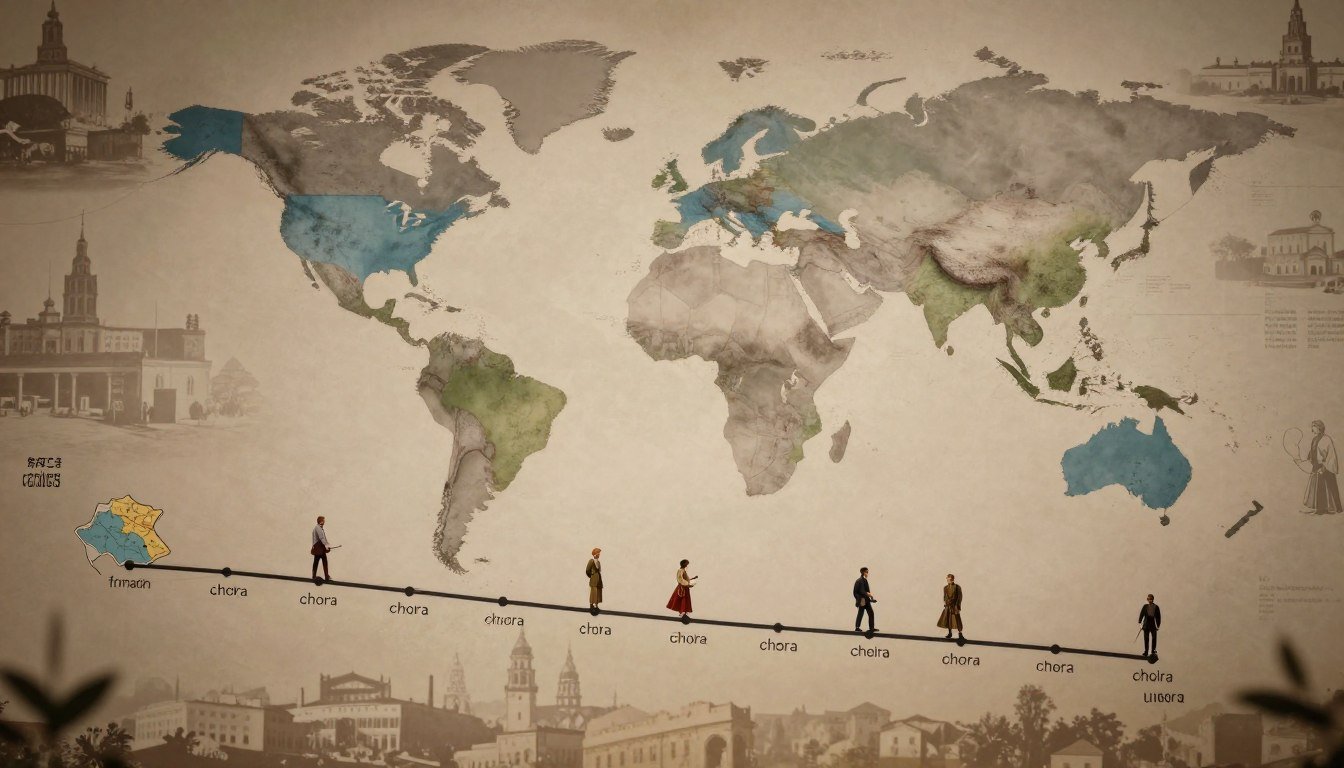
The History of Healing
 Malaria in Ancient Civilizations
Explore the historical impact and treatment of Malaria in Ancient Civilizations, uncovering the ancient responses to this enduring disease.

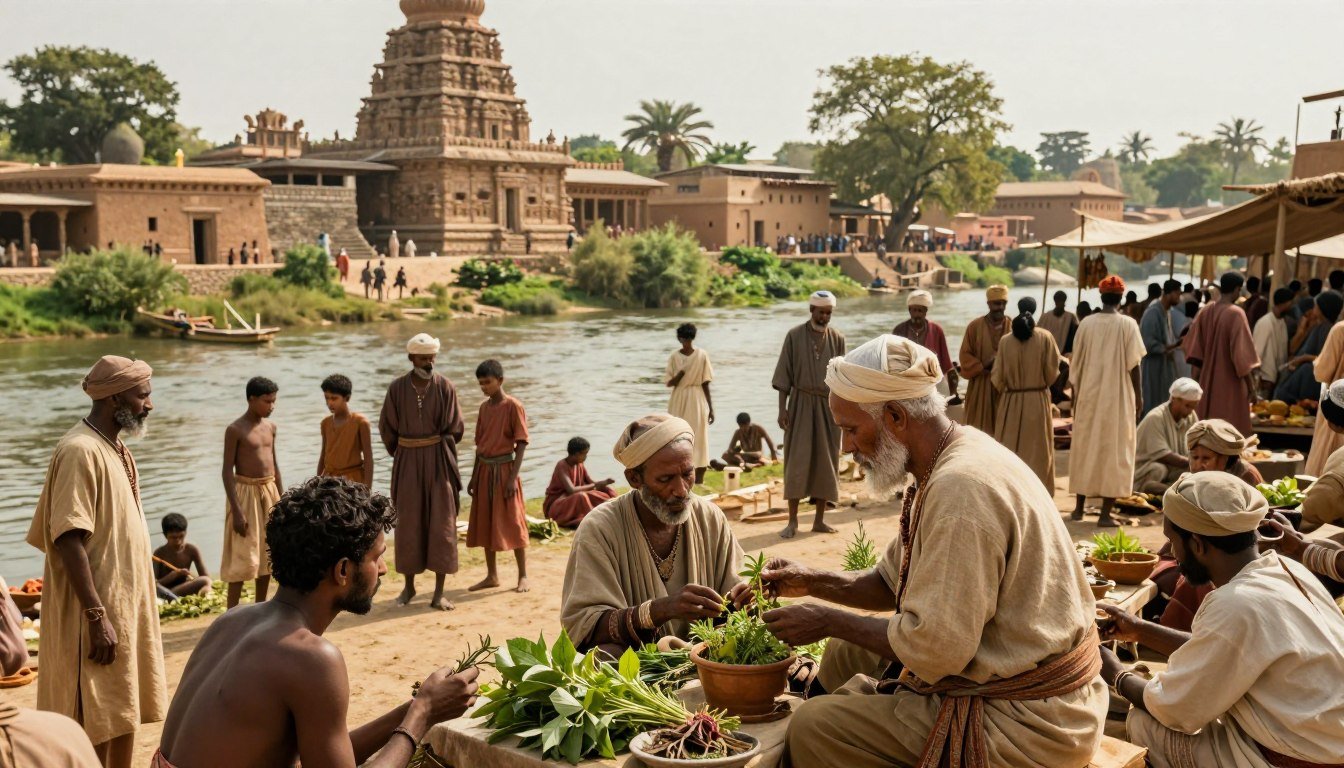
One claim in Nature in 2002 said malaria killed 50–60 billion people. This number is debated. Brian Faragher of the Liverpool School of Tropical Medicine thinks malaria killed about 4–5% of people. This is a big number, showing how important malaria is in history.
Malaria is a disease spread by mosquitoes. It’s caused by tiny creatures called Plasmodium. This disease has been around longer than medicine, starting in African primates and spreading to humans worldwide.
Malaria has changed human biology and health. It pushed humans to evolve, leading to traits like sickle-cell disease and thalassemias. These genetic changes are as important as written history in understanding malaria’s past.
Historians used to guess about the past based on texts and burial sites. Now, they use science like ancient DNA to learn more. This mix of science and history will help us understand malaria’s past better.
Key Takeaways
- Malaria’s historical death toll is debated, but even cautious estimates point to a massive impact.
- The disease is caused by Plasmodium protozoa and spread by female anopheline mosquitoes.
- Malaria likely began as a zoonotic infection linked to African primates and later adapted to humans.
- It drove strong genetic selection, influencing traits like sickle-cell disease, G6PD deficiency, and thalassemias.
- Modern biomolecular methods now strengthen Malaria in Ancient Civilizations studies beyond texts alone.
- Malaria research in ancient history increasingly combines archaeology, ecology, and lab testing for clearer answers.
Overview of Malaria’s Historical Impact
In ancient times, malaria and wetlands went hand in hand. It affected where people farmed, traveled, and built towns. Many saw a pattern of fevers that came back on a schedule.
Looking at early civilizations and malaria means understanding ecology. Mosquitoes thrived in standing water near homes and work sites. Seasonal heat made outbreaks predictable, affecting families and workers.
Definition and Causes of Malaria
Malaria is caused by Plasmodium protozoa that invade the blood. It can cause chills, fever, and exhaustion. Today, P. falciparum and P. vivax are the biggest problems, while P. malariae and P. ovale are less common.
Transmission happens through bites from female anopheline mosquitoes. Once infected, a person can carry parasites. This keeps illness going, where mosquitoes and people meet often.
Some parasite traits explain malaria’s persistence. P. falciparum thrives in large populations. P. vivax can survive cooler conditions and hide in the liver. These traits help explain malaria’s spread in early civilizations.
Overview of Ancient Civilizations’ Health
In ancient societies, health was tied to food, sanitation, and water safety. Irrigation boosted harvests but also brought mosquitoes closer to settlements. This balance explains why malaria was common in productive areas.
Illness didn’t just hit one class. Both elites and laborers suffered from repeated fevers. This limited their work during peak seasons. Malaria and ancient civilizations were linked by productivity and survival.
| Setting in early societies | Likely exposure pathway | Why it mattered for community health |
|---|---|---|
| Irrigated agriculture near canals and paddies | More standing water supports anopheline breeding near work sites | Higher fever risk during planting and harvest seasons, when labor demand peaks |
| River floodplains and marsh edges | Seasonal pooling and humid nights increase mosquito density near homes | Recurring illness can reduce childcare capacity and weaken household resilience |
| Walled towns with dense housing | Nighttime exposure increases when mosquitoes enter sleeping areas | Close living can sustain repeated cycles of infection once introduced |
| Trade routes and military movement | Travelers carry parasites between regions with suitable mosquito habitat | New introductions can shift local patterns of malaria prevalence in ancient times |
Significance of Malaria in Historical Records
References to fevers appear in history, starting in the first millennium BC in Greece and China. In Mesopotamia, clay tablets describe deadly fevers consistent with malaria. These clues help track malaria through time.
South Asian writings from the Vedic period (1500–800 BC) call malaria the “king of diseases.” Chinese tradition links tertian and quartan fevers with spleen enlargement. These records add depth to malaria discussions in early civilizations.
But diagnosing malaria in the past is tricky. Many illnesses cause recurring fever. Tools like parasite antigens and ancient genomes help fill gaps in texts. They keep debates about malaria in ancient times based on evidence.
Malaria in Ancient Egypt
Along the Nile, life was tied to irrigation canals and water. These systems also helped mosquitoes thrive. This explains why malaria was common in ancient river towns and farms.
Historical Evidence of Malaria
Today, we have tools that confirm what old texts hinted at. Tests show Plasmodium falciparum was widespread in ancient Egypt. This disease loves warm, wet places near homes.
Studies from human remains show malaria was present from around 3200 BC to 1304 BC. DNA tests confirm this, showing malaria in Egypt from 800 BC on. This evidence paints a clear picture of malaria’s history in Egypt.
Cultural References and Theories
Ancient writers hinted at how people tried to fight malaria. Herodotus said pyramid builders ate garlic to avoid illness. This shows how people used food and habits to fight malaria.
Rich people also tried to avoid mosquitoes. Pharaoh Sneferu and Cleopatra VII used bed-nets. They did this for comfort and to avoid sickness.
Malaria’s Role in the Decline of Populations
In Egypt, malaria affected who could work and travel. Repeated fevers weakened families, making it hard to farm and travel. This shows how malaria was a constant challenge.
The Nile’s case is part of a bigger pattern. When farming grows, so does mosquito habitat. This links water management to disease risk, showing how malaria affected ancient societies.
| Egyptian setting | Likely transmission pressure | Why it mattered for daily life |
|---|---|---|
| Riverbanks and flood basins | Higher mosquito breeding after inundation | Work and housing clustered near water increased night-time exposure |
| Irrigation canals and pooled fields | More persistent breeding sites between floods | Seasonal labor could overlap with peak mosquito activity and recurring fevers |
| Dense settlements near storage and shade | Steadier contact between humans and mosquitoes | Repeated illness could reduce stamina and raise caregiving demands at home |
| Elite sleeping spaces using nets | Lower bite rates in protected rooms | Household practices hint at early risk awareness tied to malaria prevalence in ancient times |
Malaria in Ancient Greece
In ancient Greece, fever was a big deal. It affected daily life, like work and where to sleep. People noticed sickness was linked to place, season, and routine.
Writers like Homer in The Iliad and Aristophanes in The Wasps mentioned recurring fevers. They saw illness as part of life. This shows ancient beliefs about malaria and its causes.
Hippocrates and Medical Descriptions
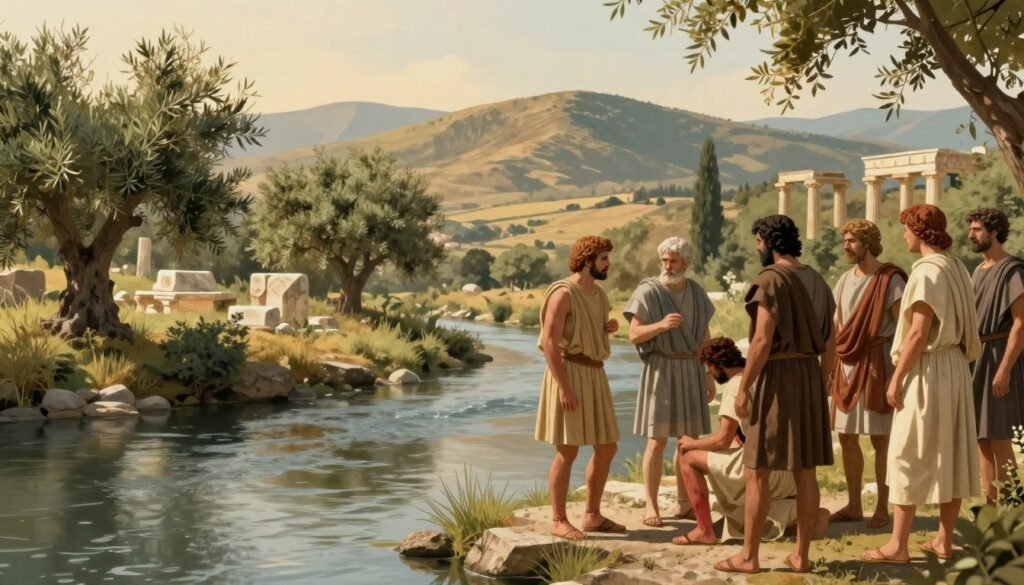
Hippocrates, from the 4th century BC, described fevers with timing. He noticed patterns like tertian and quartan cycles. This helped understand malaria better.
He linked illness to weather and local conditions. He said late summer and early fall were bad. The rising of Sirius was feared too.
Greek Theories on Disease and Environment
Greek medicine blamed sickness on air and landscape. Hippocrates talked about μίασμα, harmful pollution from the ground. Swamps and stagnant water were seen as threats.
Even without knowing about mosquitoes, Greeks thought about nature and health. Aristotle and Plato wrote about climate and balance. This shows how they saw disease and health.
Societal Impact on Greek Settlement Patterns
Season and terrain guided where people lived. Low-lying areas with water meant more fevers. Higher areas were safer.
This led to planning for work and military. It also influenced city vs. countryside living. Malaria shaped daily life in ancient Greece.
| Greek observation | How it was explained | Daily-life effect | What it shows in a historical perspective on malaria |
|---|---|---|---|
| Tertian and quartan fever timing | Body patterns linked to local climate and seasons | Families tracked “good days” and “fever days” for work and care | Early clinical sorting of symptoms before germ theory |
| Late summer and early fall misery | Heat, lingering water, and seasonal winds as triggers | More caution with travel, outdoor labor, and nighttime rest | Seasonality recorded as a repeating health risk |
| Swamps and stagnant water feared | Miasma as polluted air rising from the ground | Preference for breezier sites and avoidance of marshy zones | Ancient beliefs and practices related to malaria centered on environment |
| Recurring fevers in literature and philosophy | Illness treated as a known feature of human life | Public memory of “fever seasons” shaped expectations and behavior | Impacts of malaria in the past echoed beyond medical texts |
Malaria in the Roman Empire
In Italy, malaria was a big problem for the Romans. They called it Roman fever. It was found in the low, wet areas around Rome, like the Campagna.
This shows how malaria affected ancient societies. Geography, travel, and farming played big roles in spreading the disease.
Historians say malaria came to Rome in the first century AD. It was a big change for Europe. Trade and colonists spread the disease to inland areas.
Once malaria was there, it came back every year. This was because of the way it spread with the seasons.
Public Health Measures Against Malaria
Romans didn’t know about mosquitoes. But they knew about the dangers of bad air, water, and swamps. They tried to avoid these places when building settlements and farms.
Later, a doctor named Giovanni Maria Lancisi suggested draining swamps to stop malaria. This idea was based on the idea that changing the landscape could reduce disease risk.
This approach shows how land use decisions affected health in the past. It could either protect people or put them in danger.
Documented Cases in Roman Literature
Roman medicine left clues about long illness cycles. In De Materia Medica, Pedanius Dioscorides talks about treatments for enlarged spleens. Scholars think this might be related to malaria.
These treatments seem to be for a disease that kept coming back. They weren’t just for a short fever.
Archaeology also gives clues. At Lugnano in Teverina, child burials show strange practices. Researchers think these were to stop disease from coming back.
These stories show how malaria affected people’s lives. It wasn’t just about health; it changed behavior too.
Urban vs. Rural Experiences of Malaria
Risk wasn’t the same everywhere. People working in marshy fields faced more danger, mainly in the summer. A big outbreak in 79 AD hit these areas hard.
Inside the city, crowded places and movement were different challenges. Some changes, like moving Hallowmas to November in 835, show how malaria affected people’s lives.
In the Roman Campagna, travelers noted thin settlements and weak farming for centuries. Big changes came only in the late 1930s with malaria control efforts. This shows how malaria shaped life for so long.
| Setting | Typical exposure factors | Common social and economic pressure | Signals in records and material evidence |
|---|---|---|---|
| Marshy farmland near Rome (Campagna) | Standing water, irrigation ditches, summer heat, evening work hours | Crop loss risk, labor shortages, abandonment of fields and villages | Reports of severe epidemics; later descriptions of sparse population and poor yields |
| Rome and surrounding travel corridors | Inflow of visitors, river edges, low-lying districts, seasonal heat | Disrupted travel and religious movement during high-fever months | References to Roman fever and seasonal caution in timing of gatherings |
| Small towns under epidemic stress (central Italy) | Local wetlands and warm-season transmission in nearby valleys | Community anxiety, protective rituals, altered burial practices | Lugnano in Teverina burials interpreted as responses to epidemic fear |
Malaria in Ancient India
In ancient India, fever was a big deal. The Vedic period writings show how people worried about fevers. They made choices about water, housing, and travel because of it.
These choices hint at how malaria spread in early times. Wetlands, monsoon cycles, and where people lived made it hard to avoid.
Ayurvedic Texts and Malaria
Ayurvedic writers noticed patterns in fevers. They linked them to seasons, digestion, and the environment. This shows how ancient people tried to treat malaria with plants, diet, and rest.
Even without modern science, they noticed symptoms like chills and sweats. This shows they were paying close attention to how fevers worked.
For thousands of years, herbal treatments were used worldwide. India’s plant-based treatments were part of this global tradition. This sharing of ideas helped spread knowledge about malaria treatments.
Cultural Beliefs Surrounding Illness
In ancient India, illness was seen as moral and social. Families believed fevers came from spirits or ritual disruptions. This view influenced when they sought healers and what foods they avoided.
Communities also took steps to prevent illness. They chose breezy sleeping areas and adjusted work hours. These habits show how they tried to fight malaria.
Impact on Ancient Trade Routes
Traveling across different climates increased malaria risk. Early settlements were in drier areas, but expansion into wetter areas brought more mosquitoes. This made fevers worse for traders and travelers.
Trade linked South Asia to the Mediterranean. Over time, this led to inherited traits like sickle-cell disease. These traits helped some people resist malaria, but also spread the disease.
| Setting | Likely exposure factors | How travelers adapted | Signals in care and custom |
|---|---|---|---|
| Indus-linked drier zones | Seasonal pools after rains; irrigation edges; night biting near storage water | Timing departures to avoid peak rains; choosing higher, windier camps | Blended routines of hydration, rest, and plant remedies within malaria treatments in antiquity |
| Ganges-linked wetter zones | Floodplains, rice fields, and dense settlement close to standing water | Shorter legs between stops; sleeping away from low ground when possible | Stronger role for ancient beliefs and practices related to malaria in household rules and ritual timing |
| Coastal ports and river junctions | Brackish marshes, crowded lodging, and frequent newcomer mixing | Rotating crews and rest days; avoiding stagnant backwaters during layovers | Shared fever classifications and cross-cultural exchange of malaria treatments in antiquity |
Malaria and Mesopotamian Civilizations
In Mesopotamia, people wrote about sickness every day. This is where malaria research in ancient history often begins. Here, records, landscapes, and settlement patterns meet.
Evidence from Archaeological Findings
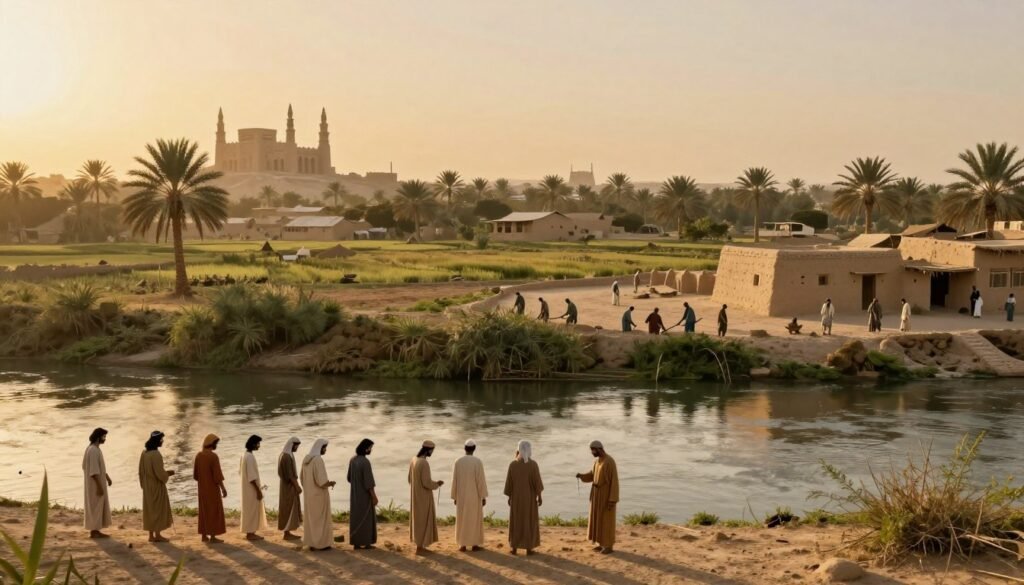
Clay tablets in cuneiform talk about fevers that come and go. These notes might remind us of malaria. But, the connection is not clear-cut.
So, we must be careful when talking about malaria in ancient times. Words like “periodic fever” can mean different things. They could point to other infections too.
New lab methods are helping us understand better. When researchers find antigens or ancient DNA, it links texts to biology. This makes malaria research in ancient history stronger.
Importance of Agriculture and Malaria
Mesopotamian farming needed irrigation canals and fields. These areas held water, which mosquitoes liked. Mosquitoes breed in standing water, near homes and animals.
This mix of water, warmth, and people explains why malaria was seasonal. Even if people survived, they could get weak during planting and harvest.
The timeline of malaria’s impact is also key. Malaria grew as humans shifted to agriculture about 10,000 years ago. This helps us see malaria’s spread in the Near East.
Government Response to Malaria Outbreaks
Finding direct decrees about malaria is tough. But, Mesopotamia had strong systems. Tablets show they knew about deadly fevers.
These records show they were aware of malaria outbreaks. They tracked sickness, work, and supplies during high-fever months. This helped leaders manage during outbreaks.
| What survives from Mesopotamia | What it can suggest | Why it’s important to be cautious |
|---|---|---|
| Cuneiform descriptions of recurring fevers | Patterns that might match mosquito-borne diseases and malaria outbreaks | Symptoms could mean other infections too; texts rarely point to one cause |
| Irrigation systems, canals, and managed wetlands | Conditions that support mosquito breeding and malaria | Water management reduced some risks; local ecology changed yearly |
| Administrative recordkeeping on labor and goods | Outbreak visibility within state systems, guiding malaria research | Records show effects (missed work, shortages) more than diagnoses |
| Modern biomolecular testing of remains (when available) | Stronger confirmation by linking pathogens to place and time | Preservation is uneven; negative results don’t rule out malaria |
Malaria and Ancient Chinese Medicine
In early Chinese medical writing, doctors carefully tracked recurring fevers. They did this even when they didn’t know the cause. This mix of detail and meaning shaped how people believed and acted against malaria.
Traditional Chinese Medical References
The Huangdi Neijing linked repeated fevers with signs like spleen enlargement. It also noted patterns that could spread through communities. Other texts described tertian and quartan fevers in similar ways, mixing symptoms with spirit explanations.
This mix helped set the tone for treating malaria in ancient times. It combined careful description with ritual thinking.
Some texts described the illness as caused by three “demons.” Yet, they also noted symptoms like chills, headaches, and rising fever. This shows how ancient beliefs and practices could blend with early clinical observations.
| Traditional source thread | What it emphasizes | How it shaped care |
|---|---|---|
| Huangdi Neijing tradition | Recurring fevers, epidemic tendencies, and spleen changes | Encouraged pattern recognition and watchfulness during fever seasons, supporting malaria prevalence in ancient times as a lived concern |
| Canon descriptions of tertian and quartan fevers | Timing of attacks, chills, headache, and fever cycles | Helped classify fevers by rhythm, a practical step within malaria treatments in antiquity |
| Supernatural framing (three “demons”) | Illness explained through spirits alongside observed signs | Reinforced ancient beliefs and practices related to malaria while keeping attention on repeated paroxysms |
Malaria’s Influence on Population Density
As more people moved to the south, they faced higher malaria risks. The humid Yangtze rice paddies made irrigation and water exposure more dangerous. This uneven risk influenced where people lived and how fast areas grew.
Healers saw more intermittent fevers in farming communities. This was true where water control was constant. In these settings, malaria treatments were essential for survival during planting, harvest, and flood seasons.
Governmental Health Regulations
Chinese medical texts were linked to the state, giving fever patterns a recognized place in official learning. These texts showed illnesses as recurring and sometimes epidemic. This suggests a long memory of community risk.
One famous remedy was qinghao, or Artemisia annua. It was first mentioned around 168 BC and later in Ge Hong’s writing. He advised soaking fresh artemisia in cold water, wringing it out, and taking the bitter juice raw for acute intermittent fevers. This method shows how ancient treatments aimed at timing, preparation, and the body’s condition during an attack.
Role of Climate in Ancient Malaria Epidemiology
Climate played a big role in the ancient world. Warm weather, rain, and standing water helped mosquitoes thrive. This made some places riskier for people.
New studies also shed light on malaria’s past. They found genetic signs of malaria parasites in Eurasia earlier than we thought. This helps us understand malaria in ancient times, even in places with few records.
Ancient Weather Patterns and Their Effects
Heat and humidity helped mosquitoes breed faster. This let parasites grow inside them. In cooler areas, P. vivax had an advantage because it can grow at lower temperatures.
P. vivax can also hide in the liver and come back later. This helped malaria spread in early civilizations, even when it was cold.
Ancient people often linked fevers to weather. Hippocrates said fevers were common in late summer and autumn. This matches how mosquito seasons peak after warm weeks.
Geographic Distribution in Civilizations
Where people lived was important. Irrigated fields and marshes were mosquito breeding grounds. Dense housing made people more exposed.
Over time, trade and travel spread malaria far and wide. This shaped malaria’s spread in ancient times, beyond one valley or kingdom.
Even high places weren’t safe. A study found P. falciparum in the Himalayas. This shows how travel and exchange brought malaria to new places.
Seasonal Variations and Disease Outbreaks
Seasons influenced daily life. People chose when to harvest or travel, avoiding low-lying areas. In Italy, “Roman fever” was linked to summer near swamps.
These cycles made malaria seem unpredictable. It was quiet for months, then intense. This pattern fits with P. vivax relapse, bringing illness back after the mosquito surge.
| Climate or setting factor | What it changes in transmission | How it could appear in ancient communities |
|---|---|---|
| Warm, wet late summer | More standing water and faster mosquito breeding | More fevers after harvest work near canals and floodplains; higher malaria prevalence in ancient times in lowlands |
| Cooler temperate winters | Fewer active mosquitoes, but P. vivax can persist via dormancy and relapse | Illness returning after cold months, supporting malaria transmission in early civilizations beyond the peak season |
| Irrigation and marsh ecology | Stable breeding habitat close to homes and fields | Risk clustering around farms, canals, and city outskirts, shaping a historical perspective on malaria tied to land use |
| Trade routes and population mobility | Parasites move with people into new, suitable habitats | Infections appearing along ports, caravan stops, and frontier zones, even where local ecology seems less ideal |
| Higher altitude settlements with outside contact | Introduces parasites through travel despite cooler conditions | Cases that suggest movement from warmer regions, complicating assumptions about malaria prevalence in ancient times |
Socioeconomic Effects of Malaria
In ancient times, malaria was a big problem in many places. It affected people’s work, food, and travel. Malaria outbreaks were common and made life harder for many.
Impact on Labor Forces
When malaria hit during busy seasons, there was a big shortage of workers. People got weaker and couldn’t do their jobs well. This slowed down farming and building projects.
Repeated fevers made communities less productive. This was true where mosquitoes were always around because of standing water.
Jobs that needed a lot of strength were the hardest to do during malaria outbreaks. This was true for farming, hauling, and rowing. Malaria affected both skilled and unskilled workers.
Influence on Trade and Economy
Trade was affected by malaria because it needed healthy workers and stable food. When sickness hit ports or markets, it caused delays and cost more. This hurt merchants who relied on timely shipments.
In Italy, an epidemic in 79 AD hurt farming and led to some places being abandoned. This reduced tax money and made managing land harder. Malaria had a big impact on the economy without causing a complete collapse.
| Socioeconomic pressure point | How malaria amplified it | Likely ripple effects |
|---|---|---|
| Agriculture in marsh-adjacent zones | Illness during planting and harvest reduced field labor and delayed maintenance of ditches and canals | Lower grain output, unstable prices, and fewer reserves for drought or war |
| Transport and exchange networks | Fever seasons increased risk for travelers and crews moving through wetlands and river corridors | Delayed deliveries, higher transaction costs, and reduced market variety |
| Public revenue and local investment | Repeated outbreaks limited productivity and shrank taxable surplus over time | Less funding for infrastructure like drainage works, roads, and storage |
Malaria and Migration Patterns
As people moved to new areas, they faced more malaria. In South Asia, migration to wetter lands increased disease risk. In China, settlers moved to rice areas with more mosquitoes.
People moving around helped malaria spread. Studies show that long-distance travel carried the disease. Trade routes also helped spread malaria.
Over time, malaria changed people’s biology, not just their economy. It led to genetic changes, like more resistance to malaria. This shows how malaria affected health and communities for generations.
Transition from Ancient to Modern Understandings
Medical thinking changed slowly over time. It grew as healers’ notes met lab work and field studies. This mix shapes our view of malaria and tracking fever today.
Looking at ancient malaria research, we see careful watching before proof. Early writers linked illness to wetlands and “bad air,” an idea in mal aria. This idea made room for parasite and mosquito evidence later.
Evolution of Malaria Treatments
Early treatments used plants and timing. Over time, herbal practice led to a search for what stops chills and fever. Cinchona bark was a key discovery, first used in the Andes and later in medicine.
In 1820, Joseph Pelletier and Joseph Bienaimé Caventou found quinine and cinchonine. This helped doctors know how much to use. Earlier, Francesco Torti showed cinchona worked for “intermittent fever.” The Dutch grew more in Java, changing prices worldwide.
| Period | Main approach | What guided decisions | Practical limit |
|---|---|---|---|
| Ancient and medieval eras | Herbal mixtures, household remedies, and environmental avoidance | Symptom patterns, seasons, local plant knowledge | Inconsistent strength and unclear causes |
| 1600s–1700s | Cinchona bark use spreads in Europe | Reports of “intermittent fever” response and case comparison | Variable bark quality and uncertain sourcing |
| 1800s | Purified quinine becomes measurable medicine | Early chemistry, standardized extraction, clinical experience | Supply shocks and uneven access |
| Late 1800s–1900s | Parasite diagnosis and vector control expand | Microscopy, mosquito studies, public health programs | Resistance, logistics, and changing mosquito habitats |
Influence of Ancient Practices on Modern Medicine
Some old ideas lasted because they were based on careful watching. Swamp drainage and settlement choices hinted at risk before the Anopheles link was clear. Ronald Ross showed malaria stages in mosquitoes in 1897, and Giovanni Battista Grassi’s team tied human transmission to Anopheles maculipennis in the Roman Campagna.
Lab tools also changed the story. Heinrich Caro’s methylene blue, along with later staining methods, made parasites easier to see. These improvements linked older fever descriptions to visible life stages.
Lessons Learned from Ancient Civilizations
A useful view of malaria comes from watching how ideas were tested and rebuilt. Charles Louis Alphonse Laveran’s 1880 work in blood microscopy moved medicine away from miasma. Camillo Golgi then matched parasite timing with tertian and quartan fever rhythms, adding structure to ancient descriptions.
Later, H. E. Shortt and P. C. C. Garnham identified liver stages in 1948, refining early infection maps. This shows a long bridge from pattern-spotting to modern biology. For malaria research in ancient history, this bridge explains why prevention, diagnosis, and therapy kept changing with evidence.
Conclusion: Legacy of Malaria in Ancient Civilizations
Malaria left a mark across time and place. Greek doctors wrote about recurring fevers. Records from China, Mesopotamia, and Vedic India also noted seasonal illnesses.
In Egypt, tests have confirmed malaria beyond just symptoms. Ancient DNA research shows P. vivax and P. falciparum were present in Eurasia earlier than thought.
These discoveries help us understand malaria’s past effects. It influenced where people settled and how farming worked. Communities tried to fight it with drainage and early treatments.
Every civilization faced a common challenge: where they lived and how they stored water. The rains also played a big role in who got sick.
Malaria’s impact is not just in the past. It causes a lot of illness and death today. In 2020, there were 240 million cases and over 600,000 deaths.
In poor tropical areas, malaria is a big problem. In the US, it has shaped public health efforts. This includes efforts during wars and programs to control mosquitoes.
The key to fighting malaria is prevention. It needs to be planned, local, and ongoing. We must watch for mosquitoes, use nets, and spray. We also need strong treatments.
Looking at the past teaches us important lessons. It shows us the importance of careful planning and community efforts. Today, we can use this knowledge to fight malaria more effectively.
FAQ
What is malaria, and what causes it?
How old is malaria in human history?
Why is “malaria in ancient civilizations” hard to prove from symptoms alone?
What do ancient texts say about malaria-like illness?
How do scientists confirm malaria in antiquity beyond written records?
What is the evidence for malaria in ancient Egypt?
Did ancient Egyptians try to prevent malaria or mosquito bites?
How did river landscapes and irrigation shape malaria outbreaks in ancient societies?
What did Hippocrates contribute to early malaria descriptions in ancient Greece?
What was the miasma theory, and how did it shape ancient ideas about malaria?
Which Greek writers beside Hippocrates mention malaria-like fevers?
What was “Roman fever,” and why did it matter?
When and how did malaria likely spread into Rome?
Did Romans attempt public health measures that reduced malaria risk?
What do Roman texts suggest about chronic malaria?
How did malaria differ in urban versus rural settings around Rome?
What does the Lugnano in Teverina burial site reveal about community fear during epidemics?
How is malaria described in Vedic-period India?
How did India’s geography influence malaria risk?
What evidence links Mesopotamia to malaria-like disease?
How did the Neolithic Revolution amplify malaria’s impacts?
What does ancient Chinese medicine say about malaria-like fevers?
What is qinghao, and how was it used against fevers in antiquity?
How did population growth and rice agriculture affect malaria in China?
How did climate and species biology shape malaria’s reach in ancient times?
What does ancient parasite genomics reveal about early malaria distribution?
How did malaria affect labor and productivity in ancient societies?
How did malaria influence trade networks and migration patterns?
Did malaria shape human evolution?
How many people might malaria have killed across history?
How did malaria treatments evolve from antiquity to modern science?
How did cinchona and quinine spread globally?
When did malaria shift from “bad air” to a parasite-and-mosquito explanation?
Who proved mosquitoes transmit malaria?
What discovery clarified malaria’s early development inside the body?
What tools improved malaria diagnosis in the laboratory?
How do ancient prevention ideas connect to modern malaria control?
What does malaria’s ancient history teach modern public health?
Which core topics guide malaria research in ancient history today?
Get More Medical History
Join our newsletter for fascinating stories from medical history delivered to your inbox weekly.