The History of Healing
 The Intriguing Story Behind the Origin of Surgery
Discover the fascinating origin of surgery from ancient trepanation to modern techniques that revolutionized medicine and saved countless lives.

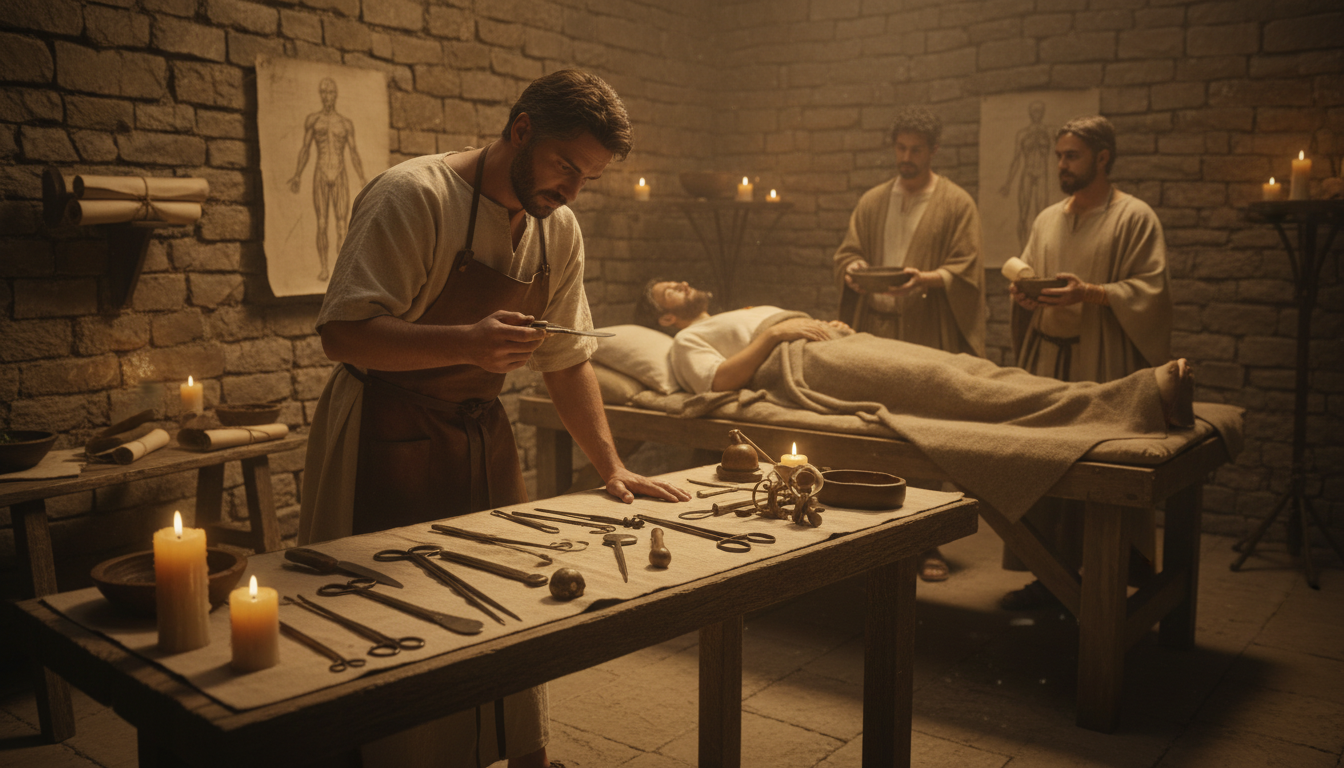
Archaeologists found skulls with holes over 10,000 years old. These skulls show the patients survived. This means ancient people were doing brain surgery.
Today, surgeons can fix a baby’s heart before it’s born. They can even reattach severed limbs. But it all started with simple tools and guesswork.
Dr. Zachary Friedenberg wrote about surgery’s history in Surgery Over the Centuries. He covered from the Neolithic Age to 1800 AD. His timeline is vast.
Dr. Ira Rutkow said most people don’t know surgery’s history. This includes many surgeons. We often take it for granted.
The journey from old superstitions to modern science was hard. Ancient surgeries were often done without anesthesia. Many patients and doctors died in the process.
The story of surgery is complex and interesting. It shows our journey from ancient times to today.
Key Takeaways
- The origin of surgery dates back over 10,000 years, with evidence of trepanation found on Stone Age skulls that show signs of healing.
- Ancient civilizations in Egypt, China, India, and Greece all developed their own early surgical practices independently.
- The surgical history timeline stretches from crude Neolithic procedures to today’s robotic-assisted operations.
- Books by Dr. Zachary Friedenberg and Dr. Ira Rutkow reveal just how little most people — including surgeons — know about the history of surgery.
- The journey from superstition-based healing to evidence-based surgery cost countless lives and took thousands of years.
- Many of the breakthroughs we rely on today came from painful trial and error, battlefield emergencies, and risky self-experimentation by doctors.
The Dawn of Surgical Practices in Ancient Civilizations
Surgery didn’t start overnight. It goes back thousands of years, to ancient civilizations. These early doctors did a lot, like setting bones and stitching wounds. They used tools that might make us shudder today.
Evidence from Ancient Egypt
In about 3000 BC, Egyptian surgeons were already fixing bones and removing tumors. They used linen thread to sew up wounds. Their knowledge of the body grew from mummification.
The Edwin Smith Papyrus is a key find from around 1600 BCE. It was named after an American Egyptologist who bought it in 1862. It’s the oldest known text on treating injuries. It shows how deep the roots of surgery go.
Mesopotamian Surgical Techniques
Mesopotamia was close behind. The Code of Hammurabi (around 1754 BC) set fees and penalties for surgeons. If a surgery went wrong, a surgeon could lose their hand. This shows surgery was a serious profession back then.
The Influence of Ancient Greece
The Greeks made surgery more scientific. They moved away from magic and towards observing and treating. Thinkers in places like Cos and Alexandria studied bodies and documented their findings. This laid the foundation for future advancements, including herbal remedies.
The Role of Herbs and Natural Remedies
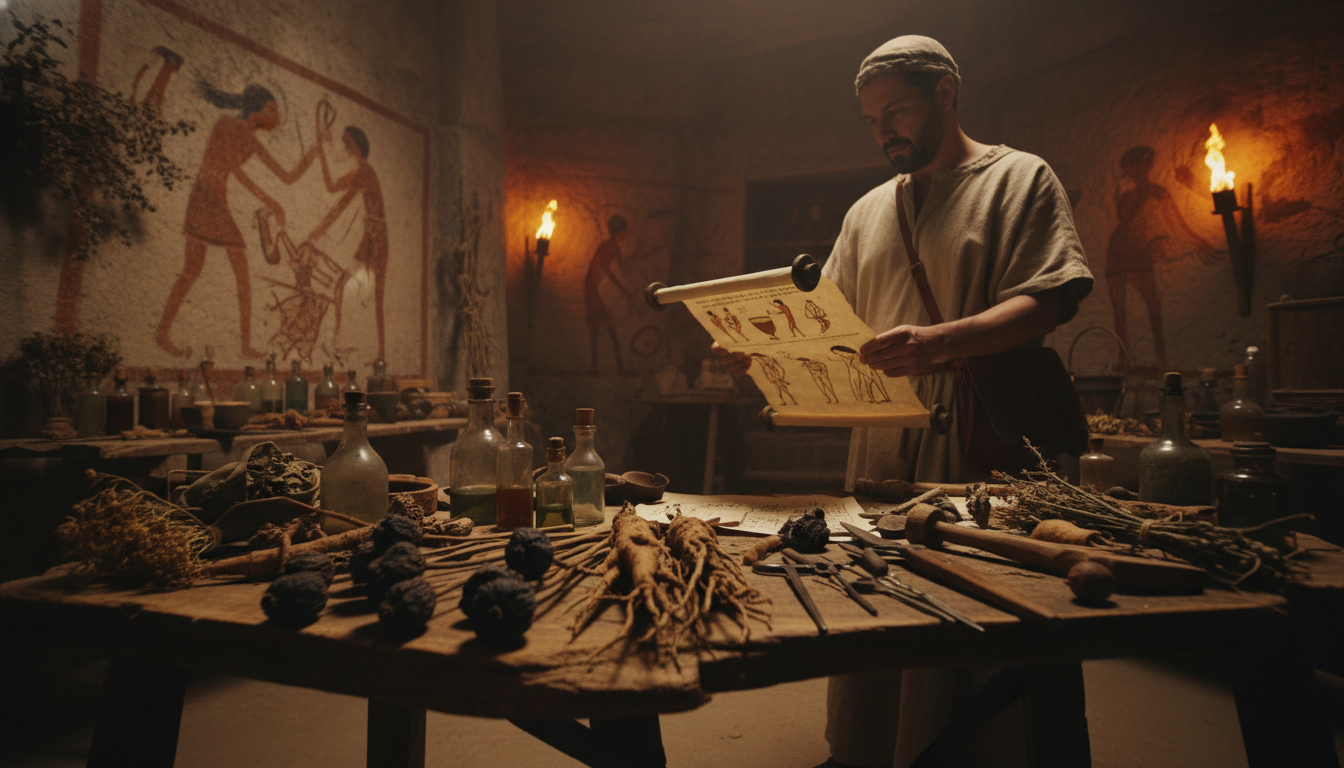
Before we had fancy scalpels and clean operating rooms, healers used what nature gave them. Plants, roots, and herbs were their medicine. Ancient healers were very creative with what they found in their gardens.
Traditional Healing Practices
In ancient India, around 600 BCE, a doctor named Sushruta wrote something amazing. His book, the Sushruta Samhita, showed surgical techniques we’d never seen before. He described nose reconstructions using skin grafts.
Surgeons took skin from a patient’s cheek, shaped it like a leaf, and stitched it in place. They even made nostrils with small pipes. This was done without electricity.
These remedies were not just simple folk medicine. They were a complex system of care. Indian surgeons rebuilt noses and ears that had been cut off as punishment. This was real surgery, long before modern operating rooms.
The Use of Plant-Based Anesthetics
Imagine having surgery without painkillers. Ancient healers faced this challenge. They used plants to help with pain.
| Plant | Region of Use | Purpose |
|---|---|---|
| Mandrake root | Ancient Greece and Rome | Sedation before surgery |
| Opium poppy | Mesopotamia and Egypt | Pain relief during procedures |
| Cannabis | Ancient China | Anesthetic mixed with wine |
| Henbane | Medieval Europe | Inducing sleep for operations |
These plant-based solutions changed surgery in big ways. They helped patients survive painful surgeries. They also helped lead to the anesthesia breakthroughs we have today.
Notable Figures in Surgery’s Evolution
Every great field has its pioneers. These are the bold thinkers who changed everything. The evolution of surgical techniques we enjoy today didn’t happen overnight. It took brilliant minds willing to challenge old beliefs and push boundaries.
Hippocrates: The Father of Medicine
You’ve probably heard his name before. Hippocrates of Kos (around 460–370 BCE) was the Greek physician who ripped medicine away from superstition. Before him, people blamed illness on angry gods. Hippocrates said, “Nope — let’s actually observe the patient.”
He created a rational approach to treating wounds and fractures. His writings described surgical advancements like draining abscesses, setting broken bones, and treating head injuries. He even insisted that doctors should “first, do no harm.” Sound familiar? That idea guides every surgeon today.
Galen’s Contributions to Anatomy
Fast forward a few centuries to Galen of Pergamon (129–216 CE). This Roman-era physician took things to a whole new level. He dissected animals — mostly pigs and monkeys — to understand how the body worked from the inside out.
His findings shaped the development of surgery for over 1,300 years. That’s wild when you think about it.
| Aspect | Hippocrates (460–370 BCE) | Galen (129–216 CE) |
|---|---|---|
| Primary Focus | Clinical observation and ethics | Anatomy and physiology |
| Key Method | Patient observation and documentation | Animal dissection |
| Lasting Impact | Hippocratic Oath | Anatomical texts used until the 1500s |
| Influence Duration | Stil referenced today | Dominant for 1,300+ years |
These two figures didn’t just practice medicine. They built the foundation that made future surgical advancements possible. From Renaissance breakthroughs to the instruments and tools that came centuries later.
Surgical Instruments Through the Ages
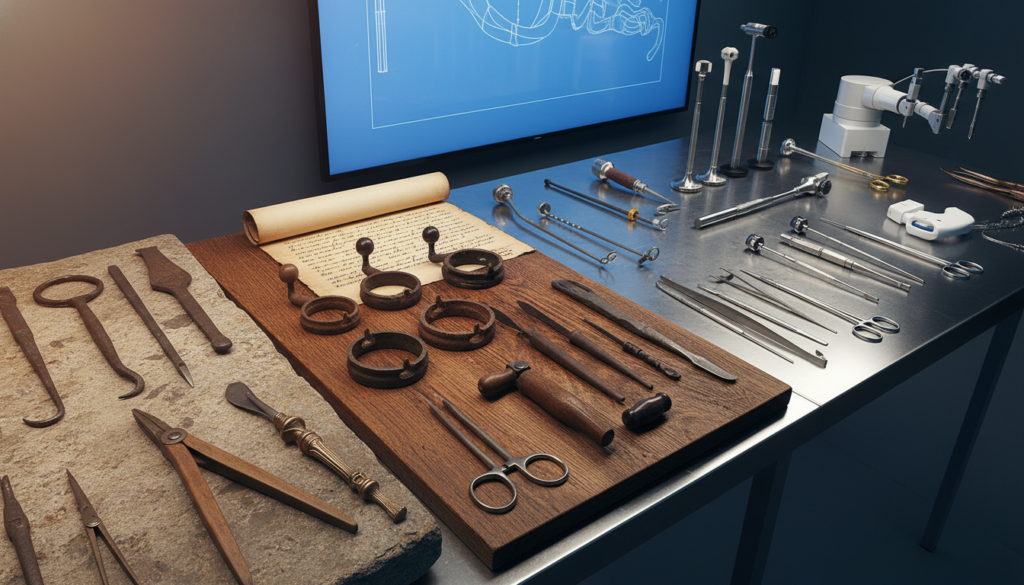
Surgery didn’t start in fancy hospitals with shiny tools. It began thousands of years ago in caves and fields. Let’s explore how we moved from rocks to robots.
Early Tools Used by Surgeons
In the Neolithic period, people used stone tools to drill holes in skulls. This was called trepanation. They thought it let evil spirits out.
But it helped with conditions like epilepsy and headaches. And amazingly, many patients survived. Skulls from ancient times show signs of healing.
“The history of surgery is the history of human courage — both the patient’s and the surgeon’s.”
In the Middle Ages, your surgeon was also your barber. They used razors for both grooming and surgery. That’s not very comforting.
Advancements in Surgical Equipment
In the 16th and 17th centuries, surgery got better. New tools replaced old ones. Surgeons wanted tools made just for surgery.
| Era | Common Tools | Primary Materials |
|---|---|---|
| Neolithic Period | Sharpened flint, obsidian blades | Stone, bone |
| Ancient Egypt | Bronze scalpels, copper needles | Bronze, copper |
| Medieval Period | Razors, saws, cautery irons | Iron, steel |
| 19th Century | Forceps, retractors, anesthesia masks | Stainless steel, rubber |
New tools made surgery safer and more effective. They changed how we heal with surgery.
The Impact of Religion on Surgical Practices
Surgery might seem like just science. But, the link between religion and surgery is thousands of years old. The first to use tools for surgery were spiritual healers, not doctors. Their work was mixed with faith, rituals, and the supernatural.
Spiritual Healing in Ancient Cultures
In the Neolithic Era, shamans did trepanation. They cut holes in skulls to let evil spirits out. This was for mental health issues or head trauma.
Many patients survived. Dr. Ira Rutkow says bone grew back around these holes. This shows ancient healers did brain surgery and people lived.
The start of surgery wasn’t in a clean room. It was by a fire, with prayer and ritual.
The Church’s Stance on Surgery
In medieval Europe, the Catholic Church had a lot of power over medicine. They made rules that kept clergy from blood. This moved surgery to barbers and tradesmen.
| Era | Religious Influence | Effect on Surgery |
|---|---|---|
| Neolithic (10,000–4,500 BCE) | Shamanic spiritual beliefs | Trepanation performed as spiritual healing |
| Ancient Egypt (3,000 BCE) | Priests served as healers | Religious rituals blended with wound care |
| Medieval Europe (500–1500 CE) | Church banned clergy from bloodletting | Surgery relegated to barbers and craftsmen |
Religion and surgery have always had a complex relationship. Faith sometimes led to new surgeries. Other times, it blocked progress for centuries.
The Renaissance: A Turning Point for Surgery
The Renaissance was a big deal. It brought us amazing art and changed how we see the human body. In the 1500s, two big changes happened that changed surgery forever.
Anatomical Discoveries by Vesalius
Before the 1500s, surgeons studied animal bodies thinking humans were the same inside. Andreas Vesalius thought this was crazy. He believed it was wrong to study apes and pigs to learn about humans.
Vesalius decided to dissect human bodies himself. He mapped the body’s inside and published his work, De Humani Corporis Fabrica, in 1543. His book had detailed pictures of muscles, bones, and organs. It was a huge step forward and made Vesalius the father of modern anatomy.
The Rise of Scientific Methods
Vesalius wasn’t alone. The Renaissance made people start to observe and look for evidence. Surgeons began to question old texts and wanted proof.
This new way of thinking led to big changes:
- Direct observation replaced old texts
- Detailed pictures became key teaching tools
- Experimentation was valued over old ways
These changes helped surgery grow even after the Renaissance. They paved the way for new discoveries in anesthesia and sterilization.
The Development of Anesthesia
The history of surgery before anesthesia is a nightmare. People had to endure everything during operations. The change came with anesthesia, a major medical breakthrough. It took a long time to develop.
Early Anesthetic Techniques
For ages, surgeons used alcohol, opium, and herbs to dull pain. These methods were not effective. Patients suffered greatly, needing to be held down.
In the 15th century, surgery was both painful and dangerous. Surgeons used soaked sponges with mandrake, hemlock, and opium. It offered some relief but was far from enough.
- Alcohol was the most common pre-surgical sedative for centuries
- Opium offered mild relief but couldn’t eliminate pain
- Herbal “soporific sponges” appeared in medieval Europe
- Patients were routinely restrained with ropes or held by force
William Morton and Ether Anesthesia
October 16, 1846, was a turning point. Dentist William T.G. Morton showed ether anesthesia at Massachusetts General Hospital. Patient Edward Abbott had a tumor removed without feeling a thing.
This moment changed surgery forever. Pain was no longer a constant in the operating room. It paved the way for more complex surgeries and better techniques.
“Gentlemen, this is no humbug.” — Dr. John Collins Warren, 1846
One demo in Boston changed surgery forever. Before Morton, speed was key. After, precision became possible.
The Surgeon’s Role in War and Conflict
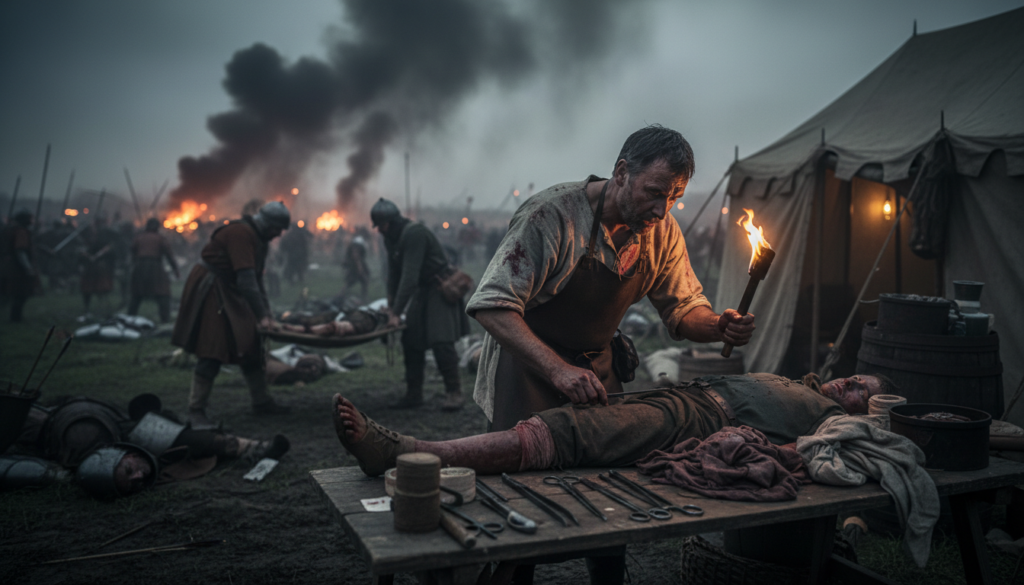
War is brutal. But it pushed surgical techniques forward in ways peace never did. When soldiers bled out, surgeons had to be creative fast. This urgency changed how we treat the body.
Battlefield Surgery in Ancient Times
Back then, surgeons weren’t always trained doctors. By the medieval period, barbers were stitching up soldiers. Yes, the same folks cutting hair were fixing stab wounds. They were seen as craftsmen, not scholars, and followed armies across Europe and the Middle East.
One famous case was during the Crusades. An English surgeon treated Prince Edward of England’s serious stab wound in Palestine. This was surgery on a battlefield, not in a hospital. It showed skill, guts, and whatever tools were available.
Innovations Provoked by Warfare
Every major conflict brought new breakthroughs. Here’s a quick look at some key moments:
| Conflict | Era | Surgical Innovation |
|---|---|---|
| Crusades | 11th–13th Century | Wound treatment and cauterization techniques |
| Napoleonic Wars | Early 19th Century | Triage system and rapid field amputations |
| American Civil War | 1861–1865 | Ambulance corps and improved prosthetics |
“The history of surgery is, in many ways, the history of war.”
— Dr. Ira Rutkow, Surgery: An Illustrated History
Battlefield surgery forced doctors to think quickly. Techniques born from desperation became common in civilian medicine. It’s a strange truth — some of the greatest leaps in surgical history came from humanity’s darkest moments.
The Emergence of Sterilization Techniques
For most of history, surgeons didn’t wash their hands. Not before surgery. Not after. Not ever. They’d go straight from examining a dead body to delivering a baby. Nobody saw a problem with that.
Surgical instruments got reused without cleaning. Surgeons wore blood-caked coats as badges of honor. Sterilization in surgery simply didn’t exist as a concept.
This was the missing puzzle piece. All the surgical advancements in the world meant nothing if patients kept dying from infections. And they did — constantly.
Ignaz Semmelweis and Hand Hygiene
In 1847, a Hungarian doctor named Ignaz Semmelweis noticed something disturbing. Women in one maternity ward were dying at five times the rate of those in another. The difference? Doctors in the deadly ward came straight from the autopsy room.
Semmelweis demanded his staff wash their hands with a chlorinated lime solution before touching patients. The death rate dropped from around 18% to under 2%. That’s staggering. Yet the medical community rejected him. They called him crazy. He died in an asylum at age 47, never seeing his ideas accepted.
The Advent of Antiseptics
British surgeon Joseph Lister picked up where Semmelweis left off. In 1867, Lister introduced carbolic acid as an antiseptic during operations. His results spoke for themselves:
| Measure | Before Lister’s Antiseptic Method | After Lister’s Antiseptic Method |
|---|---|---|
| Post-surgical infection rate | Around 50% | Around 15% |
| Amputation mortality rate | 46% | 15% |
| Acceptance by surgeons | Not applicable | Widely adopted by the 1880s |
These surgical innovations transformed operating rooms from death traps into places of genuine healing. Sterilization in surgery became the standard — and we’ve never looked back.
Modern Surgical Techniques
We’ve seen a big change from ancient times to today. Now, we’re talking about really advanced surgery. The last few decades have brought big changes that would amaze even the bravest surgeons from the Renaissance.
Those days of big cuts and long hospital stays are gone. Today, we focus on making you better fast. We do it with less pain and scarring.
Smaller Cuts, Bigger Results
Minimally invasive surgery has changed everything. Surgeons now use tiny cuts, sometimes just a few millimeters wide. They use small cameras and tools through these cuts to do complex work.
Dr. Ira Rutkow says this is a big revolution. Now, many surgeries are done in a day, not weeks.
- Laparoscopic techniques reduce recovery time from weeks to days
- Patients experience less blood loss and lower infection risk
- Many procedures that once required overnight stays are now outpatient
Robots in the Operating Room
Robotic surgery takes it even further. Systems like the da Vinci Surgical System give surgeons better precision and control. It’s not a robot doing the work alone. Your surgeon is in control, with the robot helping their hands.
| Feature | Traditional Open Surgery | Minimally Invasive Surgery | Robotic Surgery |
|---|---|---|---|
| Incision Size | 6–12 inches | 0.5–1 inch | 0.5–1 inch |
| Average Hospital Stay | 5–7 days | 1–2 days | 1–2 days |
| Recovery Time | 4–8 weeks | 1–3 weeks | 1–3 weeks |
| Surgeon Precision | Standard | Enhanced | Highest |
These new surgical methods are just the start. With new questions and technology like artificial intelligence, the future of surgery is exciting.
The Ethical Considerations in Surgery
We’ve talked about amazing tools, new techniques, and smart minds. But, have we asked enough about the patient? Throughout surgery’s history, patients often had no say in their care. That’s quite a thought, right?
The growth of surgical ethics is both fascinating and sometimes disturbing. It shows how we moved from “the surgeon knows best” to “your body, your choice.”
Patient Consent and Autonomy
For most of history, patients had little to no voice. Historian Shelley McKellar noted that patients’ views are often missing from surgical stories. Going to the surgeon was a last resort — something you had to endure, not choose.
The surgeon-patient relationship was very one-sided. Surgeons made all the decisions. It wasn’t until the 20th century that informed consent became a legal and ethical standard in the United States. The 1957 Salgo v. Leland Stanford Jr. University Board of Trustees case was a turning point, making it clear that doctors must tell patients about risks before procedures.
The Evolution of Surgical Ethics
Surgical ethics didn’t come out of nowhere. It grew over centuries of trial, error, and questionable practices. Here are some key milestones:
| Era | Ethical Standard | Patient Role |
|---|---|---|
| Ancient Greece | Hippocratic Oath (“Do no harm”) | Passive recipient |
| Medieval Period | Religious moral codes | No formal rights |
| 19th Century | Early professional codes | Limited input |
| 20th Century | Informed consent laws | Active participant |
| 21st Century | Shared decision-making | Equal partner |
Today, surgical ethics guide everything from AI in operating rooms to remote procedures. The journey from the start of surgical practices to today’s patient rights has been long, messy, and vital.
Future Trends in Surgical Practices
So, what’s next for surgery? The journey from ancient times to today’s robotic surgeries is amazing. Historian Ira Rutkow says we’re in for even more breakthroughs. The future of surgery is like something from science fiction.
The Role of Artificial Intelligence
AI is changing surgery. Machines can now look at thousands of medical images fast. They can even predict problems and help surgeons be more precise.
Companies like Intuitive Surgical are leading the way. They’re combining AI with robotic surgery to make it better.
Telemedicine and Remote Surgery
Imagine doing surgery on someone who’s thousands of miles away. This is becoming possible with 5G and advanced robotics. Telemedicine has already changed how we talk to doctors.
Now, imagine a top surgeon in New York working on a patient in Alaska. This is the future of surgery. It’s about helping people who can’t get to expert care.
FAQ
How far back does the origin of surgery actually go?
What is the Edwin Smith Papyrus and why is it so important to the history of surgery?
How did ancient Indian surgeons contribute to the development of surgery?
What role did Hippocrates play in separating surgery from superstition?
Who were barber surgeons, and what did they actually do?
Why was Andreas Vesalius so important to the Renaissance transformation of surgery?
What was surgery like before anesthesia was developed?
How did Ignaz Semmelweis change surgical outcomes through hand hygiene?
What makes minimally invasive surgery such a revolution in the surgical procedures history?
How has the patient’s voice and consent evolved throughout surgical history?
How might artificial intelligence shape the future of surgical techniques evolution?
Why is there such a widespread lack of understanding about the history of surgery?
Get More Medical History
Join our newsletter for fascinating stories from medical history delivered to your inbox weekly.