The History of Healing
 Discover Persian Medical Advancements
Explore Persian medical advancements that shaped modern medicine, from pioneering surgical techniques to pharmacy innovations in ancient Persia’s golden age.

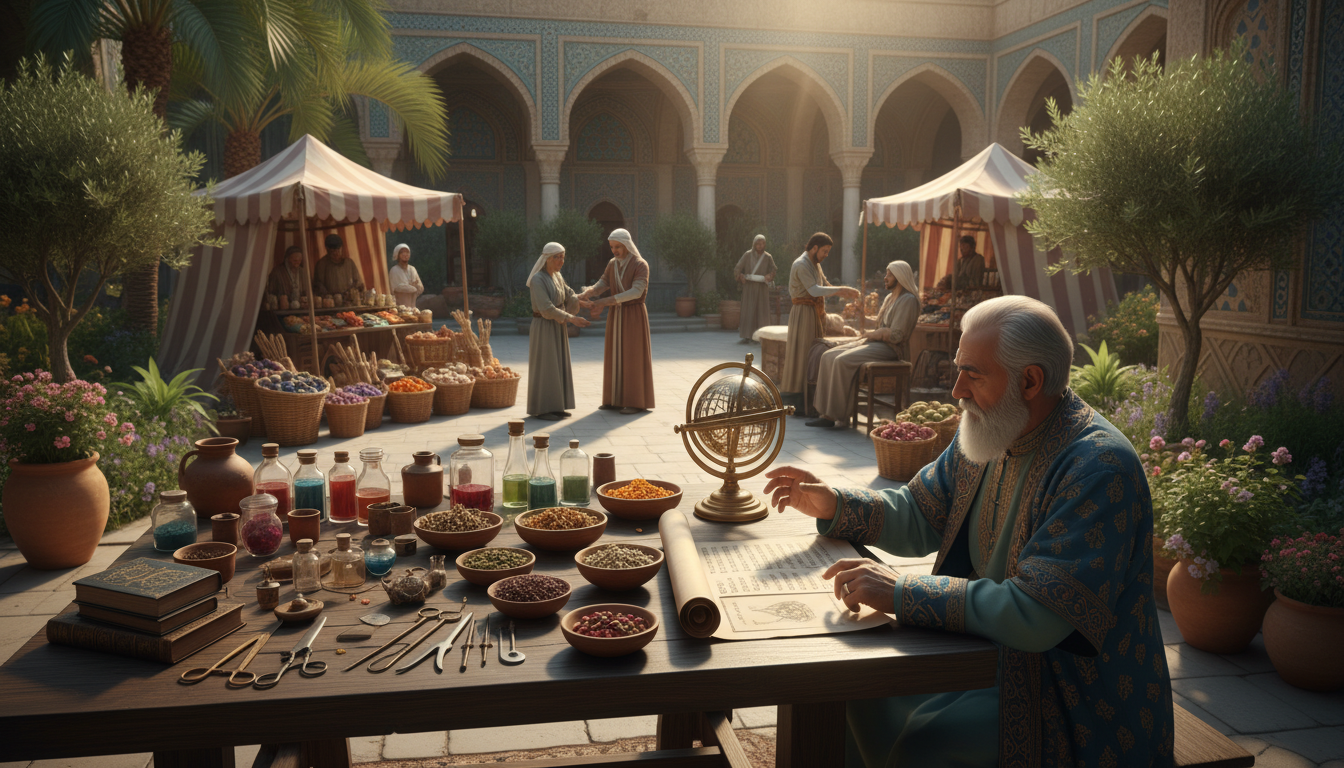
Did you know that over 4,000 years ago, Persian healers were writing down medical treatments? This was long before most civilizations had written languages. The ancient Avesta, a Zoroastrian encyclopedia, covered surgery and biology during the Achaemenid era (559–330 BCE). This is older than the Roman Empire.
The history of medicine in Persia is fascinating. Persian scholars didn’t just copy ideas. They mixed healing traditions from Greece, Egypt, India, and China into something new. By the 13th century, these ideas became key in European medical education.
You might know Abu Ali Sina, or Avicenna in the West. But he wasn’t alone. Mohammad Zakaria Razi, Abu Nasr Farabi, and Omar Khayyam also made big contributions. Their work is seen in our hospitals and pharmacies today.
Persian contributions to medicine are vast. They invented teaching hospitals and wrote early medical ethics codes. They also developed herbal pharmacology and public health systems. These advancements shaped modern medicine, but many don’t know the full story.
Let’s explore this history together. Get ready for a journey through time.
Key Takeaways
- Persian medicine stretches back over 4,000 years, making it one of the oldest documented medical traditions on Earth.
- The Avesta served as a massive scientific encyclopedia during the Achaemenid era, covering medicine across 815 chapters.
- Persian scholars like Avicenna and Rhazes blended Greek, Egyptian, Indian, and Chinese medical knowledge into groundbreaking new systems.
- Persian contributions to medicine became the foundation of European medical education by the 13th century.
- Many concepts we use today — teaching hospitals, medical ethics, herbal pharmacology, and public health systems — originated in ancient Persia.
- The history of medicine in Persia reveals how ancient medical practices directly shaped modern healthcare worldwide.
Historical Overview of Persian Medicine
Persian medicine has a long history, over 4,000 years old. This is not a mistake. It was thriving long before many great civilizations began.
Ancient Persian medicine mixed ideas from Greece, Egypt, India, and China. By the 13th century, it became the main medicine in Europe. That’s pretty amazing, right?
The Influence of Ancient Persia on Modern Medicine
The Avesta, an ancient Zoroastrian text, valued science and medicine. It said medicine was above class, ethnicity, and gender. The Vendidad talked about three healing types: surgery, herbal remedies, and spiritual healing.
Traditional Persian medicine believed health came from balanced humors. Sickness was from too much or too little of these humors.
“The learned in medicine amongst the Persians have always been considered the most skilled physicians in the world.” — Edward Gibbon, The History of the Decline and Fall of the Roman Empire
The Sassanid dynasty made hospitals into teaching centers. They had libraries and research. This was a big step in organized healthcare.
Key Medical Texts from Persian Scholars
In the Samanid Empire’s golden age, Persian scholars wrote important texts. Avicenna’s The Canon of Medicine was used in European universities until the 1600s. Rhazes wrote Kitab al-Hawi, a huge encyclopedia on diseases and treatments.
Notable Figures in Persian Medical History
| Physician | Era | Major Contribution |
|---|---|---|
| Rhazes (854–925 CE) | Samanid Empire | First to distinguish smallpox from measles |
| Avicenna (980–1037 CE) | Samanid/Buyid Era | Authored The Canon of Medicine |
| Haly Abbas (930–994 CE) | Buyid Dynasty | Wrote The Complete Art of Medicine |
These minds shaped surgery and anatomy. We’ll explore their work next.
Contributions to Surgery and Anatomy
Did you know that thousands of years ago, Persian doctors were doing surgery? And people were surviving. It wasn’t just a guess-and-cut affair. It was a real branch of medicine with its own experts and tools.
Innovations in Surgical Practices
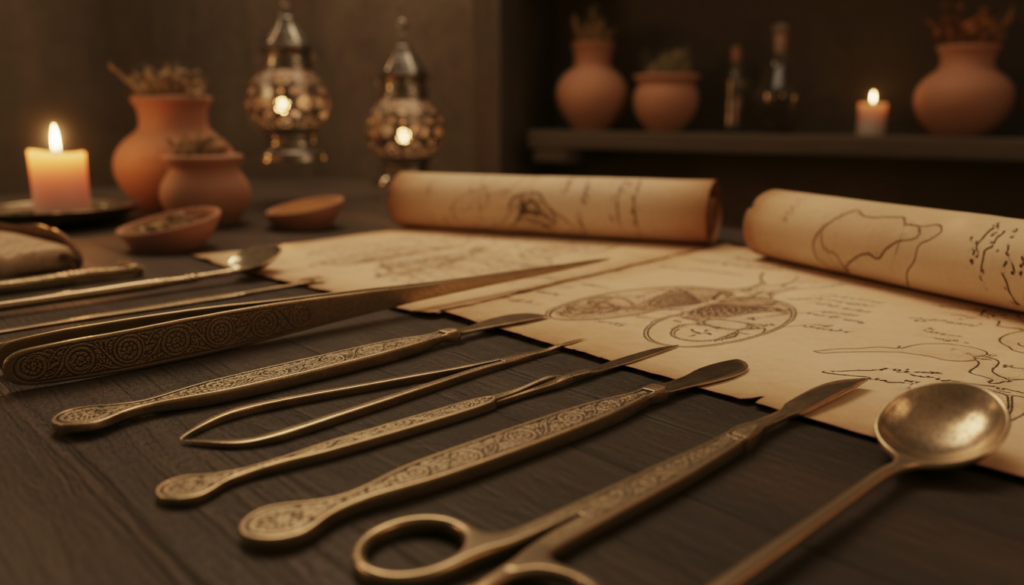
The Vendidad, an old Zoroastrian text, lists healing methods. One is “Medicine by the knife,” or surgery. The Ordibehesht Yasht even names the surgeon, Kard Pezeshk. These were not just random people with knives. They were trained pros.
In ancient Persia, surgery was more advanced than you might think. The Hedayat al-Motaallemin talks about tongue-tie surgery. And for pain, they used Bangha, a substance from Cannabis Indica seeds.
Pioneering Study of Human Anatomy
Excavations have uncovered amazing evidence. Skulls from the Burnt City show signs of ancient surgeries. These surgeries were done without modern painkillers or clean rooms. Yet, people survived and even healed.
Instruments Developed by Persian Surgeons
So, what did these Kard Pezeshk specialists use? Let’s look:
| Instrument Type | Purpose | Period of Use |
|---|---|---|
| Surgical knives (Kard) | Incisions and tissue cutting | Pre-Achaemenid era onward |
| Trepanation tools | Cranial surgery | 3rd millennium BCE (Burnt City) |
| Cauterization devices | Wound sealing and infection control | Sassanid period |
These early surgeries in Persia paved the way for future medical advancements. They set the stage for the herbal traditions we’ll explore next.
Herbal Medicine in Persian Practices
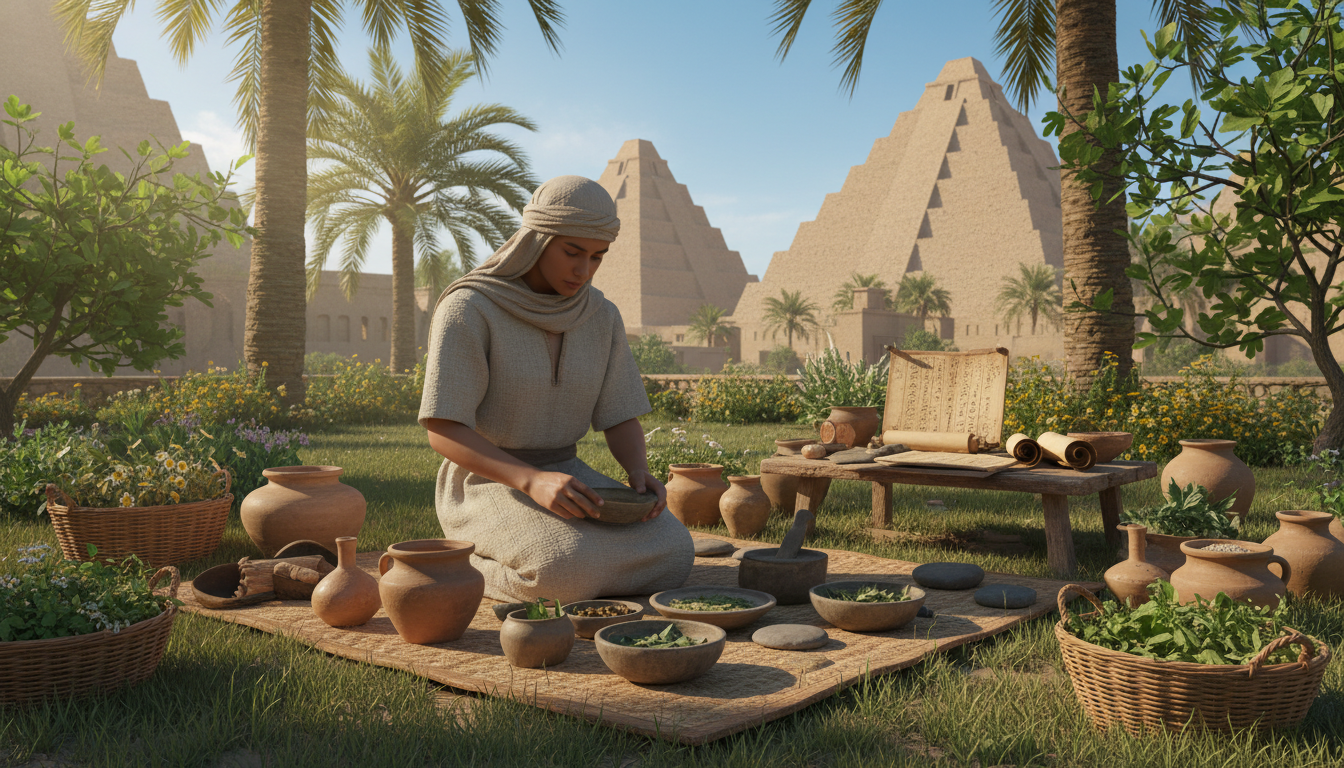
Persian herbal medicine was quite advanced. The Persian Empire covered a vast area, from the Indus Valley to the Aegean Sea. This wide range of climates and ecosystems gave Persian healers access to many medicinal plants.
Commonly Used Herbs and Their Benefits
The Avesta mentions plants like basil, chicory, sweet violet, and peppermint. The Bundahishn lists 30 sacred medicinal plants. These plants were chosen carefully, with specific parts used for different diseases.
Haoma (Ephedra Vulgaris) from the Iranian plateau is a standout. It has ephedrine, which helps with heart and breathing issues. Garlic lowers blood pressure. Bangha from Cannabis Indica is used as an anesthetic. Wild rue and frankincense are burned to kill bugs and bacteria, a practice in Iran today.
| Herb | Primary Use | Plant Part Used |
|---|---|---|
| Haoma (Ephedra) | Cardiovascular and respiratory support | Stems |
| Garlic | Blood pressure and infection control | Bulb |
| Rue | Earache, joint pain, disinfection | Leaves |
| Frankincense | Inhalation therapy, antibacterial | Resin |
| Aloeswood | Cardiac disease, irregular heartbeat | Heartwood |
The Role of Herbalists in Persian Communities
Herbalists were key in Persian communities. They were more than healers; they were community leaders. Today, Iranian herbalists use ancient knowledge to help people. They use plants like borage, sweet marjoram, fenugreek, and chicory. These remedies connect us to the past in a meaningful way.
Development of Medical Ethics
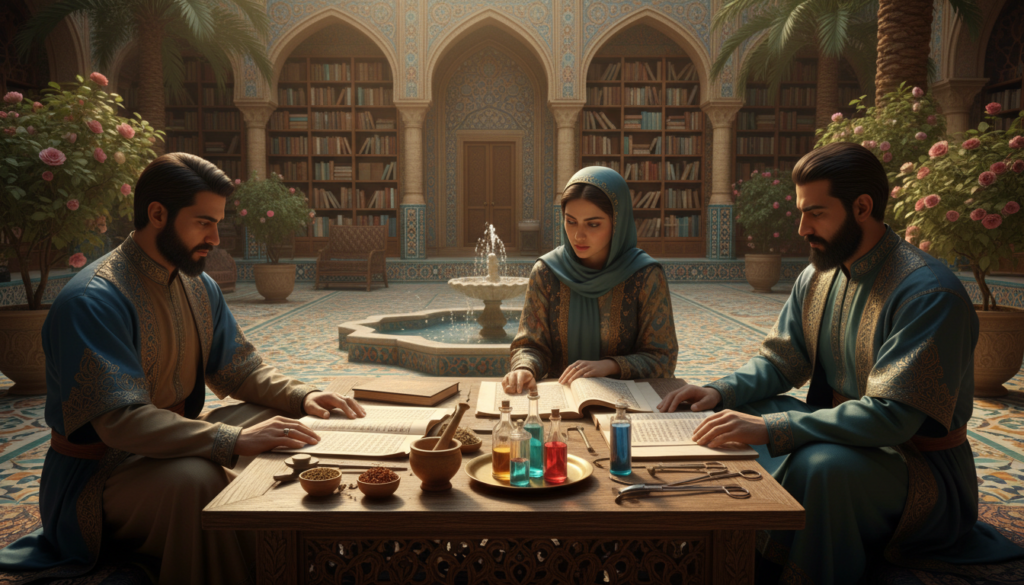
Many think medical ethics began with the Greeks. But, Persian medical ethics has deep roots. They shaped ancient medicine in surprising ways. Let’s explore how Persian thinkers created a moral framework for medicine ahead of its time.
Foundation of Medical Ethics in Persian Literature
Mazdean physician training was unique. Trainees had to cure three non-Mazdean patients before treating Mazdeans. This was more than a skill test. It taught treating all patients equally, regardless of their background.
The Avestan scriptures supported this. They didn’t limit care to one group. A doctor’s fee was based on what the patient could pay. Treating a priest? Payment was a blessing. This was a sliding-scale system from thousands of years ago!
Akhawayni Bukhari wrote Hedayat al-Motaallemin for his son. He shared treatments from personal experience and secondhand knowledge. He encouraged readers to judge for themselves. This kind of honesty is rare today.
“Knowledge and virtue are superior to sword and strength.”
These words were on Gundeshapur’s portal. It was Persia’s legendary medical academy.
Contributions to the Hippocratic Oath
The medical ethics history we trace back to Hippocrates was influenced by Persian principles. Compassion, accountability, and humility are seen in the oath doctors recite today.
| Ethical Principle | Persian Origin | Hippocratic Parallel |
|---|---|---|
| Treat all patients equally | Mazdean physician training requirement | Duty to treat without discrimination |
| Income-based fees | Avestan scripture guidance | Obligation to serve the poor |
| Honest medical reporting | Bukhari’s transparency in writings | Commitment to do no harm through ignorance |
| Virtue over power | Gundeshapur inscription | Physician as moral figure |
These ancient practices didn’t just influence hospitals and herbs. They built the conscience of medicine. This conscience carried into public health systems across the ancient world.
Impact on Public Health Systems
Did you know ancient Persians didn’t just treat sick people? They built entire systems to keep communities healthy. This was centuries before most civilizations even thought about it.
They had structured hospitals, trained staff, and real sanitation standards. It’s amazing to think about.
Organization of Hospitals in Ancient Persia
The Gundeshapur Academy was founded around 271 AD by Shapur I. It became the world’s first teaching hospital. Students learned by treating real patients under a doctor’s watch.
This was the start of clinical training, not in modern Europe.
Under Khosrow Anushirvan (r. 531–579 CE), the hospitals at Gundeshapur reached their peak. The university library had eight floors, 259 halls, and about 400,000 books. It taught subjects like anatomy and dentistry, in Greek, Syriac, and Pahlavi.
Doctors had to pass exams before treating anyone. It sounds familiar, right?
In 550 AD, the world’s first recorded medical conference was held at Ctesiphon on Anushirvan’s orders. This event was so important that Ferdowsi wrote about it in the Shahnameh.
These Persian medical advancements shaped our modern healthcare.
| Feature | Gundeshapur Academy (3rd–7th Century) | Medieval European Hospitals (12th Century) |
|---|---|---|
| Clinical Training | Students practiced on patients | Limited hands-on experience |
| Licensing Requirement | Mandatory physician exams | No formal licensing |
| Library Resources | ~400,000 books | Typically a few hundred manuscripts |
| Multilingual Education | Greek, Syriac, Pahlavi | Primarily Latin |
Advancements in Sanitation and Hygiene
Public health in Persia went beyond hospitals. They focused on clean water, waste removal, and personal hygiene. Zoroastrian teachings on purity influenced health policy across the empire.
The Role of Physicians in Persian Society
Being a doctor in ancient Persia was more than a job. It was a path to power and respect. Doctors were among the most respected in the empire.
Gundeshapur graduates often got important government jobs. The health minister, known as the Iran Dorostbod, was chosen from the best doctors. The education minister had to be an expert in philosophy, logic, or math. These roles were not just titles. They were real leadership positions.
Social Status of Persian Doctors
In Persia, doctors were divided into five specialties. You had the Health Physician, the Medical Examiner, the Surgeon, the Herbalist, and the Psychiatrist. Mental health care was a big deal back then.
Akhawayni Bukhari was known for treating mental illnesses. He worked for 23 years and became famous for it. Nezami Aruzi wrote about medical books that doctors carried on visits. This showed how advanced Persian healing was.
Education and Training of Medical Professionals
Medical training in ancient Persia was linked to religious studies. The best teachers were Iranian Magi and Mobeds, Zoroastrian priests. This training was not easy. It was a lifelong commitment.
Students learned from masters and practiced Persian healing. They moved up through a system. This dedication helped Persian physicians leave a lasting mark on medicine.
FAQ
How old is Persian medicine, and why does it matter today?
Who were the most influential figures in Persian medical history?
What kinds of surgeries did ancient Persian physicians actually perform?
Get More Medical History
Join our newsletter for fascinating stories from medical history delivered to your inbox weekly.